
What if the reason your VA disability claim keeps getting denied isn't because you aren't "hurt enough," but because you're speaking a language the VA rater doesn't understand?
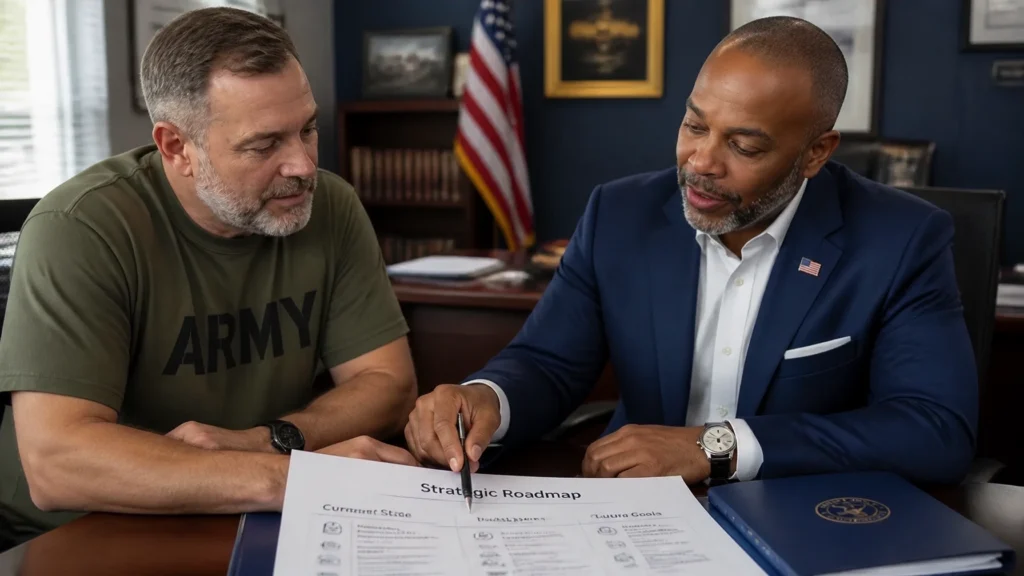
For many veterans, the transition from the battlefield to the bureaucracy is the hardest mission they’ll ever face. You spent years pushing through the pain, "rubbing dirt on it," and keeping your head down. But when it comes to the Department of Veterans Affairs, that "tough it out" mentality is your greatest enemy. To "win" your claim in 2026, you must stop treating your disability like a medical request and start treating it like a strategic operation.
At Global Vets Consulting, we’ve seen over 100,000 veterans struggle with the same wall of administrative delays. The secret isn’t just having the injury; it’s having the objective medical evidence and the technical "blueprint" to prove it. This guide provides the tactical roadmap you need to navigate the system and secure the rating you’ve earned.
Key Takeaways
- Back Pay Protection: Always start with an Intent to File (ITF) to lock in your effective date.
- The Nexus is King: Without a clear medical link between your service and your current condition, the claim will fail.
- Precision over Emotion: The VA rates based on 38 CFR Part 4 criteria, not the level of "pain" you report subjectively.
- Expert Documentation: Utilizing independent Disability Benefits Questionnaires (DBQs) can bypass the pitfalls of rushed C&P exams.
Table of Contents
- Step 1: The Tactical Pre-Planning (Intent to File)
- Step 2: Building the Medical Blueprint (Diagnosis and Nexus)
- Step 3: Precision Documentation (The Power of the DBQ)
- Step 4: The Submission Strike (Filing Form 21-526EZ)
- Step 5: Post-Submission Defense (C&P Exams and Tracking)
- Subjective Pain vs. Objective Data
- Pre-Submission Checklist
- Frequently Asked Questions
Step 1: The Tactical Pre-Planning (Locking in the Effective Date)

In military terms, you never initiate an assault without securing your perimeter first. In the world of VA disability claims, your perimeter is your Effective Date. This is the date the VA uses to calculate your back pay. If your claim takes 12 months to process and you win, the VA owes you for those 12 months, but only if you "planted the flag" early.
Verify your status by filing VA Form 21-0966 (Intent to File) immediately. This simple document gives you a one-year window to gather your evidence while "freezing" your start date.
Identify the gap: Many veterans wait until they have all their medical records before even talking to the VA. This is a mistake that costs thousands in lost back pay. Ensure you file the ITF today, even if you aren’t ready to submit the full claim until months from now.
Step 2: Building the Medical Blueprint (Diagnosis and Nexus)
You cannot win a claim on a "hunch." The VA rater requires three specific pillars to grant service connection:
- A Current Diagnosis: You must have a formal medical diagnosis for the condition in 2026.
- An In-Service Event: Proof that something happened during your military service (injury, exposure, or illness).
- The Medical Nexus: The "bridge" that connects the two.
This is where most veterans fail. They have the diagnosis and the service record, but they lack the Independent Medical Opinion (IMO) to link them. For example, if you are filing for a VA claim for depression secondary to tinnitus, the VA won't just take your word for it. You need a physician to state that it is "at least as likely as not (50% probability or greater)" that your mental health struggles are caused or aggravated by the constant ringing in your ears.
Confirm that your records use the "language of the rater." Phrases like "might be related" or "possibly caused by" are weak and often lead to denials. You need definitive, evidence-based medical rationales.
Step 3: Precision Documentation (The Power of the DBQ)

If Step 2 is the blueprint, Step 3 is the structural engineering. The VA uses Disability Benefits Questionnaires (DBQs) to determine the severity of your condition. These forms are designed to map your symptoms directly to the Schedule for Rating Disabilities (38 CFR Part 4).
Consider a DBQ for flat feet (pes planus). The rater isn't looking for you to say "my feet hurt." They are looking for specific clinical markers like calcaneal eversion, pronation, or marked deformity. If your doctor doesn't record these specific data points, you might be rated at 0% even if you can barely walk.
Strategic Action: Don't leave your rating to chance with a 15-minute C&P exam. By working with an independent licensed physician who understands VA requirements, you can submit a Fully Developed Claim (FDC) that includes a completed DBQ. This forces the rater to look at objective clinical evidence that accurately reflects your daily struggle.
Step 4: The Submission Strike (Filing Form 21-526EZ)

Once your evidence is gathered, it’s time to file VA Form 21-526EZ. This is the primary application for VA disability claims.
In 2026, the Fully Developed Claim (FDC) path is the gold standard. When you file an FDC, you are certifying that you have provided all the evidence necessary for the VA to make a decision. This bypasses the VA’s lengthy "duty to assist" phase where they spend months trying to find your records.
Identify every condition clearly. Use specific medical terms. Instead of "leg pain," use "sciatica" if that is the diagnosis. Verify that all secondary conditions are linked to a primary service-connected disability.
Step 5: Post-Submission Defense (C&P Exams and Tracking)
After you hit submit, the mission isn't over. You must actively manage your claim.
- C&P Exams: If the VA schedules a Compensation & Pension (C&P) exam, you must attend. However, you should go into that exam armed with the knowledge of your own medical records.
- The "Bad Day" Rule: When the examiner asks "How are you doing?", they aren't being social. They are evaluating your limitations. Don't describe your "best day"; describe your condition at its worst, including flare-ups.
- Tracking: Use the VA.gov portal to monitor your claim’s progress through the "Evidence Gathering, Review, and Decision" phase.
If you receive a decision that is lower than expected, do not panic. Use the "Reasons and Bases" section of your decision letter to identify the gap in evidence. Often, a Supplemental Claim with new, relevant medical evidence (like a revised IMO or DBQ) is the fastest way to correct an error.
Subjective Pain vs. Objective Medical Data
Veterans often feel frustrated when their genuine pain doesn't result in a high rating. The table below illustrates why how to file a VA claim successfully requires a shift in perspective.
| Subjective Experience | Objective Requirement (38 CFR) | Why it Matters |
|---|---|---|
| "My back hurts all the time." | Range of Motion (ROM) measurements using a goniometer. | The VA rates back pain based on the degree of flexion, not the level of pain. |
| "I'm constantly depressed." | Occupational and Social Impairment markers (e.g., "difficulty in establishing relationships"). | Ratings are based on how the condition affects your ability to work and live. |
| "The ringing in my ears is loud." | Tinnitus Diagnosis and history of acoustic trauma in service. | Tinnitus is a flat 10% rating; you need the diagnosis to trigger the award. |
| "My feet are killing me." | Pronation and Calcaneal Eversion evidence. | Specific deformities dictate the 10%, 20%, or 30% rating levels. |
The "Mission Ready" Pre-Submission Checklist
Before you hit "submit" on your VA disability claims, run through this final checklist:
- Intent to File: Is it active?
- Current Diagnosis: Do you have an ICD-10 code for every condition?
- Nexus Statement: Does your doctor use the phrase "at least as likely as not"?
- DBQ Review: Does the DBQ capture your limitations during a "flare-up"?
- Buddy Statements: Have you included lay evidence (VA Form 21-10210) to support your daily struggles?
- Service Records: Have you highlighted the specific pages in your STRs (Service Treatment Records) that prove the event?
Frequently Asked Questions
Q: Can I file a claim while still on active duty?
A: Yes. Use the Benefits Delivery at Discharge (BDD) program if you have 180 to 90 days left on your contract. This allows you to receive your rating almost immediately after you separate.
Q: What is a "Secondary" condition?
A: A secondary condition is a disability caused or aggravated by an already service-connected condition. For example, if your service-connected knee injury causes you to walk with an altered gait, leading to hip pain, the hip pain is "secondary."
Q: Why was my claim denied even though I have a doctor's note?
A: Most "doctor's notes" are not VA-compliant. The VA requires a specific nexus rationale that cites medical literature or specific evidence from your service records. A generic note saying "he has back pain from the Army" is rarely enough.
Q: Do I need a lawyer for my VA claim?
A: Not necessarily. While lawyers can help with complex appeals, many veterans find that VA claim assistance through a network of independent medical professionals is more effective for building the initial evidence file.
Secure Your Legacy
Navigating the VA is not about luck; it’s about preparation. By bridging the gap between your physical reality and the VA’s technical requirements, you position yourself to win. At Global Vets Consulting, we serve those who served by providing the medical documentation expertise needed to fight the bureaucratic fog.

Take the next step in your mission. Secure your evidence. Secure your future.