Your VA disability rating shouldn’t depend on a fifteen-minute conversation with a stranger who doesn’t know your medical history. Many veterans feel the system is stacked against them, especially when a rushed C&P examiner ignores the benefits of using private medical records for va claim evidence. It’s frustrating to receive a denial for a “lack of evidence” while you’re still confused about whether to use VA Form 21-4142 or submit the records yourself. You’ve earned your benefits, and you shouldn’t have to leave the outcome to chance. 🇺🇸
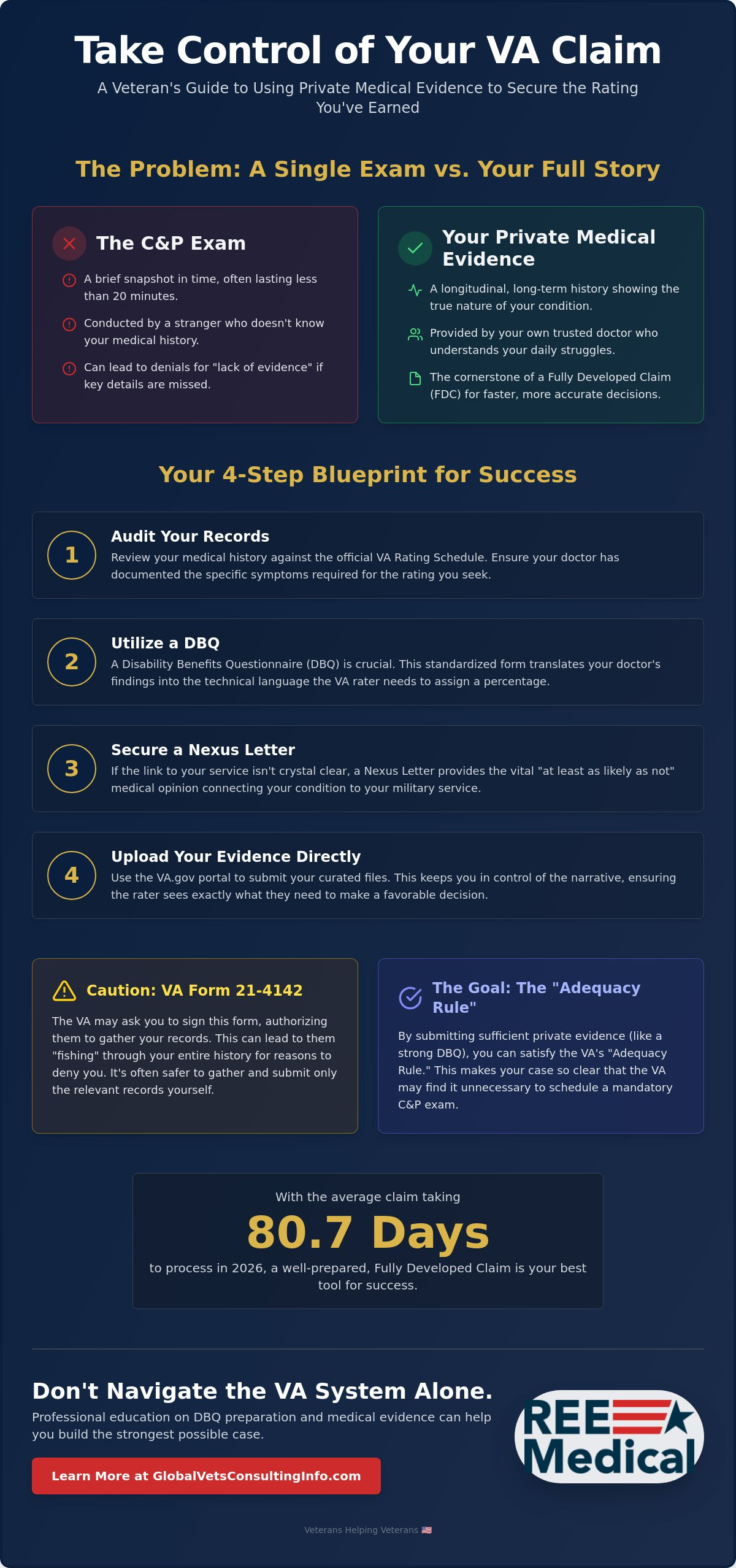
This guide explains how to leverage your private medical history and standardized DBQs to take back control. We’ll show you how to use your own doctors to avoid the uncertainty of a mandatory C&P exam through a Fully Developed Claim. With the average claim taking 80.7 days to process in 2026, efficiency and accuracy are your best tools for success. We’ll walk you through the steps to organize your evidence using current 2026 standards to ensure your rating reflects the true severity of your condition.
Key Takeaways
- Understand why longitudinal private records provide a more accurate picture of your health than a single, rushed C&P examination.
- Master the steps for using private medical records for va claim evidence by auditing your history against the official VA Rating Schedule.
- Learn how Disability Benefits Questionnaires (DBQs) act as a bridge, translating your private doctor’s findings into the technical language the VA requires.
- Discover the “Adequacy Rule” and how submitting sufficient private evidence can help you avoid mandatory C&P exams through a Fully Developed Claim.
- Explore how professional education on DBQ preparation and medical evidence can help you secure the rating you have earned through your service.
Why Using Private Medical Records for a VA Claim Strengthens Your Case
Private medical records include any healthcare documentation generated outside the Veterans Health Administration. While the VA has a legal duty to assist you in gathering evidence, relying solely on government files often leads to gaps in your medical history. By using private medical records for va claim evidence, you take control of the narrative. You provide the rater with a complete picture of your health rather than a fragmented one that might miss key details of your daily struggles.
The primary advantage of private evidence is its longitudinal nature. A Compensation and Pension (C&P) exam is a snapshot in time; it often lasts less than twenty minutes. In contrast, your private physician has likely treated you for months or years. This long-term data is vital to establish how to prove service connection. It demonstrates that your condition is chronic and persistent. This is exactly what the VA needs to see to grant a favorable rating.
VA Records vs. Private Records: The Key Differences
Private doctors offer a level of continuity that the VA system sometimes struggles to match. When you see the same specialist for years, their notes reflect the nuances of your symptoms and how they fluctuate. These specialists often provide more detailed diagnoses than generalist providers. This detailed evidence is a cornerstone of a Fully Developed Claim (FDC). Submitting a complete package allows for faster processing, which is crucial since the average claim took over 80 days to process in early 2026.
The Role of Private Evidence in Preventing Denials
Many veterans find their va claim denied for lack of evidence despite having a clear diagnosis. This usually happens because the medical records submitted don’t explicitly link the current condition to military service. Curating your private records ensures every symptom is documented before the VA schedules an exam. It fills the “silent gaps” in your file that raters often interpret as a sign of recovery. Your private records prove that your condition never went away.
Steps to Successfully Submitting Private Evidence and DBQs in 2026
Winning your claim requires more than just handing over a stack of papers. You must be strategic. The goal is to make the rater’s job as easy as possible so they can grant your rating without searching for missing pieces. Follow these steps to ensure your submission is airtight.
- Step 1: Audit your records. Review your history against the official VA Rating Schedule. Ensure your doctor has documented the specific symptoms required for the rating level you’re seeking.
- Step 2: Utilize a DBQ. Success when using private medical records for va claim evidence often depends on a Disability Benefits Questionnaire (DBQ). This standardized form translates medical jargon into the technical language the VA rater uses to assign percentages.
- Step 3: Secure a Nexus Letter. If your records don’t clearly state your condition started in service, a Nexus Letter provides the vital “at least as likely as not” connection.
- Step 4: Upload directly. Use the VA.gov portal to submit your files yourself. This keeps you in control of what the rater sees and when they see it.
To Sign or Not to Sign: VA Form 21-4142
The VA often asks you to sign Form 21-4142 to authorize them to gather your records. Be cautious. This can lead to the VA “fishing” through your entire medical history for reasons to deny you. It’s often safer to gather the records yourself and submit only what is relevant. Always include a “Statement in Support of Claim” to explain how the evidence proves your case. For expert guidance, you can explore independent medical evidence education to learn how to curate your file effectively.
Organizing Your Evidence for the Rater
When using private medical records for va claim submissions, clarity is king. Don’t just “record dump” thousands of pages. Raters are busy; they appreciate a condition-based organization. Group your documents by the specific disability you’re claiming rather than just by date. Highlight your formal diagnosis and ensure the records show the condition is currently “active.” This clarity helps the rater say “yes” faster and reduces the chance of a remand for more information.
Private Medical Evidence vs. the C&P Exam: What You Need to Know
Many veterans believe the C&P exam is the only evidence that matters. This is a common misconception that often leads to lower ratings. In reality, the VA has an “Adequacy Rule.” If your private evidence is sufficient to assign a rating, the VA can skip the C&P exam entirely. This is the ultimate goal of using private medical records for va claim submissions. It puts you in the driver’s seat by providing the rater with a professional, pre-completed roadmap of your disability. 🇺🇸
If you are scheduled for an exam and the examiner ignores your history, don’t panic. You can use your private records to challenge a negative C&P exam during a Higher-Level Review (HLR). This is particularly powerful when submitting a DBQ for mental health conditions. Private providers often capture the nuances of PTSD or depression that a rushed contractor might overlook in a twenty-minute session.
When the VA Must Accept Private DBQs
Under 2026 standards, the VA must accept private DBQs if they are “adequate for rating purposes.” This means the form must be complete, signed by a qualified professional, and based on a review of your medical history. The Elizabeth Dole Act of 2025/2026 has streamlined this by requiring standardized PDF formats for electronic sharing. Ensure your doctor includes their credentials and a clear signature. If the evidence is thorough, the VA’s own regulations encourage raters to use it without ordering further exams.
Handling Conflicting Medical Opinions
When your private doctor says “yes” and the VA examiner says “no,” the “Benefit of the Doubt” rule, or Equipoise, comes into play. If the evidence for and against your claim is roughly equal, the VA is legally required to rule in your favor. You can strengthen this position by writing a statement that explains why your private provider’s opinion is more probative. Point out that your doctor has treated you for years, whereas the C&P examiner only saw you once. If you want to learn more about presenting your evidence correctly, check out our VA rating increase education to start your journey.
Partnering with Global Vets Consulting for Professional DBQ Preparation
Navigating the transition from active duty to civilian life is challenging enough without a complex administrative battle. Many veterans find that even with a strong medical history, their claims are stalled because the evidence isn’t in a format the VA recognizes. We specialize in bridging this gap. By using private medical records for va claim development, we help you translate your long-term health history into professional Disability Benefits Questionnaires (DBQs) that raters can process with confidence. 🇺🇸
The Global Vets Consulting approach is meticulous, veteran-centric, and tech-forward. We understand that the “Evidence Gathering” phase is where most claims succeed or fail. Our educational resources focus on ensuring your documentation meets the high standards required in 2026. We don’t just look at a single diagnosis; we help you look at the full scope of your service-connected conditions to ensure your rating is accurate. 📱
- Expert Education: We provide guidance on musculoskeletal, mental health, and neurological condition documentation.
- Standardized Preparation: Our process ensures your private evidence aligns with the latest VA Rating Schedule criteria.
- Constant Support: You can access our 24/7 National Client Services Hotline whenever you have a question about your evidence.
Our Mission: Veterans Helping Veterans 🌎
We operate with a worldwide perspective, serving those who served regardless of where they’re currently located. This global reach gives us a unique edge in understanding the complexities of disability documentation across different healthcare systems. The VA’s bureaucratic maze is intimidating, but you don’t have to walk it alone. We act as a steady guide, helping you maintain focus on the outcome you’ve earned through your service and sacrifice.
Ready to Take the Next Step? 📞
If you’re tired of the uncertainty and ready to take control of your claim, we’re here to assist. You can start your intake process immediately with our 24/7 AI Veteran Intake Specialist. This technology allows us to begin reviewing your needs the moment you’re ready to move forward. Don’t let your private medical history sit in a file cabinet when it could be the key to your success. Start your DBQ preparation today with Global Vets Consulting and secure the rating you deserve. 🇺🇸
Secure the VA Rating You’ve Earned
Your medical history is your strongest asset, but only if it’s presented in a way the VA rater can easily understand. By using private medical records for va claim evidence, you shift the focus from a single snapshot exam to a comprehensive view of your health. This proactive approach ensures your symptoms are fully documented and your service connection is undeniable. It’s about taking the guesswork out of the process and providing the rater with a clear path to a “yes” decision.
Global Vets Consulting has been veteran-owned and operated since 2021. We specialize in professional DBQ documentation for all body systems, providing the technical accuracy and meticulous education you need to succeed. Our mission is to be your steady guide through the bureaucratic maze, offering support that feels like a partnership rather than a cold transaction. We understand the high stakes of your claim because we’ve been in your boots.
With our 24/7 National Client Services Hotline, help is always available when you need it most. It’s time to stop feeling neglected by complex systems and start moving forward with steady confidence. Start Your Professional DBQ Preparation Today and take the first step toward securing the benefits you deserve. You’ve served your country; now let us help you protect your future. 🇺🇸
Frequently Asked Questions
Can the VA ignore my private medical records?
The VA is legally required to consider all evidence you submit as part of your claim file. They cannot simply ignore private records; however, they may assign them less “probative weight” if the documentation is incomplete or doesn’t align with the VA Rating Schedule. Ensuring your private evidence is organized and addresses specific diagnostic criteria is the best way to make sure it’s taken seriously by the rater. 🇺🇸
Do I have to sign the VA’s medical release form (21-4142)?
You aren’t required to sign VA Form 21-4142. Many veterans prefer to gather and upload their own records directly to VA.gov to maintain control over the evidence the rater sees. This prevents the VA from “fishing” through your entire medical history for unrelated information that might be used to deny your claim. Self-submitting your records often leads to a cleaner, more focused claim file.
How far back should my private medical records go for a VA claim?
Your records should ideally cover the timeline from your initial diagnosis to your most recent treatment date. For chronic conditions, showing a continuous history of care is vital for success when using private medical records for va claim evidence. Long gaps in treatment can lead a rater to believe your condition has resolved; so, providing at least twelve months of consistent documentation is a solid baseline for most claims. 🇺🇸
What makes a private DBQ ‘sufficient’ for VA rating purposes?
A private DBQ is considered sufficient if it’s fully completed and signed by a licensed medical professional with the appropriate credentials. The form must provide enough clinical data for a rater to assign a percentage without needing more information. If your private doctor misses a single checkbox or fails to address a specific functional limitation, the VA will likely order a mandatory C&P exam to fill the gaps.
Can my private doctor’s diagnosis override a C&P examiner’s opinion?
Your private doctor’s opinion can prevail if it’s more “probative” than the C&P examiner’s assessment. Since your private physician has a long-term treating relationship with you, their perspective on your chronic symptoms is often more credible than a snapshot exam. If both opinions are equally supported by evidence, the “Benefit of the Doubt” rule requires the VA to rule in your favor. 🇺🇸
Article by
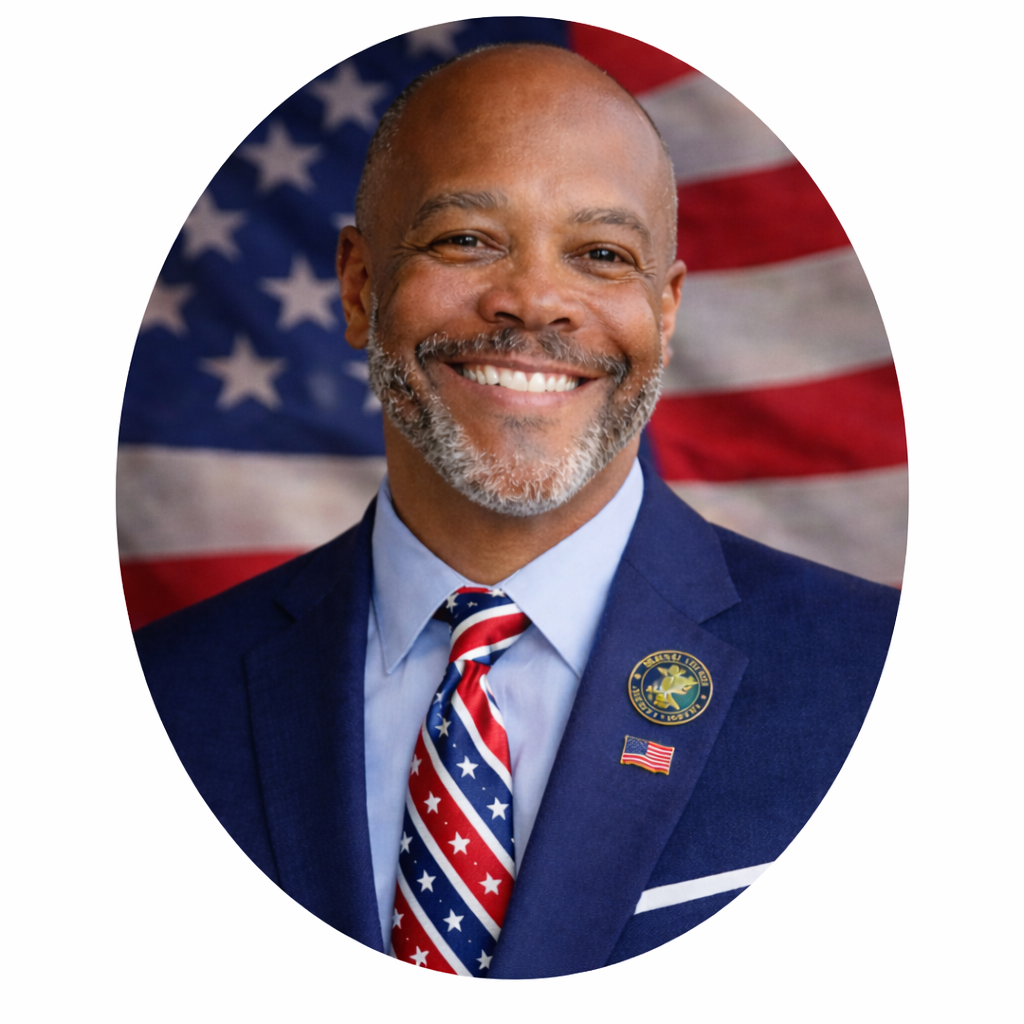
Willie Daniel
Willie Daniel is the Founder and Chief Executive Officer (CEO) of Global Vets Consulting (GVC) – National Veterans Disability Services, a veteran-led educational and medical evidence support organization dedicated to helping veterans better understand VA disability rating increases, DBQ medical evidence, secondary claims education, and C&P examination preparation.
He is a retired U.S. Army Medical Service Corps Officer with more than 27 years of honorable military service, a decorated Iraq combat veteran, and a retired federal official with the U.S. Department of Veterans Affairs. Throughout his military and federal career, Willie Daniel served in leadership, healthcare administration, operational, and veteran-support roles focused on improving services and support systems for servicemembers, veterans, and their families.
Drawing from decades of military leadership, healthcare administration, veteran advocacy, and federal government experience, Willie Daniel brings a practical, veteran-centered perspective to Global Vets Consulting’s educational articles, AI-powered veteran resources, video education initiatives, and outreach programs. His experience navigating military systems, medical documentation processes, and veteran-related administrative operations provides valuable insight into many of the challenges veterans face when seeking to better understand VA disability rating criteria, medical evidence, documentation strategies, and secondary condition education.
Through GVC’s “Veterans Helping Veterans” mission, his focus is on delivering clear, educational, and easy-to-understand information designed to empower veterans with knowledge, resources, and educational tools that may help them make more informed decisions regarding their individual VA disability journeys.
The information provided through GVC is intended for educational and informational purposes only and should not be considered legal or medical advice.
Disclaimer
Disclaimer: Global Vets Consulting, LLC (“GVC”) is a veteran-led educational and medical evidence support organization. GVC is not a law firm, is not a Veterans Service Organization (VSO), and is not affiliated with the U.S. Department of Veterans Affairs (VA) or any government agency.
Global Vets Consulting does not provide legal advice, medical advice, medical treatment, or healthcare services. GVC does not prepare, file, or submit VA disability claims on behalf of veterans. All information provided through this website, blog articles, videos, educational materials, AI tools, dashboards, templates, and communications is intended solely for general educational and informational purposes.
Veterans are encouraged to consult with accredited representatives, licensed attorneys, qualified medical providers, or Veterans Service Organizations regarding their specific legal, medical, or VA-related matters. VA disability decisions, ratings, and outcomes are determined solely by the U.S. Department of Veterans Affairs based on applicable laws, regulations, medical evidence, and individual circumstances. Past results do not guarantee future outcomes.