
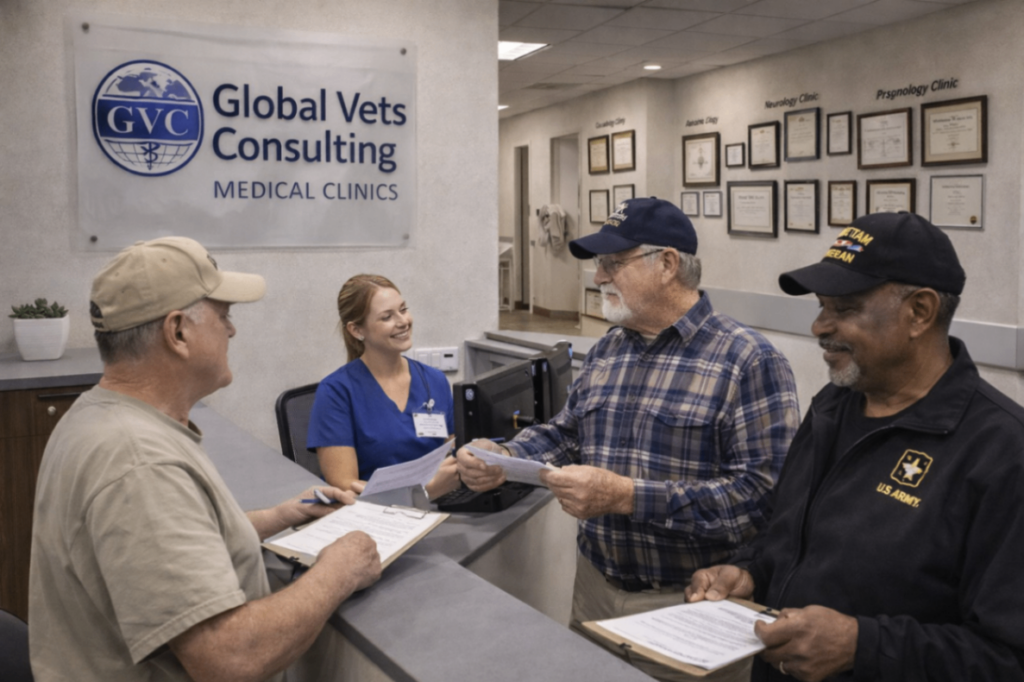
What if the reason your claim keeps getting delayed isn’t administrative backlog, but a calculated fiscal maneuver designed to save the federal government $57 billion at the expense of your health?
For years, the Department of Veterans Affairs (VA) has signaled a massive overhaul of the 38 C.F.R. Part 4 disability rating schedule. We are now standing at the edge of that cliff. Congress and the VA are looking at the books, and they see two of the most commonly claimed conditions: tinnitus and sleep apnea: as "low-hanging fruit" for budget cuts. This isn't just a policy update; for the veteran community, it feels like a tactical betrayal of the promise made to those who served.
At GVC4Vets, we don’t just watch the news; we analyze the "language of the rater" to help you build a mission-ready strategy. The rules of the game are changing, and if you don't have a blueprint to protect your ratings, you risk being left behind in the "modernization" shuffle.
Table of Contents
- The $57 Billion Math: Why You are the Target
- 38 CFR Update: The Death of the Standalone Tinnitus Rating
- Sleep Apnea: No More "Automatic" 50% for CPAP
- Comparison: Current vs. Proposed Rating Criteria
- Mission Strategy: How to Secure Your Rating Today
- FAQ: Protecting Your Benefits
Key Takeaways
- The Proposed Cut: VA estimates the changes to respiratory and auditory ratings could reduce payouts by $57 billion over the next decade.
- Tinnitus Tactic: Tinnitus (Diagnostic Code 6260) will likely lose its standalone 10% rating, becoming a "symptom" of hearing loss rather than a separate disability.
- Sleep Apnea Shift: The 50% rating for sleep apnea requiring a CPAP is on the chopping block, shifting toward a model based on "treatment efficacy."
- Grandfathering Clause: Veterans with existing ratings are generally protected, but new claims or increase requests filed after the effective date will face the stricter criteria.
- Immediate Action: Securing a va disability increase now, under the current laws, is the only way to lock in your benefits before the window closes.
The $57 Billion Math: Why You are the Target
The VA is currently managing a record number of claims, fueled by the PACT Act and increased veteran awareness. However, behind the scenes, the "modernization" of 38 C.F.R. Part 4 is being used as a fiscal brake. By tightening the requirements for tinnitus and sleep apnea, the VA aims to offset the rising costs of disability compensation.
When the VA testifies before Congress, they use phrases like "aligning with modern medicine." In veteran-to-veteran terms? That’s code for "finding reasons to rate you at 0%." The goal is to move away from compensating for the existence of a condition and toward compensating only for residual impairment after treatment.

38 CFR Update: The Death of the Standalone Tinnitus Rating
Under the current Diagnostic Code 6260, tinnitus is almost an automatic 10% rating if service connection is established. It doesn't matter if it’s in one ear or both: the max is 10%. But for over a million veterans, that 10% is the "gateway" to secondary service connections like anxiety or sleep disturbances.
The Betrayal: The proposed 38 CFR updates seek to eliminate tinnitus as a standalone compensable disability. Instead, it would be bundled into your hearing loss rating. If your hearing loss is non-compensable (0%), your tinnitus will likely be 0%. If you already have a 10% hearing loss rating, you get nothing extra for the ringing in your ears. This effectively wipes out a 10% "safety net" for hundreds of thousands of future claimants.
Sleep Apnea: No More "Automatic" 50% for CPAP
Right now, 38 CFR § 4.97 (Diagnostic Code 6847) is clear: if you require a CPAP, you are rated at 50%. This recognizes the massive lifestyle disruption and long-term cardiovascular risks associated with the condition.
The Proposed Shift: The VA argues that if a CPAP "fixes" the breathing pauses, the veteran is no longer 50% disabled. The new criteria would focus on whether the treatment is effective. If your CPAP works, you could be dropped to 0% or 10%. To hit the 100% rating, you would need to prove "end-organ damage": meaning you have to be significantly sicker to get the same support you earn today.

Comparison: Current Rating Schedule vs. Proposed Changes
| Condition | Current Criteria (The "Old" Way) | Proposed Criteria (The "Modern" Way) |
|---|---|---|
| Tinnitus | Standalone 10% rating (DC 6260). | Bundled into hearing loss; no standalone rating. |
| Sleep Apnea | 50% for CPAP/BIPAP usage. | 0% if "asymptomatic" with CPAP; based on residuals. |
| Hearing Loss | Complex grid based on decibel loss. | Potential "bundling" with tinnitus symptoms. |
| Objective Evidence | Physician diagnosis + Service connection. | Evidence of ineffective treatment required for high ratings. |
This shift ignores the subjective reality of veteran life. A CPAP machine doesn't "cure" sleep apnea; it manages it. The ringing in your ears doesn't stop just because your hearing test was "normal." This is why GVC4Vets emphasizes the transition from subjective complaints to objective medical evidence.
Mission Strategy: How to Secure Your Rating Today
You cannot wait for the Federal Register to announce the final effective date. Once the rules are codified, the door slams shut for new claims. You must treat your claim like a tactical mission.
1. Identify the Gap
Don't just tell the doctor "my ears ring." You need to provide specific data points. Is it constant? Does it lead to depression secondary to tinnitus? This creates a "paper trail" that is harder for the VA to ignore.
2. Verify Your Evidence
Ensure your medical records contain a clear nexus statement. Confirm your CPAP compliance records are up to date if you are filing for a sleep apnea increase. At GVC4Vets, we connect you with independent physicians who understand how to document these nuances in a VA-compliant DBQ.
3. Take Action Now
If you are currently rated at 0% for these conditions, or if you haven't filed yet, the time to submit your Intent to File (ITF) is today. This preserves your effective date under the current, more generous rules.

Checklist Before You File:
- Review your current 38 CFR ratings on eBenefits/VA.gov.
- Schedule a free consultation to see if you qualify for an increase.
- Gather your sleep study results (polysomnogram) and audiogram.
- Obtain a DBQ from an independent medical professional to counter "rushed C&P exams."
FAQ: Protecting Your Benefits
Q: Will my current 50% sleep apnea rating be lowered if the new rules pass?
A: Generally, no. The VA typically "grandfathers" existing ratings. However, if you file for an increase or a new secondary condition after the rules change, the VA may re-evaluate your primary condition under the new, stricter criteria.
Q: Is it too late to file for tinnitus?
A: Not yet. As of July 2026, the proposed changes are still in the final review stages. Filing now ensures your claim is adjudicated under the standalone 10% rules.
Q: What are "VA Secrets" for a higher rating?
A: There are no "secrets," only VA disability increase strategies. The most effective "insider" tactic is ensuring your medical evidence is so robust: using technical terms like "calcaneal eversion" for foot claims or "obstructive respiratory events" for apnea: that the rater has no choice but to follow the law.
Q: Can GVC4Vets help if I’ve already been denied?
A: Absolutely. Many denials stem from a lack of objective evidence or a "negative" C&P exam. We help you "bridge the gap" by connecting you with doctors who provide the detailed, evidence-based documentation the VA requires.
Don't let a $57 billion budget goal stand between you and the compensation you earned. The mission hasn't changed; the terrain has. It’s time to adapt and overcome.
Global Vets Consulting (GVC4Vets) – National Veterans Disability Services

