

Imagine walking into your Compensation and Pension appointment after months of waiting, only to have the examiner rush through your range of motion or dismiss your mental health struggles in under ten minutes. It’s a frustrating reality for many. Often, the resulting “lowball” rating stems from common C&P Exam Mistakes that are entirely preventable. Whether you’re downplaying your chronic pain out of habit or struggling to articulate how your symptoms impact your daily life, these small errors can lead to a decision that doesn’t reflect the true severity of your condition. 🇺🇸
We know that dealing with the VA’s medical process can feel like an interrogation rather than an evaluation. You’ve done the hard work of serving your country, and you shouldn’t have to worry about being misunderstood by a busy examiner. In this article, you’ll learn the most common pitfalls veterans face during their exams and how to use professional medical evidence to secure the rating you earned. We’ll show you how private Disability Benefits Questionnaires (DBQs) can protect your claim and help you walk into your next appointment with steady confidence and peace of mind. 📞
Key Takeaways
- Understand the specific role of the Compensation and Pension exam as an evidence-gathering tool rather than a standard medical treatment appointment. 🇺🇸
- Identify and avoid the most damaging C&P Exam Mistakes, such as the “I’m Fine” reflex and failing to articulate your symptoms during flare-ups.
- Recognize critical red flags during your appointment, including an examiner’s failure to use proper tools like a goniometer for musculoskeletal tests.
- Learn how private Disability Benefits Questionnaires (DBQs) can be used to anchor your claim with thorough medical evidence before the exam begins. 🌎
- Gain the peace of mind needed to navigate the bureaucratic process by preparing with accurate documentation that reflects your true disability level. 📞
What is a C&P Exam and Why Does It Matter? 🇺🇸
Understanding the system is half the battle when you’re seeking the benefits you’ve earned. A Compensation and Pension examination (C&P exam) is a specific medical evaluation scheduled by the VA to assess the severity of your service-connected disabilities. It isn’t a treatment appointment where you’ll receive a prescription or a new therapy plan. Instead, the examiner acts as a fact-finder for a rating official who will likely never meet you in person. The C&P exam is the bridge between your service-connected injury and your monthly compensation.
Preparation is vital because the stakes are high. Unfortunately, many veterans walk into these appointments without a clear strategy. Common C&P Exam Mistakes during this phase are the primary reason claims are denied or veterans receive “lowball” ratings that don’t reflect their true physical or mental struggles. If the examiner doesn’t capture the full scope of your condition, the rating official won’t have the data needed to grant an accurate percentage.
The Role of the Examiner vs. Your Medical Records
The examiner’s primary job is to verify the symptoms listed in your file. They compare what they observe during the appointment to the medical evidence you’ve already submitted. If your records are incomplete or outdated, the VA will almost always prioritize the examiner’s opinion over your personal statements. This creates a significant risk if the examiner is having an off day or misses a key symptom. Having a thorough, documented history is your best defense against an inaccurate evaluation.
Why 2026 is a Critical Year for VA Claim Accuracy
Navigating the va disability claims process step by step has become more complex in 2026. With a massive influx of new claims hitting the system, examiners are often working under extreme time pressure. This high volume means appointments can feel rushed, which significantly increases the frequency of C&P Exam Mistakes and overlooked medical details. To protect your rating, your medical evidence must be bulletproof and organized before you arrive at the clinic. 🌎
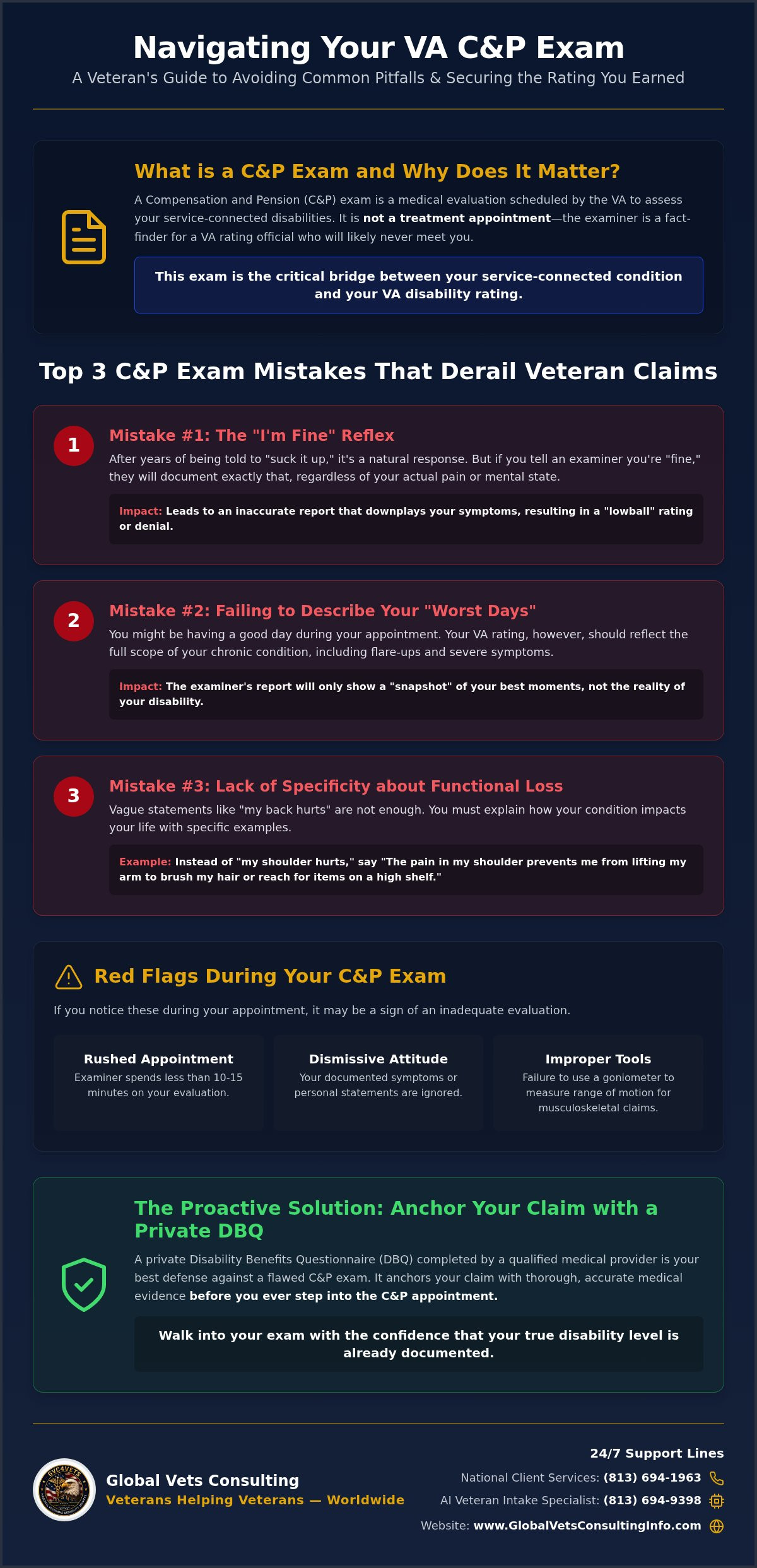
Top 3 C&P Exam Mistakes That Derail Veteran Claims
Success in your VA disability claim depends on how accurately you present your symptoms during the VA Claim Exam. While we established in the previous section that this is a fact-finding mission, your behavior during the appointment determines which “facts” make it into the report. Many veterans unintentionally sabotage their ratings by falling back on old military habits. Avoiding these common C&P Exam Mistakes is the first step toward securing the compensation you’ve earned through your service. 🇺🇸
- Mistake 1: The ‘I’m Fine’ Reflex. We spent our careers being told to “suck it up” and drive on. If the examiner asks how you’re doing and you reflexively say “I’m fine,” they will document exactly that, regardless of your actual pain levels.
- Mistake 2: Failing to Describe Your ‘Worst Days’. You might be having a relatively good day during the actual appointment. However, if you only describe that specific moment, you ignore the reality of your chronic condition. At a C&P exam, your baseline is your worst day, not your best one.
- Mistake 3: Lack of Specificity. General statements like “it hurts” don’t help the rating official. You must describe functional limitations, such as being unable to lift your arm to brush your hair or needing help getting out of a chair.
The Danger of Downplaying Your Symptoms
The “tough it out” mentality can cost you thousands in lifetime benefits. This is especially true when discussing a dbq for mental health conditions like PTSD or anxiety. Being vulnerably honest about your darkest moments isn’t a sign of weakness; it’s a requirement for an accurate rating. If you’re feeling anxious about how to communicate these struggles, our team at Global Vets Consulting can help you organize your medical evidence before the exam. 📞
Missing the Connection: Functional Loss and Range of Motion
During physical exams, many veterans try to prove they are still “fit” by pushing through the pain during range-of-motion tests. You should never let an examiner push your joints past the point where pain begins. VA law focuses on functional loss, which is the inability of the body part to perform its normal tasks. If you stop moving the moment it hurts, the examiner must record that specific limitation. This data is critical for securing higher ratings for musculoskeletal claims. 🌎
Recognizing Red Flags: What to Do if Your C&P Exam Goes Wrong
Even if you avoid the most common C&P Exam Mistakes, you might still encounter an examiner who is rushed, dismissive, or unprofessional. It’s vital to recognize when an evaluation isn’t meeting the legal standards required for Compensation and Pension Examinations. Recognizing these red flags helps you pivot before a bad examiner creates more C&P Exam Mistakes in your official file. If you spot these issues, you must act quickly to protect your claim. 🇺🇸
- Red Flag 1: No Goniometer Used. For musculoskeletal claims, the VA requires examiners to use a goniometer to measure your range of motion. If they “eyeball” your flexibility, the results are scientifically invalid and can be challenged.
- Red Flag 2: The “Speed-Run” Exam. If you have a complex condition like a TBI or multiple secondary claims, an exam that lasts only 10 or 15 minutes is a major red flag. There’s no way a thorough evaluation happened in that time.
- Red Flag 3: Contradicting Your History. If the examiner makes statements that directly conflict with your established medical history or seems like they haven’t opened your C-file, the integrity of the exam is compromised.
The most important action step is to write a “Memorandum for Record” (MFR) immediately after leaving the clinic. Document exactly what happened, what was said, and what tools were or weren’t used while the details are fresh. This document serves as your primary evidence if you need to contest the examiner’s report later. 🌎
How to File a Complaint Against a Bad Examiner
You don’t have to accept a flawed report as the final word. Call the VA 800-number immediately after a bad experience to create an official log of your complaint. Follow this up by filing a Statement in Support of Claim (Form 21-4138). This creates a formal paper trail that can be used to request a new exam or challenge the current findings. 📞
Recovering from a Flawed Exam
If you find your va claim denied for lack of evidence due to a poor C&P, you have options. A Higher-Level Review (HLR) is effective if the examiner clearly violated VA procedures. A Supplemental Claim allows you to submit new medical evidence to counter the examiner’s opinion. To ensure your documentation is bulletproof for your next steps, contact Global Vets Consulting for expert education on medical evidence. 🇺🇸
How Private DBQs Pre-empt C&P Failures 🌎
The most effective strategy for a successful claim is to prevent C&P Exam Mistakes before you even step into the clinic. While the VA examiner is a fact-finder, they often lack the time to dig deep into your history. A private Disability Benefits Questionnaire (DBQ) allows your own medical provider to document your symptoms with the thoroughness your service deserves. This professional documentation serves as a protective shield, ensuring that no key symptoms or functional limitations are “missed” during a short evaluation. 🇺🇸
Submitting a private DBQ effectively “anchors” your claim with strong medical evidence before the VA examiner even sees you. When your file already contains a detailed assessment from a qualified professional, it sets a standard of accuracy that the C&P examiner must address. This proactive approach reduces the risk of the VA relying solely on a rushed 15-minute exam. Global Vets Consulting specializes in providing the education and resources you need to secure these vital documents and build a bulletproof case. 📞
The Power of a Fully Developed Claim (FDC)
Utilizing a private DBQ is the most effective tool when seeking a dbq for va disability rating increase. By submitting all your evidence upfront through the Fully Developed Claim program, you often see faster results. More importantly, this private medical evidence can force the VA to weigh your doctor’s detailed opinion against the findings of a rushed C&P examiner. If the two reports conflict, the VA must provide a clear reason for favoring one over the other, which often works in the veteran’s favor when C&P Exam Mistakes are present in the VA’s report. 🌎
Take Control of Your Claim Today
You don’t have to leave your financial future and your family’s security in the hands of a stranger during a brief medical appointment. Preparation is the difference between a denial and the rating you’ve earned. Contact Global Vets Consulting today to learn how our educational resources can help you prepare the medical evidence you need to succeed. 🇺🇸
Get Started with Global Vets Consulting
Secure the Rating You’ve Earned Today 🇺🇸
Success in the VA claims process is rarely about luck. It’s about arriving at your appointment with the strongest possible documentation. You now understand how to avoid common C&P Exam Mistakes and how to recognize red flags when an evaluation isn’t being conducted fairly. By using private DBQs to anchor your claim, you ensure your medical history remains the primary focus of the rating official.
Global Vets Consulting is veteran-owned and operated, and we specialize in medical evidence education to empower your journey. We’ve built our services to be there when you need us most. Our 24/7 AI Veteran Intake Specialist is always available to guide you through the next steps of your preparation. Don’t leave your future to a rushed 15-minute appointment when you can have a team of advocates in your corner.
Take the first step toward a successful outcome right now. 📞 Contact our 24/7 National Client Services Hotline for expert DBQ education and get the support you deserve. You’ve already done the hard work of serving our country; let us help you navigate the system to secure your benefits. 🌎
Frequently Asked Questions
Can I bring my own notes to a C&P exam?
Yes, you can and should bring personal notes to help you stay focused and accurate during the appointment. It is easy to forget specific functional limitations or the frequency of flare-ups when you are under pressure. Having a written list ensures you don’t make common C&P Exam Mistakes like omitting key symptoms. While the examiner might not read your notes, they serve as a vital reference for you to provide consistent information.
What should I do if the C&P examiner was rude or rushed?
Report the experience immediately to the VA by calling their national hotline and filing a Statement in Support of Claim (Form 21-4138). Documenting your concerns right away creates a formal record that can be used to challenge a poor report. Reporting these issues helps prevent C&P Exam Mistakes from becoming part of your permanent medical record. If the examiner was dismissive, this record is essential for requesting a new evaluation.
Is a private DBQ better than a C&P exam for my VA claim?
A private DBQ isn’t necessarily “better” in a legal sense, but it is often much more detailed than a standard C&P report. It provides a thorough assessment from a medical professional who has taken the time to review your full history. This documentation acts as a baseline, making it harder for the VA to justify a lower rating if the C&P examiner’s findings are brief or contradictory.
What happens if I miss my C&P exam appointment?
Missing your appointment without a valid reason can lead to an immediate denial of your VA disability claim. If an emergency occurs, you must call the VA or the third-party contractor right away to reschedule. Providing a “good cause” explanation as soon as possible is the only way to keep your claim moving forward without starting the entire process over from the beginning. Don’t wait for the VA to contact you.
Can I record my C&P exam on my phone?
No, you generally cannot record a C&P exam because VA policy and most private contractors prohibit the use of recording devices during evaluations. Attempting to record without explicit written consent can lead to the termination of the exam and potential issues with your claim. Instead, focus on taking detailed notes immediately after you leave the appointment to create your own “Memorandum for Record” while the details are fresh in your mind.
Article by
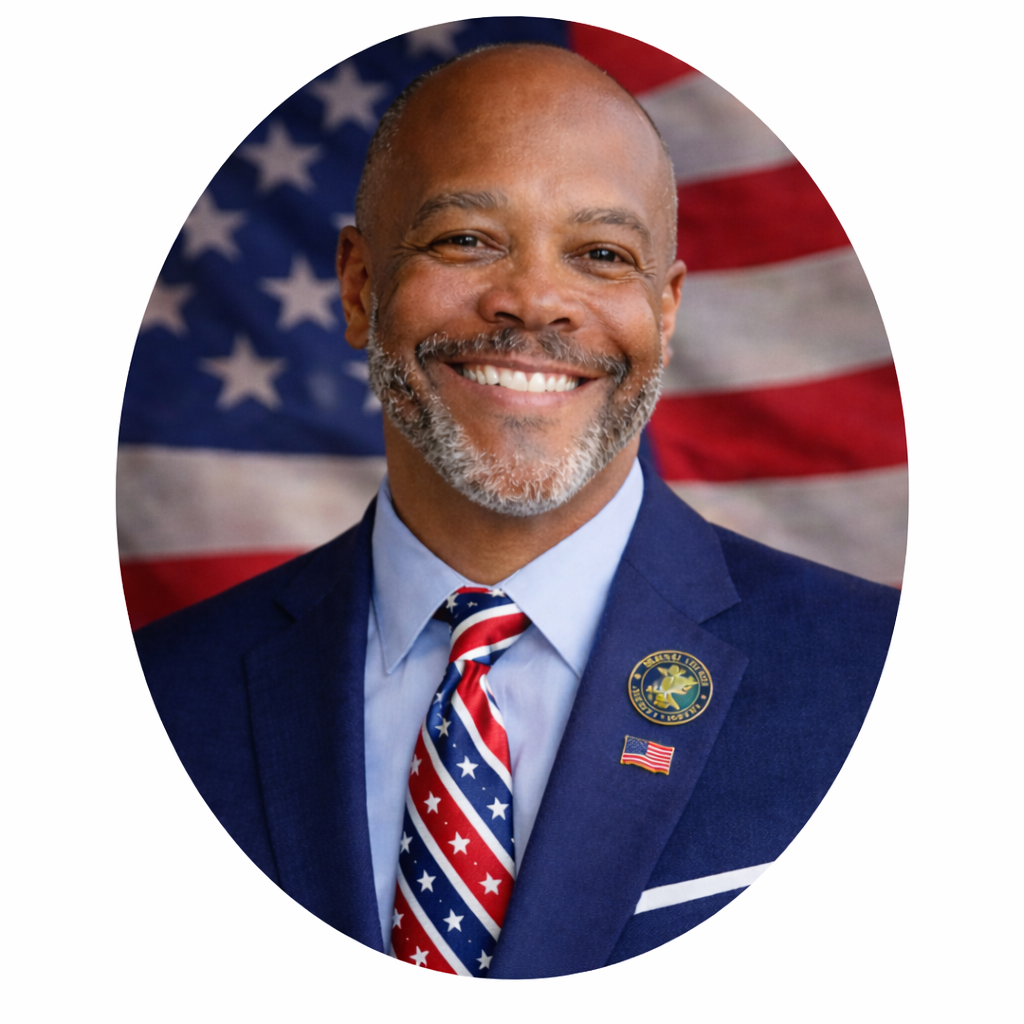
Willie Daniel
Willie Daniel is the Founder and Chief Executive Officer (CEO) of Global Vets Consulting (GVC) – National Veterans Disability Services, a veteran-led educational and medical evidence support organization dedicated to helping veterans better understand VA disability rating increases, DBQ medical evidence, secondary claims education, and C&P examination preparation.
He is a retired U.S. Army Medical Service Corps Officer with more than 27 years of honorable military service, a decorated Iraq combat veteran, and a retired federal official with the U.S. Department of Veterans Affairs. Throughout his military and federal career, Willie Daniel served in leadership, healthcare administration, operational, and veteran-support roles focused on improving services and support systems for servicemembers, veterans, and their families.
Drawing from decades of military leadership, healthcare administration, veteran advocacy, and federal government experience, Willie Daniel brings a practical, veteran-centered perspective to Global Vets Consulting’s educational articles, AI-powered veteran resources, video education initiatives, and outreach programs. His experience navigating military systems, medical documentation processes, and veteran-related administrative operations provides valuable insight into many of the challenges veterans face when seeking to better understand VA disability rating criteria, medical evidence, documentation strategies, and secondary condition education.
Through GVC’s “Veterans Helping Veterans” mission, his focus is on delivering clear, educational, and easy-to-understand information designed to empower veterans with knowledge, resources, and educational tools that may help them make more informed decisions regarding their individual VA disability journeys.
The information provided through GVC is intended for educational and informational purposes only and should not be considered legal or medical advice.
Disclaimer
Disclaimer: Global Vets Consulting, LLC (“GVC”) is a veteran-led educational and medical evidence support organization. GVC is not a law firm, is not a Veterans Service Organization (VSO), and is not affiliated with the U.S. Department of Veterans Affairs (VA) or any government agency.
Global Vets Consulting does not provide legal advice, medical advice, medical treatment, or healthcare services. GVC does not prepare, file, or submit VA disability claims on behalf of veterans. All information provided through this website, blog articles, videos, educational materials, AI tools, dashboards, templates, and communications is intended solely for general educational and informational purposes.
Veterans are encouraged to consult with accredited representatives, licensed attorneys, qualified medical providers, or Veterans Service Organizations regarding their specific legal, medical, or VA-related matters. VA disability decisions, ratings, and outcomes are determined solely by the U.S. Department of Veterans Affairs based on applicable laws, regulations, medical evidence, and individual circumstances. Past results do not guarantee future outcomes.

