
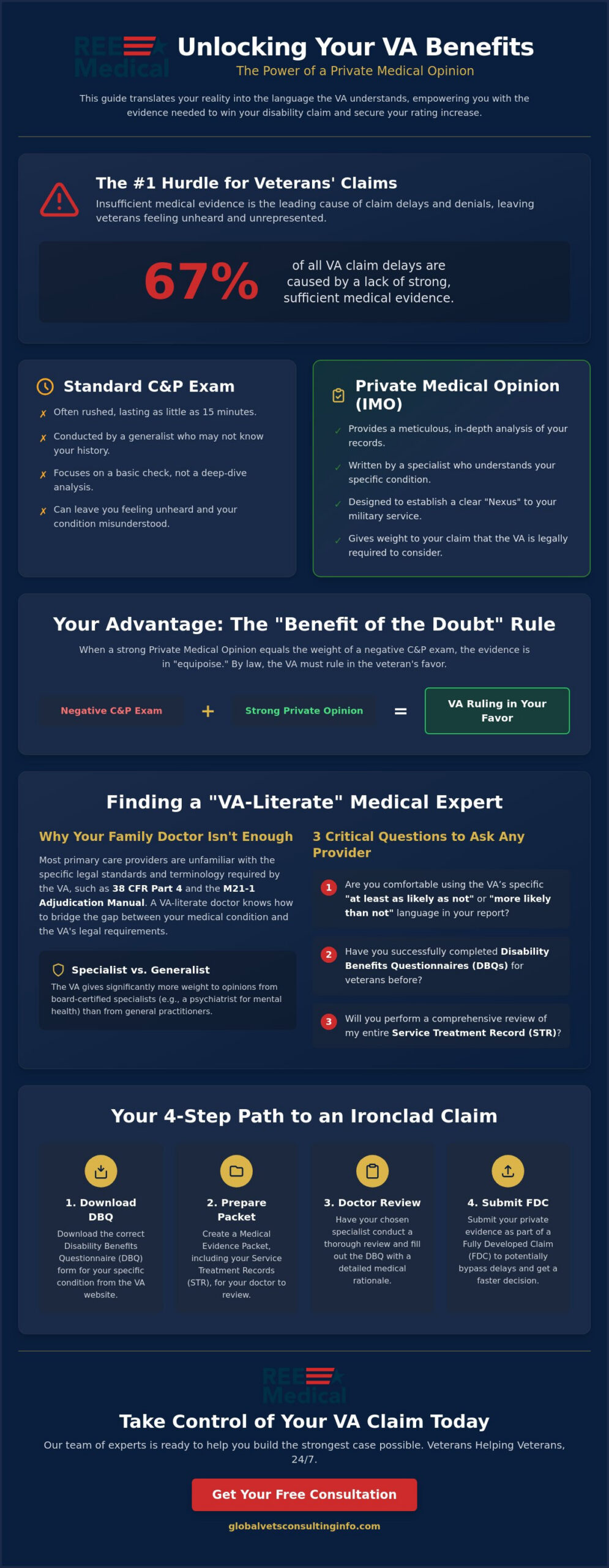
A private medical opinion for va claim isn’t just a doctor’s note; it’s a translation service that turns your daily physical reality into the specific legal language the VA is mandated to recognize. 🇺🇸 You’ve likely walked out of a C&P exam feeling unheard, or struggled to explain complex “nexus” requirements to a primary care doctor who doesn’t understand the system. It’s a heavy burden to carry when you know your symptoms are real, but the paperwork doesn’t seem to reflect it. Since insufficient medical evidence causes 67% of claim delays, getting this right is the most important step in your journey.
We understand the frustration of feeling like a number in a bureaucratic machine. Our goal is to empower you with the knowledge to find the right medical experts and secure the ironclad evidence required to win your disability claim. In this 2026 guide, we’ll walk you through the process of finding qualified providers, understanding the latest digital DBQ submission rules under the Elizabeth Dole Act, and building a strategy that gives you total confidence in your rating increase.
Key Takeaways
- Learn why a private medical opinion for va claim is often more effective than a standard C&P exam for establishing a clear service connection.
- Identify the specific traits of a “VA-literate” doctor who understands the complexities of 38 CFR Part 4 and the M21-1 Adjudication Manual.
- Follow a step-by-step process to download the correct DBQ forms and prepare a Medical Evidence Packet that simplifies the doctor’s review.
- Gain the confidence to challenge unfavorable C&P results by using Higher-Level Reviews to highlight your private specialist’s findings.
Understanding the Power of a Private Medical Opinion in the VA Claims Process
A private medical opinion for va claim is fundamentally different from the notes your doctor takes during a routine check-up. While a standard appointment focuses on treatment and immediate health needs, an Independent Medical Opinion (IMO) is a specialized document designed to address the “nexus” or link between your military service and your current condition. 🇺🇸 The Veterans Benefits Administration (VBA) often relies on generalist examiners who may only spend fifteen minutes reviewing your file. In contrast, a private specialist provides a meticulous analysis that the VA is legally required to consider as part of your evidence of record.
One of the most powerful tools in your arsenal is the “Benefit of the Doubt” rule. When a qualified private specialist provides a private medical opinion for va claim that contradicts a negative C&P exam, the evidence enters a state of “equipoise.” If the evidence for and against your claim is roughly equal, the VA is mandated to rule in your favor. This makes high-quality medical evidence the literal difference between a denial and a life-changing rating increase. It’s about ensuring the system respects your service history with the thoroughness it deserves.
IMO vs. IME: Which One Does Your Claim Need?
An Independent Medical Opinion (IMO) is typically a comprehensive review of your existing medical records and service history. It doesn’t always require an in-person visit. An Independent Medical Examination (IME), however, includes a physical evaluation. For many veterans, a record-based IMO is sufficient to establish a nexus, as long as the doctor explicitly states they have reviewed your entire service treatment record and provides a strong medical rationale for their conclusion.
The Role of Private Evidence in Fully Developed Claims (FDC)
Submitting private evidence allows you to take advantage of the Fully Developed Claim (FDC) program. By providing your own documentation, you bypass the VA’s often sluggish evidence-gathering phase. Understanding what is a dbq for va claims and how they function within this framework is vital. A private DBQ completed by your own doctor can lead to a faster decision, as it presents the rater with all the information they need to make an immediate determination.
Finding a Doctor Who Understands VA Claims and DBQ Documentation
Your local family doctor is likely an excellent physician, but they probably don’t understand the nuances of VA law. Most primary care providers are unfamiliar with 38 CFR Part 4 or the M21-1 Adjudication Manual. These are the specific rulebooks the VA uses to evaluate your disability. Without this specific knowledge, a well-meaning doctor might write an opinion that fails to meet the VA’s strict legal standards. Securing a private medical opinion for va claim requires a provider who knows how to bridge the gap between clinical findings and administrative requirements. 🇺🇸
A strong private opinion is especially critical if your evidence conflicts with a C&P Exam. VA-contracted examiners often rush through appointments, sometimes missing key details of your service history. A “VA-literate” doctor will take the time to review your entire Service Treatment Record (STR) to ensure the nexus is undeniable. Be wary of “nexus mills” that promise results without a thorough review; legitimate providers focus on accuracy and compliance. If you’re unsure how to begin your search, reviewing VA disability education resources can help you identify the right path forward.
Questions to Ask a Potential Medical Provider
Before you commit to a provider, ensure they are prepared to handle the specific demands of a VA claim. Ask these three questions during your first interaction:
- Are you comfortable using the VA’s specific “more likely than not” language in your written report?
- Have you successfully completed a Disability Benefits Questionnaire (DBQ) for other veterans?
- Will you perform a comprehensive review of my Service Treatment Record (STR) before finalizing your opinion?
Specialist vs. Generalist: Matching the Doctor to Your Condition
The VA gives significantly more weight to specialists than general practitioners. For instance, a dbq for mental health conditions is most effective when signed by a board-certified psychologist or psychiatrist. Using a specialist ensures that your private medical opinion for va claim carries the professional authority needed to challenge a generic C&P report. Always prioritize doctors who hold certifications directly related to your specific service-connected condition.
Step-by-Step: How to Get a DBQ Filled Out by a Private Medical Provider
Securing a private medical opinion for va claim starts with meticulous preparation before you ever step into a doctor’s office. Your first task is to download the exact, current version of the Disability Benefits Questionnaire (DBQ) from the official VA website for your specific condition. Using an outdated form is a common reason for administrative rejection. Once you have the form, build a comprehensive Medical Evidence Packet. This should include your service treatment records, previous decision letters, and any relevant imaging. Since insufficient medical evidence causes 67% of claim delays, providing your doctor with this context ensures their opinion is grounded in your full military history. 🇺🇸
During the evaluation, you must be honest about your “worst days.” Veterans often downplay symptoms out of habit or military discipline, but VA ratings are based on your actual level of impairment. If you only describe how you feel in the doctor’s office on a good day, your rating will likely reflect that temporary state. Focus on your most severe flare-ups and how they impact your ability to work or perform daily tasks. A properly executed private medical opinion for va claim can bypass the delays often found in the standard system.
The Three Essential Elements of a Private Nexus Letter
A strong nexus letter must contain specific legal markers to be considered “probative” by the VA. The doctor must include three critical components:
- Statement of Record Review: A clear declaration that the doctor examined your entire military and medical history.
- Medical Rationale: The clinical “why” that explains how your condition is linked to your service.
- Language of Certainty: The use of the specific phrase “at least as likely as not” to meet the VA’s legal threshold for service connection.
Common Mistakes Doctors Make on DBQs
VA raters often discount private evidence if it contains vague terms like “possibly,” “maybe,” or “could be.” These words lack the medical certainty required for a successful claim. Additionally, doctors sometimes leave sections blank or fail to properly address secondary conditions that are clearly linked to a primary service-connected disability. Always review the draft for these errors before submission. If you want to ensure your documentation meets every standard, explore our Disability Benefits Questionnaires (DBQ) education resources to build an ironclad case.
Dealing with Denials: When Your Private Medical Evidence Conflicts with a C&P Exam
It’s a common frustration for many veterans. You provide a thorough private medical opinion for va claim, yet the VA rater gives more weight to a ten-minute C&P exam. This often happens because the rater assumes the contracted examiner has more familiarity with VA standards. If your va claim was denied for lack of evidence despite your private documentation, you have exactly one year from the decision date to file an appeal. Using a Higher-Level Review (HLR) is often the fastest route to point out that your specialist’s evidence was overlooked or undervalued. 🇺🇸
A “Weight of Evidence” strategy can be vital for complex claims. This involves submitting multiple private opinions or nexus letters to overwhelm a single negative C&P report. When you have two or three board-certified specialists agreeing on a service connection, it becomes much harder for a rater to justify a denial based on a single, brief government exam. This creates a state of “equipoise,” where the benefit of the doubt must legally go to the veteran.
Writing a Statement in Support of Claim
A lay statement is your chance to bridge the gap between your daily life and the doctor’s medical opinion. Use this document to highlight the qualifications of your private doctor. If your specialist has decades of experience in a specific field and the C&P examiner was a general practitioner, make sure the VA rater knows it. Describe your symptoms in detail to provide the context that a short exam often misses.
The 2026 Standards for Probative Value
VA raters are trained to “grade” medical opinions based on probative value. Under the Elizabeth Dole Act of 2025, your private medical opinion for va claim must meet strict competency and clarity requirements. Ensure your doctor provides their opinion in a clear PDF format, as mandated for digital portal submissions. A high probative value depends on the doctor’s rationale being more persuasive and better supported by the medical records than the opposing C&P report.
Take Command of Your Medical Evidence Journey 🇺🇸
Securing the disability rating you earned requires more than just showing up to a government appointment; it requires a proactive strategy centered on high-quality documentation. You’ve learned how to identify specialists who understand the system, use the specific language of certainty required by law, and challenge unfavorable results through the Higher-Level Review process. A precise private medical opinion for va claim is your most effective tool for ensuring your medical reality is finally respected by the VA.
Global Vets Consulting is veteran-owned and operated, specializing in Disability Benefits Questionnaires (DBQ) and medical evidence education. We provide round-the-clock support to ensure you never have to navigate this system alone. 🌎 Worldwide
- 📞 24/7 National Client Services Hotline
- 🌐 24/7 AI Veteran Intake Specialist
- 🌎 GlobalVetsConsultingInfo.com
Get Professional DBQ Support from Global Vets Consulting
Stay disciplined, keep documenting, and never stop advocating for your health. We’re ready to help you cross the finish line.
Frequently Asked Questions
Can the VA ignore a medical opinion from my private doctor?
The VA is legally prohibited from ignoring a private medical opinion, as they’re required to consider all evidence of record during the adjudication process. If your private evidence meets the “sufficiency” standards, it carries significant probative value. If a rater chooses to disregard your doctor’s findings in favor of a C&P exam, they must provide a specific medical or legal justification in your decision letter.
Do I still have to attend a VA C&P exam if I submit a private DBQ?
You should plan to attend any scheduled C&P exam even if you’ve already submitted a private medical opinion for va claim. While a sufficient private DBQ can sometimes lead to a faster decision through the Fully Developed Claim program, the VA typically orders its own exam to verify the findings. Missing this appointment is a common mistake that often results in an immediate denial of your claim.
How much does a private medical opinion for a VA claim typically cost?
Average costs for private medical opinions in 2026 range from $500 to $1,500 depending on the provider’s qualifications and case complexity. Some independent medical experts may charge between $1,500 and $5,000 for highly complex record reviews. It’s important to remember that the VA doesn’t reimburse veterans for the cost of obtaining these private medical documents or filling out DBQ forms.
What is the difference between a Nexus Letter and a DBQ?
A Nexus Letter is a narrative report that establishes the medical link between your service and your current condition. In contrast, a Disability Benefits Questionnaire (DBQ) is a standardized form used to document the severity of your symptoms for rating purposes. Both documents are essential for a private medical opinion for va claim to be successful, as one proves the connection while the other determines the compensation level.
Can a Physician Assistant (PA) or Nurse Practitioner (NP) sign my VA medical opinion?
Yes, the VA generally accepts medical opinions signed by licensed Physician Assistants and Nurse Practitioners for most conditions. However, specific claims have stricter requirements. For example, an initial PTSD diagnosis must be performed by a board-certified psychiatrist or psychologist. For most musculoskeletal or respiratory claims, a signature from a qualified PA or NP is sufficient to establish valid medical evidence.
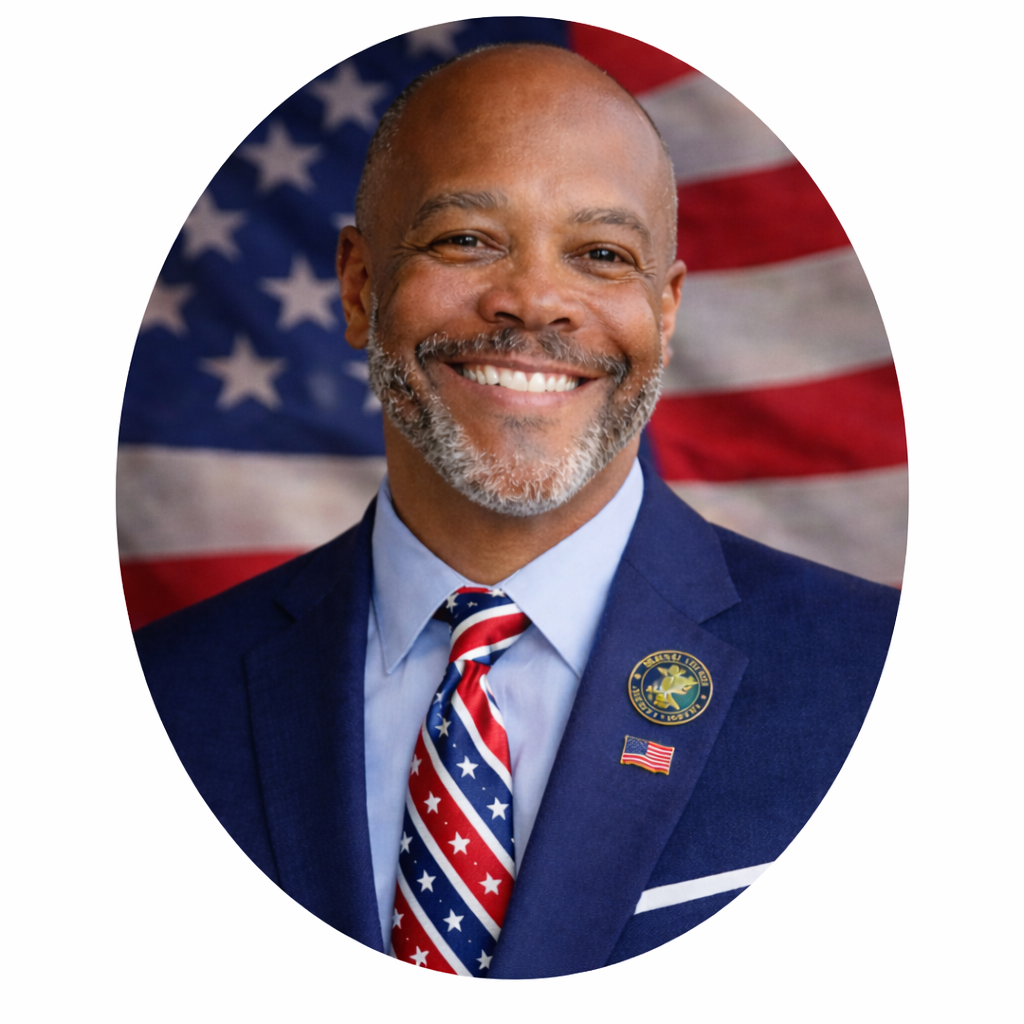
Article by
Willie Daniel
Willie Daniel is the Founder and Chief Executive Officer (CEO) of Global Vets Consulting (GVC) – National Veterans Disability Services, a veteran-led educational and medical evidence support organization dedicated to helping veterans better understand VA disability rating increases, DBQ medical evidence, secondary claims education, and C&P examination preparation.
He is a retired U.S. Army Medical Service Corps Officer with more than 27 years of honorable military service, a decorated Iraq combat veteran, and a retired federal official with the U.S. Department of Veterans Affairs. Throughout his military and federal career, Willie Daniel served in leadership, healthcare administration, operational, and veteran-support roles focused on improving services and support systems for servicemembers, veterans, and their families.
Drawing from decades of military leadership, healthcare administration, veteran advocacy, and federal government experience, Willie Daniel brings a practical, veteran-centered perspective to Global Vets Consulting’s educational articles, AI-powered veteran resources, video education initiatives, and outreach programs. His experience navigating military systems, medical documentation processes, and veteran-related administrative operations provides valuable insight into many of the challenges veterans face when seeking to better understand VA disability rating criteria, medical evidence, documentation strategies, and secondary condition education.
Through GVC’s “Veterans Helping Veterans” mission, his focus is on delivering clear, educational, and easy-to-understand information designed to empower veterans with knowledge, resources, and educational tools that may help them make more informed decisions regarding their individual VA disability journeys.
The information provided through GVC is intended for educational and informational purposes only and should not be considered legal or medical advice.
Disclaimer
Disclaimer: Global Vets Consulting, LLC (“GVC”) is a veteran-led educational and medical evidence support organization. GVC is not a law firm, is not a Veterans Service Organization (VSO), and is not affiliated with the U.S. Department of Veterans Affairs (VA) or any government agency.
Global Vets Consulting does not provide legal advice, medical advice, medical treatment, or healthcare services. GVC does not prepare, file, or submit VA disability claims on behalf of veterans. All information provided through this website, blog articles, videos, educational materials, AI tools, dashboards, templates, and communications is intended solely for general educational and informational purposes.
Veterans are encouraged to consult with accredited representatives, licensed attorneys, qualified medical providers, or Veterans Service Organizations regarding their specific legal, medical, or VA-related matters. VA disability decisions, ratings, and outcomes are determined solely by the U.S. Department of Veterans Affairs based on applicable laws, regulations, medical evidence, and individual circumstances. Past results do not guarantee future outcomes.