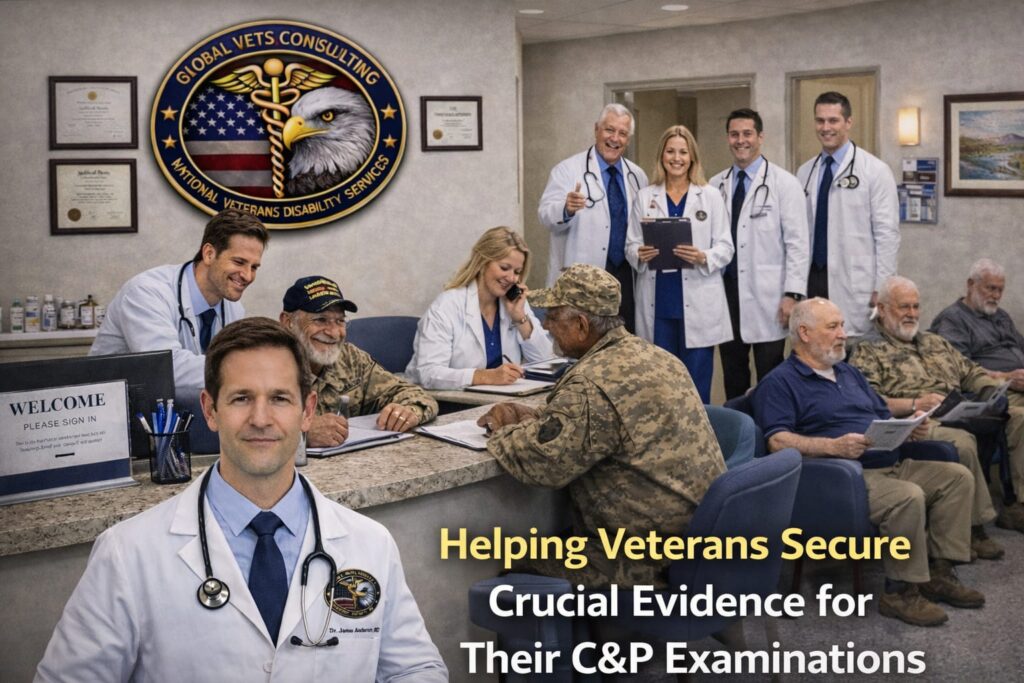

What if the difference between a 70% rating and a flat denial isn’t the severity of your symptoms, but the specific boxes checked on a single form? It’s a hard truth that many veterans face when they realize the VA rater may never actually meet them. Instead, that rater relies almost entirely on a Disability Benefits Questionnaire to translate your pain into a percentage. Understanding the role of dbq in va claims process is the most effective way to ensure your medical reality isn’t lost in translation during a rushed C&P exam. 🇺🇸
We know the anxiety of watching your claim stall in “Evidence Gathering” or worrying that a contracted doctor won’t capture your “worst days” accurately. You deserve a rating that reflects your sacrifices, not a lowball number based on incomplete paperwork. With the average claim processing time sitting at 78.6 days as of May 2026, the VA is moving faster than ever, but speed shouldn’t come at the expense of your accuracy or your peace of mind.
This guide empowers you to take control of your medical evidence by mastering the clinical language the VA requires. We’ll preview the latest 2026 regulatory shifts, explain how the Elizabeth Dole Act impacts your access to records, and show you how to leverage high-quality DBQs to secure your earned benefits. Let’s get your claim moving toward the result you deserve with clarity and confidence.
Key Takeaways
- Master the clinical language of the VA by understanding how the Disability Benefits Questionnaire serves as the vital link between your symptoms and a rater’s decision.
- Discover the specific role of dbq in va claims process and how certain keywords or severity markers can directly influence whether you receive a higher disability rating.
- Learn how submitting high-quality private medical evidence can turn your filing into a Fully Developed Claim, potentially shortening your wait time in the 2026 system.
- Reduce the anxiety of medical evaluations by ensuring your symptoms are accurately documented before you even step into a contracted C&P exam.
- Identify the strategic steps to recover from a claim denial by using detailed DBQs to provide the “new and relevant” evidence required for a successful Supplemental Claim.
What is a DBQ and Why is it the Backbone of Your VA Claim?
A Disability Benefits Questionnaire (DBQ) is a standardized medical form developed by the VA to streamline the evaluation of service-connected conditions. It’s the high-stakes medical evidence tool used by VA Raters to assign disability percentages based on the severity of your diagnosis. 🇺🇸
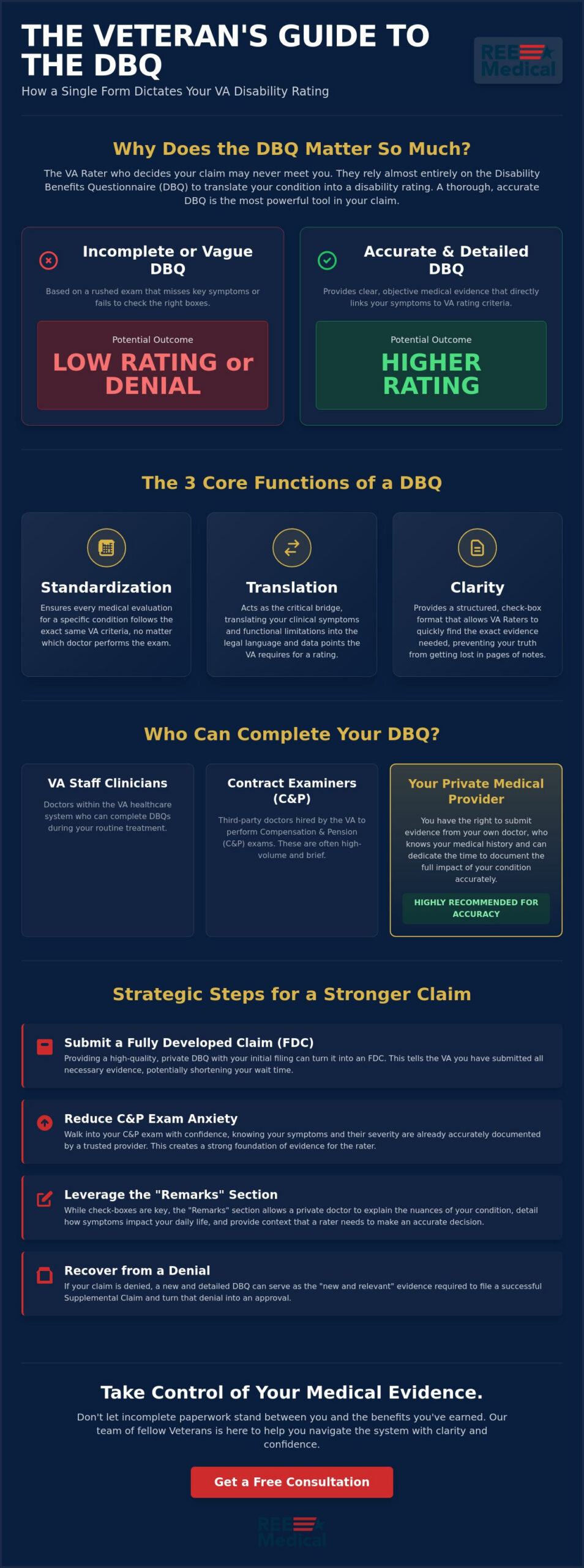
The role of dbq in va claims process is centered on three core functions:
- Standardization: It ensures that every medical evaluation follows the same criteria for a specific condition regardless of which doctor performs the exam.
- Translation: It acts as the bridge between your clinical symptoms and the VA’s legal rating requirements.
- Administrative Clarity: It provides a structured snapshot that translates physical or mental limitations into the specific data points required by law.
The Shift from Narrative Records to Standardized Forms
The VA moved away from long-form doctor notes to check-box DBQs to speed up decision-making. This shift allows the Veterans Benefits Administration (VBA) to process claims at a record-breaking pace. Standardizing the data helps avoid confusion and ensures:
- Raters find exact data points like range of motion or frequency of episodes without sifting through pages of narrative text.
- Your medical truth isn’t buried in hundreds of pages of handwritten notes that might be difficult to interpret.
- You understand what is a dbq and why this rater-friendly format is vital for your claim’s speed and accuracy.
Who Can Legally Complete a DBQ?
You have options when it’s time to document your condition. These forms can be legally completed by:
- VA Staff Clinicians: Doctors within the VA healthcare system can complete these during your routine treatment.
- Contract Examiners: Third-party clinicians from organizations like QTC, VES, or LHI handle these during Compensation and Pension (C&P) exams.
- Private Medical Providers: You have the right to use private doctors to ensure a thorough review of your medical history and current symptoms.
The role of dbq in va claims process becomes even more critical when you choose a private provider who can spend the necessary time documenting the full extent of your disability. This thoroughness often provides a more accurate medical picture than a high-volume contract exam.
How the DBQ Dictates Your VA Disability Rating
Every DBQ is meticulously designed to correspond with a specific section of the VA Schedule for Rating Disabilities (VASRD). When a rater reviews your file, they aren’t looking for a story; they’re looking for specific severity markers and keywords that justify a specific percentage. A single missed check-box on a 10-page form can be the difference between a 30% and a 70% rating for certain conditions. This is where the role of dbq in va claims process becomes undeniable. It provides the objective evidence required to satisfy the VA’s legal standards for service connection and functional impairment, especially since the VA is maintaining a 94% accuracy rate in 2026. 🇺🇸
Translating Symptoms into Percentages
Most veterans feel the weight of their symptoms daily, but the VA requires those feelings to be translated into the “General Rating Formula.” For instance, a dbq for mental health conditions focuses heavily on social and occupational impairment rather than just a diagnosis. Subjective reports of pain or distress must be documented as objective functional loss to count toward your final rating. If you want to understand where your claim stands after submission, reviewing the official VA claim process steps can help you track your progress through the rater’s desk.
The Importance of the ‘Remarks’ Section
While check-boxes are vital, the “Remarks” section at the end of the form is where the nuances of your medical truth live. A private doctor can use this space to explain how your symptoms interact or why a specific test result doesn’t tell the whole story. Generic C&P exams often leave this section blank because the examiners are under tight time constraints. The role of dbq in va claims process is significantly strengthened when this section provides a professional, detailed narrative of your disability. If you need help understanding these forms, reaching out for specialized medical evidence education can make a significant difference in your outcome.
Strategic Advantages of Private DBQs in the Claims Process
Filing a VA disability claim doesn’t have to mean waiting months for the system to find your medical records. Submitting your own medical evidence gives you a tactical edge by putting you in control of the documentation. 🇺🇸
Key strategic benefits include:
- The FDC Advantage: Filing a “Fully Developed Claim” bypasses the VA’s manual search for records, often resulting in decisions in under 30 days.
- Proven Worsening: Use a dbq for va disability rating increase to show exactly how your symptoms have progressed since your last evaluation.
- Accuracy and Time: Private providers often spend significantly more time documenting your symptoms than the typical 15-20 minutes allotted for a contract C&P exam.
Private DBQ vs. VA C&P Exam: A Comparison
The role of dbq in va claims process is to ensure your medical truth is documented with clinical precision. Choosing a private provider offers several advantages:
- Provider Familiarity: Your doctor understands your long-term medical history rather than just a single snapshot during a rushed exam.
- Legal Sufficiency: Forms must be “competent, credible, and probative” to ensure they are accepted as valid evidence by the VA Rater.
- Reduced Anxiety: Walking into a medical evaluation with your evidence already professionally documented lowers stress during the medical evaluation phase.
Winning the ‘Evidence Gathering’ Phase
Claims often stall when the VA waits for external records. Private documentation ensures your file is “Actionable and Sufficient” the moment it hits the rater’s desk. This proactive approach prevents your claim from sitting in the backlog for months. 🌎
Mastering the role of dbq in va claims process is the fastest way to secure your earned benefits. If you need assistance navigating these forms, reach out for expert medical evidence education today. Our 24/7 National Client Services Hotline is standing by. Worldwide. 🇺🇸
What to Do if Your Claim is Denied Despite Having a DBQ
Receiving a denial letter is a gut-punch, especially when you’ve already submitted clinical documentation. Understanding why a va claim denied for lack of evidence happens is the first step toward a successful appeal. Sometimes the rater determines the form is “insufficient for rating purposes” or finds that it lacks a clear link to your service history. In these cases, the role of dbq in va claims process shifts from an initial evidence tool to a corrective one. You have options to fix the record. 🇺🇸
If your evidence was missing a specific detail, the Supplemental Claim route allows you to submit “New and Relevant” evidence, such as a more comprehensive private DBQ. If you believe the rater simply overlooked the evidence already in your file, a Higher-Level Review (HLR) is the better path. During an HLR, a senior rater reviews the existing evidence without considering new documents. For secondary conditions, remember that a Nexus Letter works in tandem with your DBQ to prove the legal requirement of service connection. Together, they provide the “how” and “why” behind your diagnosis.
Correcting Errors in Your Medical Documentation
Small mistakes often lead to big delays. Review your DBQ for missing signatures, incomplete fields, or internal contradictions. For instance, if your doctor checks a box for “severe” symptoms but describes them as “mild” in the remarks, the VA may discount the entire form. It’s also vital to ensure your personal Statement in Support of Claim (VA Form 21-4138) matches the clinical findings in your DBQ. Consistency across your file is the key to building trust with the rater.
Planning for a Rating Increase
If your condition has worsened since your last rating, you don’t have to wait for the VA to notice. You can file for an increase by submitting new medical evidence that reflects your current level of severity. Leveraging the va disability claims process step by step ensures you stay ahead of the VA’s strict deadlines and procedural requirements. By understanding the role of dbq in va claims process, you can turn a denial into a roadmap for securing the benefits you earned through service.
Take Charge of Your VA Rating Journey
The role of dbq in va claims process is definitive; it is the map that guides a rater toward your accurate disability percentage. By taking a proactive stance on your medical evidence, you eliminate the guesswork and ensure your service-connected symptoms are never “lost in translation.” You’ve earned these benefits through your service, and meticulous documentation is the final step in securing the rating you deserve. 🇺🇸
At Global Vets Consulting, we are a veteran-owned and operated business that has specialized in meticulous DBQ preparation since 2021. We provide the technical accuracy and clinical language needed to speed up your claim and reduce the stress of the medical evaluation phase. Whether you’re filing for a rating increase or navigating a complex appeal, we stand ready as your mission-driven partner to ensure your medical truth is heard.
Secure the documentation your claim deserves at Global Vets Consulting. Our team is available round-the-clock via our 24/7 National Client Services Hotline 📞 or through our 24/7 AI Veteran Intake Specialist. We’re here to assist you whenever and wherever the mission takes you.
Worldwide. 🇺🇸
Frequently Asked Questions
How long does a DBQ remain valid for a VA claim in 2026?
Generally, a DBQ is considered current and valid if it was completed within one year of your claim submission. VA raters prioritize the most recent medical evidence to ensure your rating reflects your current level of functional impairment. If your form is older than twelve months, the VA will likely defer the decision or schedule a new exam to capture a more up-to-date medical snapshot of your condition.
Can my private doctor refuse to fill out a VA DBQ for me?
Yes, private physicians are not legally obligated to complete VA-specific paperwork for their patients. Some doctors feel they lack the administrative time or the specific training required to navigate the complex criteria found in the VA Schedule for Rating Disabilities. If your primary provider declines, you can seek assistance from specialists who understand the role of dbq in va claims process and how to document symptoms precisely.
Will the VA always schedule a C&P exam if I submit a private DBQ?
Not necessarily, but the VA reserves the right to order a C&P exam if they determine your private evidence is insufficient or contradictory. While a high-quality private form can sometimes allow a rater to make a decision without further testing, you must never skip a scheduled VA appointment. Skipping an exam often leads to an immediate denial, regardless of how thorough your private medical documentation might be.
What is the difference between a DBQ and a Nexus Letter?
A DBQ focuses on the severity of your symptoms to determine a rating percentage, while a Nexus Letter establishes the legal link between your condition and your military service. Think of the DBQ as the “what” and the Nexus Letter as the “why.” You need the DBQ to show how much you are impaired, but for secondary conditions, the Nexus Letter is vital to prove service connection.
How much does it cost to get a private DBQ completed?
Costs for private medical evidence vary based on the complexity of the condition and the provider’s level of expertise. It’s important to remember that the VA does not reimburse veterans for the cost of private DBQs. However, many veterans find the investment worthwhile to ensure the role of dbq in va claims process is handled with the meticulous detail required to secure a rating that accurately reflects their symptoms.

Article by
Willie Daniel
Willie Daniel is the Founder and Chief Executive Officer (CEO) of Global Vets Consulting (GVC) – National Veterans Disability Services, a veteran-led educational and medical evidence support organization dedicated to helping veterans better understand VA disability rating increases, DBQ medical evidence, secondary claims education, and C&P examination preparation.
He is a retired U.S. Army Medical Service Corps Officer with more than 27 years of honorable military service, a decorated Iraq combat veteran, and a retired federal official with the U.S. Department of Veterans Affairs. Throughout his military and federal career, Willie Daniel served in leadership, healthcare administration, operational, and veteran-support roles focused on improving services and support systems for servicemembers, veterans, and their families.
Drawing from decades of military leadership, healthcare administration, veteran advocacy, and federal government experience, Willie Daniel brings a practical, veteran-centered perspective to Global Vets Consulting’s educational articles, AI-powered veteran resources, video education initiatives, and outreach programs. His experience navigating military systems, medical documentation processes, and veteran-related administrative operations provides valuable insight into many of the challenges veterans face when seeking to better understand VA disability rating criteria, medical evidence, documentation strategies, and secondary condition education.
Through GVC’s “Veterans Helping Veterans” mission, his focus is on delivering clear, educational, and easy-to-understand information designed to empower veterans with knowledge, resources, and educational tools that may help them make more informed decisions regarding their individual VA disability journeys.
The information provided through GVC is intended for educational and informational purposes only and should not be considered legal or medical advice.
Disclaimer
Disclaimer: Global Vets Consulting, LLC (“GVC”) is a veteran-led educational and medical evidence support organization. GVC is not a law firm, is not a Veterans Service Organization (VSO), and is not affiliated with the U.S. Department of Veterans Affairs (VA) or any government agency.
Global Vets Consulting does not provide legal advice, medical advice, medical treatment, or healthcare services. GVC does not prepare, file, or submit VA disability claims on behalf of veterans. All information provided through this website, blog articles, videos, educational materials, AI tools, dashboards, templates, and communications is intended solely for general educational and informational purposes.
Veterans are encouraged to consult with accredited representatives, licensed attorneys, qualified medical providers, or Veterans Service Organizations regarding their specific legal, medical, or VA-related matters. VA disability decisions, ratings, and outcomes are determined solely by the U.S. Department of Veterans Affairs based on applicable laws, regulations, medical evidence, and individual circumstances. Past results do not guarantee future outcomes.