
The C&P examination can shape how the VA understands a skin condition’s severity and connection to service. For veterans seeking VA disability ratings for skin disorders, the General Rating Formula for the Skin may provide ratings of 0%, 10%, 30%, or 60%, depending on affected skin and treatment, according to the Office of the Federal Register, National Archives and Records Administration. A service-connection claim also needs evidence of a current condition, an in-service event or exposure, and a link between them.
If the process feels difficult to piece together, that’s understandable: symptoms can fluctuate, and an examination may not capture how a flare affects daily life. This guide to VA claims for skin conditions explains how the VA evaluates common conditions, which rating criteria matter, and how medical records, a Disability Benefits Questionnaire (DBQ), and C&P examination preparation can support your claim. You’ll also learn what evidence may help connect a skin condition to service, so you can approach each part of the process with a clearer understanding of what matters.
Key Takeaways
- Find out which Agent Orange-related skin conditions may qualify for presumptive service connection and the timing rule that can apply.
- Learn how active melanoma treatment may affect a rating, and why the status of skin cancer matters to the evaluation.
- Understand how affected skin area and systemic treatment can shape ratings for conditions such as acne, vitiligo, and fungal infections.
- See what evidence can clarify psoriasis symptoms, acne severity, and scar effects when your condition is assessed.
Are Skin Conditions Eligible for VA Disability?
Yes, a skin condition may qualify when evidence supports a service connection, including a qualifying toxic exposure or an in-service event. Burn pits, Agent Orange, and other exposures can matter, but presumptive eligibility depends on the specific condition and service circumstances.
VA Skin-Condition Rating Criteria
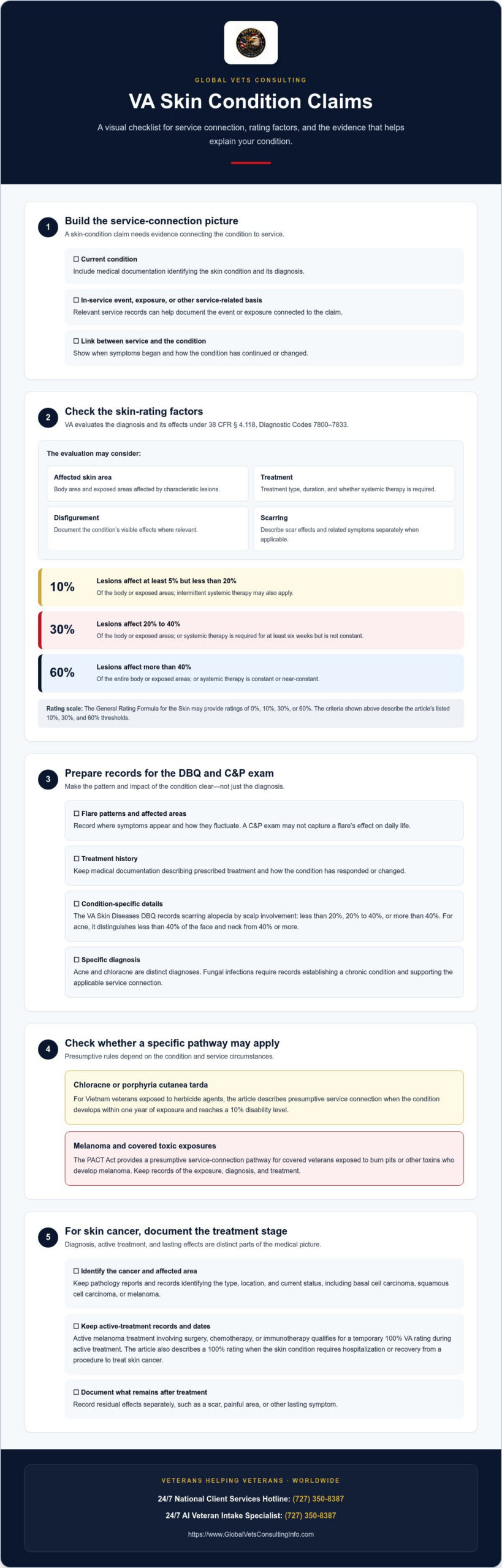
VA evaluates skin conditions under 38 CFR § 4.118, Diagnostic Codes 7800-7833, considering the diagnosis and its effects. The rating can turn on affected skin area, treatment, disfigurement, or scarring, so a psoriasis diagnosis alone does not describe the full disability picture.
For example, VA identifies psoriasis under Diagnostic Code 7816, acne under Diagnostic Code 7828, and scars under Diagnostic Codes 7800-7805. Records that describe flare patterns, affected areas, and treatment give a clearer account of how the condition affects you.
Skin-Condition Disability Claims
A skin-condition disability claim should connect a current medical diagnosis with an in-service event, exposure, or other service-related basis. Include relevant service records and medical documentation showing the diagnosis, when symptoms began, and how the condition has continued or changed.
For Vietnam veterans exposed to herbicide agents, the U.S. Department of Veterans Affairs identifies presumptive service connection for chloracne or porphyria cutanea tarda when the condition develops within one year of exposure and reaches a 10 percent disability level. This timing and severity rule is specific to those conditions.
For covered veterans exposed to burn pits or other toxins, melanoma has a presumptive service-connection pathway under the PACT Act. Documentation of the exposure and melanoma diagnosis can help explain why that pathway may apply.
Infections, Acne, Chloracne, and Hair Loss
Skin infections, including fungal disorders affecting the skin or nails, may be considered when medical records establish a chronic condition and its relationship to service. An infection is not automatically presumptive because it followed an exposure; the evidence must support the applicable service connection.
Acne and chloracne are distinct diagnoses for VA evaluation. Chloracne has Agent Orange presumptive rules, while acne ratings consider how the condition presents and which areas it affects. A diagnosis should specify which condition is present rather than relying only on a general description of breakouts.
Hair loss also needs precise documentation. The VA Skin Diseases Disability Benefits Questionnaire records scarring alopecia by scalp involvement: less than 20%, 20% to 40%, or more than 40%. Those details help distinguish the extent of the condition from a general report of hair loss.
Skin cancer, melanoma, and carcinoma ratings
VA skin cancer evaluations begin with the diagnosed type and its current status. Skin cancer can include basal cell carcinoma, squamous cell carcinoma, or melanoma. Keep pathology reports and medical records identifying the cancer, where it appears, and whether it remains active. These details distinguish the diagnosis from other skin conditions, such as dermatitis, and provide context about treatment and residual effects.
Diagnostic Codes 7818 and 7833 address skin cancer and melanoma. The rating depends on the condition and its effects, including whether treatment is active or recovery is underway. A 100% rating applies when the skin condition requires hospitalization or recovery from a procedure to treat skin cancer. Records showing the treatment, procedure, and recovery period help establish which stage of care is being evaluated.
Active melanoma treatment involving surgery, chemotherapy, or immunotherapy qualifies for a temporary 100% VA rating during active treatment. Keep records that identify the treatment and dates it was provided, then document the condition after treatment ends. This distinction matters because active cancer care and lasting effects are different parts of the medical picture. A scar, painful area, or other residual symptom may need clear documentation apart from the cancer treatment itself.
For veterans connecting skin cancer to service, evidence should identify the diagnosis and explain the relevant service exposure or event. The PACT Act established a presumptive service-connection pathway for covered veterans exposed to burn pits or other toxins who develop melanoma. Records describing a chemical exposure, melanoma diagnosis, and treatment can help show how these details relate. Be specific: note the affected area, symptoms, and lasting effects rather than grouping cancer with unrelated skin infections or psoriasis.
Ratings for acne, vitiligo, and fungal infections
VA evaluates many skin conditions by lesion coverage and treatment history. Under VA’s General Rating Formula for the Skin, a 10 percent rating may apply when characteristic lesions affect at least 5 percent but less than 20 percent of the body or exposed areas, or intermittent systemic therapy is required, according to the Office of the Federal Register, National Archives and Records Administration. A 30 percent rating may apply when lesions affect 20-40 percent of the body or exposed areas, or systemic therapy is required for at least six weeks but is not constant, according to the same organization. A 60 percent rating may apply when lesions affect more than 40 percent of the entire body or exposed areas, or systemic therapy is constant or near-constant, according to the same organization.
For acne and fungal infections, document the diagnosis, affected areas, and prescribed treatment. The VA Skin Diseases Disability Benefits Questionnaire distinguishes acne affecting less than 40% of the face and neck from acne affecting 40% or more. Fungal disorders involving skin or nails also require evidence of the diagnosed condition and its severity. Record recurrences and treatment rather than describing symptoms only as irritation.
Vitiligo affecting exposed areas qualifies for a 10% rating under the VA criteria. Porphyria cutanea tarda ratings also consider lesion coverage: 10% for 5-20% of the body or exposed areas, 30% for 20-40%, and 60% for more than 40%. Its documented lesions and any systemic therapy over the past 12 months help establish the relevant criteria.
For chronic urticaria, the VA questionnaire asks whether symptoms occurred at least twice a week for six weeks or more after a break in treatment. Solar keratosis documentation should identify the diagnosis, lesion locations, and treatment history so the condition can be assessed under the applicable skin criteria.
Systemic therapy matters separately from topical treatment. As of August 13, 2018, medications applied to the skin are not considered systemic for VA purposes. Keep medication records that show the type and duration of therapy. Scars may receive ratings from 0 to 80 percent depending on the criteria, including painful or unstable scarring and disfigurement of the head, face, or neck.
How does the VA rate psoriasis, acne, and scars?
VA evaluates psoriasis under Diagnostic Code 7816 and acne under Diagnostic Code 7828. Psoriasis ratings include 0%, 10%, 30%, 60%, and 100%; the criteria depend on severity and treatment. For these skin conditions, document each diagnosis, where symptoms appear, and how flare-ups affect you.
Scars are rated separately under 38 CFR § 4.118, Diagnostic Codes 7800-7805. Under Diagnostic Code 7800, scars or disfigurement of the head, face, or neck may be rated at 10%, 30%, 50%, or 80%. VA considers characteristics such as scar length and effects on facial features. A scar measuring 5 or more inches is one characteristic of disfigurement.
For painful or unstable scars, Diagnostic Code 7804 provides ratings of 10%, 20%, or 30%. One or two scars qualify for a 10% rating under its criteria, while five or more qualify for 30%. An unstable scar involves frequent loss of skin covering; VA may add 10% when more than one scar is considered unstable. Describe pain, skin breakdown, and location in medical records.
Other scars, including linear scars, may be evaluated under Diagnostic Code 7805 based on disabling effects. For deep scars with underlying soft tissue damage, coverage of 6-11.99 in² qualifies for a 10% rating. Skin disabilities that fluctuate between flare-ups and remission are evaluated during an active flare-up to assess their nature. Keep dated photographs and treatment notes documenting changes and functional effects. To organize evidence for a skin-condition rating, prepare your rating evidence with clear records of diagnoses, symptoms, and scar effects.
Global Vets Consulting (GVC4Vets): Disability Benefits Questionnaires (DBQ)
Global Vets Consulting (GVC4Vets) helps veterans organize skin-condition claim evidence through Disability Benefits Questionnaires (DBQ) and Independent Medical Evidence Education. A DBQ can document condition severity and functional effects; it complements medical records rather than replacing them. If your records don’t clearly describe flare-ups, affected areas, treatment, or scarring, these resources can help you understand what evidence is relevant.
GVC4Vets also offers C&P Examination Preparation Education and Secondary VA Claims Education. These may be useful when preparing to explain symptoms during an examination or considering how another condition relates to a service-connected skin disorder. The focus is educational support for your claim evidence, not medical treatment or legal representation.
For veteran-to-veteran support, contact the 24/7 National Client Services Hotline or 24/7 AI Veteran Intake Specialist at (727) 350-8387, or visit Global Vets Consulting.
Take Your Next Step With Clearer Evidence
Preparing a skin-disorder claim starts with a record that reflects your condition over time. Keep your diagnosis, treatment history, symptom changes, and effects on daily activities organized together. This gives you a practical reference when preparing for an examination or reviewing whether your evidence accurately describes the condition. If symptoms change, update your notes and medical records so your account reflects your current experience.
Global Vets Consulting (GVC4Vets) can help you understand how claim documentation fits into the process. Your individual circumstances determine how the VA evaluates the evidence, so focus on making your records clear and specific. For support, contact the 24/7 National Client Services Hotline or the 24/7 AI Veteran Intake Specialist at (727) 350-8387, or contact Global Vets Consulting.
Steady preparation can help you approach the next stage with greater clarity and confidence.
Frequently Asked Questions
How Do I Prove Service Connection for a Skin Condition?
Connect your current diagnosis with a relevant event, exposure, or symptoms during service using consistent records. For example, organize service documents, medical notes, and a personal timeline showing when symptoms began and how they changed. If a clinician has explained how your condition relates to service, include that medical evidence. Clear dates and consistent details can help the VA understand the connection you’re describing.
What Are Common Skin Conditions Among Veterans?
Veterans may develop conditions such as eczema, dermatitis, urticaria, vasculitis, tinea pedis, and lichen simplex chronicus. Skin and nail fungal disorders, stasis dermatitis, and Leishmaniasis are also considered in VA skin evaluations. A condition’s name alone doesn’t establish service connection. Keep records identifying the diagnosis and describing symptoms, affected areas, and how the condition changes over time.
How Does VA Rate Scars?
VA evaluates scars based on features such as location, pain, instability, and effects on function. For instance, if a scar limits movement, records should describe the affected activity; a facial scar calls for clear documentation of its location and appearance. Include examination notes and photographs when available. Specific descriptions help distinguish a scar’s visible characteristics from its practical effects.
How Is Chloracne Evaluated?
Chloracne ratings depend on whether acne is superficial or deep, where it appears, and how much of the face and neck it affects. Superficial chloracne of any extent is rated 0%. Deep acne affecting less than 40% of the face and neck, or other non-intertriginous areas, is rated 10%; deep acne in intertriginous areas is rated 20%, and involvement of 40% or more of the face and neck is rated 30%.
What skin conditions qualify for VA disability benefits?
Skin conditions may qualify when evidence supports a service connection and documents a current diagnosis. Examples include psoriasis, eczema, dermatitis, acne, scars, skin cancer, urticaria, vasculitis, and fungal disorders affecting the skin or nails. Certain exposure-related conditions, including chloracne, may have presumptive pathways. The relevant evidence depends on the diagnosis, service history, and applicable exposure rules, so identify the specific condition in your records.
How does the VA rate skin disorders under the disability rating schedule?
VA uses condition-specific criteria that may consider affected body or exposed areas, treatment, scarring, and functional effects. Different diagnoses affecting separate areas may receive separate evaluations. For example, a veteran with psoriasis and a distinct skin cancer residual may need evidence describing each diagnosis and its effects separately. Keep medication history and examination records organized by condition so the evidence clearly shows what each evaluation addresses.

Article by
Willie Daniel
Willie Daniel is the Founder and Chief Executive Officer (CEO) of Global Vets Consulting (GVC4Vets) – National Veterans Disability Services, a veteran-led educational and medical evidence support organization dedicated to helping veterans better understand VA disability rating increases, DBQ medical evidence, secondary claims education, and C&P examination preparation.
He is a retired U.S. Army Medical Service Corps Officer with more than 27 years of honorable military service, a decorated Iraq combat veteran, and a retired federal official with the U.S. Department of Veterans Affairs. Throughout his military and federal career, Willie Daniel served in leadership, healthcare administration, operational, and veteran-support roles focused on improving services and support systems for servicemembers, veterans, and their families.
Drawing from decades of military leadership, healthcare administration, veteran advocacy, and federal government experience, Willie Daniel brings a practical, veteran-centered perspective to Global Vets Consulting’s educational articles, AI-powered veteran resources, video education initiatives, and outreach programs. His experience navigating military systems, medical documentation processes, and veteran-related administrative operations provides valuable insight into many of the challenges veterans face when seeking to better understand VA disability rating criteria, medical evidence, documentation strategies, and secondary condition education.
Through GVC’s “Veterans Helping Veterans” mission, his focus is on delivering clear, educational, and easy-to-understand information designed to empower veterans with knowledge, resources, and educational tools that may help them make more informed decisions regarding their individual VA disability journeys.
The information provided through GVC is intended for educational and informational purposes only and should not be considered legal or medical advice.
Disclaimer
Disclaimer: Global Vets Consulting, LLC (“GVC”) is a veteran-led educational and medical evidence support organization. GVC is not a law firm, is not a Veterans Service Organization (VSO), and is not affiliated with the U.S. Department of Veterans Affairs (VA) or any government agency.
Global Vets Consulting does not provide legal advice, medical advice, medical treatment, or healthcare services. GVC does not prepare, file, or submit VA disability claims on behalf of veterans. All information provided through this website, blog articles, videos, educational materials, AI tools, dashboards, templates, and communications is intended solely for general educational and informational purposes.
Veterans are encouraged to consult with accredited representatives, licensed attorneys, qualified medical providers, or Veterans Service Organizations regarding their specific legal, medical, or VA-related matters. VA disability decisions, ratings, and outcomes are determined solely by the U.S. Department of Veterans Affairs based on applicable laws, regulations, medical evidence, and individual circumstances. Past results do not guarantee future outcomes.