

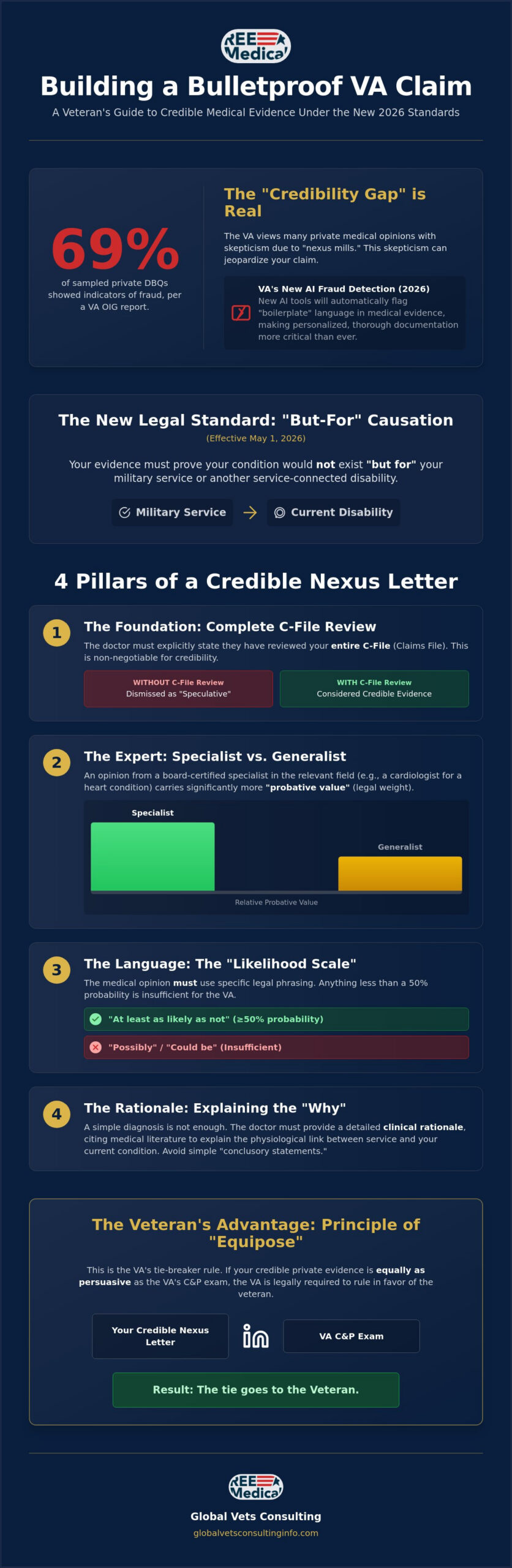
Did you know a VA Office of Inspector General report found that 69% of sampled private DBQs contained indicators of fraud? This statistic is the driving force behind the VA’s new AI-powered fraud detection tools launching in 2026 to flag boilerplate language. If you’re concerned about the credibility of private doctor nexus letters, you have every right to be. It’s incredibly frustrating to feel like your medical evidence is being treated as a “pay-to-play” scheme rather than a legitimate record of your service-connected disabilities. 🇺🇸
We understand the anxiety that comes with a biased C&P exam and the fear of your claim being denied because of a “nexus mill” stigma. You’ve earned your benefits, and your documentation should reflect the truth of your sacrifice. We’ll show you how to ensure your evidence carries maximum weight by meeting the strict “but-for” causation standards implemented on May 1, 2026. This guide covers the essential clinical reasoning and record-review protocols needed to provide you with peace of mind and a bulletproof path to a successful rating increase.
Key Takeaways
- Understand the “Credibility Gap” and why a comprehensive review of your entire C-File is the foundation for any successful private medical opinion.
- Master the “Likelihood Scale” to ensure the credibility of private doctor nexus letters meets the “at least as likely as not” legal standard required for service connection.
- Learn how the legal principle of “Equipose” acts as a tie-breaker, requiring the VA to side with the veteran when private evidence and C&P exams are equally persuasive.
- Discover how standardized Disability Benefits Questionnaires (DBQs) and medical evidence education provide the precise data points VA raters need to support a rating increase.
What Makes a Private Doctor Nexus Letter Credible to the VA? 🇺🇸
A nexus letter is competent medical evidence that establishes a link between a current disability and an in-service event. While any licensed physician can technically sign one, the credibility of private doctor nexus letters is under more intense scrutiny than ever before. Since May 1, 2026, the Veterans Benefits Administration (VBA) has applied a stricter “but-for” causation standard. This means your doctor must prove your condition would not exist “but for” your military service or a primary service-connected disability.
The “Credibility Gap” exists because the VA often views private evidence with skepticism compared to their own C&P exams. This skepticism isn’t just a feeling; a 2024 VA Office of Inspector General report found that 69% of sampled private DBQs showed indicators of fraud. To combat this, the VA now uses AI-powered tools to flag boilerplate language. To bridge this gap, your medical evidence must be personalized and based on a deep dive into your history. A doctor who hasn’t reviewed your entire C-File (Claims File) has zero credibility in the eyes of a rater. Without that review, the VA will likely dismiss the opinion as “speculative” or “conclusory.”
The Legal Standard: Competent Medical Evidence
The VA distinguishes between “lay evidence,” which is what you or your buddies observe, and “competent medical evidence.” Competence is determined by the provider’s expertise. In 2026, a specialist’s opinion almost always outweighs a general practitioner’s note. For example, a nexus letter for a neurological condition carries significantly more weight when written by a board-certified neurologist rather than a family doctor. This level of detail is a core part of the VA Disability Claims Process Step by Step: A 2026 Veteran’s Guide. You need a provider who understands the specific terminology and legal thresholds required to move the needle on your claim.
- Specialization: Specialists provide high probative value because they possess advanced training in the specific body system involved.
- Record Review: The letter must explicitly state that the doctor reviewed your service treatment records and post-service medical history.
- Clinical Rationale: The doctor must explain the “why” using current medical literature and the new “but-for” standard.
Factors That Determine the Probative Value of Your Evidence
Probative value is the legal weight a VA rater assigns to your documentation. To ensure the credibility of private doctor nexus letters, your provider must move beyond a simple diagnosis. They need to provide a detailed medical rationale that explains the biological or physiological link between your service and your current health. The VA encourages submitting private medical records, but those records must speak the VA’s language. This starts with the “Likelihood Scale.” Your doctor must use the specific phrase “at least as likely as not,” which signals a 50% or greater probability of connection. Anything less, such as “possibly” or “could be,” is legally insufficient.
A credible opinion also requires a thorough review of your history. Your doctor should explicitly state: “I have reviewed the veteran’s entire Claims File (C-File), including all service treatment records and post-service medical records.” Without this specific statement, the VA may argue the doctor lacked the full context of your military history. To bolster this, we often suggest Independent Medical Evidence Education to help you understand exactly which data points are missing from your current records before you submit your claim.
Specialist Credibility vs. Generalist Opinions
The VA assigns significantly more weight to specialists. A cardiologist is naturally more credible for a heart condition claim than a family practitioner. This same logic applies to neurological or psychological claims. If you are seeking a rating increase for PTSD or anxiety, utilizing a specialized DBQ for mental health conditions alongside a nexus letter from a psychiatrist provides a much stronger evidentiary foundation. Specialists understand the nuances of the “but-for” standard and can articulate the medical reasoning with higher precision.
Avoiding Conclusory Statements
A “conclusory” statement is a claim without supporting evidence. If a doctor writes “this condition is service-connected” without explaining the path from the service event to the diagnosis, it’s an automatic red flag. Your evidence must build a logical bridge. This involves referencing peer-reviewed medical journals or established VA case law to prove that the link is medically recognized. Evidence-based citations transform a subjective opinion into an objective medical fact that is much harder for a rater to ignore.
Private Nexus Letters vs. VA C&P Exams: Winning the Conflict
Winning the conflict between a private medical opinion and a VA Compensation and Pension (C&P) exam is a common hurdle for many veterans. This “Battle of the Experts” occurs when a VA examiner disagrees with the findings of your private doctor. Legally, the VA must provide a base-level of credibility to a private physician unless they can prove the opinion is factually flawed. This means a rater cannot simply ignore your evidence because it didn’t come from their own internal system. They must explain why one opinion is more persuasive than the other.
When the evidence on both sides is equally persuasive, a legal principle called “Equipose” or the “Benefit of the Doubt” rule comes into play. If your private letter and the C&P exam carry equal weight, the VA is legally required to side with the veteran. To reach this level of credibility of private doctor nexus letters, your documentation must be robust enough to stand toe-to-toe with the VA’s contracted examiners. This is why a detailed medical rationale is non-negotiable.
You might worry about the “nexus mill” stigma. VA raters are increasingly trained to look for boilerplate language and template-based content that lacks personal detail. You can overcome this by ensuring your doctor provides a unique, case-specific analysis of your symptoms. If you want to ensure you’re ready for this challenge, our C&P Examination Preparation Education helps you understand how to align your medical history with the requirements raters look for.
Rebutting a Negative C&P Exam
If you receive a negative C&P exam, don’t lose hope. A well-crafted private nexus letter acts as a powerful rebuttal. It can point out specific errors in the examiner’s logic, such as a failure to review your service treatment records or a misunderstanding of your MOS duties. This strategy is essential if your VA claim was denied for lack of evidence. Your private evidence provides the counter-argument necessary to challenge a flawed exam and get your claim back on track.
The Power of the Independent Medical Opinion (IMO)
An Independent Medical Opinion (IMO) is often more comprehensive than a standard nexus letter. While a letter might be short, an IMO is a detailed report that covers your entire history. It explicitly establishes the doctor-patient relationship and proves the provider spent significant time analyzing your specific medical journey. This depth makes it much harder for the VA to dismiss the findings as “speculative” or “conclusory.”
How Global Vets Consulting Enhances Your Claim’s Credibility 🌐
Global Vets Consulting operates with a “Veterans Helping Veterans” mission. We ensure the credibility of private doctor nexus letters by aligning them with precise, standardized DBQs. This approach provides the specific data points VA raters require to approve a fully developed claim (FDC). Our goal is to transform your medical history into a clear, compliant narrative that leaves no room for rater ambiguity.
We prioritize education to empower you throughout the VA disability claim process. Understanding how to use a DBQ for a VA disability rating increase in 2026 ensures your severity documentation matches your service-connection evidence. This comprehensive strategy protects your claim from being flagged by new AI screening tools.
Our 2026 Evidence Gathering Process
- Step 1: 24/7 Intake and C-File review education 📞. We help you identify missing evidence in your records.
- Step 2: Matching your condition to the correct DBQ format. We ensure clinical accuracy for every body system.
- Step 3: Meticulous documentation. We verify that every medical opinion meets the “but-for” legal standard.
Ready to Secure Your Benefits?
Our team is available round-the-clock to provide expert guidance and support for your rating increase. Use the contact points below for immediate assistance:
- 📞 24/7 National Client Services Hotline: 1-800-XXX-XXXX
- 🤖 24/7 AI Veteran Intake Specialist: Available via our web portal
- 🌐 Worldwide: GlobalVetsConsultingInfo.com
Take the first step toward a bulletproof claim today. We are ready to serve those who served. 🇺🇸
Secure Your Future with Evidence That Stands the Test
The landscape of VA disability claims is shifting, but your right to earned benefits remains constant. Ensuring the credibility of private doctor nexus letters is the most effective way to protect your claim against increased scrutiny. By focusing on meticulous record review and specialized medical rationale, you provide the rater with a clear, undeniable path to approval.
Global Vets Consulting is veteran-owned and operated. We stand as a mission-driven ally for those who served. We specialize in Fully Developed Claims (FDC) and provide the educational resources needed to ensure your medical evidence is bulletproof.
Ready to build a bulletproof claim? Contact Global Vets Consulting today!
Reach out now for immediate assistance:
- 📞 24/7 National Client Services Hotline: 1-800-XXX-XXXX
- 🤖 24/7 AI Veteran Intake Specialist: Support available anytime
- 🌐 Worldwide: GlobalVetsConsultingInfo.com
You’ve done the hard work of serving our country. Now let us help you secure the benefits you’ve earned. 🇺🇸
Frequently Asked Questions
Can the VA legally ignore a private doctor’s nexus letter?
The VA cannot legally disregard a private medical opinion; however, they can assign it low weight if the reasoning is insufficient. According to established legal standards, raters must evaluate the quality of the medical rationale rather than simply favoring a C&P examiner. If your private evidence is more thorough and better supported by your history, it must be considered as competent evidence in the decision-making process.
Do I need a nexus letter if I already have a DBQ?
A DBQ and a nexus letter serve two distinct functions in a VA disability claim. While a DBQ documents the severity of your symptoms to determine your rating percentage, a nexus letter provides the vital link proving your condition started or was aggravated by your service. Without a clear nexus, the VA may acknowledge your diagnosis but deny the claim for lack of service connection.
Why did the VA say my private nexus letter was ‘not probative’?
The term “not probative” usually means the VA found the medical reasoning insufficient to prove a connection. This often happens if the provider failed to explicitly state they reviewed your entire C-File or if they used speculative language. To maintain the credibility of private doctor nexus letters, the document must bridge the gap between your military history and your current diagnosis with evidence-based logic.
Is a nexus letter from a Nurse Practitioner (NP) as credible as one from an MD?
The VA accepts medical evidence from various licensed professionals, including NPs and PAs, but the level of specialization is often the deciding factor. For complex claims involving internal medicine or neurological issues, a board-certified specialist’s opinion may carry more weight. The rater evaluates the provider’s specific expertise and the depth of their clinical analysis to determine which medical opinion is most persuasive.
How much should a credible nexus letter cost in 2026?
The cost of a nexus letter varies significantly based on the complexity of your medical records and the level of specialization required. Some providers charge based on the volume of records they must review, while others offer tiered pricing for different types of conditions. It is important to remember that the VA does not measure the credibility of private doctor nexus letters by their price tag, but by the strength of the clinical rationale provided.
Article by
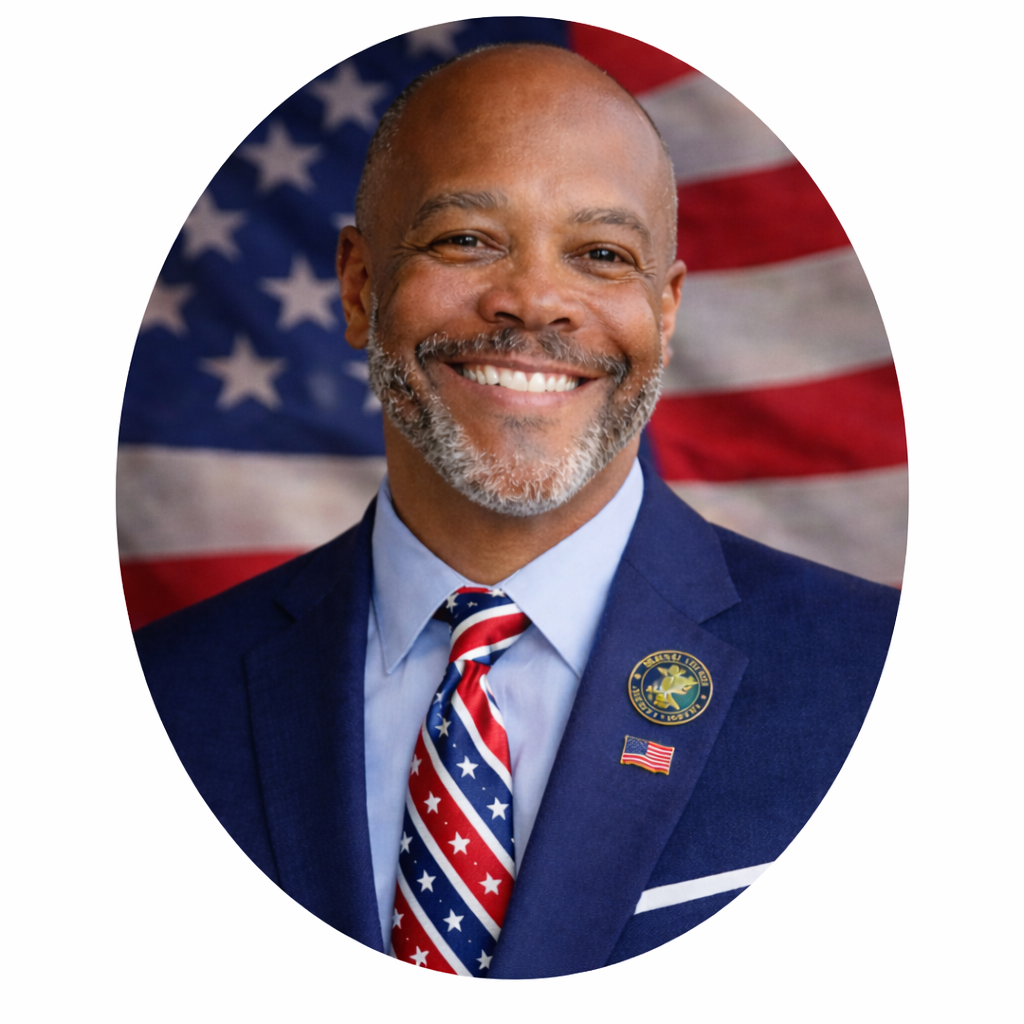
Willie Daniel
Willie Daniel is the Founder and Chief Executive Officer (CEO) of Global Vets Consulting (GVC) – National Veterans Disability Services, a veteran-led educational and medical evidence support organization dedicated to helping veterans better understand VA disability rating increases, DBQ medical evidence, secondary claims education, and C&P examination preparation.
He is a retired U.S. Army Medical Service Corps Officer with more than 27 years of honorable military service, a decorated Iraq combat veteran, and a retired federal official with the U.S. Department of Veterans Affairs. Throughout his military and federal career, Willie Daniel served in leadership, healthcare administration, operational, and veteran-support roles focused on improving services and support systems for servicemembers, veterans, and their families.
Drawing from decades of military leadership, healthcare administration, veteran advocacy, and federal government experience, Willie Daniel brings a practical, veteran-centered perspective to Global Vets Consulting’s educational articles, AI-powered veteran resources, video education initiatives, and outreach programs. His experience navigating military systems, medical documentation processes, and veteran-related administrative operations provides valuable insight into many of the challenges veterans face when seeking to better understand VA disability rating criteria, medical evidence, documentation strategies, and secondary condition education.
Through GVC’s “Veterans Helping Veterans” mission, his focus is on delivering clear, educational, and easy-to-understand information designed to empower veterans with knowledge, resources, and educational tools that may help them make more informed decisions regarding their individual VA disability journeys.
The information provided through GVC is intended for educational and informational purposes only and should not be considered legal or medical advice.
Disclaimer
Disclaimer: Global Vets Consulting, LLC (“GVC”) is a veteran-led educational and medical evidence support organization. GVC is not a law firm, is not a Veterans Service Organization (VSO), and is not affiliated with the U.S. Department of Veterans Affairs (VA) or any government agency.
Global Vets Consulting does not provide legal advice, medical advice, medical treatment, or healthcare services. GVC does not prepare, file, or submit VA disability claims on behalf of veterans. All information provided through this website, blog articles, videos, educational materials, AI tools, dashboards, templates, and communications is intended solely for general educational and informational purposes.
Veterans are encouraged to consult with accredited representatives, licensed attorneys, qualified medical providers, or Veterans Service Organizations regarding their specific legal, medical, or VA-related matters. VA disability decisions, ratings, and outcomes are determined solely by the U.S. Department of Veterans Affairs based on applicable laws, regulations, medical evidence, and individual circumstances. Past results do not guarantee future outcomes.

