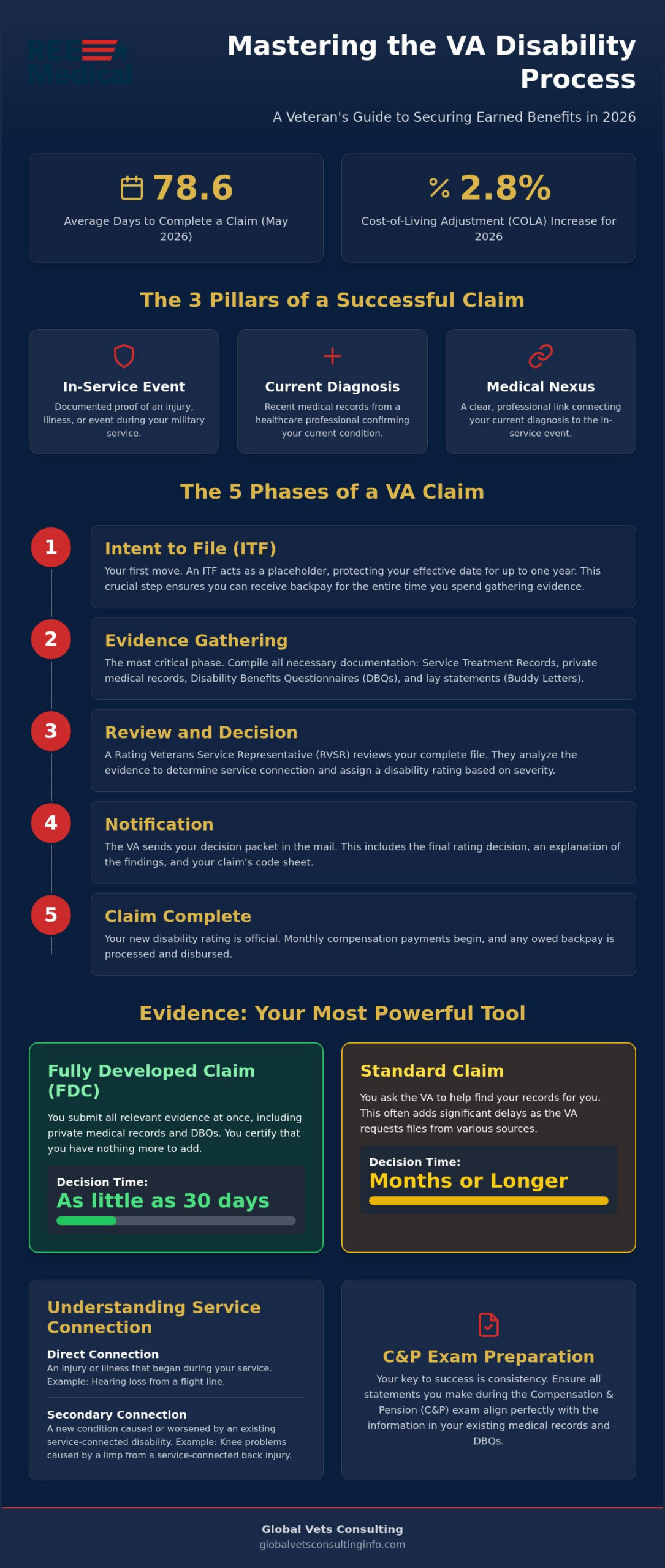
Did you know that as of May 2026, the average time to complete a claim has dropped to just 78.6 days? While the system is moving faster than in years past, the VA Disability Process still feels like a high-stakes maze for many veterans. You might be worried about navigating complex medical jargon or facing a C&P exam without the right documentation. It’s frustrating to feel like your financial security depends on a bureaucratic decision, especially with the 2.8% COLA increase for 2026 making every rating point more valuable than ever.
We’re here to help you turn that confusion into a clear, actionable strategy. This guide will show you how to master the claim system and secure the benefits you earned through high-quality medical evidence. You’ll learn exactly how to organize your documentation to pursue a higher disability rating and gain a full understanding of the five claim phases. We’ll also dive into how Disability Benefits Questionnaires (DBQs) can strengthen your case, giving you the peace of mind you deserve.
Key Takeaways
- Learn how to protect your effective date and maximize potential backpay by properly utilizing the Intent to File (ITF) phase.
- Discover why high-quality medical evidence and DBQs are more effective than relying solely on VA-contracted examiners to determine your rating.
- Master the VA Disability Process by navigating the five critical phases of a claim with organized documentation and clear milestones.
- Prepare for the C&P exam by ensuring your statements remain consistent with your existing medical records and DBQs.
- Understand how modern digital filing and the PACT Act have changed the timeline for securing your tax-free disability compensation.
Understanding the VA Disability Process in 2026 🇺🇸
The VA Disability Process is the administrative path to securing tax-free monthly compensation for injuries or illnesses tied to your time in uniform. While the Veterans Benefits Administration has modernized its approach, the core requirements remain strict. In 2026, the landscape is defined by the PACT Act and faster digital filing, but speed doesn’t replace the need for a solid strategy. You shouldn’t “shotgun” claims by filing for every ache and pain without proof. Instead, focus on the “Big Three” requirements:
- An in-service event: Documentation showing an injury or illness occurred during your service.
- A current diagnosis: Recent medical records proving you still suffer from the condition.
- A medical nexus: A clear link from a healthcare professional connecting your current diagnosis to your service.
Direct vs. Secondary Service Connection
Service connection is the bridge between your military service and your current health. Direct service connection covers injuries that happened during active duty, such as a hearing loss event on a flight line. Secondary connection is different; it involves conditions caused or aggravated by an existing disability. If your service-connected back pain leads to depression or a change in your gait that ruins your knees, those new issues are secondary. Identifying these links is a vital part of the VA Disability Process.
What Qualifies as Medical Evidence?
Your Service Treatment Records (STRs) act as the foundation of your claim. They provide the historical proof the VA needs to see. However, understanding VA disability claims means knowing that STRs are just the start. You can strengthen your case with lay statements, also known as Buddy Letters. These letters from family or fellow service members describe your symptoms in plain English, providing context that clinical notes often miss. Using both medical records and personal testimony creates a complete picture for the rater.
The 5 Phases of a VA Disability Claim: Step-by-Step 🌐
Understanding the timeline of your claim helps reduce the anxiety of waiting. While the official VA claim process steps include several internal administrative milestones, we focus on the five phases where you can take direct action. As of May 2026, the average time to complete a claim has dropped to 78.6 days, but your level of preparation determines whether you hit that mark or face lengthy delays. The VA Disability Process rewards those who are organized and proactive rather than those who wait for the system to ask for more information.
- Phase 1: Intent to File (ITF): This is your placeholder that protects your backpay date.
- Phase 2: Evidence Gathering: This is the most critical stage where you compile medical records and lay statements.
- Phase 3: Review and Decision: A Rating Veterans Service Representative (RVSR) examines your file to determine service connection and severity.
- Phase 4: Notification: The VA mails your decision packet, which includes your rating and your code sheet.
- Phase 5: Claim Complete: Your benefits are updated, and any owed backpay is processed.
Phase 1: Why the Intent to File (ITF) is Your Best Friend
You should never hit “submit” on a claim without an ITF already in the system. By submitting an Intent to File on VA.gov, you lock in your effective date for up to one year. This gives you twelve months to gather high-quality medical evidence without losing a single day of potential backpay. It’s a simple step that ensures you’re paid from the moment you decided to seek help, not just the moment you finished your paperwork.
Phase 2: Building a Fully Developed Claim (FDC)
The VA Disability Process offers two paths: the Standard Claim and the Fully Developed Claim (FDC). In a standard claim, you ask the VA to find your records for you, which often leads to significant wait times. With an FDC, you provide all evidence, including private medical records and DBQs, upfront. By certifying that you have no more evidence to submit, you can often see a decision in as little as 30 days. If you want to take control of your timeline, mastering your claim strategy through the FDC program is the most effective way to secure your benefits quickly.
The Role of DBQs: Why Evidence is Your Most Powerful Tool 📞
Your medical evidence is the engine that drives your claim. A Disability Benefits Questionnaire (DBQ) is a standardized form that captures the clinical details of your condition in a format the VA understands. While the official guide on How to File a VA Disability Claim outlines the basic paperwork, it often overlooks the strategic advantage of private evidence. In the VA Disability Process, using a what is a dbq to document your symptoms ensures that a rater sees the full picture of your health, not just a snapshot from a brief exam.
Standard C&P exams are often rushed, sometimes lasting only 15 minutes. An examiner might miss the nuances of your daily struggle or fail to record the frequency of your flare-ups. By submitting a private DBQ, you ensure your documentation speaks “VA language” by addressing specific medical criteria found in the rating schedule. This level of detail helps you avoid the low-ball ratings that often result from incomplete files. A high-quality DBQ should capture:
- The exact frequency and duration of your symptoms.
- The specific functional loss you experience in your daily life or job.
- Objective medical findings, such as range of motion measurements or diagnostic test results.
Private DBQs vs. VA C&P Exams
The VA is legally required to consider private DBQs from qualified medical providers. These forms carry significant weight because they provide a comprehensive look at your health over time. A professional DBQ preparation service helps you document the true impact of your disability, ensuring no detail is left to chance. This proactive approach puts you in the driver’s seat of your claim rather than leaving your financial future solely in the hands of a VA-contracted examiner.
Using DBQs for a Rating Increase
If your condition has worsened since your last decision, you don’t have to settle for an outdated rating. You can file for a dbq for va disability rating increase to document the progression of your symptoms. Moving from a 30% to a 70% rating often depends on showing increased severity or a higher level of social and occupational impairment. Using precise documentation within the VA Disability Process is the most reliable way to secure the increase you deserve. If you’re ready to get the compensation you’ve earned, secure your high-quality medical evidence today.
Navigating the C&P Exam and Final Decision 🇺🇸
The Compensation and Pension (C&P) exam is often the most stressful part of the VA Disability Process. It is the moment where your written medical evidence meets a face-to-face evaluation. You should walk into that room prepared to be your own best advocate by knowing your records inside and out. The examiner is there to verify the severity of your condition, so your goal is to provide a clear, honest picture of your daily struggles.
Consistency is your greatest asset during this evaluation. If you have submitted a dbq for mental health conditions, your verbal testimony must align with the clinical findings in that document. Raters look for discrepancies between what you say and what is on paper. If you tell an examiner you’re “doing fine” out of habit, you risk a low-ball rating that doesn’t reflect your true reality. If you encounter an inadequate examiner who dismisses your pain or ignores your records, you can submit a Memorandum for Record (MFR) to the VA to document the issue before a decision is finalized.
Preparing for Your Exam Day
When describing your symptoms, always focus on your “worst day.” Don’t put on a brave face or minimize your limitations. If you have good days where the pain is manageable, that’s fine, but the VA needs to know how the condition stops you when it’s at its peak. We recommend bringing a copy of your submitted DBQs to the appointment. Having your own records on hand helps you stay consistent and ensures you don’t forget to mention critical symptoms during the stress of the exam.
Handling a Denied Claim
Receiving a va claim denied for lack of evidence is a common hurdle, but it’s not the end of the road. It’s simply a signal that your file needs more high-quality medical documentation. You have several paths forward, including a Supplemental Claim if you have new evidence to provide, or a Higher-Level Review if you believe the rater overlooked existing facts. Ready to take control of your claim? Get started with Global Vets Consulting today!
Take Control of Your Benefits Journey 🇺🇸
Mastering the VA Disability Process is about moving from a state of confusion to one of confident action. You’ve seen how locking in your Intent to File protects your backpay and how high-quality medical evidence like DBQs can bridge the gap between a denial and a successful rating. By focusing on the “Big Three” requirements and preparing thoroughly for your C&P exam, you ensure the system works for you, not against you.
You don’t have to navigate these administrative hurdles alone. We are a veteran-owned and operated team that specializes in professional DBQ preparation to help you present the most accurate picture of your health. Whether you’re seeking an initial rating or a VA rating increase, having an expert guide makes all the difference. Our team is ready to support your mission with the clarity and respect you deserve.
🇺🇸 Secure the High-Quality Medical Evidence You Need — Contact Global Vets Consulting Now!
📞 24/7 National Client Services Hotline: (800) 515-3914
You earned these benefits through your service; it’s time to claim them with confidence and peace of mind.
Frequently Asked Questions
How long does the VA disability process take in 2026?
As of May 2026, the average time to complete a disability claim is 78.6 days. This is a significant decrease from the 141.5 days reported in early 2025. While the VA processed over 2 million claims in fiscal year 2026, your individual timeline depends on the complexity of your file and the amount of evidence provided upfront. Filing a Fully Developed Claim is the most reliable way to stay on the shorter end of this average.
Can I file my own VA disability claim without a VSO?
You absolutely can file your own claim without a Veterans Service Organization (VSO). Many veterans choose to manage their own VA Disability Process through the VA.gov portal to maintain direct control over their documentation. While VSOs offer valuable assistance, you are responsible for ensuring your medical evidence is complete. Taking a proactive approach allows you to gather private DBQs and lay statements that accurately reflect your condition’s severity.
What is the fastest way to get a VA disability rating?
The fastest way to receive a decision is by submitting a Fully Developed Claim (FDC). By providing all necessary medical evidence, including STRs and DBQs, at the time of submission, you certify that no further records are needed. This allows the VA to skip the lengthy evidence-gathering phase. FDC claims are often processed in as little as 30 days, which is much faster than the standard administrative route.
Is a private DBQ better than a VA C&P exam?
A private DBQ isn’t necessarily “better,” but it’s often more comprehensive than a standard C&P exam. Private providers typically spend more time reviewing your history and documenting the functional impact of your symptoms. Since the VA Disability Process requires the rater to consider all competent medical evidence, a well-prepared private DBQ serves as a powerful tool to ensure your rating isn’t based solely on a brief evaluation by a contracted examiner.
What should I do if my VA disability claim is denied?
If your claim is denied, your first step is to carefully read the decision letter to identify the missing element. Most denials occur because of a lack of medical evidence or a missing nexus between your service and your diagnosis. You can then file a Supplemental Claim to provide new evidence, such as a private DBQ, or request a Higher-Level Review if you believe the VA made an error based on the existing file.
Article by
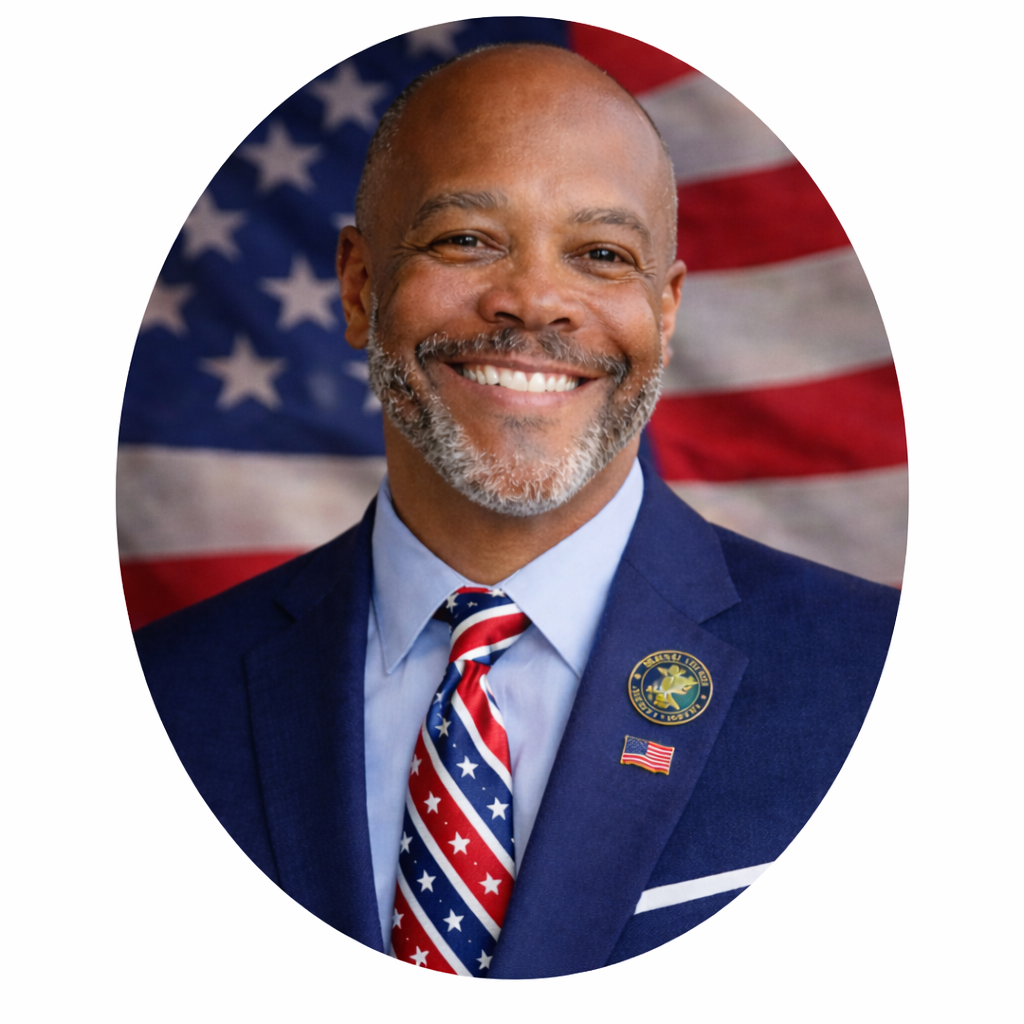
Willie Daniel
Willie Daniel is the Founder and Chief Executive Officer (CEO) of Global Vets Consulting (GVC) – National Veterans Disability Services, a veteran-led educational and medical evidence support organization dedicated to helping veterans better understand VA disability rating increases, DBQ medical evidence, secondary claims education, and C&P examination preparation.
He is a retired U.S. Army Medical Service Corps Officer with more than 27 years of honorable military service, a decorated Iraq combat veteran, and a retired federal official with the U.S. Department of Veterans Affairs. Throughout his military and federal career, Willie Daniel served in leadership, healthcare administration, operational, and veteran-support roles focused on improving services and support systems for servicemembers, veterans, and their families.
Drawing from decades of military leadership, healthcare administration, veteran advocacy, and federal government experience, Willie Daniel brings a practical, veteran-centered perspective to Global Vets Consulting’s educational articles, AI-powered veteran resources, video education initiatives, and outreach programs. His experience navigating military systems, medical documentation processes, and veteran-related administrative operations provides valuable insight into many of the challenges veterans face when seeking to better understand VA disability rating criteria, medical evidence, documentation strategies, and secondary condition education.
Through GVC’s “Veterans Helping Veterans” mission, his focus is on delivering clear, educational, and easy-to-understand information designed to empower veterans with knowledge, resources, and educational tools that may help them make more informed decisions regarding their individual VA disability journeys.
The information provided through GVC is intended for educational and informational purposes only and should not be considered legal or medical advice.
Disclaimer
Disclaimer: Global Vets Consulting, LLC (“GVC”) is a veteran-led educational and medical evidence support organization. GVC is not a law firm, is not a Veterans Service Organization (VSO), and is not affiliated with the U.S. Department of Veterans Affairs (VA) or any government agency.
Global Vets Consulting does not provide legal advice, medical advice, medical treatment, or healthcare services. GVC does not prepare, file, or submit VA disability claims on behalf of veterans. All information provided through this website, blog articles, videos, educational materials, AI tools, dashboards, templates, and communications is intended solely for general educational and informational purposes.
Veterans are encouraged to consult with accredited representatives, licensed attorneys, qualified medical providers, or Veterans Service Organizations regarding their specific legal, medical, or VA-related matters. VA disability decisions, ratings, and outcomes are determined solely by the U.S. Department of Veterans Affairs based on applicable laws, regulations, medical evidence, and individual circumstances. Past results do not guarantee future outcomes.