
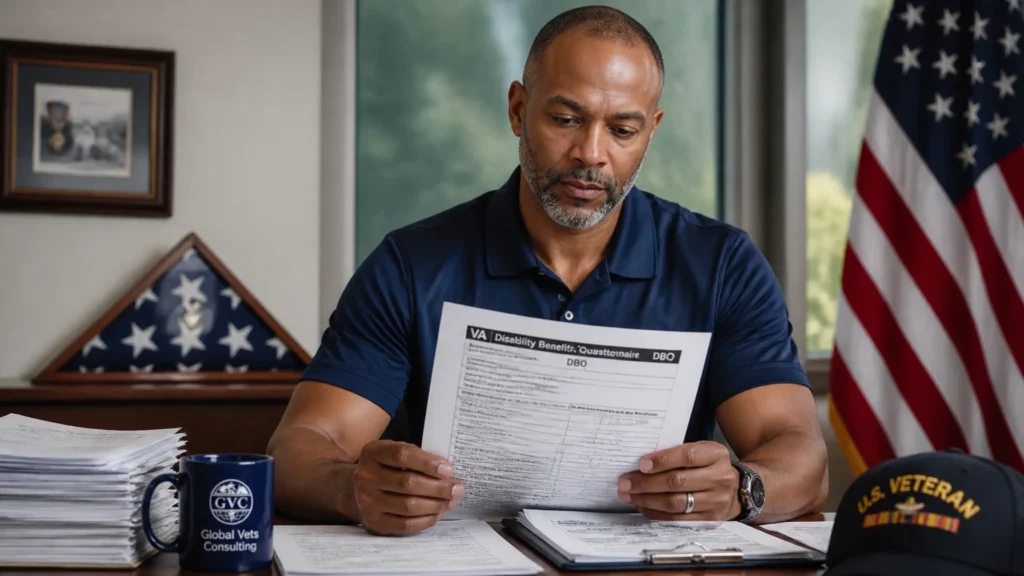
What if the reason your claim keeps getting denied isn't that you aren't "injured enough," but because you're speaking a language the VA doesn't understand?
For most veterans, filing for VA disability claims feels like navigating a minefield without a map. You know you’re hurting. You know your service caused it. But when the decision letter arrives, it's a cold "denied" or a "10% rating" that feels like a slap in the face. The "secret" isn't a magic word or a hidden trick, it’s a tactical shift from being a patient to being a strategist. You need to stop describing how you feel and start proving how you are limited according to the law.
Table of Contents
- The Tactical Blueprint: Why Strategy Beats Pain
- Speaking the Language of the Rater (38 CFR)
- Evidence Over Emotion: The Objective Requirement
- The Provider Partnership: Using the DBQ Correctly
- Comparison: Pes Planus vs. Plantar Fasciitis
- Your Pre-Submission Checklist
- Frequently Asked Questions
Key Takeaways
- Lock in your date: Always start with an Intent to File to protect your back pay.
- Speak the Code: Use the specific terminology found in 38 CFR Part 4 to describe your symptoms.
- Objective Evidence is King: Transition from "subjective" pain reports to "objective" clinical findings like range of motion (ROM) or diagnostic imaging.
- Expert Assistance: Leveraging professional VA claim assistance can bridge the gap between a medical diagnosis and a successful rating.
The Tactical Blueprint: Why Strategy Beats Pain
In the military, we never went on a mission without a primary, alternate, contingency, and emergency (PACE) plan. Filing a claim is no different. Your "mission" is to secure the benefits you earned, and your "blueprint" is your medical evidence.
The first secret the system won't emphasize is the power of the Intent to File (ITF). Many veterans wait until they have every piece of paper ready before they even click "submit." That is a multi-thousand-dollar mistake. By submitting an ITF immediately, you lock in your effective date. This ensures that once your claim is approved, even if it takes 12 months, your back pay is calculated from that initial date.
Verify your current symptoms, Confirm your service connection, and Ensure you aren't leaving money on the table by delaying your start date. If you are unsure where to start, you can view our initial claims guide for a step-by-step roadmap.

Speaking the Language of the Rater (38 CFR)
The VA Rater (RVSR) isn't looking for a story; they are looking for specific keywords that match the Schedule for Rating Disabilities. This is found in 38 CFR Part 4.
If you're filing a claim for a respiratory condition, don't just say you "can't breathe well." Instead, look at 38 CFR § 4.97 and understand how the VA evaluates "capacity." For instance, if you're dealing with a sinus condition, you need to know if your symptoms meet the criteria for diagnostic code 6522 (Chronic Sinusitis).
When you learn how to file a VA claim effectively, you start using terms like "functional loss," "flare-ups," and "mechanical instability." These aren't just buzzwords; they are the legal thresholds for higher compensation tiers.
Evidence Over Emotion: The Objective Requirement
One of the most common points of "confusion" for veterans is why their claim was denied despite their intense daily pain. The hard truth: pain is subjective; evidence is objective.
The VA requires three things for a successful claim (the "Caluza Triangle"):
- A current medical diagnosis.
- An in-service event or injury.
- A medical nexus (link) connecting the two.
To "bridge the gap," you must provide the doctor with specific data points. For example, if you are filing a dbq for flat feet, the examiner isn't just looking at your feet; they are measuring calcaneal eversion and looking for "marked pronation." If these technical findings aren't in your medical record, the rater has no "objective" way to grant a higher rating.

The Provider Partnership: Using the DBQ Correctly
Your doctor is your most valuable ally, but only if you provide them with the right tools. A Disability Benefits Questionnaire (DBQ) is the primary document the VA uses to evaluate your condition.
Too many veterans walk into a C&P (Compensation and Pension) exam and hope the doctor "sees" their pain. Instead, you should treat the relationship as a partnership. Identify your worst days, not your best ones. Identify the specific ways your condition limits your "activities of daily living" (ADLs).
For example, if you are working on a DBQ for degenerative disc disease, ensure the provider records your "Range of Motion" using a goniometer. If they don't use the tool, the exam is legally insufficient. You have the right to request a thorough, evidence-based evaluation.
Comparison: Pes Planus vs. Plantar Fasciitis
Veterans often confuse these two foot conditions, leading to incorrectly filed claims and frustrating denials. Understanding the distinction is vital for your strategy.
| Feature | Pes Planus (Flat Feet) | Plantar Fasciitis |
|---|---|---|
| Anatomy | Collapse of the medial longitudinal arch. | Inflammation of the thick band of tissue (fascia) across the bottom of the foot. |
| Pain Profile | Often a dull, aching pain in the arch and heel; worsens with standing. | Sharp, stabbing pain, especially with the "first steps" in the morning. |
| Objective Finding | Calcaneal eversion, "flat" footprint, pronation. | Tenderness at the calcaneal tuberosity; thickness on ultrasound. |
| Rating Criteria | Primarily based on deformity and "marked" vs. "moderate" levels. | Primarily based on response to treatment (orthotics) and frequency of pain. |
Identify which condition truly reflects your medical reality before you file. Filing for the wrong "Diagnostic Code" can lead to years of unnecessary appeals.

Your Pre-Submission Checklist: Mission Readiness
Before you hit "submit" on your VA disability claims, run through this tactical checklist:
- Intent to File: Is your ITF active and within the one-year window?
- Current Diagnosis: Do you have a diagnosis within the last 12 months for every claimed condition?
- Service Treatment Records (STRs): Have you identified the specific pages in your STRs that prove the "in-service event"?
- The Nexus: Does your medical evidence explicitly state your condition is "at least as likely as not" (50% probability or greater) related to service?
- DBQ Review: Have you reviewed a sample DBQ to ensure your doctor has all the necessary measurement points?
- Lay Statements: Have you included "Buddy Letters" to document the "subjective" impact of your symptoms on your daily life?
If you're feeling overwhelmed, use a VA disability calculator to estimate your potential rating and see the tangible impact of getting your documentation right.
Frequently Asked Questions
Q: Can I file for an increase if my condition has worsened?
A: Yes. This is called an increase claim. You must provide new medical evidence showing that your symptoms now meet a higher percentage threshold in the 38 CFR.
Q: How long does the VA claim process take in 2026?
A: While the VA has automated some processes, the "secrets" to speed remain the same: file a "Fully Developed Claim" (FDC). An FDC includes all your private medical records and DBQs upfront, often cutting months off the wait time.
Q: What if the C&P examiner was rushed and didn't listen?
A: You can challenge a "bad" C&P exam. Immediately write a "Statement in Support of Claim" detailing why the exam was insufficient (e.g., "The doctor didn't use a goniometer") and upload it to your file.
Q: Should I use a VSO or private VA claim assistance?
A: This depends on the complexity of your case. VSOs are great for straightforward filings, but many veterans seek independent, licensed physicians for specialized medical documentation to ensure their evidence is robust enough to withstand a rater’s scrutiny.
Q: Can I be rated for secondary conditions?
A: Absolutely. If your service-connected knee injury has caused a back problem (due to an altered gait), the back problem can be rated as "secondary." This is a powerful way to reach a 100% rating.

Navigating the VA doesn't have to be a battle you lose. By shifting your mindset to a tactical approach: prioritizing objective medical data and using the "language of the rater": you can secure the rating you deserve. Don't let the system's complexity deter you from your mission.