
What if the reason your claim keeps getting denied isn't that you're not "injured enough," but because you're using the wrong medical language to bridge the gap?
In 2026, the VA disability landscape has shifted. While the fundamental regulations remain anchored in 38 CFR § 3.310, the application of these rules has become a tactical minefield. Veterans who approach their va secondary claims as a simple "request for help" are often met with administrative delays and "rushed C&P exams" that result in low-ball ratings.
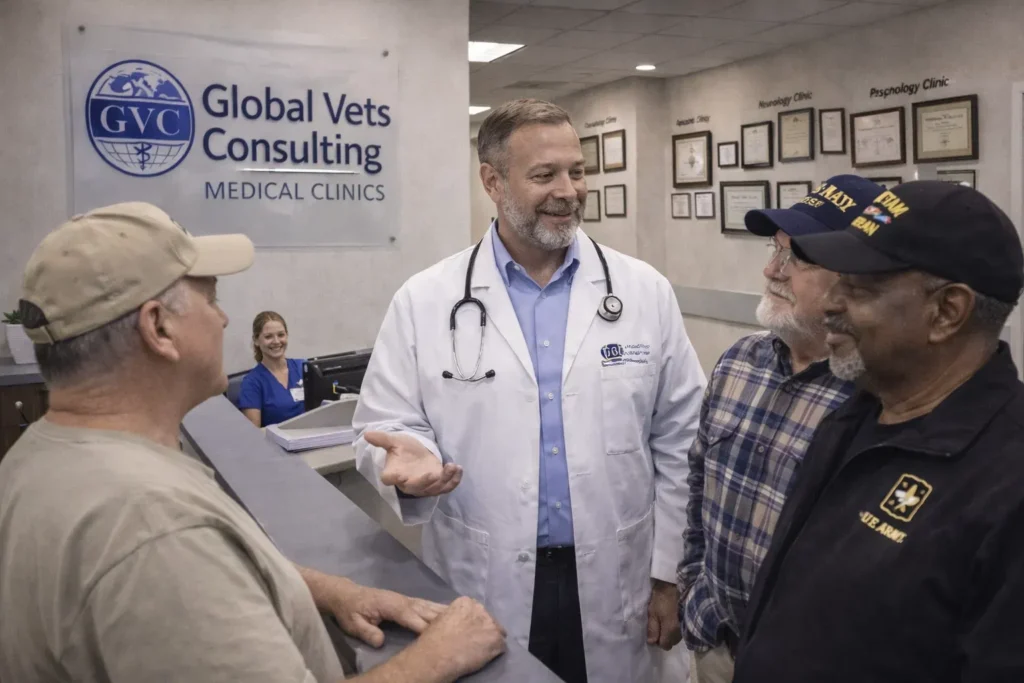
At Global Vets Consulting (GVC4Vets), we view your claim as a mission. And every mission requires a blueprint. With a network of over 800+ independent licensed physicians and a track record of supporting 100,000+ veterans, we’ve identified the exact data points the VA Rater is looking for.
Table of Contents
- Key Takeaways for 2026
- The "But-For" Logic: The Secret to Secondary Connection
- The 2026 Medication Trap: What the Interim Rule Means for You
- Common Pitfalls: Pes Planus vs. Plantar Fasciitis
- The GVC4Vets Strategy: Streamlining the "No Initial Consult" Process
- 2026 Tactical Checklist for Submission
- Frequently Asked Questions (FAQ)
Key Takeaways for 2026
- Medical Nexus is King: You must prove your secondary condition is "at least as likely as not" caused or aggravated by your primary service-connected disability.
- The Medication Rule: Be aware of the 2026 interim rule regarding "medication-controlled symptoms": even if suspended, the VA is looking at your "medicated" vs. "baseline" functionality.
- Strategic Risk: Filing for va secondary claims can trigger a re-evaluation of your primary ratings. Ensure your va medical evidence is bulletproof before you submit.
- Precision over Pain: The VA raters don't rate based on how much it hurts; they rate based on diagnostic codes and objective functional loss.
The "But-For" Logic: The Secret to Secondary Connection
Most veterans fail because they describe their symptoms subjectively. To win a secondary claim, you must adopt the "But-For" causation mindset.
"But-for my service-connected knee injury (Primary), I would not have developed a compensatory gait leading to this hip condition (Secondary)."
This isn't just semantics; it’s the "language of the rater." Under 38 CFR § 3.310, a secondary condition does not require an in-service event. It only requires a medical nexus: a bridge. Our physicians specialize in identifying these clinical links, ensuring your va nexus letter uses the high-level technical terminology required to establish "proximate cause."

The 2026 Medication Trap: What the Interim Rule Means for You
In early 2026, the VA introduced an interim rule that directed examiners to evaluate disabilities "as they present," including the impact of medication. While the VA has temporarily paused the enforcement of this rule due to massive pushback, the "secret" is that examiners are still being trained to look for "well-controlled" symptoms.
If your migraines are secondary to your service-connected TBI, but your medication reduces them from 4 per week to 1 per week, a "rushed C&P exam" might result in a lower va disability increase than you deserve.
Tactical Tip: Ensure your va medical evidence documents your "unmedicated baseline." Your rating should reflect the severity of the underlying condition, not just the temporary relief provided by a pill.
Common Pitfalls: Pes Planus vs. Plantar Fasciitis
One of the most frequent "Reddit-style" queries we see involves confusion between foot conditions. Many veterans file for "foot pain" and get denied because they didn't specify the correct diagnostic code.
| Condition | Diagnostic Code | Objective Requirement |
|---|---|---|
| Pes Planus (Flat Feet) | 5276 | Evidence of "calcaneal eversion" and loss of longitudinal arch. |
| Plantar Fasciitis | 5269 | Objective evidence of inflammation and "exquisite tenderness" of the plantar fascia. |
If you are filing for dbq for flat feet as a secondary condition to a knee or back issue, your physician must bridge the gap using objective data points, not just your report of pain.

The GVC4Vets Strategy: Streamlining the "No Initial Consult" Process
Why do veterans choose GVC4Vets over competitors like REE Medical or VetComm? It’s our "Mission-First" infrastructure. We understand that your time is as valuable as your health.
- No Initial Consult Hurdles: We’ve eliminated the bureaucratic fluff. Our process is designed to get you in front of our network of 800+ doctors quickly.
- Evidence-Based DBQs: We don't just "fill out forms." We provide VA-compliant medical documentation that stands up to the scrutiny of the 2026 rating schedule updates.
- Technical Authority: Whether it's a diagnostic code 6522 for sleep apnea secondary to rhinitis or complex mental health "But-For" links, our doctors speak the VA's language.
2026 Tactical Checklist for Submission
Before you hit "submit" on your va disability increase or secondary claim, verify the following:
- Confirm Diagnosis: Do you have a current, formal diagnosis for the secondary condition?
- Identify the Primary: Is your primary condition already service-connected (even at 0%)?
- Bridge the Gap: Does your va nexus letter explicitly use the phrase "at least as likely as not"?
- Functional Impact: Does your va medical evidence detail functional loss (e.g., range of motion, frequency of prostrating attacks)?
- Check the Codes: Have you verified the most recent 2026 diagnostic code updates in 38 CFR Part 4?
Frequently Asked Questions (FAQ)
Q: Can I file for a secondary claim if my primary condition is rated at 0%?
A: Absolutely. A 0% rating still establishes "service connection." Once that anchor is in place, you can link secondary conditions to it for a combined va disability increase.
Q: Will filing a secondary claim cause my 100% P&T status to be reviewed?
A: Filing any new claim can technically open your file for review. This is why having "bulletproof" medical evidence from an independent physician is critical to protect your existing ratings.
Q: How does the PACT Act help with secondary claims in 2026?
A: The PACT Act creates "presumptive" primary conditions (like chronic sinusitis). Once these are service-connected, it becomes much easier to link "secondary" issues like sleep apnea or secondary mental health conditions to them.
Q: What is the fastest way to get my DBQ?
A: Call our clinic hotline directly at 813-694-1963. Our streamlined process bypasses the typical "initial consult" delays, getting you the evidence you need for your mission.
Ready to secure the rating you’ve earned? Don't leave your future to a "rushed C&P exam." Join the 100,000+ veterans who have used the GVC4Vets strategy to win.
Contact us today at 813-694-1963 (Hotline) or 813-694-9398 (Intake), or visit Global Vets Consulting to start your mission.

