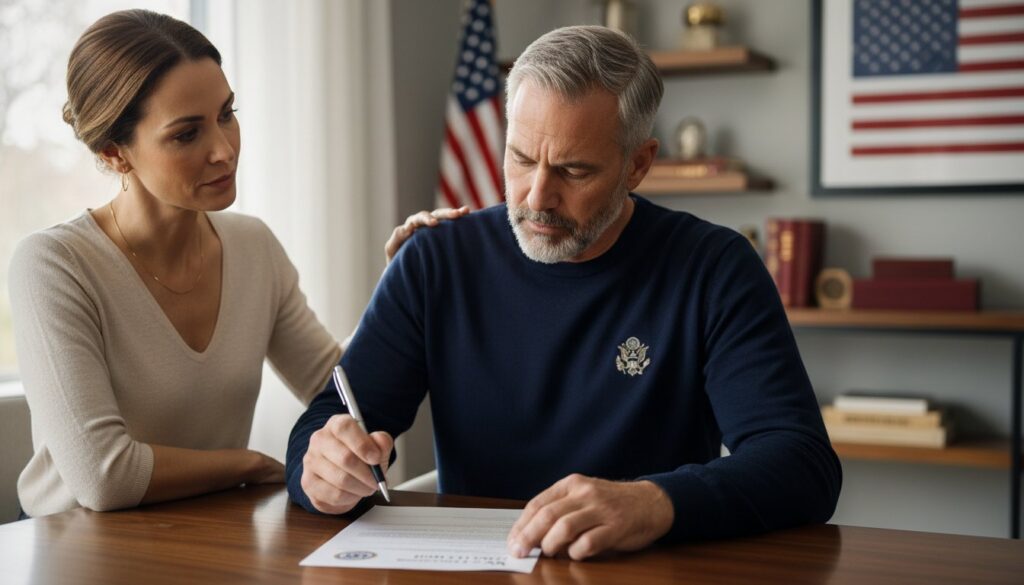
With over 1.59 million veterans currently service-connected for PTSD, you are part of a massive community, yet your individual medical records often fail to capture the raw reality of your daily struggles. It is frustrating to feel like a C&P examiner only sees a brief, sanitized snapshot of your life, leaving you worried that your claim might be denied because the paperwork lacks depth. Understanding how to write a va buddy letter for ptsd is the most effective way to bridge this gap and provide the lay evidence that validates your lived experience.
We recognize the anxiety that comes with trying to recall traumatic events and the fear of doing it wrong. This guide simplifies the process by showing you exactly how to use VA Form 21-10210 in 2026 to create a persuasive narrative. You will find a clear template designed to align your symptoms with the PTSD DBQ, ensuring the VA rater understands your functional loss. We’ll walk you through the specific details needed to turn a simple statement into a powerful tool for your disability claim evidence.
Key Takeaways
- Identify why VA Form 21-10210 is the mandatory standard for lay evidence in 2026 and how it replaces older, outdated forms.
- Select the most effective witnesses, choosing battle buddies to verify stressors and family members to document daily social withdrawal.
- Master the “Before and After” narrative strategy to establish a clear baseline of your health before service-connected trauma occurred.
- Learn exactly how to write a va buddy letter for ptsd that provides the lay evidence needed to support your clinical DBQ.
- Ensure total consistency across all witness statements to protect your claim from potential contradictions or red flags during the rating process.
The Power of Lay Evidence: What is a VA Buddy Letter for PTSD? 📝
A VA Buddy Letter is a formal lay statement provided by someone who has witnessed your condition firsthand. It provides the “human story” that clinical medical records often miss. Mastering how to write a va buddy letter for ptsd is essential for bridging the gap between cold clinical notes and the daily reality of your service-connected trauma.
Administrative standards have evolved for 2026. While veterans previously used VA Form 21-4138 for various statements, the Veterans Benefits Administration now prefers VA Form 21-10210 for lay/witness testimony. This transition ensures your evidence is processed with the technical accuracy the current system demands.
Witness statements are critical for several reasons:
- C&P examinations are often brief snapshots; your buddies see the 24/7 reality of your symptoms.
- Lay evidence provides the “credibility factor” needed to prevent a VA claim denied for lack of evidence.
- Statements from others corroborate your diagnosis by detailing specific, observable behaviors.
When to Use a Buddy Statement in 2026
You should incorporate lay evidence in the following scenarios:
- Verify Stressors: Use witness testimony to prove a traumatic event occurred if your official military personnel records are incomplete.
- Document Severity: Use these letters to show how your PTSD symptoms have worsened when you are seeking a rating increase.
Lay evidence serves as a vital bridge between complex “VA math” and the actual human experience of living with PTSD after service.

Choosing Your Witnesses: Who Should Write Your PTSD Buddy Letter?
Identifying the right individuals to support your claim is just as important as knowing how to write a va buddy letter for ptsd. You need a team of witnesses who can cover different angles of your life, from the battlefield to the breakroom. As you research How To File A VA Disability Claim, consider who has seen your symptoms at their worst. Choosing the right witnesses is the first step in mastering how to write a va buddy letter for ptsd that the VA cannot ignore.
- Battle Buddies: These individuals are your best resource for verifying in-service stressors. They can testify to the exact moments your personality shifted during your time in uniform.
- Spouses or Partners: They live with the 24/7 reality of your condition. They are best suited to document night terrors, hypervigilance, and the social withdrawal that outsiders rarely see.
- Employers or Coworkers: Their testimony is vital for proving occupational impairment. They can describe your difficulty following instructions or outbursts that affect workplace productivity.
- The Veteran: You should always write your own statement. A self-statement anchors the entire claim by providing the internal context for your external behaviors.
Criteria for a High-Quality Witness
A persuasive statement must come from someone with firsthand knowledge. The VA won’t credit rumors or stories they heard from others; the witness must have personally observed the behavior they are describing. Additionally, they must be willing to provide their contact information, as the VA may verify the statement’s authenticity. One of the most powerful witnesses is someone who knew you before your service. Their ability to contrast your baseline personality with your current state is a secret weapon in proving the service connection for PTSD. If you need more clarity on building your evidence, exploring veteran benefits education and resource awareness can help you identify the strongest advocates for your case.
Crafting a compelling statement requires more than just listing grievances. It demands a structured approach that mirrors the VA’s own evaluation criteria. When you sit down to learn how to write a va buddy letter for ptsd, you must focus on four critical steps that build a chronological narrative of your service and subsequent struggles. This methodical progression helps the rater see the full scope of your condition.
Step 1: Identify the Veteran and the Writer. Start with the administrative basics. The VA needs to know exactly who is writing and their relationship to you. Use the official VA Form 21-10210 and include full names, service numbers, and the duration of your relationship. This establishes the witness’s authority to speak on your behalf.
Step 2: Describe the Veteran ‘Before.’ A rater needs a baseline to measure your decline. Have the writer describe your personality before the traumatic event. Were you outgoing? Did you have a steady job and a calm demeanor? This contrast makes the impact of PTSD undeniable to the reader.
Step 3: Detail the Stressor Event. If the buddy was present during the trauma, they should describe it using sensory details. Mention the sounds, smells, or the environment. However, avoid unnecessarily graphic language that might overwhelm the reader; focus on the facts of the event. If you want to ensure your evidence is as strong as possible, consider C&P examination preparation education to align your testimony with clinical expectations.
Step 4: Describe the ‘After.’ This is where the writer details the changes they see now. Focus on observable behaviors like hypervigilance, memory issues, or sudden anger. Learning how to write a va buddy letter for ptsd effectively means providing the rater with a clear, undeniable picture of your daily life.
The ‘Show, Don’t Tell’ Rule for PTSD Symptoms
A persuasive buddy letter focuses on specific, observable behaviors rather than medical diagnoses. Instead of saying “he is anxious,” the writer should state, “he sits with his back to the wall in every restaurant.” Rather than claiming “he has trouble at work,” they should write, “he has been fired from three jobs this year due to outbursts.” These concrete details prove the severity of the condition better than any clinical label could.
Closing the Statement Correctly
The letter must end with a formal certification to be considered valid evidence. The mandatory 2026 certification is: “I certify that the statements on this form are true and correct to the best of my knowledge and belief.” Ensure the document is signed and dated. Without this, the VA may dismiss the statement entirely due to procedural errors.
Maximizing Your Claim: Aligning Buddy Letters with your PTSD DBQ
Consistency is the most vital element of a successful claim. When the VA reviews your file, they look for a seamless alignment between your clinical records and your lay evidence. Any contradictions between what a witness describes and what your doctor notes can lead to skepticism regarding the severity of your symptoms. Understanding how to write a va buddy letter for ptsd means ensuring the witness narrative directly supports the specific symptoms documented in your medical evidence. This unified front makes it much harder for a rater to overlook the true impact of your condition.
A DBQ for mental health conditions provides the clinical framework for your rating, but it often lacks personal depth. While a doctor can diagnose “occupational impairment,” a buddy letter can provide the proof by explaining that you’ve been fired from multiple jobs due to outbursts or memory lapses. These lay statements effectively “fill in the blanks” regarding your social and occupational struggles. Integrating this evidence is a critical phase of the VA disability claims process step by step, as it provides the rater with a 360-degree view of your daily life.
The Role of Professional DBQ Preparation
Global Vets Consulting helps you navigate this complex intersection of medical and lay evidence. We provide the education needed to ensure your medical documentation accurately reflects the severity your buddies describe in their statements. A professional medical opinion combined with strong lay evidence is the gold standard for achieving the correct PTSD rating. If you’re ready to strengthen your case with meticulous documentation, Contact Global Vets Consulting for expert DBQ support today. Knowing how to write a va buddy letter for ptsd is a powerful skill, but ensuring that letter aligns with a high-quality DBQ is what ultimately secures the benefits you earned through your service.
Secure Your Earned Benefits with Strong Lay Evidence 🇺🇸
You now have the tools to use VA Form 21-10210 effectively and create a baseline of health that makes your symptoms undeniable to a rater. Learning how to write a va buddy letter for ptsd is a powerful step toward validating your service-connected struggles and ensuring the VA sees the full scope of your functional impairment. Professional medical documentation combined with these personal accounts creates the gold standard for a successful rating.
Global Vets Consulting, veteran-owned and operated since 2021, is dedicated to helping you align your medical evidence with your lived experience. We provide high-accuracy DBQ education to ensure your claim is meticulous and accurate from the start. Our team is ready to provide immediate assistance whenever you need it.
- 📞 24/7 National Client Services Hotline
- 🤖 24/7 AI Veteran Intake Specialist
- 🌐 Worldwide: GlobalVetsConsultingInfo.com
You served your country with honor and deserve a system that recognizes your sacrifices. Take this next step with confidence, knowing you have the evidence needed to secure the benefits you earned through your service.
Frequently Asked Questions
What form should I use for a VA buddy letter in 2026?
You should use VA Form 21-10210, Lay/Witness Statement, for all buddy letters in 2026. This specific form is the current administrative standard and remains valid through July 31, 2027. It includes the mandatory certification language required by the VA to verify the statement’s authenticity. Using the correct form is a vital part of how to write a va buddy letter for ptsd because it prevents your evidence from being sidelined by outdated paperwork.
Can my spouse write a buddy letter for my PTSD claim?
Your spouse can and should write a statement for your claim. They are often the best source for documenting symptoms that occur behind closed doors, such as night terrors, irritability, or social withdrawal. While a battle buddy verifies what happened during service, a spouse verifies the current severity of your condition. Their observations provide the clinical context needed to support a higher disability rating during the evaluation process.
How long should a VA buddy statement be?
There isn’t a strict word count, but most effective statements are one to two pages. The rater needs enough detail to understand the situation without getting lost in a dense narrative. Focus on three or four concrete examples of how PTSD affects your daily life. Clear, punchy descriptions of observable behaviors are more persuasive than long, repetitive paragraphs that don’t offer new evidence for your claim.
Does a buddy letter need to be notarized for the VA?
Notarization is not required for a VA buddy statement. The writer simply needs to sign and date the form, which includes a pre-printed statement certifying that the information is true and correct. This certification provides the necessary legal weight for the document to be considered valid lay evidence. Knowing how to write a va buddy letter for ptsd includes ensuring this signature is present, as an unsigned form will likely be rejected.
What if I can’t find anyone I served with to write a letter?
If you can’t find service members, look to those who knew you before and after your time in uniform. Parents, siblings, or long-time friends can describe the specific ways you changed because of your service. Employers can also document how your symptoms cause workplace issues. These civilian accounts are perfectly valid forms of lay evidence and can be just as effective in proving your functional impairment to the VA.
Article by
Willie Daniel
Willie Daniel is the Founder and Chief Executive Officer (CEO) of Global Vets Consulting (GVC) – National Veterans Disability Services, a veteran-led educational and medical evidence support organization dedicated to helping veterans better understand VA disability rating increases, DBQ medical evidence, secondary claims education, and C&P examination preparation.
He is a retired U.S. Army Medical Service Corps Officer with more than 27 years of honorable military service, a decorated Iraq combat veteran, and a retired federal official with the U.S. Department of Veterans Affairs. Throughout his military and federal career, Willie Daniel served in leadership, healthcare administration, operational, and veteran-support roles focused on improving services and support systems for servicemembers, veterans, and their families.
Drawing from decades of military leadership, healthcare administration, veteran advocacy, and federal government experience, Willie Daniel brings a practical, veteran-centered perspective to Global Vets Consulting’s educational articles, AI-powered veteran resources, video education initiatives, and outreach programs. His experience navigating military systems, medical documentation processes, and veteran-related administrative operations provides valuable insight into many of the challenges veterans face when seeking to better understand VA disability rating criteria, medical evidence, documentation strategies, and secondary condition education.
Through GVC’s “Veterans Helping Veterans” mission, his focus is on delivering clear, educational, and easy-to-understand information designed to empower veterans with knowledge, resources, and educational tools that may help them make more informed decisions regarding their individual VA disability journeys.
The information provided through GVC is intended for educational and informational purposes only and should not be considered legal or medical advice.
Disclaimer
Disclaimer: Global Vets Consulting, LLC (“GVC”) is a veteran-led educational and medical evidence support organization. GVC is not a law firm, is not a Veterans Service Organization (VSO), and is not affiliated with the U.S. Department of Veterans Affairs (VA) or any government agency.
Global Vets Consulting does not provide legal advice, medical advice, medical treatment, or healthcare services. GVC does not prepare, file, or submit VA disability claims on behalf of veterans. All information provided through this website, blog articles, videos, educational materials, AI tools, dashboards, templates, and communications is intended solely for general educational and informational purposes.
Veterans are encouraged to consult with accredited representatives, licensed attorneys, qualified medical providers, or Veterans Service Organizations regarding their specific legal, medical, or VA-related matters. VA disability decisions, ratings, and outcomes are determined solely by the U.S. Department of Veterans Affairs based on applicable laws, regulations, medical evidence, and individual circumstances. Past results do not guarantee future outcomes.