
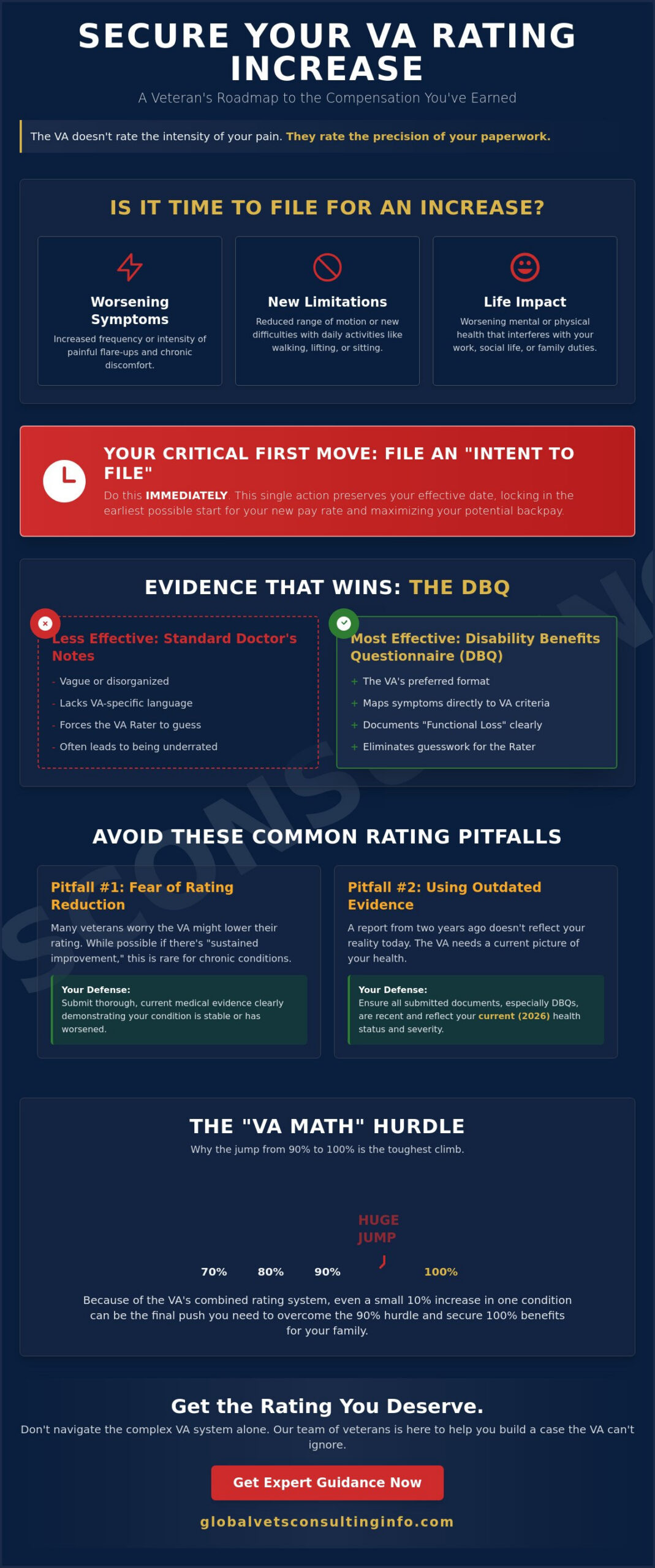
The VA doesn’t actually rate the intensity of your pain. They rate the precision of your paperwork. If you feel like your current compensation isn’t keeping up with your worsening symptoms, you aren’t alone. Many veterans hesitate to file for a VA Rating Increase because they fear the system might actually lower their existing rating if they reopen the claim. It’s a valid concern, but staying at a lower tier means leaving earned benefits on the table, especially with the 2026 COLA increase of 2.8 percent now in effect.
We understand the frustration of feeling overlooked by a complex bureaucracy. You deserve a rating that reflects your daily reality, and that starts with understanding exactly how the VA uses Disability Benefits Questionnaires (DBQs) to make their decisions. By documenting your limitations with clinical accuracy, you can move toward the 100 percent disability rate of $3,938.58 per month to provide the security your family needs.
This guide provides a clear roadmap for filing your claim using the latest VA Form 21-526EZ requirements. You’ll learn exactly how to use medical evidence to trigger an increase and turn your medical history into a documented case that the VA can’t ignore.
Key Takeaways
- Understand when a service-connected condition qualifies for an “Increased Claim” and why the 2026 pay chart is your first reference point.
- Learn why the VA prioritizes Disability Benefits Questionnaires (DBQs) over standard medical notes to determine a VA Rating Increase.
- Discover the critical importance of filing an Intent to File immediately to preserve your effective date and maximize your backpay.
- Identify how to document “Functional Loss” to clearly demonstrate to the VA how your symptoms limit your daily activities and work capacity.
- Avoid common pitfalls like using outdated medical evidence that fails to reflect your current 2026 health status and severity level.
What is a VA Rating Increase and When Should You Apply? 🇺🇸
An Increased Claim is a specific type of request filed for a condition the VA has already recognized as service-connected but has since progressed in severity. The Veterans Benefits Administration (VBA) processes these claims based on evidence that your symptoms now meet a higher criteria in the rating schedule. If you aren’t sure if your current compensation matches your health status, your first step should be reviewing the latest VA disability pay chart to understand the potential impact on your monthly benefits.
You should consider filing when your daily life changes significantly. This might look like an increased frequency of painful flare-ups, new limitations in your range of motion, or worsening mental health symptoms that interfere with your social or professional life. These clinical changes are the primary triggers for a VA Rating Increase. Documenting these shifts as they happen ensures your medical record is ready when you decide to take action.
Many veterans worry that reopening a claim might cause the VA to lower their existing rating. While the VA can technically reduce a rating if evidence shows “sustained improvement,” you can mitigate this risk by providing thorough, accurate documentation. You don’t have to fear the process if your evidence clearly demonstrates that your condition is either stable or worsening. Meticulousness is your best defense against a rating reduction.
Increased Claim vs. Supplemental Claim: Knowing the Difference
You use an Increased Claim when the condition is already service-connected but has simply become more severe. If the VA previously denied an increase and you have new, relevant evidence to challenge that specific decision, you’d file a Supplemental Claim instead. The process is sequential: identify the worsening condition, check the rating schedule for the next tier, and gather your medical evidence to support the jump.
The ‘VA Math’ Factor in 2026
A single VA Rating Increase can have a massive impact because of how the VA combines multiple ratings. Moving from 90% to 100% is often the most difficult leap, as it requires a significant amount of additional disability points to overcome the “VA math” hurdle. Precision in your documentation matters most here. Even a small 10% shift in one condition can be the difference between staying at 90% and reaching the 100% threshold for your family’s security.
The Role of Medical Evidence and DBQs in Securing an Increase
The success of your VA Rating Increase depends almost entirely on the quality of your medical evidence. While your service connection is already established, the burden of proof shifts toward demonstrating the current severity of your condition. A Disability Benefits Questionnaire (DBQ) is the clinical blueprint the VA uses to determine your disability percentage. Unlike standard doctor’s notes, which may be vague or disorganized, a DBQ ensures your symptoms are translated directly into the language of the VA’s Schedule for Rating Disabilities.
When a Rater reviews your file, they prioritize these standardized forms because they provide a clear, objective snapshot of your limitations. You can find more details on the process in the official VA guide to filing a claim. Because the VA is using increased scrutiny and AI auditing for private evidence in 2026, the accuracy of these forms is more critical than ever. By using these documents, you eliminate the guesswork for the Rater, making it easier for them to see that you meet the criteria for a higher compensation tier.
How to use a DBQ for a VA disability rating increase
Securing an increase requires a strategic approach to documentation. You must ensure your medical provider maps your symptoms accurately to the specific check-boxes on the current 2026 form versions. The “Remarks” section is particularly vital, as it allows for a detailed explanation of how your condition impacts your daily life and ability to maintain employment. If you want to dive deeper into this strategy, you can learn more about how to use a DBQ for a VA disability rating increase to strengthen your evidence package.
Private Medical Evidence vs. VA Records
Relying solely on VA medical records can often lead to being underrated. VA clinicians are frequently overworked, which can result in rushed appointments where the full scope of your pain or functional loss isn’t recorded. In contrast, working with experts in Independent Medical Evidence Education allows you to present a thorough record of your limitations. This level of detail is often what bridges the gap between a 30% and a 70% rating, providing the comprehensive proof needed for a successful VA Rating Increase.
Step-by-Step: Filing Your VA Claim for Increase in 2026
Securing a VA Rating Increase isn’t just about showing you’re in pain. It’s about following a structured administrative process that leaves no room for error. In 2026, the VA’s average processing time for claims ranges between 77 and 150 days, so efficiency is key to getting the results you need for your family. By following a logical progression of steps, you can reduce the risk of delays or denials.
- Step 1: Submit an Intent to File. Do this immediately. This simple step preserves your effective date, ensuring that once your increase is approved, your backpay is calculated from the day you started the process rather than the day you finished the paperwork.
- Step 2: Review your C-File. You can’t argue for an increase effectively if you don’t know the baseline the VA is using. Reviewing your Claims File helps you identify which specific symptoms the VA previously noted and where the gaps in your 2026 health status exist.
- Step 3: Secure updated documentation. Obtain professional Disability Benefits Questionnaires (DBQ) that reflect your current level of impairment. These forms are the primary evidence tools that translate your physical or mental limitations into the VA’s rating schedule.
- Step 4: File electronically. When you are ready to File Your VA Claim for Increase, use the VA.gov portal. Electronic submissions are processed faster than paper mail and allow for immediate confirmation of receipt.
Preparing for the C&P Exam
If the VA schedules a Compensation & Pension exam, you must arrive prepared to discuss your “worst day.” It is a common mistake to describe how you feel at the exact moment of the exam. Instead, you should explain your symptoms as they occur during a flare-up. If you can’t walk without assistance during a flare-up, that is the reality the examiner needs to hear, regardless of how you feel on the morning of the appointment.
Tracking Your Claim Status
The modern claims process allows for better transparency than ever before. You can utilize 24/7 AI Veteran Intake Specialist tools to stay updated on your documentation status and ensure the VA has everything they need. If the VA requests more evidence after your submission, don’t panic. It’s often a request for clarification that can be resolved by providing additional clinical data or a statement in support of the claim. If you need help organizing your evidence, you can explore our Veteran Benefits Education & Resource Awareness programs today.
Maximizing Success: Avoiding Common Rating Increase Pitfalls
Filing for a VA Rating Increase is a mission that requires tactical precision. Even with a clear worsening of symptoms, many veterans see their claims stalled or denied because of avoidable errors in their evidence presentation. To secure the 2026 compensation rates you’ve earned, you must avoid the common traps that lead to administrative delays.
- Pitfall #1: Failing to show ‘Functional Loss’. The VA doesn’t just want to know that you’re in pain. They need to see how that pain stops you from performing daily tasks or maintaining employment. If your documentation doesn’t describe how a condition limits your range of motion or cognitive focus, the Rater may not have enough evidence to justify a higher percentage.
- Pitfall #2: Relying on old medical evidence. Your 2026 health status cannot be proven with records from two or three years ago. The VA requires recent clinical data that reflects your current severity. Using outdated evidence is one of the fastest ways to receive a denial.
- Pitfall #3: Skipping the ‘Intent to File’. Every day you wait to submit your Intent to File is a day of backpay you may never recover. This is a critical financial safeguard that many veterans overlook in their rush to gather paperwork.
The Global Vets advantage lies in professional documentation prepared by those who speak the VA’s language. We focus on ensuring your medical evidence is thorough, accurate, and aligned with the latest rating schedules. This “Veterans Helping Veterans” approach ensures your history is respected while meeting the strict requirements of the modern claims system.
Why Professional DBQ Preparation Matters
A single unchecked box or a vague description can result in an administrative “kick-back,” forcing you to start over. Professional preparation ensures that your Disability Benefits Questionnaire (DBQ) is a complete and accurate reflection of your condition. This meticulousness provides peace of mind and reduces the anxiety of the unknown. If you’ve already faced a setback, understanding why a VA claim denied for lack of evidence happened is the first step toward a successful recovery in 2026.
Next Steps: Your 2026 Action Plan
Your path to a successful VA Rating Increase follows a clear sequence: submit your Intent to File, gather your medical evidence, and submit your completed DBQs via VA.gov. Don’t let a low rating define your quality of life when the 2026 COLA increases are designed to support you and your family. We are ready to assist you at every stage of this journey.
🇺🇸 Global Vets Consulting — Worldwide
📞 24/7 National Client Services Hotline
🤖 24/7 AI Veteran Intake Specialist
Secure the Compensation You Have Earned 🇺🇸
Your health is your most important asset, and your disability rating should reflect the daily challenges you face. By prioritizing current medical evidence and avoiding the administrative traps we’ve discussed, you can navigate the 2026 claims landscape with steady confidence. Standardizing your symptoms through a professional DBQ is the most effective way to communicate functional loss to the VA Rater. This level of precision is what often bridges the gap between your current benefits and a successful VA Rating Increase.
Global Vets Consulting has been veteran-owned and operated since 2021, and we speak the language of the system. We specialize in providing the educational resources and DBQ support needed for Mental Health, Musculoskeletal, and Respiratory claims. You don’t have to navigate this complex process alone or settle for a rating that doesn’t provide for your family. Our 24/7 National Client Services Hotline is available whenever you’re ready to start your journey toward a fair decision.
Frequently Asked Questions
Can the VA lower my rating if I ask for an increase in 2026?
Yes, the VA has the authority to lower a rating if the medical evidence provided during your claim shows that your condition has significantly improved. This is known as a rating reduction. To mitigate this risk, ensure your Disability Benefits Questionnaire (DBQ) accurately reflects your current limitations and functional loss. Providing thorough medical evidence that documents your “worst days” helps demonstrate that your condition is either stable or progressing in severity.
How long does it take for a VA rating increase to be approved?
The average processing time for a VA Rating Increase in 2026 typically falls between 77 and 150 days. While some reports suggest a national average of approximately 84 days, the actual timeline depends on the complexity of your evidence and the current backlog. Submitting a fully developed claim with professional DBQs and filing electronically via VA.gov can help move your case through the system more efficiently.
Do I need a new Nexus Letter for a rating increase claim?
You generally don’t need a new Nexus Letter when filing for a rating increase because the service connection is already established. Your focus should be entirely on proving the increased severity of the condition. The VA Rater will look for clinical evidence, such as range of motion testing or frequency of symptoms, to see if you meet the higher criteria in the Schedule for Rating Disabilities. A current DBQ is the primary tool for this task.
What is the best evidence for a VA mental health rating increase?
The most effective evidence for a mental health increase is a DBQ that clearly documents your “social and industrial impairment.” The VA rates mental health conditions based on how symptoms interfere with your work and relationships. Detailed medical evidence showing an increase in symptoms like panic attacks, memory loss, or an inability to maintain workplace productivity is essential. Focus on how these changes have impacted your life since your last rating decision.
Can I get a rating increase for a secondary condition?
You can absolutely secure a VA Rating Increase for a secondary condition if that condition has progressed in severity. Just like a primary service-connected disability, secondary conditions like migraines or sleep apnea are eligible for higher compensation if they meet the next tier of the rating schedule. You must provide updated medical documentation showing the new level of impairment to justify the increase in your combined disability percentage.

Article by
Willie Daniel
Willie Daniel is the Founder and Chief Executive Officer (CEO) of Global Vets Consulting (GVC) – National Veterans Disability Services, a veteran-led educational and medical evidence support organization dedicated to helping veterans better understand VA disability rating increases, DBQ medical evidence, secondary claims education, and C&P examination preparation.
He is a retired U.S. Army Medical Service Corps Officer with more than 27 years of honorable military service, a decorated Iraq combat veteran, and a retired federal official with the U.S. Department of Veterans Affairs. Throughout his military and federal career, Willie Daniel served in leadership, healthcare administration, operational, and veteran-support roles focused on improving services and support systems for servicemembers, veterans, and their families.
Drawing from decades of military leadership, healthcare administration, veteran advocacy, and federal government experience, Willie Daniel brings a practical, veteran-centered perspective to Global Vets Consulting’s educational articles, AI-powered veteran resources, video education initiatives, and outreach programs. His experience navigating military systems, medical documentation processes, and veteran-related administrative operations provides valuable insight into many of the challenges veterans face when seeking to better understand VA disability rating criteria, medical evidence, documentation strategies, and secondary condition education.
Through GVC’s “Veterans Helping Veterans” mission, his focus is on delivering clear, educational, and easy-to-understand information designed to empower veterans with knowledge, resources, and educational tools that may help them make more informed decisions regarding their individual VA disability journeys.
The information provided through GVC is intended for educational and informational purposes only and should not be considered legal or medical advice.
Disclaimer
Disclaimer: Global Vets Consulting, LLC (“GVC”) is a veteran-led educational and medical evidence support organization. GVC is not a law firm, is not a Veterans Service Organization (VSO), and is not affiliated with the U.S. Department of Veterans Affairs (VA) or any government agency.
Global Vets Consulting does not provide legal advice, medical advice, medical treatment, or healthcare services. GVC does not prepare, file, or submit VA disability claims on behalf of veterans. All information provided through this website, blog articles, videos, educational materials, AI tools, dashboards, templates, and communications is intended solely for general educational and informational purposes.
Veterans are encouraged to consult with accredited representatives, licensed attorneys, qualified medical providers, or Veterans Service Organizations regarding their specific legal, medical, or VA-related matters. VA disability decisions, ratings, and outcomes are determined solely by the U.S. Department of Veterans Affairs based on applicable laws, regulations, medical evidence, and individual circumstances. Past results do not guarantee future outcomes.