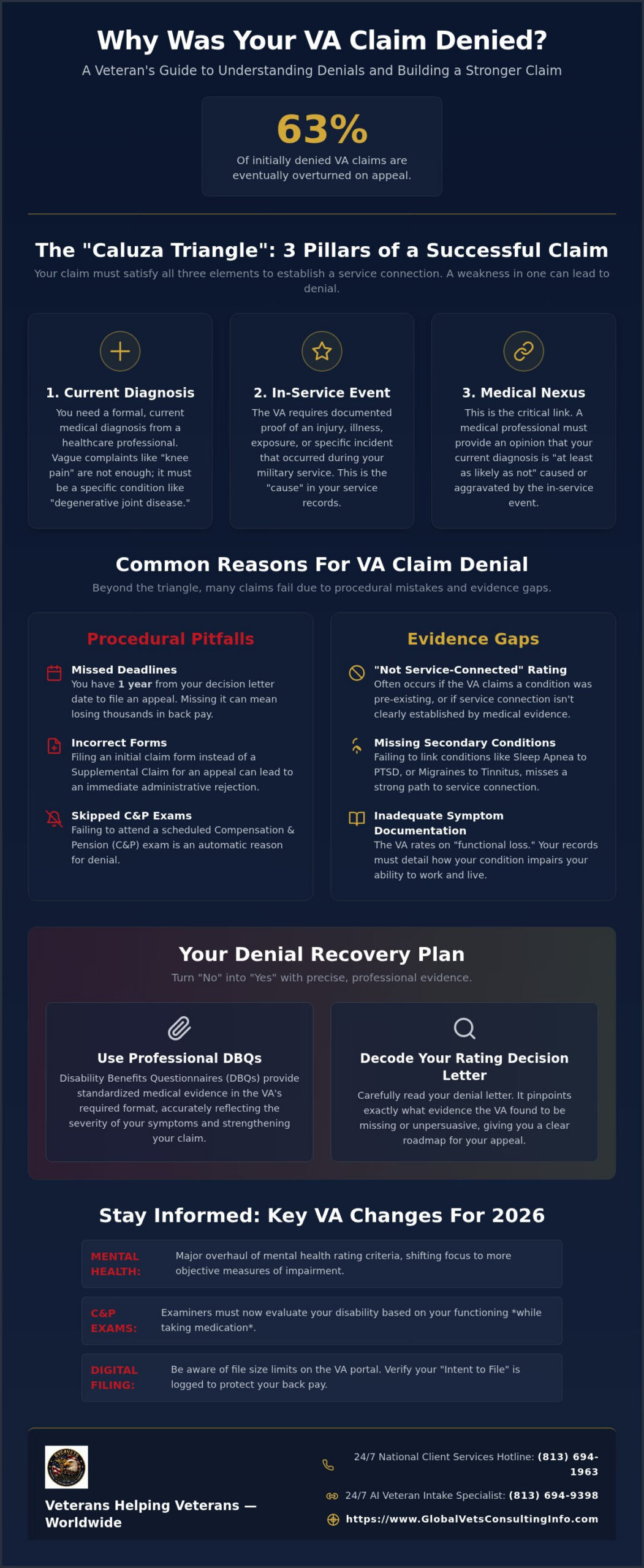
Roughly 63% of initially denied VA disability claims are eventually overturned on appeal, yet receiving that first “No” in the mail still feels like a punch to the gut. If you’ve been searching for the common reasons for va claim denial, you’re likely frustrated by a system that seems to speak a different language than your own medical team. It’s exhausting to deal with VA “math” and complex logic when your financial stability and peace of mind are on the line. 🇺🇸
We understand that the gap between your daily physical reality and a formal rating decision can feel impossible to bridge. You shouldn’t have to be a medical expert or a legal scholar just to access the benefits you earned through your service. This guide is designed to cut through the jargon and identify the specific evidence gaps that trigger denials. We’ll show you how professional medical documentation, specifically Disability Benefits Questionnaires (DBQs), can help turn a “No” into a “Yes” by providing the clarity the VA requires.
We will break down the “Caluza Triangle” of evidence, explain the major 2026 changes to mental health ratings, and provide a clear path to securing the medical nexus you need. By the end of this article, you’ll know exactly which forms are missing and how to find a reliable partner to help you document your conditions with precision.
Key Takeaways
- Master the “Caluza Triangle” to ensure your claim includes the three essential elements: a current diagnosis, an in-service event, and a medical nexus.
- Identify the procedural pitfalls and missed deadlines that serve as common reasons for va claim denial so you can protect your effective date and back pay.
- Learn how professional Disability Benefits Questionnaires (DBQs) provide the standardized medical evidence needed to accurately reflect the severity of your symptoms.
- Discover how to decode your VA Rating Decision Letter to pinpoint exactly what evidence is missing before choosing your next appeal path.
- Stay informed on 2026 updates, including the major overhaul of mental health rating criteria and new rules regarding medication during C&P exams.
The “Caluza Triangle”: Why Most VA Claims Fail the Evidence Test
The “Caluza Triangle” isn’t a military tactic, but it’s the most important strategy for your disability claim. To secure a favorable rating, you must satisfy three specific requirements: a current medical diagnosis, an in-service event or injury, and a medical nexus linking the two. If even one side of this triangle is weak, your claim will likely fail. Understanding these elements is vital when reviewing a broad overview of veterans’ benefits and assessing why the VA might have issued a denial letter.
Failure to establish these three pillars accounts for the most common reasons for va claim denial. Without all three, the VA logic simply won’t allow for a service connection. 🇺🇸
- Reason #1: Lack of a current diagnosis. You cannot claim “knee pain” alone; you need a formal diagnosis like degenerative joint disease in your medical records.
- Reason #2: No in-service event. The VA needs documented proof that an injury, exposure, or specific incident occurred while you were in uniform.
- Reason #3: The missing nexus. This is the medical “bridge” where a provider confirms your current condition is “at least as likely as not” caused by your service.
The Problem with “Not Service-Connected” Ratings
Many veterans receive a “not service-connected” rating because the VA claims a condition was pre-existing. They often use your entrance physical as a baseline. If you didn’t report a minor issue then, but it appears in your records shortly after discharge, they may argue it didn’t happen during service. We see this often when documentation is sparse or inconsistent. It’s a frustrating hurdle, but accurate medical evidence can clarify that your service either caused or aggravated the condition.
Secondary Conditions: The Link Veterans Often Miss
A major gap in many applications is trying to claim everything as a direct injury. Sometimes, the strongest path is a secondary claim. For example, your Sleep Apnea might be secondary to PTSD, or your Migraines could be secondary to Tinnitus. If you aren’t sure how these connect, learning how to prove service connection through secondary conditions can save your claim. Documentation must clearly show how your primary service-connected disability caused the new one. This approach turns a complex medical situation into a logical, evidence-based argument the VA can approve.
Procedural Pitfalls: Forms, Deadlines, and C&P Exam Failures
Sometimes your health isn’t the problem; the paperwork is. Administrative errors are among the most common reasons for va claim denial. For instance, filing an initial claim form when you actually need a Supplemental Claim form can trigger an immediate rejection. Timing is just as critical. You have exactly one year from the date on your decision letter to file an appeal and protect your effective date. If you miss this window by even a day, you could lose thousands of dollars in retroactive pay. Note that if you’re appealing a Board decision to the federal court, that deadline drops to just 120 days.
The Compensation and Pension (C&P) exam is another major hurdle. In February 2026, the VA implemented a rule requiring examiners to evaluate your disability based on your functioning while taking medication. This change means if your symptoms are well-managed by treatment, you might receive a lower rating than expected. Additionally, skipping a C&P exam is an automatic denial. Always attend your appointments, even if you feel the examiner won’t understand your situation. It’s better to go and document the experience than to hand the VA an easy reason to say no.
Digital Filing Errors in 2026
Modernizing the system has created new obstacles. In 2026, veterans often face technical glitches when uploading large medical files to the VA portal. If a file is too big, it might not attach correctly, leaving your claim incomplete. Always verify that your Intent to File (ITF) is properly logged and confirmed in the system to secure your back pay. A simple digital error shouldn’t stand between you and your benefits.
Inadequate Symptom Documentation
The VA rates disabilities based on “functional loss.” If your records don’t show how your condition impacts your ability to work or care for yourself, you’ll likely face a denial. While “buddy statements” provide helpful context, they rarely stand alone without professional medical backing. If you’re struggling to organize your evidence, medical evidence education can help you present a clearer picture of your daily challenges to the rater.
How Professional DBQs Overcome a “Lack of Evidence” Denial
Receiving a denial letter often boils down to a single phrase: “lack of evidence.” This is one of the most common reasons for va claim denial, yet it’s also one of the most solvable. A Disability Benefits Questionnaire (DBQ) is a standardized form designed to give the VA exactly what they need in the format they prefer. While a C&P examiner might only spend 15 minutes reviewing your case, a private DBQ allows for a thorough documentation of your symptoms and history. By addressing these common reasons for va claim denial through precise documentation, you shift the burden of proof back to the facts of your service.
Using Independent Medical Evidence is a powerful way to counter a negative VA medical opinion. Professional DBQs focus on the severity of your condition, ensuring every functional limitation is recorded according to the VA’s rating schedule. Much like the precision and expertise required by Dynamic Contracts Consultants LLC for specialized proposal development, your medical evidence must be meticulously drafted to meet stringent standards. This level of detail helps prevent the rater from guessing your disability level, which often results in a lower-than-deserved rating or an outright “No.”
- Standardized formatting that aligns directly with VA rating schedules.
- In-depth symptom reporting that goes beyond the scope of a standard C&P exam.
- Clear nexus statements using the specific medical terminology the VA requires.
Bridging the Nexus Gap with Expert Documentation
A DBQ serves as the essential bridge between your military medical history and the VA’s complex rating criteria. To satisfy the nexus requirement, your documentation must use specific language, such as stating your condition is “at least as likely as not” related to your service. If you’re new to this process, understanding what is a dbq can help you see how these forms provide the medical “bridge” the VA requires to approve your claim.
Accuracy Matters: Preventing Incomplete Form Denials
Technical errors are a major source of frustration and delay. Utilizing professional DBQ preparation services ensures your forms are complete and accurate before submission. These standardized forms are critical for the Fully Developed Claim (FDC) process, which can significantly speed up your decision time. Don’t let a missing checkbox or a vague medical note be the reason you’re denied. If you’re ready to substantiate your claim with precise evidence, get started with professional medical documentation education today.
Your Denial Recovery Plan: Next Steps for Veterans 🇺🇸
Receiving a denial letter is a setback, but it is not the final word. Roughly 63% of initially denied claims are eventually overturned on appeal. Understanding the common reasons for va claim denial allows you to build a targeted strategy for your recovery. We recommend a structured, step-by-step approach to move from a “No” to the benefits you’ve earned through your service.
- Step 1: Read your Rating Decision Letter carefully. The VA is legally required to tell you exactly what is missing. Look for the “Evidence” and “Reasons for Decision” sections to identify if the issue is a missing nexus, a lack of diagnosis, or a procedural error.
- Step 2: Choose your appeal path. Decide between a Higher-Level Review (HLR) or a Supplemental Claim based on whether you need to add new evidence.
- Step 3: Gather new and relevant medical evidence. This often involves securing professional Disability Benefits Questionnaires (DBQs) or Nexus Letters to fill the gaps identified in your letter.
- Step 4: Don’t go it alone. Leverage veteran-centric consulting to build a file that is organized, accurate, and ready for a rater’s approval.
Supplemental Claims vs. Higher-Level Review
If you believe the VA made a mistake based on the evidence they already had, a Higher-Level Review (HLR) is the appropriate path. However, if the denial was due to a “lack of evidence,” you should file a Supplemental Claim. This allows you to add a private DBQ or a new medical opinion to your file. In 2026, Supplemental Claims are often the faster path to success because they proactively fix the evidence gaps that cause most denials. As of June 2026, the average processing time for disability-related claims is approximately 71.3 days, making a well-documented Supplemental Claim a highly efficient option.
Global Vets Consulting: Professional Support for Your Claim
Our team provides the medical documentation education required to recover from a lack of evidence denial. We focus on ensuring your DBQs are standardized and meticulous, leaving no room for the VA to downplay your symptoms. Our 24/7 National Client Services Hotline is ready to assist you: 📞 (888) 512-3213. Don’t let the complexity of the system stand in your way. Get the medical evidence you need to win your VA claim. 🇺🇸
Take Control of Your VA Rating Decision
A denial letter isn’t the final word on your health; it’s a signal to refine your strategy. By addressing the common reasons for va claim denial with precision, you can bridge the gap between your service history and the VA’s complex rating criteria. Success often depends on satisfying the Caluza Triangle and ensuring every functional limitation is documented on the correct forms. Global Vets Consulting stands as your dedicated partner, offering the expertise of a veteran-owned and operated team that specializes in standardized medical documentation.
Our 24/7 AI Veteran Intake Specialist is ready to help you begin the process of strengthening your file right now. You don’t have to navigate this bureaucratic system alone or feel overwhelmed by medical jargon. We are committed to helping you present a clear, undeniable case to the rater so you can secure the rating you’ve earned.
🇺🇸 Start Your DBQ Request Today with Global Vets Consulting
You’ve served your country with honor. Now, let’s work together to ensure you receive the benefits and recognition you deserve. Stay focused and keep pursuing your claim; the path to a “Yes” is within your reach.
Frequently Asked Questions
Is a VA claim denial permanent?
No, a VA claim denial is not a final or permanent decision. You have several options to keep your claim alive, including filing a Supplemental Claim, a Higher-Level Review, or a Board Appeal. Since roughly 63% of initially denied claims are eventually overturned on appeal, a “No” is often just a request from the VA for better medical evidence or a clearer connection to your service.
Can I submit a private DBQ after my claim has been denied?
Yes, you can submit a private Disability Benefits Questionnaire (DBQ) as part of a Supplemental Claim. This is a strategic way to address common reasons for va claim denial related to a “lack of evidence.” By providing a private DBQ, you offer the VA new and relevant medical documentation that specifically addresses the severity of your condition and fills the gaps identified in your decision letter.
How long do I have to appeal a VA disability denial in 2026?
You generally have one year from the date on your VA decision letter to file an appeal. This “Continuous Pursuit” rule is vital because it preserves your original effective date for back pay if you meet the deadline. However, if you are appealing a Board of Veterans’ Appeals decision to the federal court, that deadline is much shorter at only 120 days.
What is the most common reason for a PTSD claim denial?
The most frequent reason for a PTSD denial is the lack of a verified “stressor” event or a failure to provide a formal diagnosis from a qualified professional. In 2026, the VA is also shifting mental health ratings to a five-domain functional framework. If your medical records don’t clearly document how PTSD affects your task completion or interpersonal functioning, you’ll likely face a denial based on insufficient functional evidence.
Do I need a lawyer to appeal a VA claim denial?
You are not required to hire a lawyer to appeal a denied claim. Many veterans successfully navigate the process by working with veteran-centric consultants who specialize in medical evidence education and DBQ preparation. While lawyers are common for complex Board Appeals, many evidence-based denials can be resolved through a Supplemental Claim; furthermore, if you are a legal professional looking for your next career move, check out Esquire Talent Consultants.
What happens if I miss my C&P exam appointment?
Missing a Compensation and Pension (C&P) exam almost always results in an automatic denial of your claim. The VA views your attendance as a requirement for substantiating your condition and evaluating its severity. If you miss an appointment due to an emergency, you must contact the VA immediately to establish “good cause” and request a reschedule to avoid a formal rejection of your benefits.
Article by
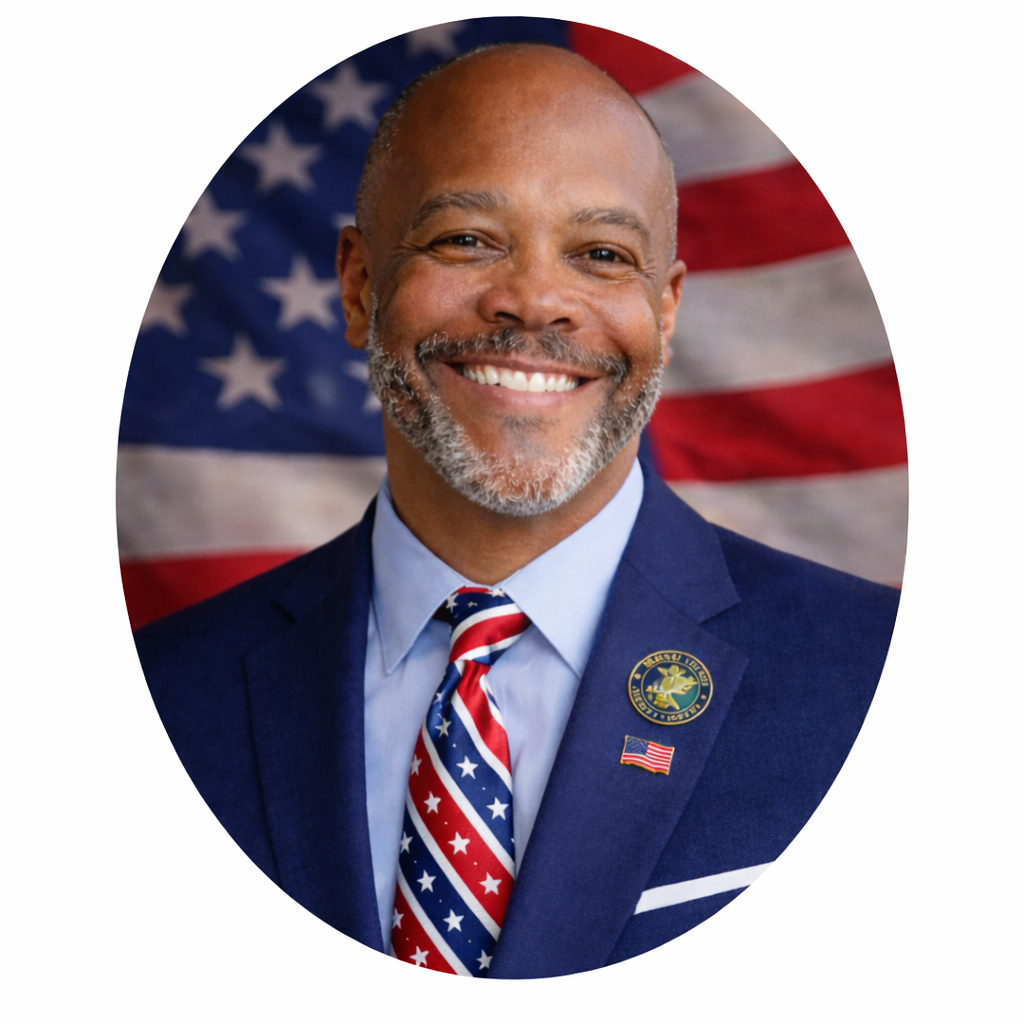
Willie Daniel
Willie Daniel is the Founder and Chief Executive Officer (CEO) of Global Vets Consulting (GVC) – National Veterans Disability Services, a veteran-led educational and medical evidence support organization dedicated to helping veterans better understand VA disability rating increases, DBQ medical evidence, secondary claims education, and C&P examination preparation.
He is a retired U.S. Army Medical Service Corps Officer with more than 27 years of honorable military service, a decorated Iraq combat veteran, and a retired federal official with the U.S. Department of Veterans Affairs. Throughout his military and federal career, Willie Daniel served in leadership, healthcare administration, operational, and veteran-support roles focused on improving services and support systems for servicemembers, veterans, and their families.
Drawing from decades of military leadership, healthcare administration, veteran advocacy, and federal government experience, Willie Daniel brings a practical, veteran-centered perspective to Global Vets Consulting’s educational articles, AI-powered veteran resources, video education initiatives, and outreach programs. His experience navigating military systems, medical documentation processes, and veteran-related administrative operations provides valuable insight into many of the challenges veterans face when seeking to better understand VA disability rating criteria, medical evidence, documentation strategies, and secondary condition education.
Through GVC’s “Veterans Helping Veterans” mission, his focus is on delivering clear, educational, and easy-to-understand information designed to empower veterans with knowledge, resources, and educational tools that may help them make more informed decisions regarding their individual VA disability journeys.
The information provided through GVC is intended for educational and informational purposes only and should not be considered legal or medical advice.
Disclaimer
Disclaimer: Global Vets Consulting, LLC (“GVC”) is a veteran-led educational and medical evidence support organization. GVC is not a law firm, is not a Veterans Service Organization (VSO), and is not affiliated with the U.S. Department of Veterans Affairs (VA) or any government agency.
Global Vets Consulting does not provide legal advice, medical advice, medical treatment, or healthcare services. GVC does not prepare, file, or submit VA disability claims on behalf of veterans. All information provided through this website, blog articles, videos, educational materials, AI tools, dashboards, templates, and communications is intended solely for general educational and informational purposes.
Veterans are encouraged to consult with accredited representatives, licensed attorneys, qualified medical providers, or Veterans Service Organizations regarding their specific legal, medical, or VA-related matters. VA disability decisions, ratings, and outcomes are determined solely by the U.S. Department of Veterans Affairs based on applicable laws, regulations, medical evidence, and individual circumstances. Past results do not guarantee future outcomes.