
What if the difference between a 10% and a 100% VA rating isn’t the severity of your condition, but the person who documented it? It’s a question many veterans ask as they weigh the choice of a va c&p exam vs private medical evidence when filing for a rating increase in 2026. You’ve already done the hard work of serving. Now, the thought of facing another denial because of a rushed exam or confusing medical jargon is enough to create significant anxiety. 🇺🇸
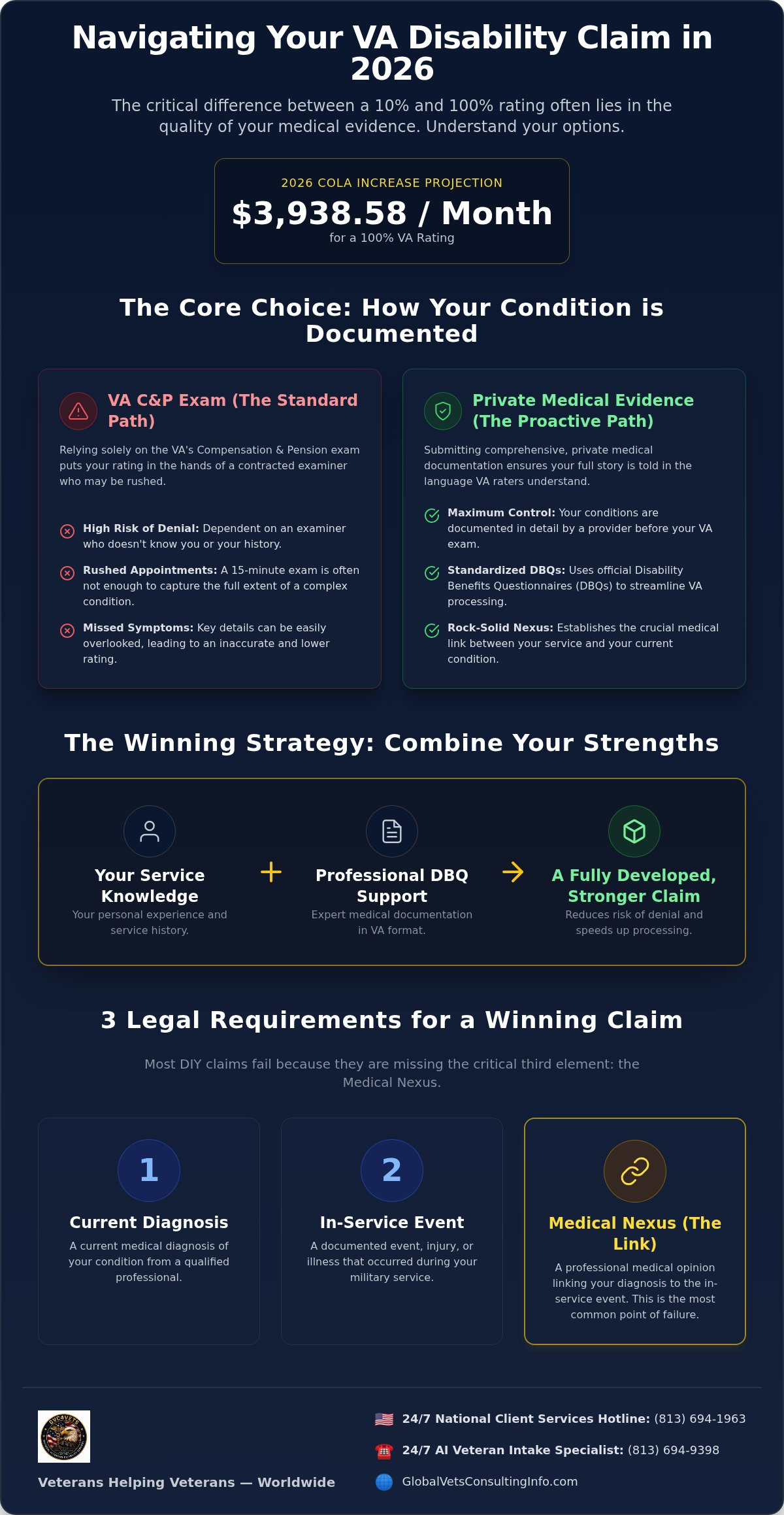
Our goal is to help you decide if the DIY path or professional medical education is the right move for your situation. We recognize that the system often feels stacked against you. This guide breaks down how to leverage the latest 2026 COLA increases, which bring a 100% rating to $3,938.58 per month, and how new laws like the Elizabeth Dole Act are changing evidence submission. We provide a clear roadmap to the rating you earned so you can finally trade confusion for peace of mind.
Key Takeaways
- Understand the critical differences between handling your VA claim solo and partnering with medical documentation experts to navigate 2026’s updated rating criteria.
- Learn how to weigh the va c&p exam vs private medical evidence to ensure your symptoms are accurately captured and standardized for faster VA processing.
- Discover why technical errors and lack of evidence cause most DIY claim denials and how to avoid these common pitfalls.
- Explore the “Winning Strategy” of combining your personal service knowledge with professionally completed Disability Benefits Questionnaires (DBQs).
- Identify why specialized medical evidence support often outperforms standard legal assistance when seeking a VA rating increase.
DIY VA Claim vs. Professional Help: The Real Difference in 2026 🇺🇸
Starting a VA disability claim often feels like entering a complex maze without a map. In 2026, the Veterans Benefits Administration continues to process a record number of claims, making the quality of your submission more critical than ever. The DIY path means you’re taking full responsibility for researching your conditions, gathering every service treatment record, and filing the paperwork alone. While this gives you total control, it often leaves a massive evidence gap that leads to denials.
Professional help comes in several forms. You might work with a Veterans Service Officer (VSO) for administrative filing or hire an accredited attorney for complex legal appeals. However, many veterans are turning to medical documentation experts like Global Vets Consulting to address the root cause of most denials: insufficient medical proof. The VA is placing an even higher priority on standardized Disability Benefits Questionnaires (DBQs) to streamline their decision-making process. These forms ensure that your symptoms are translated into the specific language raters need to see.
The real debate often centers on the va c&p exam vs private medical evidence. If you go the DIY route, you’re almost entirely dependent on the VA’s contracted examiner to tell your story. If that examiner is rushed or misses a key symptom, your rating suffers. Choosing to lead with private medical documentation ensures that your actual physical or mental limitations are documented clearly before your exam. When you compare the va c&p exam vs private medical evidence, the latter offers a level of detail and consistency that a 15-minute VA appointment rarely provides.
What is the Evidence-First Strategy?
Winning your claim isn’t about luck; it’s about meeting three specific legal requirements. You need a current medical diagnosis, a documented in-service event or injury, and a medical nexus that connects the two. Most DIY claims fail because they lack that third piece. An evidence-first strategy focuses on securing a rock-solid medical nexus before you ever hit the submit button. This proactive approach reduces the risk of having your claim sent back for more information, saving you months of frustration.
The Benefits and Risks of Filing Your VA Claim Solo (DIY)
Choosing to file your own claim is a decision rooted in self-reliance and a deep understanding of your own military journey. You have immediate access to your service history and a personal perspective on how your injuries affect your daily life. Filing solo also means you maintain total control over your submission timeline and avoid any upfront financial costs. For many, this path feels like the most direct way to handle their business with the VA.
However, this independence comes with significant operational risks. The most common pitfall is the technical error. If your submission doesn’t strictly adhere to the VA evidence requirements, you may find your VA claims denied for lack of evidence. In 2026, the VA’s Fully Developed Claim (FDC) program is faster than ever, but it requires you to have every piece of documentation ready at the moment of filing. Missing just one medical nexus can result in a denial that takes months or years to appeal.
Another danger is the “VA Math” trap. Many veterans assume that individual ratings simply add up, but the VA uses a combined rating table that calculates “what’s left” of a healthy person. Misunderstanding this process often leads to frustration when a veteran expects a 100% rating but receives 80% or 90%. If you’re feeling overwhelmed by these calculations, exploring educational resources for VA ratings can help clarify your path forward.
The DIY Evidence Trap
A common mistake in DIY claims is over-relying on buddy letters. While statements from fellow service members provide excellent context, they are not a substitute for professional medical documentation. When you weigh the va c&p exam vs private medical evidence, remember that a C&P examiner only has a few minutes to review your file. If you walk into that exam without private evidence to guide the conversation, you’re leaving your earned rating in the hands of a stranger who might be having a bad day or a rushed schedule.
Why Professional Medical Documentation Outperforms Standard Legal Help
Legal representation plays a vital role when your claim involves complex legal disputes or appeals. Many veterans seek university legal assistance for veterans to handle these administrative hurdles. However, an attorney’s job is to argue the law, not to provide medical evidence. The VA makes decisions based on clinical findings, not legal theories. When you weigh the va c&p exam vs private medical evidence, it’s clear that professional medical documentation from experts like Global Vets Consulting often leads to faster results than standard legal help alone.
A primary tool in this process is the Disability Benefits Questionnaire (DBQ). These standardized forms are designed to give VA raters exactly what they need in a format they recognize. When you submit a professionally completed DBQ, you reduce the rater’s workload and minimize the risk of human error. This is especially critical when you’re seeking a VA disability rating increase. By providing standardized evidence, you position your claim for the Fully Developed Claim (FDC) advantage, which can lead to a decision in 30 days or less in 2026.
The Power of an Independent Medical Opinion
In the choice of va c&p exam vs private medical evidence, the weight of the evidence often comes down to probative value. A C&P examiner might see dozens of veterans a week, leading to rushed reports that overlook the nuances of your condition. Conversely, a private doctor’s DBQ provides a comprehensive view of your medical history and daily limitations. This independent medical opinion carries significant weight because it’s thorough and addresses the specific rating criteria the VA uses.
Streamlining Your Evidence
Global Vets Consulting specializes in educating you on how to secure this high-quality documentation. We help you move past the anxiety of the unknown by providing a clear path to standardized medical proof. If you’re ready to ensure your claim is decision-ready on day one, contact Global Vets Consulting today to learn more about our medical evidence education services.
Winning Strategy: Combining DIY Filing with Professional DBQ Support
The most effective path to your earned rating doesn’t require choosing between total independence and expensive legal fees. Instead, a hybrid approach allows you to maintain control over your filing while ensuring your medical documentation meets the highest standards. By understanding the strategic value of a va c&p exam vs private medical evidence, you can submit a claim that is difficult for the VA to ignore. This method bridges the gap between your personal experience and the technical requirements of the rater’s desk. 🇺🇸
Follow these four steps to execute a winning strategy in 2026:
- Step 1: Identify and Document. Review your medical records to identify all conditions related to your service. Gather your Service Treatment Records (STRs) to establish the initial service connection.
- Step 2: Educate and Secure Evidence. Partner with Global Vets Consulting to secure professionally completed DBQs for your specific conditions. This ensures your symptoms are captured using the precise language the VA requires.
- Step 3: Quality Review. Meticulously review your documentation for accuracy. Ensure the medical nexus is clear and that every symptom reported matches the severity of your daily lived experience.
- Step 4: Execute the Filing. Submit your claim through the VA disability claims process as a Fully Developed Claim (FDC). This signals to the VA that you have provided all necessary evidence, often resulting in a faster decision.
Why This Hybrid Model Wins in 2026
This model allows you to save significantly on legal fees because you aren’t paying a percentage of your backpay to an attorney for a standard increase. You lead with bulletproof medical proof that stands up to scrutiny. When you compare the va c&p exam vs private medical evidence, having your own documentation ready means you aren’t at the mercy of a single, brief appointment with a contract examiner.
We provide the tools to make this process seamless. Our 24/7 AI Veteran Intake Specialist is available for immediate guidance, ensuring you can start your journey toward a rating increase whenever you’re ready. This tech-forward approach, combined with our “Veterans Helping Veterans” ethos, provides the steady confidence you need to secure the benefits you earned through your service. 🌎
📞 24/7 National Client Services Hotline: 1-800-XXX-XXXX
🌐 Learn more at: GlobalVetsConsultingInfo.com
Take Command of Your VA Rating Journey 🇺🇸
You’ve served your country with honor; now it’s time to ensure the system honors your sacrifices. Success in 2026 isn’t just about choosing between filing solo or hiring help. It’s about ensuring your medical evidence is standardized and decision-ready from day one. By using the hybrid strategy of DIY filing paired with professional DBQ support, you bridge the technical gap that often leads to denials. This approach gives you the probative value needed when weighing the va c&p exam vs private medical evidence.
As a veteran-owned and operated team since 2021, we specialize in high-quality Disability Benefits Questionnaires that meet strict VA standards. We provide the steady guidance you need to navigate this complex process with peace of mind. Our 24/7 National Client Services Hotline is always ready to support your mission and ensure your claim is fully developed.
🌐 Get the Professional Medical Evidence You Need – Start Your DBQ Process Now
You don’t have to face the VA alone. Let’s work together to secure the earned rating you deserve. 🌎
Frequently Asked Questions
Is it better to file a VA claim myself or hire a professional in 2026?
The best path for most veterans is a hybrid approach where you maintain control of the filing while utilizing professional medical evidence education. Filing solo allows you to keep 100% of your backpay, but professional documentation ensures your claim isn’t denied due to technical errors. This strategy bridges the gap between your personal knowledge and the VA’s strict requirement for standardized medical proof.
What are the biggest mistakes to avoid when filing a DIY VA claim?
The most common error is walking into an appointment unprepared and relying solely on the examiner to document your symptoms. When comparing the va c&p exam vs private medical evidence, veterans often fail because they don’t have an independent diagnosis or a clear medical nexus already in their file. Submitting a claim without a completed DBQ often results in a “wait and see” situation that leads to a lower rating or an outright denial.
Can the VA reject a DBQ filled out by a private doctor?
The VA cannot legally ignore a DBQ from a private physician, but they can assign it less weight if it doesn’t meet specific clinical standards. To prevent this, your documentation must be thorough, address every required field, and use the precise language found in the VA’s rating schedule. Providing standardized, high-quality medical evidence makes it much harder for a rater to dismiss your private doctor’s findings in favor of a rushed contract exam.
How much does professional help for a VA claim cost?
Costs vary depending on whether you choose legal representation or medical evidence support. Attorneys often take a significant percentage of your backpay as a contingency fee, which can be thousands of dollars. Medical evidence education services typically involve flat fees for record reviews and document preparation. You should always verify the fee structure of any consultant to ensure it fits your financial situation while providing the specific documentation you need to win.
Will using professional medical documentation speed up my VA claim decision?
Submitting professional documentation often leads to a faster decision by qualifying your submission as a Fully Developed Claim. When you resolve the va c&p exam vs private medical evidence debate by providing your own evidence upfront, you reduce the VA’s need to schedule additional exams or request more records. In 2026, decision-ready claims are prioritized, which can significantly shorten the time you spend waiting for your rating increase.
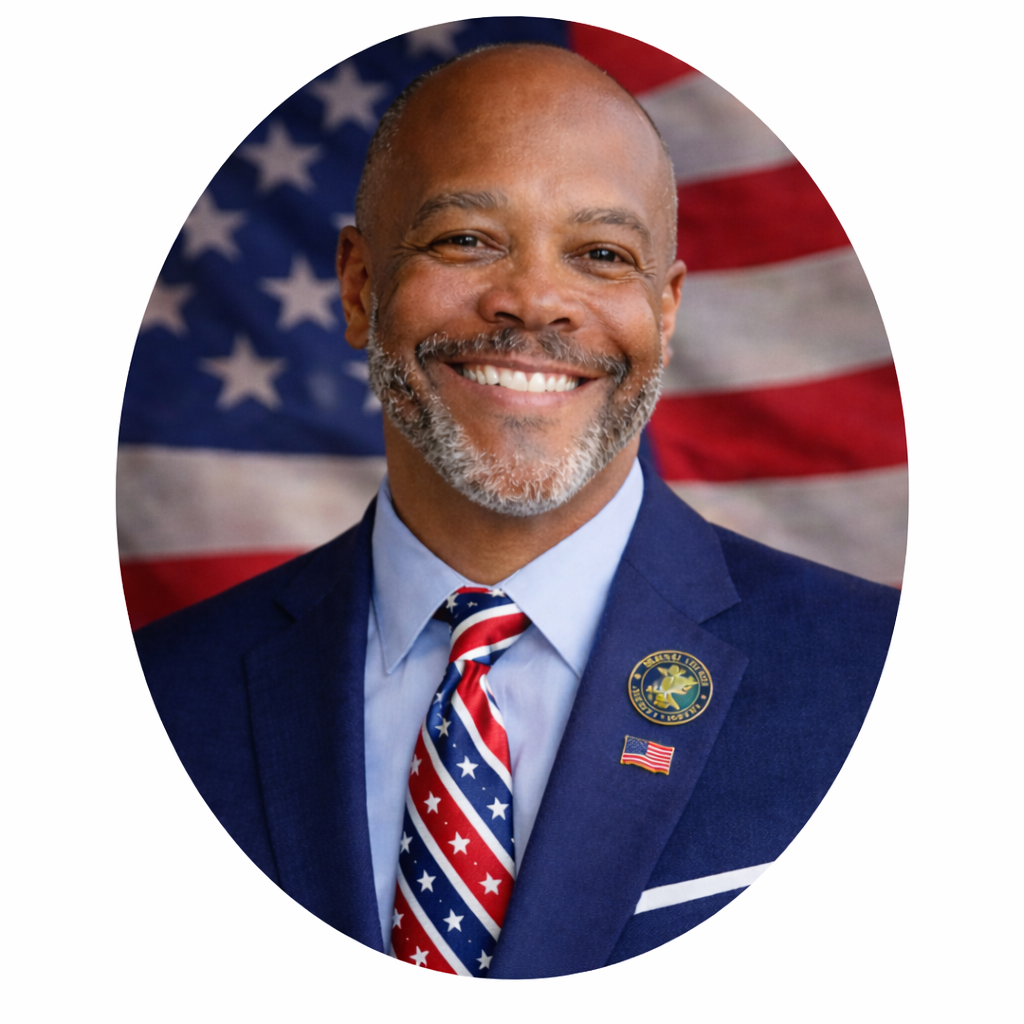
Article by
Willie Daniel
Willie Daniel is the Founder and Chief Executive Officer (CEO) of Global Vets Consulting (GVC) – National Veterans Disability Services, a veteran-led educational and medical evidence support organization dedicated to helping veterans better understand VA disability rating increases, DBQ medical evidence, secondary claims education, and C&P examination preparation.
He is a retired U.S. Army Medical Service Corps Officer with more than 27 years of honorable military service, a decorated Iraq combat veteran, and a retired federal official with the U.S. Department of Veterans Affairs. Throughout his military and federal career, Willie Daniel served in leadership, healthcare administration, operational, and veteran-support roles focused on improving services and support systems for servicemembers, veterans, and their families.
Drawing from decades of military leadership, healthcare administration, veteran advocacy, and federal government experience, Willie Daniel brings a practical, veteran-centered perspective to Global Vets Consulting’s educational articles, AI-powered veteran resources, video education initiatives, and outreach programs. His experience navigating military systems, medical documentation processes, and veteran-related administrative operations provides valuable insight into many of the challenges veterans face when seeking to better understand VA disability rating criteria, medical evidence, documentation strategies, and secondary condition education.
Through GVC’s “Veterans Helping Veterans” mission, his focus is on delivering clear, educational, and easy-to-understand information designed to empower veterans with knowledge, resources, and educational tools that may help them make more informed decisions regarding their individual VA disability journeys.
The information provided through GVC is intended for educational and informational purposes only and should not be considered legal or medical advice.
Disclaimer
Disclaimer: Global Vets Consulting, LLC (“GVC”) is a veteran-led educational and medical evidence support organization. GVC is not a law firm, is not a Veterans Service Organization (VSO), and is not affiliated with the U.S. Department of Veterans Affairs (VA) or any government agency.
Global Vets Consulting does not provide legal advice, medical advice, medical treatment, or healthcare services. GVC does not prepare, file, or submit VA disability claims on behalf of veterans. All information provided through this website, blog articles, videos, educational materials, AI tools, dashboards, templates, and communications is intended solely for general educational and informational purposes.
Veterans are encouraged to consult with accredited representatives, licensed attorneys, qualified medical providers, or Veterans Service Organizations regarding their specific legal, medical, or VA-related matters. VA disability decisions, ratings, and outcomes are determined solely by the U.S. Department of Veterans Affairs based on applicable laws, regulations, medical evidence, and individual circumstances. Past results do not guarantee future outcomes.