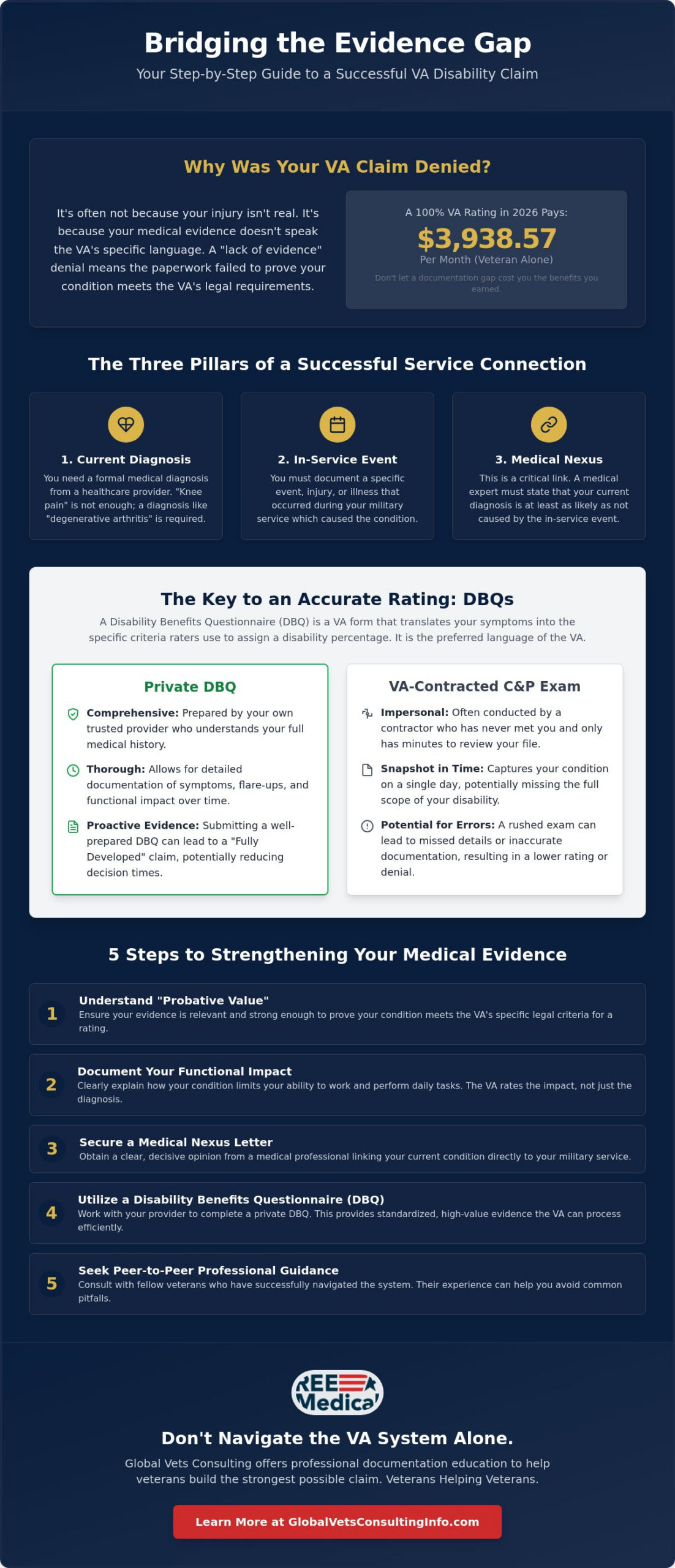
What if the reason your claim was denied wasn’t because your injury isn’t real, but because your medical evidence didn’t speak the VA’s specific language? You aren’t alone if you feel overwhelmed by complex terminology or anxious about your next C&P exam. Finding the right VA Claims Help is often the difference between a frustrating denial and the 100% rating you deserve, which in 2026 pays $3,938.57 per month for a veteran alone following the latest cost-of-living adjustments.
We understand that “lack of evidence” denials feel like a personal rejection of your service. It’s frustrating to know your body is hurting while a bureaucrat tells you the paperwork doesn’t match. This article will teach you how to bridge that medical evidence gap through professional DBQ education and peer-to-peer support. You’ll gain a clear understanding of medical evidence requirements and learn how to navigate the system with steady confidence. We’ll walk through the essential steps to prepare for your exams and explain how fellow veterans can help you secure a successful rating increase through meticulous documentation and education.
Key Takeaways
- Understand why standard medical records often lack the “probative value” required for a successful claim and how to address these deficiencies.
- Discover how to access expert VA Claims Help to ensure your medical evidence aligns precisely with the VA’s specific rating criteria.
- Learn the critical role of Disability Benefits Questionnaires (DBQs) in translating your physical or mental symptoms into an accurate disability percentage.
- Find out how to transition your application to “Fully Developed” status to reduce processing times and improve the accuracy of your rating.
- Explore how professional documentation education from fellow veterans simplifies the complex administrative process and helps you secure the benefits you earned.
Understanding the VA Claims Evidence Gap: Why Benefits are Denied in 2026
Many veterans are surprised when they receive a denial letter despite having decades of medical history. This often happens because of the “evidence gap,” where standard medical records fail to speak the specific language used by the Veterans Benefits Administration (VBA). To win your claim, your documentation must have probative value. This means your evidence must be relevant and strong enough to prove your condition meets the VA’s legal requirements for a specific rating percentage. Standard records show you were treated, but they don’t always prove you are disabled according to the law.
If you’ve had a va claim denied for lack of evidence, it isn’t necessarily the end of the road. Most denials in 2026 stem from a failure to link a secondary condition to a primary service-connected disability. Professional VA Claims Help focuses on closing this gap by gathering the precise documentation that raters need to see to overturn a previous decision.
The Three Pillars of a Successful Service Connection
A solid claim stands on three specific legs. If one is missing, the whole thing collapses. First, you need a current medical diagnosis; the VA won’t grant benefits for “knee pain” without a formal diagnosis like degenerative arthritis. Second, you must document the in-service event or stressor that caused the issue. You need to show the “where” and “when” clearly. Finally, you need a medical nexus. This is the critical expert opinion that connects your current diagnosis to your time in uniform. Securing expert VA Claims Help ensures these three pillars are clearly established before you hit submit.
Common Pitfalls in the Evidence-Gathering Phase
One major mistake is relying solely on the VA’s “Duty to Assist” to find your records. While the VA is required to help, their system has processed over 2 million claims as of June 2026. This massive volume can lead to missing files or overlooked clinical notes. Another pitfall is failing to describe functional impact. The VA doesn’t just rate you on your diagnosis; they rate you on how that condition limits your ability to work and perform daily tasks. Without documenting how your health affects your daily work life, you’re likely to receive a lower rating than you’ve actually earned.
The Critical Role of Disability Benefits Questionnaires (DBQs) in 2026
A Disability Benefits Questionnaire (DBQ) is a standardized form designed to ensure medical evidence meets specific VA rating schedule requirements. It isn’t just a summary of your health; it’s a technical document that translates your symptoms into the specific criteria the VA uses to assign a rating. Understanding what is a dbq for va claims is vital for any veteran seeking an accurate evaluation. While a regular doctor’s note might mention you have pain, a DBQ records exact measurements like range of motion or the frequency of flare-ups.
In the 2026 claims environment, the VA relies on these forms to maintain an accuracy rate of over 94%. As you learn how to file a VA disability claim, you’ll see that standardized evidence is the preferred currency of the rater. With the VA processing over 2 million claims as of June 1, 2026, they need data that is easy to read and impossible to misinterpret. A well-prepared DBQ provides exactly that.
Private DBQs vs. VA-Contracted C&P Exams
Many veterans experience anxiety about Compensation and Pension (C&P) exams. These appointments are often short and conducted by contractors who don’t know your medical history. A private DBQ acts as a safeguard. It provides a more comprehensive view of your condition from a provider who has the time to document your symptoms thoroughly. This proactive approach ensures the rater sees a complete picture of your health, rather than a snapshot from a fifteen-minute exam. If you’re feeling overwhelmed, professional DBQ education can help you organize your records effectively.
Accuracy in Documentation: The Key to a Correct Rating
Every checkbox on a DBQ carries weight. If a provider misses a single section, it can lead to a lower percentage or a complete denial. You must ensure your medical provider understands VA-specific terminology. Phrases that mean one thing in a hospital can mean something entirely different to a VA rater. Utilizing expert VA Claims Help ensures your documentation is meticulous and accurate. This level of detail is what secures the rating you’ve earned through your service.
5 Steps to Strengthening Your Medical Evidence Before Filing
Proactive claim preparation is the key to moving your application from “Standard” to “Fully Developed” status. While the VA processed over 2 million claims as of June 2026, Fully Developed Claims (FDCs) are often decided more efficiently because you provide all necessary evidence upfront. You can refer to our guide on the va disability claims process step by step to ensure your evidence submission is timed perfectly. Organizing your medical history into a clear, chronological timeline makes the rater’s job easier and reduces the chance of critical details being overlooked during the review process.
Supporting evidence should also include lay statements or “buddy letters.” These personal accounts from family members or fellow service members provide vital context about the functional impact of your condition. They fill in the blanks that clinical records might miss, specifically regarding how your symptoms affect your daily life and ability to work. If you find this process confusing, seeking expert VA Claims Help can ensure your supporting statements are structured to provide maximum probative value.
Audit Your Service Treatment Records (STRs)
Start by identifying any “missing” events that occurred during your time in service. Many veterans have injuries that weren’t fully documented in a clinic while they were deployed. You must match these past incidents to your current medical complaints to create a seamless paper trail. This audit ensures that every claim you file has a clear point of origin in your service record, which is essential for establishing service connection.
Securing a Professional Medical Opinion
A diagnosis alone is rarely enough; you often need a Nexus Letter to solidify the foundation of your claim. This document provides a medical professional’s expert opinion that your condition is “at least as likely as not” related to your service. You can provide your doctor with Public Disability Benefits Questionnaires (DBQs) to help them understand the specific data points the VA requires. Educating your private physician on these forms ensures their notes are precise and legally useful. Learn how to strengthen your medical evidence today to secure the rating you’ve earned.
Professional Documentation Support: How Global Vets Consulting Bridges the Gap
Global Vets Consulting operates with a single, clear mission: Veterans Helping Veterans. We provide professional VA Claims Help by focusing specifically on the quality and accuracy of your medical documentation. While some organizations are currently overwhelmed by the high volume of claims in 2026, our approach remains meticulous and duty-bound. We assist you in gathering the specific medical evidence required for a dbq for va disability rating increase, ensuring your symptoms are documented with the precision that VA raters expect.
Our process is designed to streamline the evidence-gathering phase, which significantly reduces veteran anxiety and stress. We don’t believe in high-pressure tactics. Instead, we offer a partnership based on transparency and integrity. By bridging the gap between your medical history and the VA’s rating schedule, we help you secure the maximum rating you’ve earned through your service. This methodical flow ensures you feel informed and empowered throughout the entire process.
A Technology-Forward Approach for Modern Veterans
We utilize modern tools to ensure you never feel neglected by the system. Our 24/7 AI Veteran Intake Specialist 🌐 provides immediate support when you need it most, regardless of your time zone. This technology allows for worldwide accessibility, serving veterans whether they are stationed overseas or retired in the States. We provide a structured and reliable experience from your first interaction to your final result, treating your claim with the respect it deserves.
Take the Next Step Toward Your Earned Benefits
Waiting to file or update your claim can be a costly mistake. Every month of delay can cost you thousands in potential back-pay, especially with the 2.8% COLA increase that took effect for 2026. If you’re ready to move forward with steady confidence, our 24/7 National Client Services Hotline 📞 is available to guide you. Don’t let a “lack of evidence” denial stand between you and your benefits. Start your evidence-gathering journey with Global Vets Consulting today! 🇺🇸
Secure Your Earned Benefits with Steady Confidence
Securing the disability rating you earned through your service requires a strategy rooted in medical evidence quality rather than just administrative filing. You now have the tools to bridge the evidence gap by ensuring your documentation provides the probative value that VA raters require. By utilizing standardized DBQs and transitioning to a Fully Developed Claim status, you can navigate the complex 2026 claims environment with clarity and peace of mind. Our team has been veteran-owned and operated since 2021, and we remain dedicated to simplifying this bureaucratic process through specialized DBQ preparation and medical evidence education.
Don’t let the frustration of a previous denial or the anxiety of a C&P exam prevent you from receiving your maximum rating. Professional VA Claims Help is available to ensure your medical history is translated accurately into the VA’s specific language. You’ve served your country with honor, and now it’s time to ensure the system works for you. Take the next step toward a successful rating increase today.
🇺🇸 Get the Professional DBQ Support You Deserve — Contact Global Vets Consulting Now!
24/7 National Client Services Hotline: 1-800-XXX-XXXX
Frequently Asked Questions
How can I get help with my VA claim if it was already denied?
You can seek professional VA Claims Help to review your denial letter and identify the specific evidence gaps that led to the decision. Most denials occur because the link between your service and your current condition wasn’t established or the medical evidence lacked probative value. By gathering more precise documentation, such as a Nexus Letter or an updated DBQ, you can file a Supplemental Claim to present new and relevant evidence that addresses the rater’s concerns directly.
What is the fastest way to get a VA disability rating increase in 2026?
The fastest way to secure an increase is by submitting a Fully Developed Claim (FDC) that includes completed Disability Benefits Questionnaires (DBQs). As of late May 2026, the average time to complete a disability claim has been reduced to 78.6 days. Providing all required medical evidence upfront allows the VA to skip the evidence-gathering phase, which often results in a decision within 80 to 125 days for many initial claims processed this year.
Can a private doctor fill out a DBQ for my VA claim?
Yes, private healthcare providers can complete DBQs for your claim, and the VA is required to consider this evidence during the rating process. While the VA doesn’t reimburse the cost of these private exams, a well-documented form from your own physician often provides a more thorough assessment than a standard C&P exam. It’s essential to ensure your doctor uses the most current public-facing forms provided by the VA to maintain compliance and technical accuracy.
What happens if my C&P exam contradicts my private medical evidence?
The VA rater must weigh the probative value of both documents if a C&P exam contradicts your private medical evidence. This is where professional VA Claims Help becomes crucial to ensure your private evidence is more detailed, accurate, and persuasive than a rushed contractor exam. If the evidence is in “equipoise,” meaning both sides are equally strong, the VA is legally required to resolve the doubt in favor of the veteran.
How much does it cost to get professional help with VA claim documentation?
Costs for documentation support vary depending on the level of education and medical evidence coordination required for your specific conditions. While some organizations operate on a flat-rate fee for initial consulting services, others have different structures based on the complexity of the DBQ preparation. You should always verify the fee schedule during your initial consultation to ensure transparency and peace of mind before moving forward with your documentation strategy.
Article by
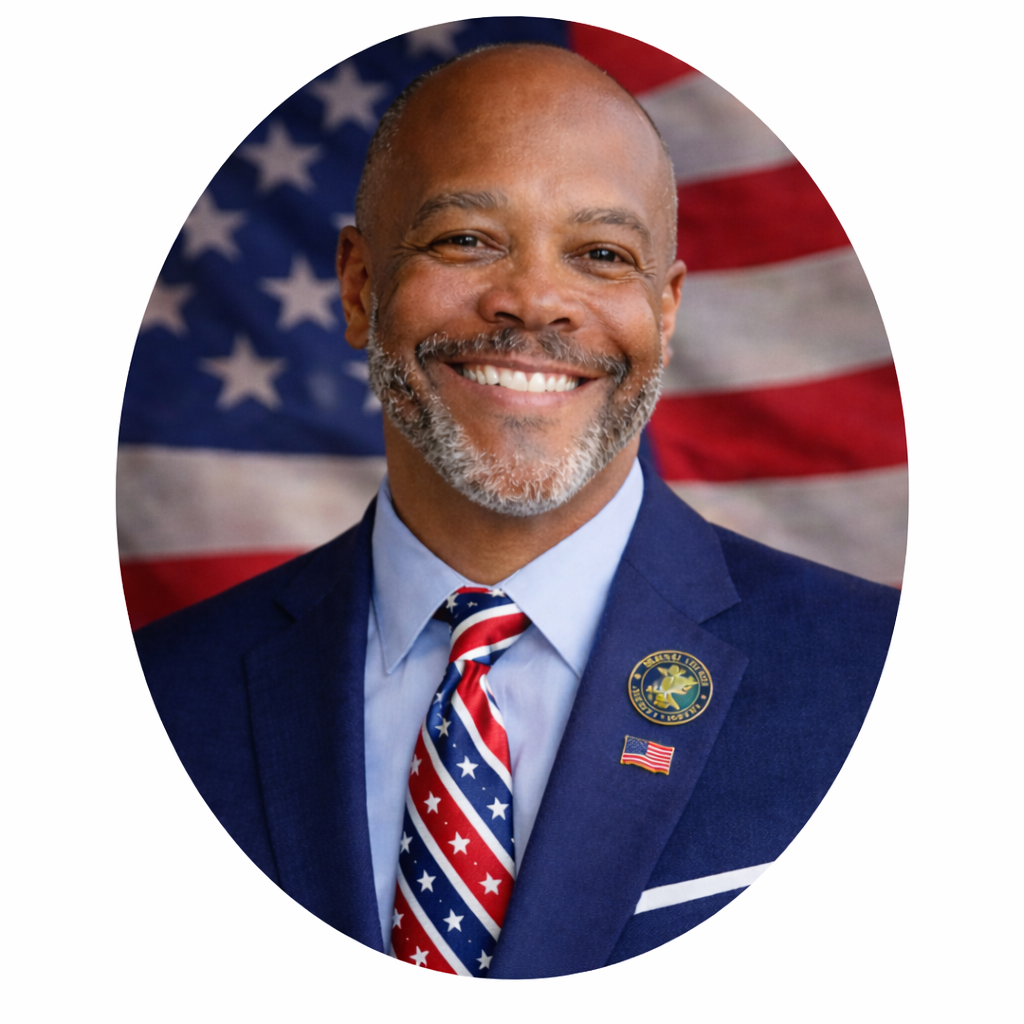
Willie Daniel
Willie Daniel is the Founder and Chief Executive Officer (CEO) of Global Vets Consulting (GVC) – National Veterans Disability Services, a veteran-led educational and medical evidence support organization dedicated to helping veterans better understand VA disability rating increases, DBQ medical evidence, secondary claims education, and C&P examination preparation.
He is a retired U.S. Army Medical Service Corps Officer with more than 27 years of honorable military service, a decorated Iraq combat veteran, and a retired federal official with the U.S. Department of Veterans Affairs. Throughout his military and federal career, Willie Daniel served in leadership, healthcare administration, operational, and veteran-support roles focused on improving services and support systems for servicemembers, veterans, and their families.
Drawing from decades of military leadership, healthcare administration, veteran advocacy, and federal government experience, Willie Daniel brings a practical, veteran-centered perspective to Global Vets Consulting’s educational articles, AI-powered veteran resources, video education initiatives, and outreach programs. His experience navigating military systems, medical documentation processes, and veteran-related administrative operations provides valuable insight into many of the challenges veterans face when seeking to better understand VA disability rating criteria, medical evidence, documentation strategies, and secondary condition education.
Through GVC’s “Veterans Helping Veterans” mission, his focus is on delivering clear, educational, and easy-to-understand information designed to empower veterans with knowledge, resources, and educational tools that may help them make more informed decisions regarding their individual VA disability journeys.
The information provided through GVC is intended for educational and informational purposes only and should not be considered legal or medical advice.
Disclaimer
Disclaimer: Global Vets Consulting, LLC (“GVC”) is a veteran-led educational and medical evidence support organization. GVC is not a law firm, is not a Veterans Service Organization (VSO), and is not affiliated with the U.S. Department of Veterans Affairs (VA) or any government agency.
Global Vets Consulting does not provide legal advice, medical advice, medical treatment, or healthcare services. GVC does not prepare, file, or submit VA disability claims on behalf of veterans. All information provided through this website, blog articles, videos, educational materials, AI tools, dashboards, templates, and communications is intended solely for general educational and informational purposes.
Veterans are encouraged to consult with accredited representatives, licensed attorneys, qualified medical providers, or Veterans Service Organizations regarding their specific legal, medical, or VA-related matters. VA disability decisions, ratings, and outcomes are determined solely by the U.S. Department of Veterans Affairs based on applicable laws, regulations, medical evidence, and individual circumstances. Past results do not guarantee future outcomes.