The number of veterans achieving a 100% disability rating has nearly doubled since 2021, yet many still find themselves stuck at a lower percentage than they deserve. It’s common to feel ignored by C&P examiners or overwhelmed by confusing jargon and “VA math” that never seems to add up in your favor. You’ve likely spent months waiting for a decision, only to receive a rating that doesn’t reflect your true physical or mental limitations. Getting the right Veteran Disability Assistance shouldn’t feel like an uphill battle against the very system meant to support you.
We believe that every veteran deserves a clear and predictable path to their earned benefits. This article will teach you how to secure the rating you’ve earned by mastering medical evidence and the DBQ process. We’ll provide a roadmap toward a 100% P&T rating and explain how to use Fully Developed Claims to get a faster decision from the VA. You’re about to learn how to document your limitations with such precision that your evidence speaks for itself, ensuring your claim is processed with the accuracy and respect it requires.
Key Takeaways
- Understand why the VA is prioritizing standardized medical documentation in 2026 to accelerate claim decisions and reduce the backlog.
- Discover how private Disability Benefits Questionnaires (DBQs) serve as the essential medical evidence needed to accurately document your physical and mental limitations.
- Learn a logical roadmap for identifying under-rated conditions and securing the independent medical evidence required for a successful rating increase.
- Access specialized Veteran Disability Assistance that simplifies complex VA jargon and provides a clear path toward the benefits you’ve earned.
- Master the evidence-first strategy to submit Fully Developed Claims that can lead to faster processing and a 100% P&T rating.
Navigating Veteran Disability Assistance in 2026: The Evidence-First Approach
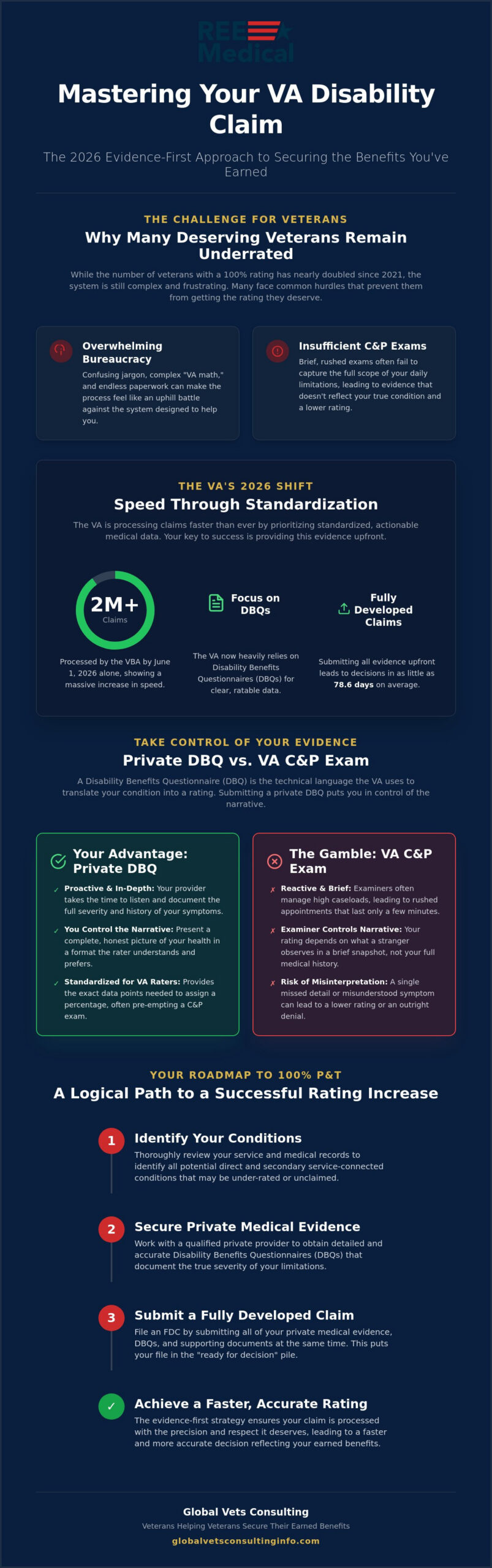
Veteran disability assistance encompasses the financial, medical, and educational support provided to those with service-connected conditions. In 2026, the Veterans Benefits Administration (VBA) is processing claims at a record pace, having completed over two million disability claims by June 1 alone. This increased speed is driven by a heavy reliance on standardized medical documentation, specifically Disability Benefits Questionnaires (DBQs). The VA is no longer just looking at your service records; they’re looking for clear, actionable data that matches their specific rating criteria.
To secure the rating you deserve, you must identify both direct and secondary service connections. Direct connection is the straightforward link between an injury and your service. Secondary claims involve new conditions caused or aggravated by an existing service-connected disability, such as migraines resulting from high blood pressure. Waiting for the VA to “find” your evidence is a risky gamble. It often leads to lower ratings or denials because the VA’s examiners might not capture the full scope of your daily limitations during a brief exam. Proactive Veteran Disability Assistance ensures your evidence is front and center before the rater even opens your file.
The Shift Toward Fully Developed Claims (FDC)
Submitting all your medical evidence upfront through a Fully Developed Claim is the most effective way to reduce wait times. In May 2026, the average time to complete a claim decision dropped to 78.6 days, but this efficiency depends on your preparation. You’re the primary evidence gatherer in your own case. By providing comprehensive medical evidence and completed DBQs at the time of filing, you ensure your file is “ready for decision” the moment it hits a rater’s desk, bypassing the lengthy development phase that slows down standard claims.
Common Challenges in the Current VA System
Even with faster processing, the backlog remains a hurdle for veterans with weak documentation. “VA math” can be brutal; it doesn’t just add percentages together, it calculates what’s left of your “whole person,” making every documented symptom vital for reaching a higher combined rating. Service connection is the bridge between military duty and current medical diagnosis. Without a solid bridge built on independent medical evidence, your claim risks falling through the cracks of a complex and often indifferent bureaucracy.
The Power of Private Medical Evidence: Why DBQs Are Non-Negotiable
A Disability Benefits Questionnaire (DBQ) is the technical language the VA uses to translate your pain into a percentage. While many veterans focus solely on the administrative side of filing, the rater focuses on the medical findings that fit their specific rating schedule. A private DBQ allows you to present your symptoms in a format the rater already understands. This documentation effectively bridges the gap between a simple diagnosis and the functional limitations that dictate your monthly payment. If you want to understand the specifics of this process, learning what is a dbq for va claims is the first step toward a more accurate filing.
The primary advantage of private medical evidence is the quality of the clinical interaction. In many cases, VA-contracted examiners manage high caseloads and may only spend a few minutes reviewing your condition. A private provider takes the time to listen to your history and record the full severity of your symptoms. This level of detail is a core component of effective Veteran Disability Assistance. It ensures that the rater sees a complete, honest picture of your health rather than a rushed snapshot taken during a single appointment.
DBQs vs. C&P Exams: Taking Control of the Narrative
Submitting a private DBQ can often pre-empt or supplement a standard C&P exam. Because these forms mirror the VA’s own rating criteria, they provide the rater with the exact data points needed to assign a percentage. This proactive approach puts you in control of the narrative; you aren’t just waiting for an examiner to notice your limitations. You’re providing a standardized medical record that proves they exist. This is vital when seeking VA disability compensation for complex or worsening conditions.
Key Conditions That Benefit from Professional DBQ Support
Mental health ratings for PTSD, anxiety, or depression require meticulous documentation of social and occupational impairment. A private DBQ ensures these invisible wounds are captured correctly by a provider who understands your history. Similarly, musculoskeletal and neurological conditions rely on precise measurements of range of motion and functional loss. Without these specific metrics, the VA may default to a lower rating. If you feel your current evidence is lacking, our team can provide independent medical evidence education to help you strengthen your case before you file.
Step-by-Step Roadmap to Securing a VA Rating Increase
Achieving a higher rating requires a shift from passive waiting to active evidence management. Step 1 begins with a thorough review of your current award letter. You must identify conditions that have worsened since your last exam or were under-rated based on the VA’s criteria. Step 2 is securing independent medical evidence that accurately reflects your current symptom severity. This isn’t just about getting a doctor’s note; it’s about obtaining documentation that speaks the VA’s language and addresses their specific rating requirements.
Step 3 involves learning how to use a dbq for a va disability rating increase in 2026 to ensure your evidence is formatted correctly for rater review. Finally, Step 4 is submitting your claim as a Fully Developed Claim (FDC). This bypasses the VA’s evidence-gathering phase, which can often lead to long delays or incomplete records. By providing all documentation upfront, you simplify the rater’s job and speed up your decision. If you’re ready to start this process, reach out for expert VA rating increase education today. 🇺🇸
Identifying Secondary Conditions
Many veterans overlook the power of secondary service connection in their Veteran Disability Assistance strategy. This involves linking a new condition to one that is already service-connected. For example, you might link sleep apnea to PTSD or migraines to tinnitus. To succeed, you must provide a “nexus,” which is medical proof that Condition B was caused or aggravated by Condition A. The VA Disability Compensation system recognizes these links, but only if you provide the scientific rationale through a nexus letter or a detailed DBQ.
Overcoming a ‘Lack of Evidence’ Denial
If you’ve had a va claim denied for lack of evidence in the past, don’t lose hope. You can use a Supplemental Claim to introduce new and relevant medical documentation. This process allows you to keep your original effective date while addressing the specific gaps the VA identified in your previous denial. Providing high-quality Veteran Disability Assistance means ensuring that every symptom is backed by clinical data, leaving no room for the VA to question the validity of your claim.
Maximizing Your Benefits with Global Vets Consulting 🇺🇸
Global Vets Consulting operates with a mission-driven focus: veterans helping veterans. We understand that the VA bureaucracy is often cold and overwhelming. Our team provides the Veteran Disability Assistance you need to navigate this complex system with confidence. By focusing on professional DBQ preparation, we ensure your medical documentation is meticulous, compliant, and ready for rater review. This evidence-first approach is why Worldwide veterans trust us for their independent medical evidence education.
Many veterans face significant anxiety regarding the C&P examination. This stress often comes from a lack of control over how their symptoms are recorded by contracted examiners. We bridge this gap by providing thorough C&P examination preparation education. When you walk into an exam with a clear understanding of your own medical evidence, the process becomes a predictable step toward your goal rather than a source of fear. It’s about ensuring the examiner sees the full, accurate picture of your service-connected conditions.
Our Specialized Educational Resources
We prioritize high-impact areas that frequently result in under-rating, such as Mental Health, Sleep Apnea, and Musculoskeletal claims. Our va disability claims process step by step guide empowers you to lead your own claim from a position of strength. This resource ensures you aren’t just a number in a backlog; you’re a well-informed advocate for your own health and benefits. By mastering the DBQ process, you take the guesswork out of your VA rating increase.
Ready to Take the Next Step?
You don’t have to tackle this alone. Our team is ready to provide the Veteran Disability Assistance required to secure your earned rating and move toward a 100% P&T status. Contact us at any time to begin your journey toward a more accurate VA decision. We invite you to visit our website for a comprehensive resource review and to connect with our support team.
- 📞 24/7 National Client Services Hotline
- 🤖 24/7 AI Veteran Intake Specialist
- 🌐 GlobalVetsConsultingInfo.com
Secure the Rating You Deserve Today
Securing a fair VA rating is no longer about just filling out forms; it’s about mastering the medical evidence that the VA requires in 2026. By focusing on professional DBQ preparation and identifying secondary conditions, you take control of your claim’s outcome. Transitioning to a Fully Developed Claim (FDC) strategy ensures your file is ready for decision the moment it reaches a rater’s desk. This proactive approach is the most reliable way to achieve the 100% P&T rating you’ve earned through your service.
Global Vets Consulting is veteran-owned and operated since 2021. We are dedicated to providing specialized Veteran Disability Assistance through medical evidence education. Whether you use our 24/7 AI Veteran Intake Specialist or speak with our team directly, we offer a steady path forward through the bureaucracy. You don’t have to face this complex system alone. 🇺🇸
📞 Contact our 24/7 National Client Services Hotline for expert veteran disability assistance guidance. Your journey toward a higher rating starts with a single, informed step. We’re ready to stand with you as you claim the benefits you’ve rightfully earned.
Frequently Asked Questions
What is the most common reason for a VA disability claim denial in 2026?
The most common reason for a denial is a lack of sufficient or actionable medical evidence that proves a current diagnosis or a clear service connection. Even though the VA is processing claims at a record pace in 2026, raters still require specific data that matches their rating schedule. If your file lacks a detailed DBQ that captures your functional limitations, the rater often doesn’t have enough information to grant the benefits you’ve earned.
Can I use a private doctor to fill out my DBQ for a VA claim?
You can certainly use a private healthcare provider to complete a Disability Benefits Questionnaire (DBQ) for your claim. The VA is legally required to consider sufficient and actionable private medical evidence submitted by a veteran’s provider. Using a private doctor often ensures your symptoms are recorded by a professional who listens to your full history, which can provide a more accurate picture of your health than a rushed C&P exam.
How do I increase my VA disability rating from 70% to 100%?
Increasing your rating from 70% to 100% typically requires proving that your current conditions have worsened or identifying secondary conditions caused by your primary disabilities. Reaching the 100% threshold is difficult due to “VA math,” so you must document every symptom with extreme precision. Utilizing specialized Veteran Disability Assistance can help you identify under-rated conditions and secure the independent medical evidence needed to bridge the gap to a higher rating.
What is the difference between a Nexus Letter and a DBQ?
A Nexus Letter establishes the “link” between your military service and your current diagnosis, while a DBQ documents the “severity” of your symptoms. You can think of the Nexus Letter as the bridge that proves your condition is service-connected and the DBQ as the evidence that determines your actual percentage. Both documents are essential for a successful VA disability claim, particularly when you’re filing for secondary conditions or mental health increases.
Is veteran disability assistance available for secondary conditions?
Professional Veteran Disability Assistance is highly beneficial for secondary conditions, which are a major factor in reaching a 100% rating in 2026. Many veterans don’t realize that conditions like sleep apnea or migraines can be linked to existing service-connected disabilities. Our educational resources focus on helping you understand how to document these connections with the specific medical evidence required to prove that your secondary condition was caused or aggravated by your service.
Article by
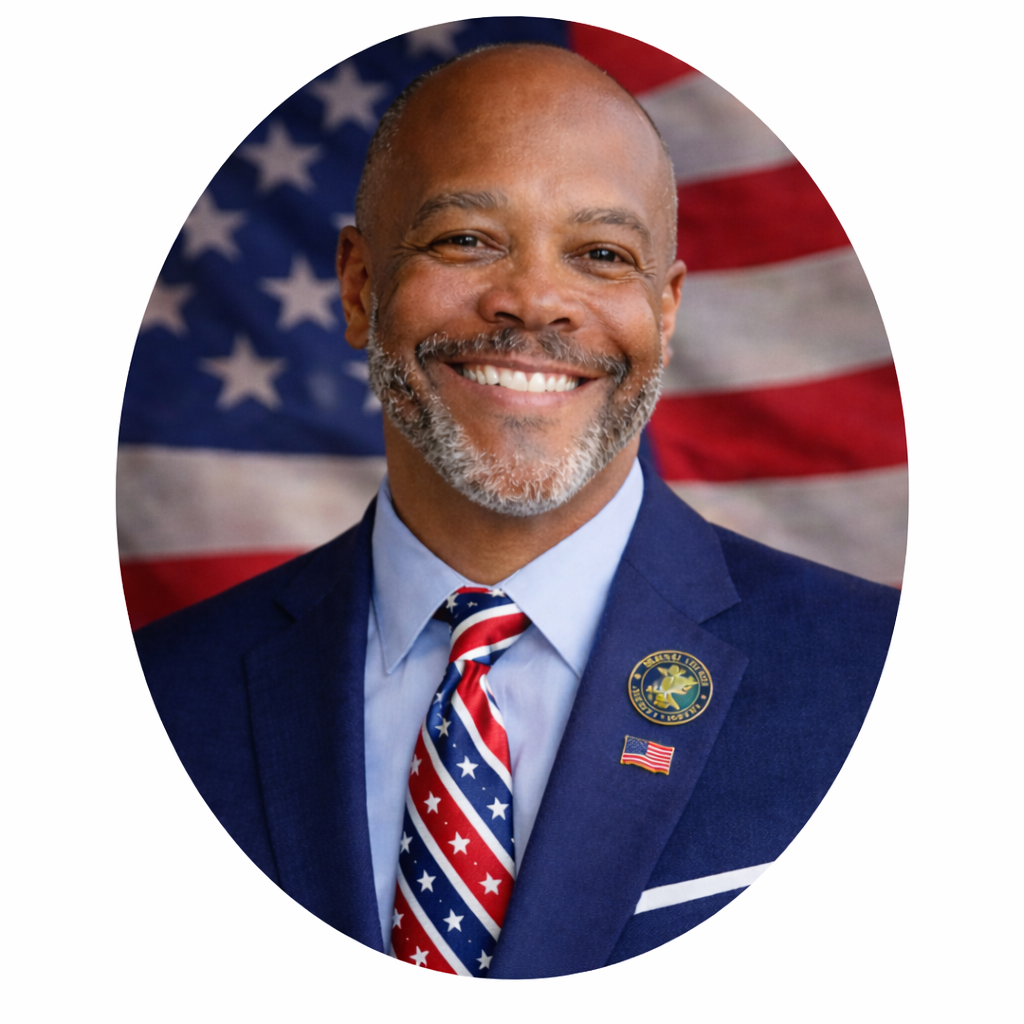
Willie Daniel
Willie Daniel is the Founder and Chief Executive Officer (CEO) of Global Vets Consulting (GVC) – National Veterans Disability Services, a veteran-led educational and medical evidence support organization dedicated to helping veterans better understand VA disability rating increases, DBQ medical evidence, secondary claims education, and C&P examination preparation.
He is a retired U.S. Army Medical Service Corps Officer with more than 27 years of honorable military service, a decorated Iraq combat veteran, and a retired federal official with the U.S. Department of Veterans Affairs. Throughout his military and federal career, Willie Daniel served in leadership, healthcare administration, operational, and veteran-support roles focused on improving services and support systems for servicemembers, veterans, and their families.
Drawing from decades of military leadership, healthcare administration, veteran advocacy, and federal government experience, Willie Daniel brings a practical, veteran-centered perspective to Global Vets Consulting’s educational articles, AI-powered veteran resources, video education initiatives, and outreach programs. His experience navigating military systems, medical documentation processes, and veteran-related administrative operations provides valuable insight into many of the challenges veterans face when seeking to better understand VA disability rating criteria, medical evidence, documentation strategies, and secondary condition education.
Through GVC’s “Veterans Helping Veterans” mission, his focus is on delivering clear, educational, and easy-to-understand information designed to empower veterans with knowledge, resources, and educational tools that may help them make more informed decisions regarding their individual VA disability journeys.
The information provided through GVC is intended for educational and informational purposes only and should not be considered legal or medical advice.
Disclaimer
Disclaimer: Global Vets Consulting, LLC (“GVC”) is a veteran-led educational and medical evidence support organization. GVC is not a law firm, is not a Veterans Service Organization (VSO), and is not affiliated with the U.S. Department of Veterans Affairs (VA) or any government agency.
Global Vets Consulting does not provide legal advice, medical advice, medical treatment, or healthcare services. GVC does not prepare, file, or submit VA disability claims on behalf of veterans. All information provided through this website, blog articles, videos, educational materials, AI tools, dashboards, templates, and communications is intended solely for general educational and informational purposes.
Veterans are encouraged to consult with accredited representatives, licensed attorneys, qualified medical providers, or Veterans Service Organizations regarding their specific legal, medical, or VA-related matters. VA disability decisions, ratings, and outcomes are determined solely by the U.S. Department of Veterans Affairs based on applicable laws, regulations, medical evidence, and individual circumstances. Past results do not guarantee future outcomes.