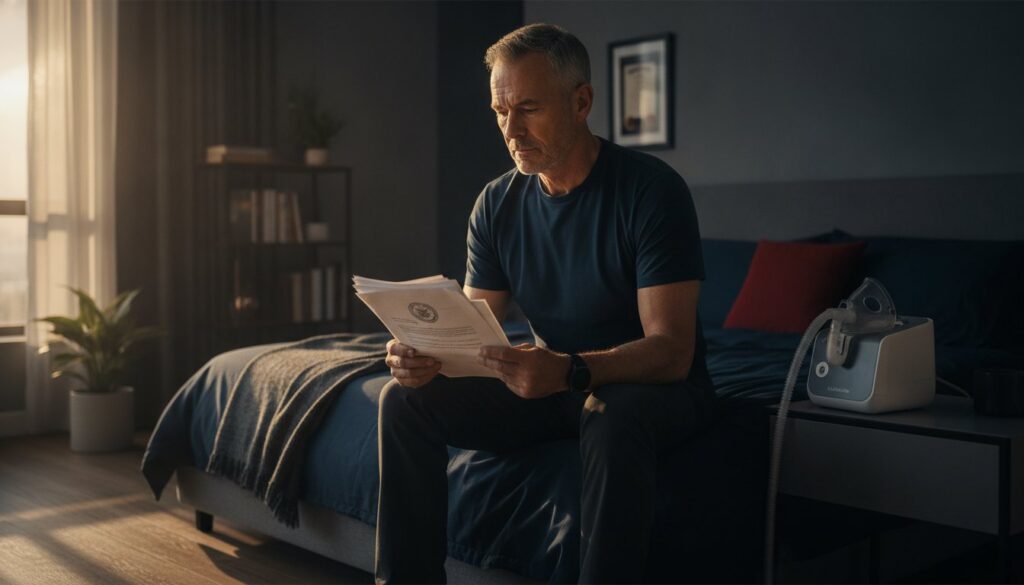
Did you know that sleep apnea is now the second most common respiratory condition among disabled veterans, with over 763,000 of us receiving compensation? Despite these high numbers, many of our peers find themselves stuck with a 0% or 30% rating that doesn’t reflect the reality of their daily struggle. If you’re preparing a Sleep Apnea Increase Claim, you likely feel that your current rating ignores the exhaustion that follows you everywhere. It’s frustrating to face a system that downplays your need for a CPAP or treats your worsening symptoms as a minor inconvenience.
We’re here to help you navigate this complex process. This guide explains how to document your condition effectively to move toward the 50% or 100% level you’ve earned. You’ll learn how to secure accurate medical documentation, like a DBQ, that the VA can’t simply overlook. We’ll walk through the 2026 rating requirements, clarify why proposed schedule changes are currently on hold, and provide a clear path toward the financial stability you deserve for your service.
Key Takeaways
- Understand the 2026 rating thresholds, specifically how the requirement of a breathing assistance device like a CPAP triggers the jump from a 30% to a 50% rating.
- Learn how to document worsening symptoms through a professional Disability Benefits Questionnaire (DBQ) to strengthen your Sleep Apnea Increase Claim.
- Discover how to overcome common VA denials by addressing service-connected obesity and proving consistent compliance with your prescribed medical equipment.
- Follow a structured, two-step approach to review your medical records and obtain the thorough documentation necessary for a successful rating increase.
Understanding the Sleep Apnea VA Rating Criteria for an Increase
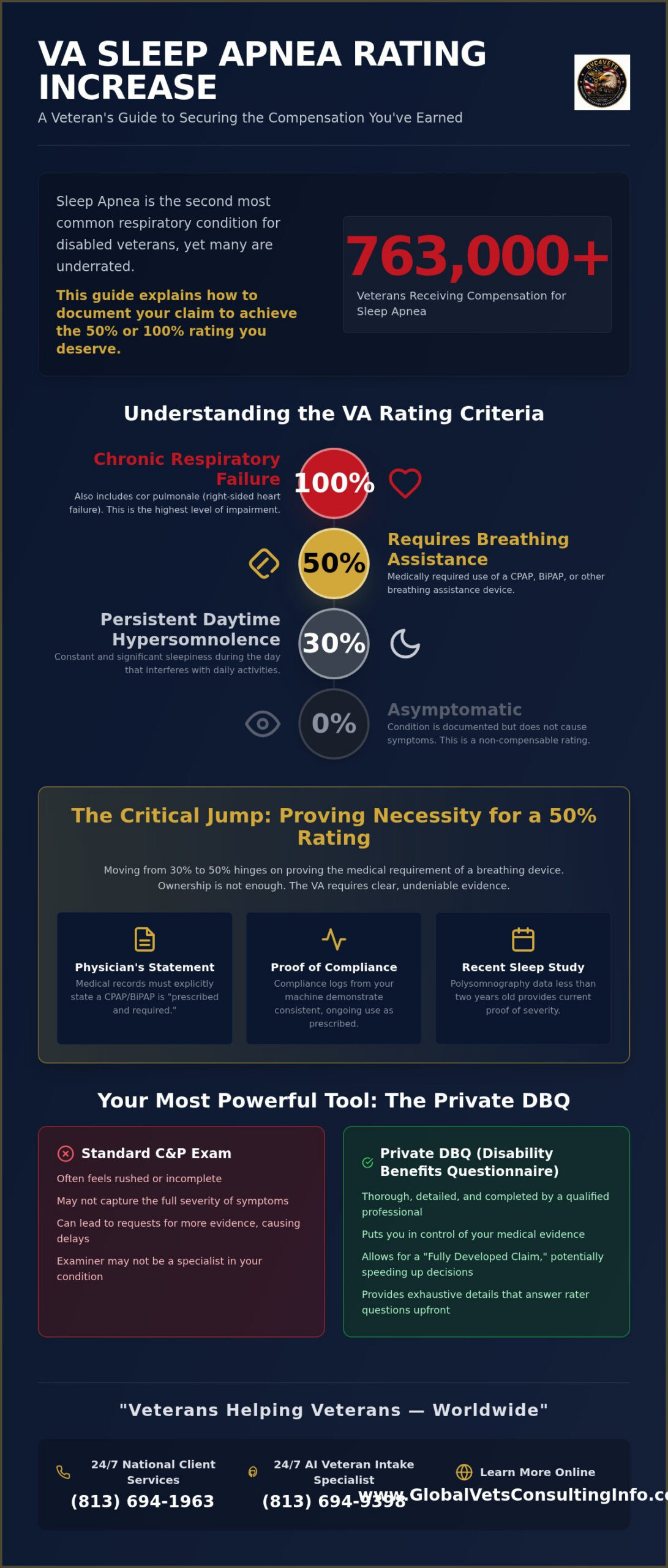
Navigating the VA rating schedule requires understanding how specific symptoms translate to compensation levels. For those asking What is Sleep Apnea? in the context of a disability claim, the VA recognizes three types: obstructive, central, and mixed. As of August 2026, ratings are assigned at 0%, 30%, 50%, or 100%. A 0% rating means the condition is documented but asymptomatic. The 30% level is granted for persistent daytime sleepiness. To reach the 100% level, you must demonstrate chronic respiratory failure or cor pulmonale, which is right-sided heart failure caused by high blood pressure in the pulmonary arteries. This foundational knowledge is the first step in a successful Sleep Apnea Increase Claim.
The 30% vs. 50% Threshold: Why Most Increases Stall
Moving from a 30% to a 50% rating is the most common goal for a Sleep Apnea Increase Claim. The difference hinges entirely on the “requirement” of a breathing assistance device like a CPAP or BiPAP machine. Many claims stall because the veteran has a machine but lacks clear evidence of medical necessity. The VA doesn’t just want to see that you own a CPAP; they need a physician’s statement confirming that the device is required to treat your service-connected condition. Without this specific documentation, the VA often maintains the lower rating despite worsening symptoms.
Proposed 2026 Changes to Sleep Apnea Ratings
There’s significant discussion regarding proposed updates to the VA rating schedule. While the VA has considered shifting toward a model that rates based on treatment effectiveness, these changes aren’t in effect as of mid-2026. If you already have a service-connected rating, you’re generally protected by grandfathering rules. This means your current rating won’t be reduced even if new criteria are eventually adopted. Staying informed about these shifts ensures you can document your symptoms accurately under the current, more favorable rules.
Essential Medical Evidence: Why a Private DBQ is Critical for Your Increase
A Disability Benefits Questionnaire (DBQ) is the standardized form the VA uses to evaluate the severity of a condition. When you’re filing a Sleep Apnea Increase Claim, this document serves as the primary evidence for the rater to determine your compensation level. While the VA often schedules a Compensation and Pension (C&P) exam, these appointments can feel rushed or incomplete. A private DBQ, completed by a qualified medical professional, offers a level of thoroughness that standard exams don’t always provide. It pre-empts common rater questions by providing exhaustive details upfront, which can significantly reduce the need for follow-up exams or clarifying statements.
The Power of Private Medical Evidence
Submitting your own medical evidence allows you to file what the VA calls a “Fully Developed Claim.” This approach puts the control back in your hands, ensuring that the physician captures every nuance of your worsening respiratory issues. For a deeper look at how this impacts your results, you can read about the Benefits of Using a Private DBQ for Your VA Claim. Providing high-quality evidence from the start shows the VA you’re serious about your health and your benefits. If you need help gathering this documentation, our expert team at Global Vets Consulting can guide you through the process.
Documenting CPAP Compliance and Medical Necessity
The VA requires current proof of severity to grant an increase. You should include sleep study results, specifically polysomnography data, that are less than two years old. To meet the VA Rating Criteria for Sleep Apnea for a 50% rating, your records must explicitly state that a CPAP or BiPAP machine is “prescribed and required” for treatment. Simply owning the device isn’t enough; you must demonstrate that it’s a medical necessity and that you’re compliant with its use. Compliance logs from your machine can be a powerful tool to prove you’re following the prescribed treatment plan.
Common Challenges in Sleep Apnea Increase Claims
Filing a Sleep Apnea Increase Claim often involves navigating specific rater biases that can lead to an unfair denial. One major hurdle is the “Obesity” argument. Instead of letting the VA use weight as a primary cause for your condition, you can argue that weight gain is a symptom or secondary to other service-connected issues. For example, joint injuries that limit mobility or medications for mental health conditions often lead to weight changes. Another frequent issue is the “Lack of Compliance” denial. You must prove you’re using your prescribed equipment by providing machine data logs. For more on Diagnosing and Treating Sleep Apnea, your medical records must show consistent therapy use to justify a higher rating.
Don’t fall for the “interim improvement” myth. A single sleep study showing fewer events doesn’t mean your condition is resolved; it often just means the treatment is working as intended. If you’ve already faced a setback, review our guide on how to handle a VA Claim Denied for Lack of Evidence.
Overcoming the C&P Exam Bias
It’s common for a C&P examiner to spend only five minutes reviewing your history. This brief window rarely captures the full impact of your symptoms or the medical necessity of your equipment. A professional DBQ acts as a powerful rebuttal to a negative or superficial C&P exam by providing a comprehensive medical perspective that the VA rater cannot easily ignore.
Secondary Service Connection as a Path to Increase
Sometimes the path to a Sleep Apnea Increase Claim is through secondary conditions. Linking your breathing issues to PTSD, sinusitis, or rhinitis can create a stronger case for a combined rating increase. You can explore how these conditions overlap in our resource on the DBQ for Mental Health Conditions. If you’re ready to secure the evidence you need, contact Global Vets Consulting today for expert guidance.
Filing Your Sleep Apnea Increase with Global Vets Consulting
Winning a Sleep Apnea Increase Claim requires a methodical approach that leaves no room for rater error. We follow a proven three-step process to help you move from a stagnant rating to the compensation you deserve. First, our expert team conducts a comprehensive review of your current rating and medical records. We identify the specific evidence gaps that led to your previous 0% or 30% decision. Next, we guide you through obtaining a professional DBQ that accurately captures your current symptom severity and the medical necessity of your CPAP. Finally, you submit your “Fully Developed Claim” (FDC) through VA.gov, providing the VA with everything they need to make a favorable decision without further delays.
Why Global Vets Consulting is Your Best Ally
As a veteran-owned and operated firm, we operate with a “Veterans Helping Veterans” ethos. We don’t view your claim as a transaction; it’s a mission to ensure you receive the benefits you earned through your service. Our team understands the intricacies of the bureaucratic system and is dedicated to simplifying it for you. We provide constant support through our 24/7 National Client Services Hotline 📞 at 800-484-0935. Whether you have questions about your medical evidence or need updates on your intake status, we’re available around the clock to offer steady guidance and support.
Ready to Take the Next Step?
The time to act is now, especially with potential shifts in the rating schedule on the horizon. Securing a 50% or 100% rating can provide the financial stability and peace of mind you need to manage your health. Don’t let a confusing process or a brief C&P exam stand in the way of your earned outcomes. Visit Global Vets Consulting today to schedule your specialized intake session and start the process of documenting your worsening symptoms with precision and integrity.
Take Control of Your Earned Benefits Today
Securing the rating you deserve requires shifting from a simple diagnosis to detailed medical evidence. By understanding the 2026 rating thresholds and documenting the medical necessity of your breathing assistance device, you can successfully navigate a Sleep Apnea Increase Claim. We’ve explored how a professional DBQ provides the thoroughness that standard C&P exams often lack, ensuring your symptoms aren’t downplayed by a rushed review. Whether you’re addressing rater bias or linking symptoms to secondary conditions, the key is accurate and meticulous documentation.
Global Vets Consulting is a veteran-owned and operated firm dedicated to helping you secure these earned outcomes. We specialize in professional DBQ preparation and offer round-the-clock support through our 24/7 National Client Services Hotline at 800-484-0935. Start Your Sleep Apnea Increase Claim with Global Vets Consulting Today! 🇺🇸 You’ve served your country with honor; now it’s time to ensure the VA honors its commitment to your health and well-being.
Frequently Asked Questions
Can I get a sleep apnea increase if I don’t use a CPAP machine?
Yes, but your rating will likely be capped at 30% unless you meet the rare criteria for a 100% rating. Under current 2026 guidelines, the jump to 50% specifically requires the use of a breathing assistance device like a CPAP or BiPAP. If you don’t use a device but suffer from chronic respiratory failure, you might qualify for the 100% level. Most veterans find that a prescribed device is necessary for a 50% rating.
How long does a VA sleep apnea increase claim take in 2026?
Most increase claims currently take between four to six months for the VA to process. You can potentially shorten this timeline by submitting a Fully Developed Claim (FDC) that includes a private DBQ. By providing all medical evidence upfront, you reduce the time the VA spends gathering records from third parties. This proactive approach helps you avoid the common delays often associated with the standard claim process.
Will the VA decrease my rating if I file for an increase?
Filing for an increase triggers a review of your condition, which carries a technical risk of a rating reduction. However, a decrease only happens if your medical evidence shows significant improvement in your symptoms. If you’re filing a Sleep Apnea Increase Claim because your condition has worsened, thorough documentation will protect your current rating. We focus on ensuring your medical evidence accurately reflects your current level of disability.
Do I need a new sleep study for a rating increase claim?
You should provide a sleep study that is less than two years old to prove your current symptom severity. The VA requires recent polysomnography data to confirm that your condition still meets the diagnostic criteria for a higher rating. If your last study was conducted several years ago, the rater may decide your evidence is outdated. A fresh study provides the concrete data needed for a successful Sleep Apnea Increase Claim.
Is sleep apnea secondary to PTSD a valid way to get an increase?
Establishing sleep apnea as secondary to PTSD is a highly effective strategy for many veterans seeking a higher combined rating. While this doesn’t change the sleep apnea rating criteria itself, it provides a service connection path if you were previously denied. If you’re already service-connected, documenting how PTSD aggravates your sleep apnea can help justify the medical necessity of your treatment. This holistic view often leads to a higher overall compensation level.

Article by
Willie Daniel
Willie Daniel is the Founder and Chief Executive Officer (CEO) of Global Vets Consulting (GVC4Vets) – National Veterans Disability Services, a veteran-led educational and medical evidence support organization dedicated to helping veterans better understand VA disability rating increases, DBQ medical evidence, secondary claims education, and C&P examination preparation.
He is a retired U.S. Army Medical Service Corps Officer with more than 27 years of honorable military service, a decorated Iraq combat veteran, and a retired federal official with the U.S. Department of Veterans Affairs. Throughout his military and federal career, Willie Daniel served in leadership, healthcare administration, operational, and veteran-support roles focused on improving services and support systems for servicemembers, veterans, and their families.
Drawing from decades of military leadership, healthcare administration, veteran advocacy, and federal government experience, Willie Daniel brings a practical, veteran-centered perspective to Global Vets Consulting’s educational articles, AI-powered veteran resources, video education initiatives, and outreach programs. His experience navigating military systems, medical documentation processes, and veteran-related administrative operations provides valuable insight into many of the challenges veterans face when seeking to better understand VA disability rating criteria, medical evidence, documentation strategies, and secondary condition education.
Through GVC’s “Veterans Helping Veterans” mission, his focus is on delivering clear, educational, and easy-to-understand information designed to empower veterans with knowledge, resources, and educational tools that may help them make more informed decisions regarding their individual VA disability journeys.
The information provided through GVC is intended for educational and informational purposes only and should not be considered legal or medical advice.
Disclaimer
Disclaimer: Global Vets Consulting, LLC (“GVC”) is a veteran-led educational and medical evidence support organization. GVC is not a law firm, is not a Veterans Service Organization (VSO), and is not affiliated with the U.S. Department of Veterans Affairs (VA) or any government agency.
Global Vets Consulting does not provide legal advice, medical advice, medical treatment, or healthcare services. GVC does not prepare, file, or submit VA disability claims on behalf of veterans. All information provided through this website, blog articles, videos, educational materials, AI tools, dashboards, templates, and communications is intended solely for general educational and informational purposes.
Veterans are encouraged to consult with accredited representatives, licensed attorneys, qualified medical providers, or Veterans Service Organizations regarding their specific legal, medical, or VA-related matters. VA disability decisions, ratings, and outcomes are determined solely by the U.S. Department of Veterans Affairs based on applicable laws, regulations, medical evidence, and individual circumstances. Past results do not guarantee future outcomes.