

Many veterans believe that reaching a 90% rating means they are just one small claim away from the finish line, but the reality of “VA math” often leaves them stuck in a frustrating gap. You’ve served your country and documented your injuries, yet the system can feel like it’s designed to keep you from the full benefits you’ve earned. It’s discouraging when your medical evidence is ignored during a C&P exam or when you’re unsure if you should pursue TDIU or a scheduler increase. Understanding how to get a 100 percent va disability rating is about medical documentation precision, not just the severity of your symptoms.
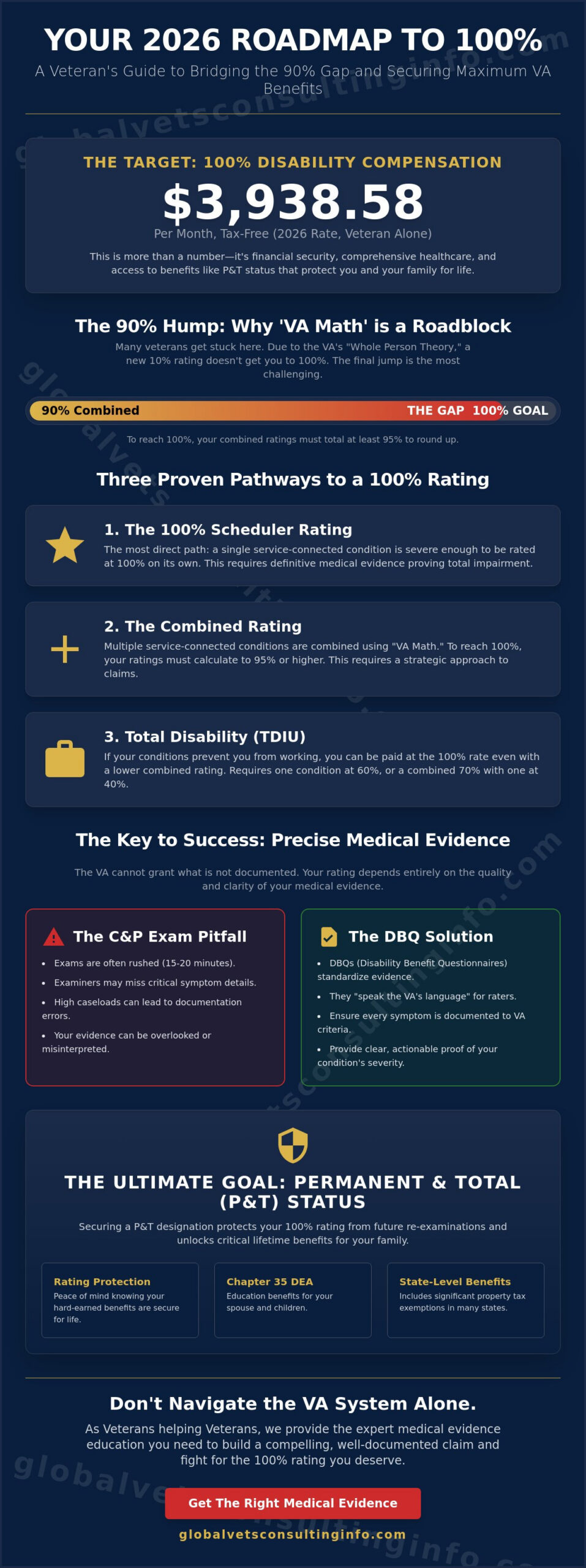
We’ve created this 2026 strategy guide to help you bridge that final gap and secure the maximum monthly compensation, which is now $3,938.58 for a veteran alone. You’ll discover the specific pathways and medical evidence requirements needed to reach the maximum rating and access 100% P&T benefits like healthcare and property tax exemptions. This article provides a clear roadmap for your documentation, moving from complex administrative hurdles to a predictable path for your earned outcomes.
Key Takeaways
- Identify the three primary routes to the maximum rating, including Scheduler, Combined, and TDIU pathways.
- Discover how to get a 100 percent va disability rating by leveraging Disability Benefits Questionnaires (DBQs) to provide standardized medical evidence.
- Learn how to bridge the gap from a 90% rating by strategically identifying high-value conditions and secondary service connections.
- Understand the critical role of independent medical evidence education in preparing for your next C&P examination.
- Gain a clear roadmap for documenting your symptoms to ensure the VA recognizes the full impact of your service-connected conditions.
Pathways to a 100% VA Disability Rating in 2026
Reaching the maximum rating is a significant milestone that provides long-term financial security and comprehensive healthcare for you and your family. For 2026, a veteran alone at the 100% level receives $3,938.58 per month in tax-free compensation. There are three primary routes to this outcome: a single 100% scheduler rating, a combined rating that rounds up to 100%, or Total Disability based on Individual Unemployability (TDIU). Each path requires specific medical evidence and a clear understanding of how the U.S. Department of Veterans Affairs evaluates your service-connected conditions.
Scheduler vs. Combined Ratings: Navigating ‘VA Math’
The “Whole Person” concept is the foundation of the rating system. If you have a 90% rating and receive a new 10% rating, you don’t automatically hit 100% because the VA considers you already 90% disabled. The VA calculates disability by subtracting each new rating from the remaining percentage of a veteran’s efficiency. To reach the top, your combined ratings must total at least 95% to round up. This complex calculation is why many veterans find themselves stuck at the 90% mark. Understanding how to get a 100 percent va disability rating requires a strategy that looks at your disabilities as a complete picture rather than isolated incidents.
TDIU: The Alternative Path to 100% Compensation
If your service-connected disabilities prevent you from maintaining substantially gainful employment, TDIU offers a critical alternative. You may qualify if you have one disability rated at 60% or a combined rating of 70% with at least one condition rated at 40%. This pathway pays you at the full 100% rate even if your combined scheduler rating is lower. 🇺🇸
In 2026, securing Permanent and Total (P&T) status is the goal for many. This designation means the VA does not expect your condition to improve, which protects your rating from future re-examinations. It also grants access to additional benefits like Chapter 35 education assistance for dependents and various state-level property tax exemptions. Moving toward this status requires meticulous documentation and a proactive approach to your medical evidence.
The Critical Role of Medical Evidence and DBQs
Medical evidence is the bedrock of any successful increase. Without it, the VA cannot verify the severity of your symptoms or their impact on your daily life. When you are researching About VA Disability Ratings, you’ll see that the VA relies on specific documentation to assign a percentage. This is why a standardized approach to your records is essential. If your evidence is disorganized or vague, you risk a lower rating than you deserve.
Standardization comes through Disability Benefits Questionnaires (DBQs). These forms ensure your medical evidence speaks the VA’s language. If you’ve ever wondered what is a dbq, it’s essentially a checklist that guides a medical professional to capture the exact data points the VA needs to make a decision. Using these forms correctly is a vital step in learning how to get a 100 percent va disability rating.
Why Your C&P Exam Might Be the Weak Link
Many veterans rely solely on the Compensation and Pension (C&P) exam. These appointments are often rushed. Contracted examiners might miss critical details because they are balancing high caseloads. If an examiner fails to document a specific range of motion or the frequency of your flare-ups, your rating will suffer. A private DBQ acts as a safeguard. It ensures that every symptom is documented according to the VA’s own criteria before you even step into the exam room.
How DBQs Clarify Symptom Severity for the Rater
VA raters aren’t doctors; they are administrative professionals. They look for specific “keywords” and “checkboxes” that match the federal rating schedule. DBQs translate medical jargon into these specific categories. By using a DBQ, your medical provider can provide a narrative that clearly outlines your functional loss. This clarity reduces the chances of a rater overlooking evidence that could push you to that maximum level. If you feel your previous medical evidence was ignored, focusing on DBQ preparation and education can provide the structure your claim needs to succeed.
Strategic Claim Selection to Overcome the 90% Hump
Hitting the 90% combined rating is often where the journey becomes most difficult. Because of how the VA rounds percentages, moving from 90% to 100% requires a significant jump in medical evidence or the addition of high-value conditions. If you’re looking for how to get a 100 percent va disability rating, you must look beyond just filing more claims. You need a strategy that targets conditions with high-rating potential and links them through secondary service connections. Understanding the Current VA disability compensation rates reveals why this push is worth the effort. The difference between 90% and 100% isn’t just a few dollars; it’s a monthly increase of over $1,500 for a veteran alone.
High-Value Primary and Secondary Conditions
Certain conditions are more likely to result in a 70% or 100% rating based on the VA’s criteria. Mental health conditions, including PTSD and major depressive disorder, are primary examples. Traumatic Brain Injury (TBI) and Sleep Apnea also carry significant weight. However, the real power often lies in secondary service connection. For instance, if you have a service-connected back injury that has caused nerve damage in your legs, you can claim radiculopathy secondary to that back pain. These secondary ratings stack on top of your primary conditions, helping you overcome the “VA math” hurdle without needing a single 100% scheduler rating.
Documenting Worsening Symptoms in 2026
If your current disabilities have deteriorated, filing for a va disability rating increase is a logical next step. A DBQ is the most effective tool for this because it allows your doctor to specifically document changes in your medical status. Your rating is determined by the frequency, severity, and duration of your symptoms as documented in your medical records. A strong “Nexus,” or medical link, is vital here to prove that your current state is still directly related to your service or your primary service-connected disability. If you’re ready to take the next step in your journey, explore our secondary VA claims education to see how we can help you document these critical links.
How Global Vets Consulting Supports Your 100% Goal 🌎
Global Vets Consulting operates with a “Veterans Helping Veterans” mission. We know the frustration of being underrated because we’ve been there. Our team focuses on providing a clear, predictable path forward for those who feel neglected by complex administrative systems. We offer specialized education on how to get a 100 percent va disability rating by ensuring your medical evidence is meticulous and compliant with current 2026 standards. This isn’t just a transaction; it’s a partnership rooted in duty and respect for your service.
Professional DBQ Documentation and Education
Success in a rating increase depends on the precision of your evidence. We provide comprehensive DBQ preparation and education services designed to translate your daily struggles into the specific language VA raters require. Our process ensures that every symptom is captured with the accuracy needed to reflect your true level of disability. We prioritize thoroughness and legitimacy, helping you gather independent medical evidence that stands up to scrutiny. By focusing on the details that C&P examiners might overlook, we help you build a stronger case for the maximum rating.
Ready to Start Your Journey to 100%?
You don’t have to navigate the bureaucracy alone. We’ve integrated modern technology with veteran expertise to provide immediate assistance whenever you need it. Whether you’re stuck at the 90% hump or need education on secondary service connections, our resources are designed to simplify your path. We are veteran-owned and understand the struggle firsthand, which is why we maintain constant availability for our community.
If you’re ready to secure the benefits you’ve earned, engage with our team today. We offer round-the-clock support to ensure you have the roadmap you need for a successful claim.
🇺🇸 Global Vets Consulting Worldwide
- 📞 24/7 National Client Services Hotline: 800-484-0131
- 🤖 24/7 AI Veteran Intake Specialist
- 🌐 Contact Global Vets Consulting Today
Take Command of Your 2026 VA Strategy
You now have a structured roadmap to move beyond the 90% gap and secure your financial future. Success in 2026 depends on your ability to present undeniable medical evidence that matches the VA’s strict rating criteria. By focusing on high-value conditions and utilizing secondary service connections, you can finally navigate the complexities of how to get a 100 percent va disability rating. Precision in your documentation is what separates a frustrating denial from a life-changing increase in your monthly compensation.
Global Vets Consulting has been veteran-owned and operated since 2021. We specialize in DBQ education and preparation to ensure your symptoms are documented with the exactness required for a successful increase. Our team is here to provide a steady path forward through our 24/7 National Client Services Hotline at 800-484-0131. You can also engage immediately with our AI Veteran Intake Specialist to start your documentation review and identify any missing links in your medical records.
Don’t let “VA math” or rushed exams stand between you and your earned benefits. Secure Your Medical Evidence with Global Vets Consulting today to take the next step toward your maximum rating. You’ve served your country with honor; now it’s time to ensure the system works for you. 🇺🇸
Frequently Asked Questions
What is the monthly payment for a 100% VA disability rating in 2026?
The monthly payment for a 100% VA disability rating for a veteran alone is $3,938.58 as of January 2026. This amount includes the 2.8% cost-of-living adjustment that took effect in late 2025. If you have dependents, your compensation increases. For example, a veteran with a spouse and one child receives approximately $4,150.43 per month. These benefits remain completely tax-free at the federal and state levels.
Can I work if I have a 100% scheduler disability rating?
You can maintain full employment while receiving a 100% scheduler rating without any income caps. The VA assigns scheduler ratings based on the severity of your medical symptoms rather than your employment status. This is a common point of confusion for many. Only veterans receiving Total Disability based on Individual Unemployability (TDIU) are restricted from “substantially gainful” employment. If your rating is scheduler, your career choices don’t impact your disability pay.
How do I move from a 90% rating to a 100% rating?
Moving from 90% to 100% requires you to bridge the “VA math” gap by adding new secondary claims or documenting that current conditions have worsened. Since the VA rounds to the nearest 10%, you actually need a combined raw score of 95% to reach the maximum level. Learning how to get a 100 percent va disability rating often involves identifying secondary conditions, such as sleep apnea or radiculopathy, that link directly to your primary service-connected disabilities.
Is a private DBQ better than a VA C&P exam for getting 100%?
A private DBQ is often more effective because it ensures your symptoms are documented thoroughly by a provider who understands your medical history. While the VA frequently schedules its own C&P exams, those appointments can be brief and sometimes miss critical functional limitations. A private DBQ provides the rater with a clear, standardized record of your condition before the exam even starts. This proactive approach helps prevent rater oversight and clarifies the severity of your symptoms.
What does ‘Permanent and Total’ (P&T) mean for a 100% rating?
Permanent and Total status means the VA considers your disabilities to be permanent with no medical expectation of improvement. This designation is highly sought after because it typically exempts you from future scheduled re-examinations. It also grants your family access to valuable benefits like CHAMPVA healthcare and Chapter 35 education assistance. Once you reach P&T status, your rating is protected from routine reductions, providing long-term peace of mind for you and your dependents.
Article by
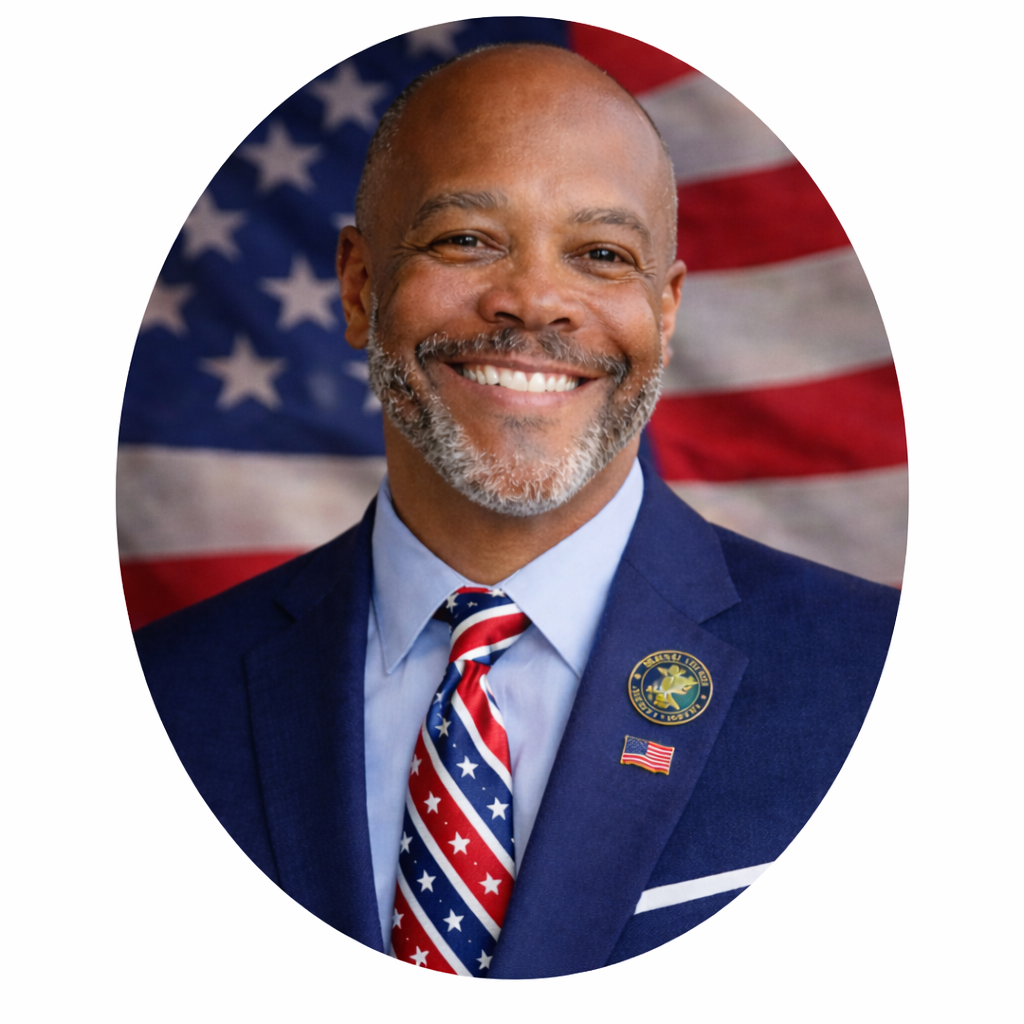
Willie Daniel
Willie Daniel is the Founder and Chief Executive Officer (CEO) of Global Vets Consulting (GVC) – National Veterans Disability Services, a veteran-led educational and medical evidence support organization dedicated to helping veterans better understand VA disability rating increases, DBQ medical evidence, secondary claims education, and C&P examination preparation.
He is a retired U.S. Army Medical Service Corps Officer with more than 27 years of honorable military service, a decorated Iraq combat veteran, and a retired federal official with the U.S. Department of Veterans Affairs. Throughout his military and federal career, Willie Daniel served in leadership, healthcare administration, operational, and veteran-support roles focused on improving services and support systems for servicemembers, veterans, and their families.
Drawing from decades of military leadership, healthcare administration, veteran advocacy, and federal government experience, Willie Daniel brings a practical, veteran-centered perspective to Global Vets Consulting’s educational articles, AI-powered veteran resources, video education initiatives, and outreach programs. His experience navigating military systems, medical documentation processes, and veteran-related administrative operations provides valuable insight into many of the challenges veterans face when seeking to better understand VA disability rating criteria, medical evidence, documentation strategies, and secondary condition education.
Through GVC’s “Veterans Helping Veterans” mission, his focus is on delivering clear, educational, and easy-to-understand information designed to empower veterans with knowledge, resources, and educational tools that may help them make more informed decisions regarding their individual VA disability journeys.
The information provided through GVC is intended for educational and informational purposes only and should not be considered legal or medical advice.
Disclaimer
Disclaimer: Global Vets Consulting, LLC (“GVC”) is a veteran-led educational and medical evidence support organization. GVC is not a law firm, is not a Veterans Service Organization (VSO), and is not affiliated with the U.S. Department of Veterans Affairs (VA) or any government agency.
Global Vets Consulting does not provide legal advice, medical advice, medical treatment, or healthcare services. GVC does not prepare, file, or submit VA disability claims on behalf of veterans. All information provided through this website, blog articles, videos, educational materials, AI tools, dashboards, templates, and communications is intended solely for general educational and informational purposes.
Veterans are encouraged to consult with accredited representatives, licensed attorneys, qualified medical providers, or Veterans Service Organizations regarding their specific legal, medical, or VA-related matters. VA disability decisions, ratings, and outcomes are determined solely by the U.S. Department of Veterans Affairs based on applicable laws, regulations, medical evidence, and individual circumstances. Past results do not guarantee future outcomes.

