

What if the 30-day window after filing isn’t just a deadline, but your most strategic opportunity to secure the rating you’ve earned? 🇺🇸 You’ve likely felt that sudden spike of anxiety after hitting the submit button, wondering if a missing Nexus Letter or an incomplete medical record will lead to an immediate denial. It’s frustrating to feel like your future is stuck in a digital black hole while you wait for a decision. We understand that pressure, and we know that waiting passively isn’t in a veteran’s nature.
The good news is that you have more control than you might think. This guide explains exactly how to submit additional evidence for VA claim using the latest 2026 digital tools like QuickSubmit and the VA.gov portal. You’ll discover the most effective ways to organize your medical evidence and DBQs to ensure the VA sees the full picture of your service-connected conditions. We’re going to provide a clear roadmap for your next steps, from prioritizing the right forms to meeting critical timelines, so you can move forward with steady confidence and the peace of mind that comes from taking proactive action.
Key Takeaways
- Understand the critical 2026 timelines, including the 30-day evidence window and the one-year deadline for submitting additional documentation.
- Learn exactly how to submit additional evidence for va claim using the latest digital tools like QuickSubmit and the VA.gov portal to keep your file updated.
- Discover how to use VA Form 21-4138 as a strategic cover letter to ensure your medical evidence and DBQs are correctly reviewed by the VA rater.
- Master the “Waiting Game” with proactive mental health strategies designed to reduce the stress of the evidence gathering and review phase.
- Prepare for your results by learning how to decode a Rating Decision letter and identifying the path forward if you disagree with the outcome.
Understanding the 2026 VA Claim Timeline and Evidence Windows 🇺🇸
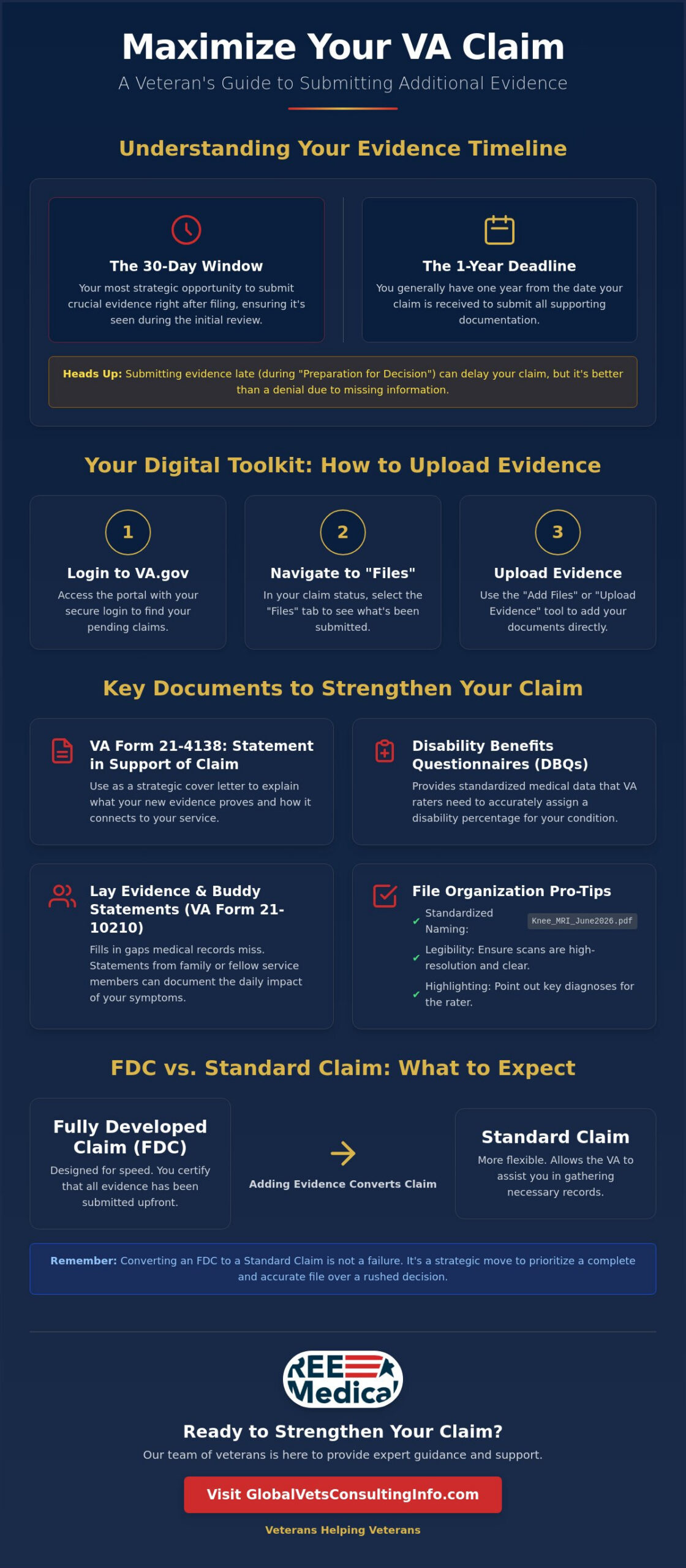
The 2026 VA claim process moves through several distinct phases, each requiring specific actions from the veteran. First, your claim is “Received” and logged into the system. Next, it enters “Initial Review,” where a claims processor ensures all basic requirements are met. The most critical phase is “Evidence Gathering, Review, and Decision.” This specific stage is often the longest because the Veterans Benefits Administration must coordinate medical records, schedule C&P exams, and verify service connections.
If you feel like your claim is stuck, remember that this is a meticulous review process designed to ensure accuracy. In 2026, the PACT Act continues to drive record-high claim volumes across the country. While this increased volume can affect processing speeds, it also means more veterans are receiving presumptive benefits than ever before. Knowing how to submit additional evidence for va claim during this window is your best tool for managing the timeline and ensuring your file is complete.
When is it ‘Too Late’ to Submit Evidence?
You generally have a one-year window from the date the VA receives your claim to submit supporting documentation. However, timing is everything. If you submit new records while your claim is in the “Preparation for Decision” phase, the rater may move your claim back to the “Evidence Gathering” stage. While this adds some time to the clock, it’s often better to face a small delay than to receive a denial because you didn’t provide a critical Nexus Letter or medical record.
Fully Developed Claims (FDC) vs. Standard Claims
An FDC is designed for speed because you certify that you’ve submitted all evidence upfront. A Standard claim allows the VA to assist in gathering records from federal sources. If you learn how to submit additional evidence for va claim after filing an FDC, the VA will automatically convert it to a Standard claim. This isn’t a failure. It simply means you’re prioritizing a complete and accurate file over a rushed decision. For a detailed breakdown of these stages, check out our guide on the VA disability claims process step by step.
How to Submit Additional Evidence for VA Claim: Step-by-Step 🌐
Accessing the official VA claim process through the VA.gov portal is your most direct route to updating your file. Knowing how to submit additional evidence for va claim correctly ensures that the rater sees the most relevant information first. Once you log in and navigate to your pending claim, you’ll find the “Files” tab where the “Upload Evidence” tool lives. While the technical steps of how to submit additional evidence for va claim are straightforward, your strategy for what you upload will determine your success.
Using VA Form 21-4138, known as a Statement in Support of Claim, acts as a professional cover letter for your new evidence. This form allows you to explain exactly what the new records prove and how they relate to your service connection. When you submit medical records, don’t just dump documents into the portal. A Disability Benefits Questionnaire (DBQ) provides the standardized clinical data and severity markers that VA raters require to accurately assign a disability percentage according to the Schedule for Rating Disabilities. If you need help understanding these technical forms, you can explore our educational resources for DBQs and medical evidence.
Organizing Your Medical Documentation
Raters often review hundreds of pages of records. You can make their job easier by following these organization tips:
- Standardized Naming: Use clear, descriptive file names like “Left_Knee_MRI_Results_June2026.pdf” instead of “Document1.pdf.”
- Legibility: Ensure all scans are high-resolution and oriented correctly to prevent the rater from skipping over critical data.
- Strategic Highlighting: Point out key diagnoses or clinical findings that directly link your condition to your military service.
The Role of Lay Evidence and Buddy Statements
Official medical records don’t always capture the daily reality of your symptoms. This is where lay evidence, submitted via VA Form 21-10210, becomes vital. These buddy statements from family or fellow service members fill gaps in your history by documenting how your condition impacts your quality of life. While lay evidence is supportive, it works best when paired with clinical documents. To understand how these pieces fit together, read our guide on What is a DBQ? to see how medical and lay evidence complement each other.
Managing Anxiety While Waiting for a VA Decision 📞
Waiting for a VA decision often feels like a second battle. This period of uncertainty, sometimes called “VA Stress Syndrome,” can trigger significant anxiety as you wonder if you’ve done enough. While you’ve already learned how to submit additional evidence for va claim, the mental weight of the “black hole” period remains. We recommend setting strategic limits on your status checks. Checking the VA app multiple times a day rarely speeds up the process and often increases your stress levels. Instead, try these proactive steps to stay grounded:
- Weekly Check-ins: Limit yourself to checking your claim status once per week to avoid constant notification fatigue.
- Symptom Logging: Maintain a daily log of your symptoms to provide concrete data for future evidence submissions.
- Peer Connection: Engage with VSOs or peer-to-peer support groups to share experiences and reduce isolation.
Focusing on what you can control is the best way to maintain steady confidence. Knowing how to submit additional evidence for va claim gives you the power to act if your situation changes, but until then, your primary mission is your well-being. Connecting with the veteran community reminds you that you aren’t alone in this journey. Sharing experiences with others who understand the bureaucratic maze can be incredibly validating and reduces the feeling that you are fighting this system by yourself.
Building the ‘Breadcrumb Trail’
One of the most effective ways to manage the waiting period is to continue your medical treatment. This creates a “breadcrumb trail” of evidence that the VA cannot ignore. You should never stop going to the doctor just because your claim is pending. Continuous treatment ensures your health is prioritized and prevents the VA from claiming your condition has improved due to a lack of recent records. If your symptoms worsen during the wait, this ongoing medical documentation becomes the next vital layer of your claim file.
When to Reach Out for Support
If the stress of the process becomes overwhelming, seek guidance from those who have been there. Our 24/7 National Client Services Hotline is available to provide a professional perspective when you feel stuck. For those dealing with the specific challenges of psychological service connections, understanding the DBQ for mental health conditions can help demystify how the VA evaluates these complex claims. If you need to discuss your evidence strategy or feel overwhelmed by the process, you can contact our veteran intake specialists for immediate education and support. 🇺🇸
Preparing for the Decision: Next Steps and Success Strategies 🇺🇸
Receiving your Rating Decision letter is a major milestone, but it’s rarely the end of the journey. You must look past the final percentage and go straight to the “Reason for Decision” section. This part of the letter is essentially a roadmap. It explains exactly what evidence the rater considered and, more importantly, what was missing to justify a higher rating. If your VA claim denied for lack of evidence, this section tells you how to recover by identifying the specific gaps in your clinical history.
In the 2026 system, a denial isn’t a final “no.” It’s an invitation to file a Supplemental Claim using VA Form 20-0995. To succeed here, you must provide “new and relevant” evidence that the VA hasn’t reviewed before. A professional Disability Benefits Questionnaire (DBQ) is often the most effective tool for this because it addresses the rater’s specific clinical requirements in their own technical language. Understanding how to submit additional evidence for va claim at this stage allows you to bridge the gap between a denial and an approval with steady confidence.
The Global Vets Consulting Advantage
Our veteran-owned team understands that the VA operates on specific data points. We help you translate your medical history into that language through professional DBQ education and resource awareness. Having documentation that aligns with the VA’s rating criteria ensures your symptoms are seen and accurately measured. We focus on meticulousness because we know that a well-prepared file is the best way to secure your earned outcomes and reduce the need for lengthy appeals.
Ready for the Next Step?
If your condition worsened while you were waiting, or if you aren’t satisfied with your current rating, it’s time to be proactive. Don’t wait for another year to pass before taking action. You can connect with our 24/7 AI Veteran Intake Specialist right now to evaluate your current evidence and plan your next move. Whether you need a VA rating increase or help with secondary claims education, we are here to guide you through the process. 🌐
📞 24/7 National Client Services Hotline
🌎 GlobalVetsConsultingInfo.com
Take Command of Your VA Claim Journey 🇺🇸
You’ve now mastered the critical 2026 evidence windows and the technical steps of how to submit additional evidence for va claim. By organizing your medical records and utilizing professional DBQs, you transform a confusing bureaucratic process into a predictable path forward. It’s vital to remember that your medical documentation is the most powerful tool you have to validate your service-connected conditions and secure the rating you’ve earned. Proactive action today prevents the frustration of a denial tomorrow.
Don’t leave your claim to chance or get lost in the VA waiting game. Our team has been veteran-owned and operated since 2021, and we specialize in professional DBQ preparation and independent medical evidence education. We provide the technical accuracy and support you need to speak the VA’s language effectively. With our 24/7 National Client Services Hotline, you’re never alone in this process. Contact Global Vets Consulting today to strengthen your evidence and move forward with steady confidence. You served your country with honor; now it’s time to ensure the system works for you. Stay proactive and keep pushing forward.
Frequently Asked Questions
How long does it typically take for the VA to review additional evidence in 2026?
The VA typically takes 30 to 60 days to process additional evidence once it is uploaded to your digital file. While the VA aims to move quickly, the high volume of PACT Act claims in 2026 means review times can fluctuate based on the complexity of your condition. Providing well organized files with clear medical evidence can help the rater identify key facts faster, potentially preventing unnecessary delays during the decision phase.
Will submitting more evidence reset the timeline for my VA claim?
Submitting more evidence does not reset your entire claim to the beginning, but it may move your claim back one stage. This usually happens if your claim was already in the “Preparation for Decision” phase when the new documents arrived. It’s better to accept a minor stage delay than to risk a denial by not knowing how to submit additional evidence for va claim when you have critical new medical records.
Can I submit a private DBQ after I have already attended my C&P exam?
You can absolutely submit a private DBQ after attending a C&P exam as long as the VA hasn’t issued a final decision. This is a strategic way to provide a second clinical opinion if you feel the C&P examiner didn’t accurately capture the severity of your symptoms. Ensuring the rater has a comprehensive view of your condition through multiple medical perspectives often strengthens the overall validity and credibility of your file.
What is considered ‘New and Relevant’ evidence for a VA claim?
“New” evidence is any documentation the VA has not previously reviewed, while “relevant” evidence is information that directly proves a service connection or addresses a rater’s specific concerns. This includes recent treatment records, updated DBQs, or buddy statements that provide fresh details about your symptoms. Understanding how to submit additional evidence for va claim that meets these specific criteria is essential for succeeding with a Supplemental Claim.
How often should I check the status of my claim on VA.gov?
We recommend checking your claim status once a week to maintain your peace of mind while staying informed. Constant checking doesn’t speed up the bureaucratic process and can lead to unnecessary anxiety. If there’s a significant change or a request for more information, the VA will typically notify you via mail or the official portal; therefore, a weekly check-in is sufficient to ensure you don’t miss any critical deadlines.

Article by
Willie Daniel
Willie Daniel is the Founder and Chief Executive Officer (CEO) of Global Vets Consulting (GVC) – National Veterans Disability Services, a veteran-led educational and medical evidence support organization dedicated to helping veterans better understand VA disability rating increases, DBQ medical evidence, secondary claims education, and C&P examination preparation.
He is a retired U.S. Army Medical Service Corps Officer with more than 27 years of honorable military service, a decorated Iraq combat veteran, and a retired federal official with the U.S. Department of Veterans Affairs. Throughout his military and federal career, Willie Daniel served in leadership, healthcare administration, operational, and veteran-support roles focused on improving services and support systems for servicemembers, veterans, and their families.
Drawing from decades of military leadership, healthcare administration, veteran advocacy, and federal government experience, Willie Daniel brings a practical, veteran-centered perspective to Global Vets Consulting’s educational articles, AI-powered veteran resources, video education initiatives, and outreach programs. His experience navigating military systems, medical documentation processes, and veteran-related administrative operations provides valuable insight into many of the challenges veterans face when seeking to better understand VA disability rating criteria, medical evidence, documentation strategies, and secondary condition education.
Through GVC’s “Veterans Helping Veterans” mission, his focus is on delivering clear, educational, and easy-to-understand information designed to empower veterans with knowledge, resources, and educational tools that may help them make more informed decisions regarding their individual VA disability journeys.
The information provided through GVC is intended for educational and informational purposes only and should not be considered legal or medical advice.
Disclaimer
Disclaimer: Global Vets Consulting, LLC (“GVC”) is a veteran-led educational and medical evidence support organization. GVC is not a law firm, is not a Veterans Service Organization (VSO), and is not affiliated with the U.S. Department of Veterans Affairs (VA) or any government agency.
Global Vets Consulting does not provide legal advice, medical advice, medical treatment, or healthcare services. GVC does not prepare, file, or submit VA disability claims on behalf of veterans. All information provided through this website, blog articles, videos, educational materials, AI tools, dashboards, templates, and communications is intended solely for general educational and informational purposes.
Veterans are encouraged to consult with accredited representatives, licensed attorneys, qualified medical providers, or Veterans Service Organizations regarding their specific legal, medical, or VA-related matters. VA disability decisions, ratings, and outcomes are determined solely by the U.S. Department of Veterans Affairs based on applicable laws, regulations, medical evidence, and individual circumstances. Past results do not guarantee future outcomes.

