
Did you know that roughly 30 million Americans struggle with nerve damage, yet many veterans leave thousands of dollars on the table because they don’t realize their numb feet are actually a high-value secondary claim? If you’re already service-connected for diabetes, that tingling or loss of sensation isn’t just a nuisance; it’s a recognized medical complication. With the 2026 COLA increase setting the 100% disability rate at $3,938.57 per month, ensuring every symptom is properly documented is vital. We understand the frustration of dealing with peripheral neuropathy secondary to diabetes while trying to navigate a system that often feels like it’s designed to confuse you.
You deserve a rating that reflects the true impact of your service. This article will show you how to successfully link your nerve damage to your diabetes to secure the VA disability rating you earned. We’ll break down the 2026 rating schedules, explain how to navigate complex combined ratings, and discuss the importance of medical evidence that the VA cannot ignore.
Key Takeaways
- Learn the specific requirements to establish peripheral neuropathy secondary to diabetes as a high-value secondary condition.
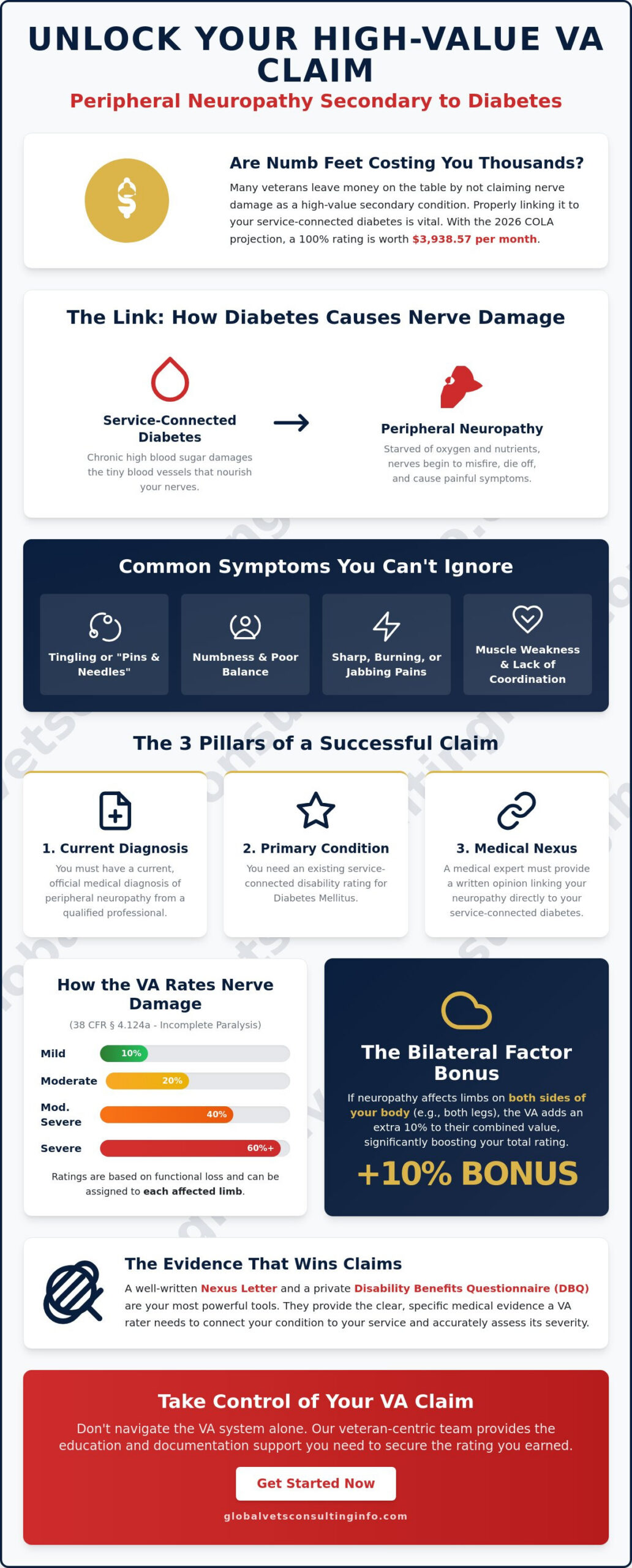
- Identify the three essential elements of a successful claim: a current diagnosis, a service-connected primary condition, and a clear medical nexus.
- Understand how the VA applies 38 CFR § 4.124a to determine your rating based on the severity of nerve paralysis and functional impairment.
- Explore how utilizing a private Disability Benefits Questionnaire (DBQ) can provide the precise medical evidence needed to accurately reflect your condition’s impact.
- Discover how veteran-centric education and documentation support can help you navigate the VA system with confidence to secure your earned rating increase. 🇺🇸
What is Peripheral Neuropathy Secondary to Diabetes?
Peripheral neuropathy isn’t a standalone issue for many; it’s a direct consequence of long-term blood sugar mismanagement. When you file for peripheral neuropathy secondary to diabetes, you’re telling the VA that your service-connected diabetes has caused nerve damage. This falls under the “Secondary Service Connection” rule. This rule applies when a primary disability either causes a new condition or makes an existing one worse. It’s a common path for veterans who already have a rating for diabetes mellitus but notice their health is declining in other ways.
Common symptoms include:
- Tingling or “pins and needles” sensations.
- Numbness that makes it hard to feel the ground while walking.
- Sharp, burning, or jabbing pains that worsen at night.
- Muscle weakness or loss of coordination in the hands or feet.
One critical detail veterans often miss is that the VA evaluates each limb separately. If you have nerve damage in both legs and both arms, those are four separate potential ratings. This can lead to a much higher combined rating than a single diagnosis would suggest, especially when the bilateral factor is applied.
The Biological Link Between Diabetes and Nerve Damage
Chronic high blood glucose levels act like a slow-moving toxin to your nervous system. Over time, these elevated levels damage the tiny blood vessels that provide essential oxygen and nutrients to your nerves. Without proper blood flow, the nerves begin to misfire or die off entirely. Diabetic neuropathy is the medical term for this broad category of damage. Specifically, distal symmetric polyneuropathy is the most common form found in diabetic veterans, typically starting in the toes and moving up the legs. The VA requires a clear medical link to prove your diabetes is the culprit.
Why Veterans are at Higher Risk for Diabetic Complications
Veterans face unique challenges that increase the prevalence of Type 2 diabetes. Factors like high-stress environments, irregular sleep patterns during deployment, and specific environmental exposures can lead to metabolic issues later in life. Once diabetes is established, the onset of neurological symptoms is often a matter of time. Proving peripheral neuropathy secondary to diabetes is about connecting these dots for the VA through clear medical evidence and professional documentation.
Proving Secondary Service Connection for Peripheral Neuropathy
Winning a claim for peripheral neuropathy secondary to diabetes requires more than just telling the VA your feet hurt. You must satisfy three specific legal pillars. First, you need a current medical diagnosis of neuropathy. Second, you must have an existing service-connected rating for diabetes mellitus. Finally, you need a medical nexus that links the two. Many veterans mistakenly believe they must prove their nerve damage started during active duty. In a secondary claim, you only need to prove that your service-connected diabetes caused the nerve damage later in life.
The VA focuses heavily on functional loss. While clinical tests like EMGs are helpful, the rater wants to know how numbness or burning affects your daily life. Can you stand for long periods? Do you trip because you can’t feel your toes? Documenting these limitations is often more persuasive than a lab report alone. This evidence shows the rater exactly how your condition meets the criteria for a higher rating.
Understanding VA Ratings for Neurological Nerve Damage
Ratings for nerve conditions are found under 38 CFR § 4.124a. The VA assigns percentages based on the severity of “incomplete paralysis.” A mild condition typically starts at 10%, while moderate symptoms can earn 20%. If your condition is moderately severe, you may see 40%, and truly severe cases can reach 60% or 80%. If both legs or both arms are affected, the VA applies the “bilateral factor.” This adds an extra 10% to the combined rating for those limbs before calculating your total score. You can learn more about how these pieces fit together in our VA disability claims process step by step guide.
The Necessity of a Medical Nexus Letter
A Nexus Letter is the most powerful tool in your evidence folder. It’s a formal medical opinion stating your condition is “at least as likely as not” caused by your diabetes. As the NIDDK explains diabetic nerve damage, the biological connection is clear, but the VA needs a doctor to put that link in writing for your specific case. Without this bridge, the VA may deny the claim by stating there’s no evidence of a connection. If you’re struggling to organize your medical evidence, exploring secondary VA claims education can provide the clarity you need to move forward.
The Role of the DBQ in Proving Your Secondary Claim
The VA relies on a specific tool called a Disability Benefits Questionnaire (DBQ) to evaluate your claim. These forms are designed to ensure medical evidence is presented in a format that mirrors the VA’s rating criteria. While the VA uses these forms during Compensation and Pension (C&P) exams, a private DBQ can often be more comprehensive. You can find more context on these standardized forms in our guide, What is a DBQ?. It’s the primary way the rater understands the severity of your condition.
For peripheral neuropathy secondary to diabetes, the Neurological DBQ is the primary document. It focuses on several key areas, such as sensory testing using a monofilament, reflex responses, and motor strength. The goal is to pinpoint which nerves are affected and the degree of functional impairment. When these forms are filled out correctly, they provide a clear roadmap for the VA rater to assign an accurate percentage.
Why Private DBQs are the Key to a Successful Rating Increase
A standard C&P exam may only last 15 minutes. This is rarely enough time to capture the full scope of your condition. In contrast, a private DBQ allows a doctor who understands your history to provide a thorough picture of your symptoms. This ensures that every limitation is documented according to the VA’s specific rating tiers. Understanding how to use a DBQ for a VA disability rating increase is often the difference between a 10% and a 40% rating. If you’re ready to secure the evidence you need, explore our Disability Benefits Questionnaires (DBQ) educational resources today.
Critical Evidence Needed for Neuropathy Documentation
Your documentation must be precise to be effective. The VA looks for specific markers such as nerve involvement and the severity of sensory loss. As the Mayo Clinic on neuropathy symptoms points out, the condition can manifest as extreme sensitivity or complete numbness. If you have muscle atrophy or significant weakness, these must be noted on the form. Always be honest about your “worst days.” The VA needs to know how you function during a flare-up, not just how you feel during a brief office visit. Detailed evidence makes it much harder for the VA to ignore the reality of your condition.
Securing Your Earned Benefits with Global Vets Consulting 🇺🇸
The path to a successful peripheral neuropathy secondary to diabetes claim is often blocked by a wall of complex paperwork and strict medical requirements. At Global Vets Consulting, we act as your partner to simplify this evidence-gathering process. Our mission is built on a “Veterans Helping Veterans” ethos. We speak your language and understand the specific challenges you face when your service-connected diabetes begins to affect your mobility and quality of life. We provide the professional authority and precision needed to navigate the VA system with integrity.
Thorough and accurate medical documentation is your best defense against a claim denial. The VA cannot ignore evidence that clearly matches their own rating criteria. By focusing on meticulousness, we help you build a case that reflects the true severity of your condition. Our team is dedicated to ensuring that no symptom is overlooked and no functional loss goes undocumented. This structured approach reduces anxiety and offers a predictable path toward the benefits you earned through your service.
Our Methodical Approach to DBQ Preparation
We use a step-by-step process to help you secure standardized forms that accurately reflect your current medical status. This includes educational resources on Disability Benefits Questionnaires (DBQ) and independent medical evidence education. To start your journey immediately, you can access our 24/7 AI Veteran Intake Specialist 🌐. This technology ensures that you can begin the intake process at any time, day or night, getting you one step closer to your VA rating increase.
Take Action: Don’t Leave Your Benefits to Chance
You shouldn’t have to struggle with confusing forms or rushed exams that fail to capture your “worst days.” Your health and your compensation are too important to leave to chance. Stop feeling neglected by a complex system and start working with a knowledgeable advocate who values your well-being and respects your history. Contact us today at GlobalVetsConsultingInfo.com to ensure your secondary claim is supported by the strongest possible medical evidence. Let’s work together to secure the 2026 rating you deserve. 🇺🇸
Take the Next Step Toward Your Earned Disability Rating
Securing a rating for peripheral neuropathy secondary to diabetes is about more than just acknowledging your pain; it’s about providing the VA with a clear, undeniable path to approval. We’ve explored how a strong medical nexus and a detailed Disability Benefits Questionnaire (DBQ) act as the foundation for your claim. By documenting the specific functional loss in each limb, you move closer to a rating that truly reflects your daily reality.
At Global Vets Consulting, we specialize in neurological condition documentation and are proud to be veteran-owned and operated 🇺🇸. Our team understands the intricacies of the 2026 rating schedule and is ready to help you navigate the system with precision. Whether you have questions at midnight or midday, our 24/7 National Client Services Hotline 📞 is available to support your journey.
Don’t let confusing administrative hurdles stand between you and the compensation you’ve earned through your service. Start Your DBQ Process with Global Vets Consulting Today. You’ve served your country with honor; now let us help you secure the benefits you deserve.
Frequently Asked Questions
Can I claim peripheral neuropathy as a secondary condition to diabetes?
Yes, you can claim peripheral neuropathy secondary to diabetes if your service-connected diabetes mellitus has caused nerve damage in your extremities. This is a common claim path because the biological link between high blood sugar and nerve fiber damage is well-established. You’ll need a current medical diagnosis and a nexus letter stating your neuropathy is “at least as likely as not” caused by your primary diabetes condition.
What is the maximum VA rating for peripheral neuropathy secondary to diabetes?
The maximum rating for peripheral neuropathy depends on the specific nerve affected, but complete paralysis of the sciatic nerve can reach 80%. Most veterans fall into the 10% to 40% range for moderate to severe cases. These ratings are determined by the level of functional loss and “incomplete paralysis” as defined under 38 CFR § 4.124a, which measures sensory and motor impairment.
Do I need a C&P exam if I submit a private DBQ for neuropathy?
The VA may still schedule a C&P exam, but a high-quality private DBQ often provides the detailed evidence needed to secure an accurate rating. If your private documentation is “actionable and sufficient,” the VA rater can technically decide your claim without further exams. However, you should always attend any scheduled VA exams to ensure your claim isn’t denied for a failure to report.
What happens if my primary diabetes claim is not yet service-connected?
You cannot successfully claim peripheral neuropathy secondary to diabetes until your diabetes is officially service-connected by the VA. Secondary claims require a “primary” condition to act as the legal anchor for the new diagnosis. If your diabetes claim is currently pending, the VA will usually wait for that decision or deny the neuropathy claim until the primary connection is established.
How does the VA bilateral factor apply to neuropathy in both legs?
The bilateral factor adds an extra 10% boost to your combined rating when you have nerve damage in both the left and right sides of your body. The VA calculates the combined rating for the affected limbs first and then adds 10% of that value on top of the subtotal. This “VA math” adjustment recognizes that having both legs impaired creates a significantly higher level of disability.

Article by
Willie Daniel
Willie Daniel is the Founder and Chief Executive Officer (CEO) of Global Vets Consulting (GVC) – National Veterans Disability Services, a veteran-led educational and medical evidence support organization dedicated to helping veterans better understand VA disability rating increases, DBQ medical evidence, secondary claims education, and C&P examination preparation.
He is a retired U.S. Army Medical Service Corps Officer with more than 27 years of honorable military service, a decorated Iraq combat veteran, and a retired federal official with the U.S. Department of Veterans Affairs. Throughout his military and federal career, Willie Daniel served in leadership, healthcare administration, operational, and veteran-support roles focused on improving services and support systems for servicemembers, veterans, and their families.
Drawing from decades of military leadership, healthcare administration, veteran advocacy, and federal government experience, Willie Daniel brings a practical, veteran-centered perspective to Global Vets Consulting’s educational articles, AI-powered veteran resources, video education initiatives, and outreach programs. His experience navigating military systems, medical documentation processes, and veteran-related administrative operations provides valuable insight into many of the challenges veterans face when seeking to better understand VA disability rating criteria, medical evidence, documentation strategies, and secondary condition education.
Through GVC’s “Veterans Helping Veterans” mission, his focus is on delivering clear, educational, and easy-to-understand information designed to empower veterans with knowledge, resources, and educational tools that may help them make more informed decisions regarding their individual VA disability journeys.
The information provided through GVC is intended for educational and informational purposes only and should not be considered legal or medical advice.
Disclaimer
Disclaimer: Global Vets Consulting, LLC (“GVC”) is a veteran-led educational and medical evidence support organization. GVC is not a law firm, is not a Veterans Service Organization (VSO), and is not affiliated with the U.S. Department of Veterans Affairs (VA) or any government agency.
Global Vets Consulting does not provide legal advice, medical advice, medical treatment, or healthcare services. GVC does not prepare, file, or submit VA disability claims on behalf of veterans. All information provided through this website, blog articles, videos, educational materials, AI tools, dashboards, templates, and communications is intended solely for general educational and informational purposes.
Veterans are encouraged to consult with accredited representatives, licensed attorneys, qualified medical providers, or Veterans Service Organizations regarding their specific legal, medical, or VA-related matters. VA disability decisions, ratings, and outcomes are determined solely by the U.S. Department of Veterans Affairs based on applicable laws, regulations, medical evidence, and individual circumstances. Past results do not guarantee future outcomes.