
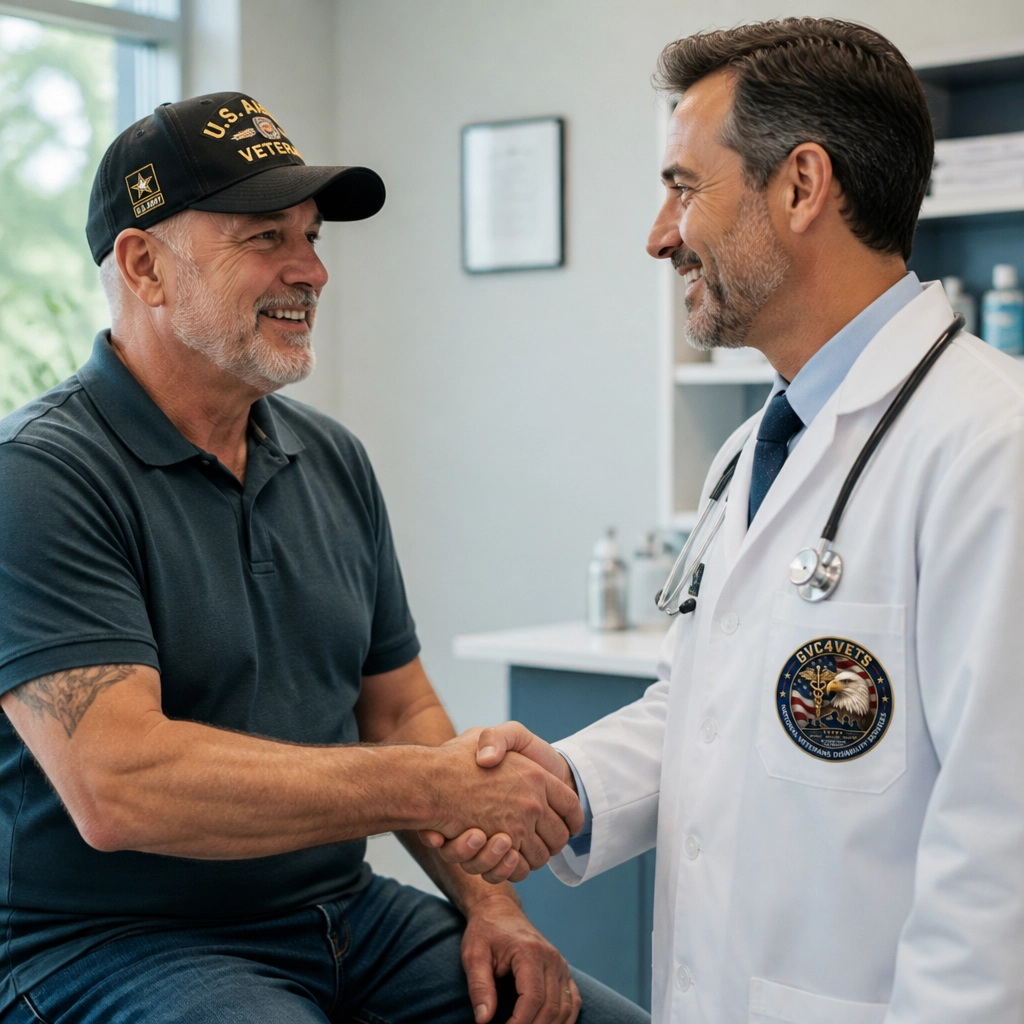
What if the reason your claim keeps getting denied isn't that you aren't "sick enough," but that your daily mission plan is fundamentally flawed? Many veterans approach the VA disability system as a passive observer, waiting for the Department of Veterans Affairs to "discover" the truth of their service-connected disabilities. In reality, the VA is an evidence-based machine that operates on precision, not intuition. To secure the VA disability ratings you earned, you must shift from a "wait-and-see" mentality to a tactical, daily execution strategy.
At GVC4Vets, we see thousands of veterans who have the symptoms but lack the "blueprint" to translate those symptoms into the language of the rater. This post isn't about the theory of filing; it is about the daily habits, rituals, and systematic routines required to bridge the gap between your physical pain and the objective requirements of 38 CFR Part 4.
Key Takeaways
- Audit Daily: Success in high-value claims (Mental Health, Sleep Apnea, Tinnitus) requires a structured review of your medical evidence every 24 hours.
- Master the Code: Use specific technical terms like functional impairment and occupational social impairment to align with 38 CFR § 4.130.
- The 24-Hour Ritual: Your C&P exam doesn't start when you walk into the room; it starts with a preparation ritual the day before.
- Systematic Appeals: Treat a denial as a "reconnaissance report" that tells you exactly where your evidence is lacking.
Table of Contents
- The Daily Mission Briefing: Auditing Your Evidence
- The Language of the Rater: Technical Precision
- Tactical Routines for Mental Health & Sleep Apnea
- The C&P Exam Ritual: Pre-Mission Preparation
- The Counter-Attack: Systematic Handling of Denials
- Final Checklist & FAQ
1. The Daily Mission Briefing: Auditing Your Evidence
A high-value claim strategy is built on the foundation of consistent data collection. You cannot rely on a single doctor's appointment from three years ago to carry a claim for a VA disability increase.
Verify your current medical records daily. Confirm that every symptom you experience is documented with a corresponding date and severity level. If you are filing for a condition like allergic rhinitis under diagnostic code 6522, you must ensure your records specifically mention nasal polyps or the percentage of passage obstruction (greater than 50% on both sides).
Treat your claim like a military operation. Every morning, spend 15 minutes reviewing one section of your C-File or recent private medical records. Identify the "silent gaps", the months where you had symptoms but didn't seek treatment. These gaps are what a rater uses to justify a lower rating or a denial.

2. The Language of the Rater: Technical Precision
The VA doesn't rate "pain"; it rates functional impairment. If you tell a C&P examiner your feet hurt, they might give you 0%. If you explain that your calcaneal eversion (the outward tilting of the heel) is causing marked deformity and pronation under DC 5276, you are speaking their language.
- Objective vs. Subjective: Contrast your subjective feelings of exhaustion with the objective data of an AHI (Apnea-Hypopnea Index) score for sleep apnea.
- The Nexus: Ensure your private physician uses the specific phrase "at least as likely as not" when connecting your condition to service.
- Range of Motion (ROM): For musculoskeletal claims, the VA focuses on where the pain starts, not where your movement stops.

3. Tactical Routines for Mental Health & Sleep Apnea
Mental health claims (rated under 38 CFR § 4.130) and Sleep Apnea claims are often "high-value" because they can lead to 50%, 70%, or 100% ratings. However, they are also the most frequently scrutinized.
Establish a Symptom Log: For Mental Health, don't just say you feel "anxious." Document specific instances of occupational and social impairment. Did you miss a deadline? Did you avoid a family gathering? Identify these daily data points.
For Sleep Apnea, the routine is about compliance and "Nexus" building. If you are seeking a VA disability rating increase, confirm your CPAP data is being transmitted to your provider. The VA often denies increases if they see "non-compliance" in the medical records.
4. The C&P Exam Ritual: Pre-Mission Preparation
The C&P exam tips you find online often focus on what to say during the meeting. At GVC4Vets, we focus on the 24 hours before the meeting.
- Review the DBQ: Verify which Disability Benefits Questionnaire the examiner will be using. If it's a back claim, review the requirements for thoracolumbar spine ratings and the importance of the goniometer.
- The Worst-Day Rule: Your routine the day of the exam should reflect your "worst day," not your current state of "pushing through the pain."
- Note-Taking: Identify three specific "flare-up" triggers you must mention. Do not leave the exam until you have checked these off your mental list.

5. The Counter-Attack: Systematic Handling of Denials
A VA claim appeal is not a personal rejection; it is a tactical setback. When you receive a denial, your immediate daily task is to deconstruct the "Reasons for Decision" section.
- Evidence Gap: Did they say there was no "Nexus"? Your routine is now to secure an Independent Medical Opinion (IMO).
- Legal Error: Did they ignore a piece of evidence? File a Higher-Level Review (HLR).
- New Evidence: Did you find a buddy letter or a new medical study? Submit a Supplemental Claim.
GVC4Vets specializes in connecting you with a network of over 800 independent, licensed physicians who understand how to write the VA-compliant medical documentation that fills these gaps.

Daily Execution Checklist
- Morning: Spend 15 minutes reviewing one page of your C-File.
- Afternoon: Log at least one instance of functional impairment (e.g., "Back pain prevented me from driving for more than 20 minutes").
- Evening: Confirm all upcoming medical appointments are on the calendar and you have a list of symptoms ready for the provider.
- Weekly: Verify your "intent to file" date to ensure you aren't losing out on back pay.
Frequently Asked Questions
Q: What is a "High-Value" claim?
A: These are conditions that typically result in higher percentage ratings (50% or above) due to their profound impact on a veteran's ability to work and function socially. Common examples include PTSD, Sleep Apnea, and complex musculoskeletal issues.
Q: Why was my Tinnitus claim capped at 10%?
A: Under the current 38 CFR § 4.96, Tinnitus is limited to a maximum 10% rating, whether it is in one ear or both. The strategy here is not to fight the 10% cap, but to use Tinnitus as a "gateway" to secondary conditions like migraines or anxiety.
Q: Can I use a private doctor for my DBQ?
A: Yes. In fact, many veterans prefer this because private doctors often spend more time performing a thorough evaluation than a rushed C&P examiner. GVC4Vets connects you with physicians who specialize in these detailed reports.
Q: How do I prove "Functional Impairment" if I have a desk job?
A: Functional impairment isn't just about physical labor. It includes your ability to concentrate, stay on task, and interact with coworkers. If your mental health condition causes you to withdraw or lose focus, that is a direct hit to your "occupational and social functioning."
Global Vets Consulting (GVC4Vets) – National Veterans Disability Services
Bridging the gap between your service and the benefits you've earned.