
What if the reason your claim keeps getting denied isn't that you aren't injured, but that you are speaking a different language than the VA rater?
In the world of VA disability claims, your personal narrative of pain, while valid, is often considered "subjective." The VA Rater (RVSR) and the Decision Review Officer (DRO) operate in a world of "objective" data. They don't just want to know that your back hurts; they need to see the exact degrees of flexion, the presence of muscle spasms, and the specific diagnostic code that matches your clinical presentation under 38 CFR Part 4.
At GVC4Vets, we treat the disability claim process like a mission. This isn't a "wait and see" endeavor; it is a tactical operation that requires a precise medical blueprint. To secure the veteran disability benefits you earned, you must bridge the gap between your physical reality and the VA’s rigid regulatory framework.
Table of Contents
- The Legal Framework: 38 CFR Part 4
- The Evidence Triad: Diagnosis, Chronicity, and Nexus
- The Power of the Disability Benefits Questionnaire (DBQ)
- The VA Nexus Letter: Establishing the Link
- Secondary Claims: The Chain of Causation
- Tactical Checklist for Submission
- Frequently Asked Questions
Key Takeaways
- Objectivity is King: Replace "it hurts" with clinical data points like "reduced range of motion" or "ankylosis."
- The DBQ is Your Shield: A fully developed Disability Benefits Questionnaire can often preempt a rushed C&P exam.
- Nexus is the Bridge: Without a clear medical link (nexus), even the most severe injury will not be service-connected.
- Precision Matters: Use the specific language found in the Schedule for Rating Disabilities to ensure the rater has no room for "interpretation."
1. The Legal Framework: 38 CFR Part 4
The foundation of every VA disability increase or initial claim is 38 CFR Part 4, the Schedule for Rating Disabilities. This document is the "Rosetta Stone" for claims. It lists every compensable condition and the specific medical criteria required for each percentage rating (0% to 100%).
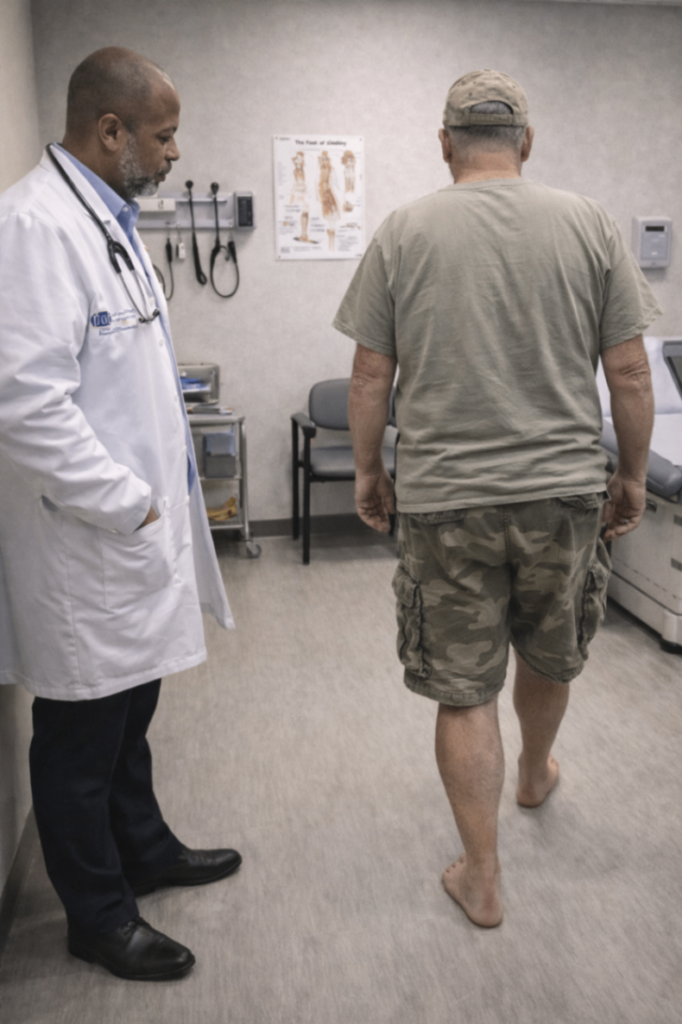
For example, if you are filing a dbq for flat feet (Pes Planus), the rater isn't looking for "sore feet." They are looking for "pronated feet," "valgus deformity," or "calcaneal eversion." If your medical evidence doesn't use these specific terms, the rater may default to a lower rating or a denial. Verify that your provider is referencing the correct diagnostic codes, such as diagnostic code 5276 for flat feet or 38 CFR § 4.97 for respiratory conditions.

2. The Evidence Triad: Diagnosis, Chronicity, and Nexus
Building a bulletproof claim requires three non-negotiable elements. If one is missing, the mission fails.
I. Current Medical Diagnosis
You cannot receive VA disability ratings for "knee pain." You receive them for "Patellofemoral Pain Syndrome" or "Degenerative Arthritis." Confirm that you have a formal diagnosis from a licensed physician (MD or DO) within the last 12 months.
II. Chronicity of Symptomatology
The VA must see that your condition is chronic, not acute. This is where your VA medical evidence: pharmacy records, physical therapy logs, and imaging (MRI/X-ray): comes into play. Identify a "continuity of symptomatology" that shows the condition has persisted since your time in service.
III. The Medical Nexus
The Nexus is the "why." It is the professional medical opinion that connects your current diagnosis to an event, injury, or illness during active duty. At GVC4Vets, we emphasize that this link must be stated with "at least as likely as not" (50% probability or greater) certainty.
3. The Power of the Disability Benefits Questionnaire (DBQ)
A Disability Benefits Questionnaire is a standardized form used by the VA to ensure that clinicians capture the exact data needed for a rating decision.
Many veterans make the mistake of relying solely on the VA-contracted C&P examiner. These exams are often rushed, sometimes lasting less than 15 minutes. By working with an independent, licensed physician within the GVC4Vets network, you can submit a private DBQ that is thorough, accurate, and reflects your "worst days," not just how you feel in a cold exam room.
Ensure your DBQ includes:
- Objective measurements: Range of motion (ROM) tested with a goniometer.
- Functional loss: How the condition affects your ability to work or perform daily tasks (e.g., "unable to stand for more than 15 minutes due to radiculopathy").
- Flare-ups: Documentation of how your condition degrades during periods of increased severity.

4. The VA Nexus Letter: Establishing the Link
While a DBQ documents severity, a VA nexus letter documents connection. A high-quality nexus letter is more than a note; it is a clinical argument.
Identify the following elements in a strong nexus letter:
- Records Review: The doctor must explicitly state, "I have reviewed the veteran's entire C-File and service medical records."
- Medical Rationale: The doctor should cite peer-reviewed medical literature to explain the biological plausibility of the connection.
- The Conclusion: Use the "magic language": “It is at least as likely as not that the veteran’s [Condition] was caused or aggravated by their military service.”
5. Secondary Claims: The Chain of Causation
Many veterans are underrated because they only focus on direct service connection. VA secondary claims are conditions caused or aggravated by an existing service-connected disability.
Strategic Example: If you have service-connected "Lumbosacral Strain" (back pain) that has caused you to walk with an altered gait, leading to "Plantar Fasciitis," the foot condition is secondary to the back.
- Direct: Back Pain -> Service.
- Secondary: Plantar Fasciitis -> Back Pain.
GVC4Vets specializes in helping veterans "bridge the gap" by identifying these secondary links that are often overlooked by the VA.
6. Tactical Checklist for Submission
Before you hit "submit" on how to file a VA claim, go through this checklist to ensure your evidence package is mission-ready:
- Verify that every condition has a corresponding, current diagnosis (less than 12 months old).
- Confirm that all ROM tests were conducted using a goniometer and documented on the correct DBQ.
- Ensure the Nexus letter uses the "at least as likely as not" standard.
- Check that your private medical records are organized chronologically to show a clear history of treatment.
- Identify any secondary conditions (e.g., sleep apnea secondary to PTSD, or GERD secondary to NSAID use for orthopedic pain).
7. Frequently Asked Questions (FAQ)
What is the difference between a C&P Exam and a private DBQ?
A C&P exam is scheduled by the VA and performed by a contractor. A private DBQ is performed by a physician of your choosing. Under 38 CFR § 3.326, the VA must accept a private DBQ if it is "adequate for rating purposes," which can often save you from the stress of a C&P exam.
Do I really need a Nexus letter if my condition is in my service records?
If you are filing years after discharge, the VA often argues that the "nexus" is broken. A VA nexus letter provides the clinical continuity required to prove that the condition didn't just "happen" recently, but is a direct result of your service.
Can GVC4Vets help with a claim increase?
Yes. A VA disability increase requires new medical evidence showing that your condition has worsened since your last rating. We connect you with doctors who understand how to document this progression using the specific criteria in the rating schedule.
How do I know which diagnostic code to use?
The diagnostic code is determined by your symptoms and diagnosis. For instance, diagnostic code 6522 covers allergic rhinitis. Our network of physicians is trained to identify the code that most accurately reflects your level of impairment.
Global Vets Consulting (GVC4Vets) – National Veterans Disability Services