What if the reason your claim keeps getting denied isn't that you aren't injured, but that you aren't speaking the rater’s language?
In the world of VA disability claims, "pain" is subjective, but 38 CFR Part 4 is objective. To the Department of Veterans Affairs, your service-connected struggle doesn't exist unless it is translated into specific, clinical data points. This is the disconnect where most veterans lose their "mission." At GVC4Vets, we treat the claims process like a strategic operation. To win, you need a blueprint, a Medical Evidence Playbook, that bridges the gap between your physical reality and the rigid requirements of the VA rating schedule.
Key Takeaways
- Precision over Pain: The VA raters look for objective measurements like Range of Motion (ROM) and functional loss, not just descriptions of discomfort.
- The Trinity of Evidence: Every successful claim requires a current diagnosis, an in-service event, and a clear medical nexus.
- The DBQ as a Scorecard: A properly executed Disability Benefits Questionnaire (DBQ) is your primary tool for ensuring the rater has no choice but to assign the correct percentage.
- Clinical Terminology: Using the "language of the rater" (e.g., calcaneal eversion, diagnostic code 6522) reduces the risk of administrative misinterpretation.
Table of Contents
- The Strategic Framework: Understanding 38 CFR
- The Nexus Letter: Establishing the Mission Link
- The DBQ: Your Tactical Scorecard
- Objective vs. Subjective: The Role of ROM Testing
- Secondary Service Connection: Expanding the Perimeter
- The GVC4Vets Pre-Submission Checklist
- Frequently Asked Questions (FAQ)
1. The Strategic Framework: Understanding 38 CFR
The VA Schedule for Rating Disabilities (VASRD), found in 38 CFR Part 4, is the rater’s rulebook. It contains the Diagnostic Codes (DCs) and the specific clinical criteria required for every rating percentage from 0% to 100%.
If you are filing for a condition like allergic rhinitis, the rater is looking specifically at diagnostic code 6522. They aren't just checking if your nose is stuffy; they are looking for "greater than 50-percent obstruction of both nasal passages" or "complete obstruction of one nasal passage." Without this specific clinical phrasing in your medical evidence, your claim is dead on arrival.
At GVC4Vets, we emphasize that your medical documentation must be "built to code." This means your physician must understand the specific requirements of the DC you are targeting. Whether it’s 38 CFR § 4.97 for respiratory conditions or the musculoskeletal rules for the spine, the evidence must be precise.

2. The Nexus Letter: Establishing the Mission Link
The medical nexus is the bridge between your current diagnosis and your military service. Without a nexus, you have a medical condition, but you don't have a VA claim.
A "strong" nexus letter isn't just a note from a doctor saying they "think" your condition is related to service. To be actionable, a nexus letter must:
- State a Record Review: The doctor must explicitly state they have reviewed your Service Treatment Records (STRs) and your C-File.
- Use Legal Language: The opinion must be expressed as "at least as likely as not (50% probability or greater)" that the condition was caused or aggravated by service.
- Provide Medical Rationale: This is the "why." If you have flat feet (pes planus), the doctor needs to explain the biomechanical progression, such as how calcaneal eversion has led to secondary issues like plantar fasciitis or knee strain.
3. The DBQ: Your Tactical Scorecard
The Disability Benefits Questionnaire (DBQ) is perhaps the most critical document in your playbook. It is designed to capture the exact data points the VA needs to rate your condition.
However, not all DBQs are created equal. A "rushed" C&P exam often results in incomplete DBQs that miss the nuances of your condition. When you work with the independent physicians in the GVC4Vets network, the focus is on a comprehensive evaluation. This includes documenting functional impact, how the condition affects your ability to stand, walk, lift, or perform "work-like" activities.
Pes Planus vs. Plantar Fasciitis: A Tactical Distinction
Many veterans confuse these two, but the VA rates them differently.
- Pes Planus (Flat Feet): Rated under DC 5276. The rater looks for "pronounced" deformity, inward displacement of the Achilles tendon, and pain on manipulation.
- Plantar Fasciitis: Rated under DC 5269. The criteria focus on whether the condition is unilateral or bilateral and if it is "resistant to treatment."
Your medical evidence must clearly distinguish between these diagnoses to ensure you are rated under the most advantageous diagnostic code.

4. Objective vs. Subjective: The Role of ROM Testing
The VA relies heavily on Range of Motion (ROM) testing for orthopedic claims. This is where many veterans fail because they don't understand the objective requirements.
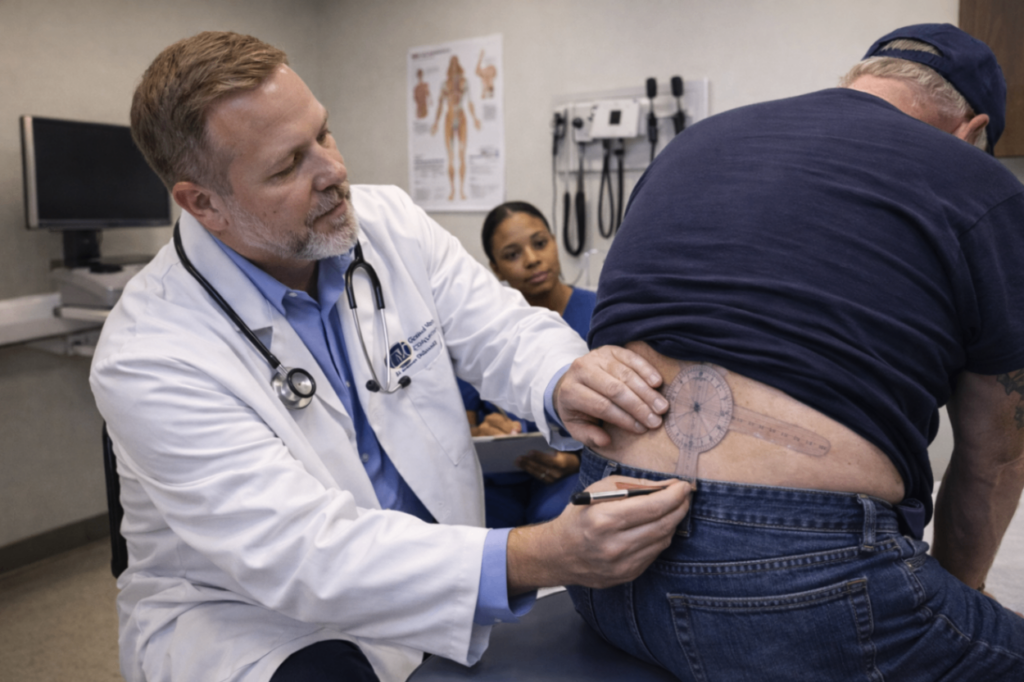
During an exam for a lumbosacral strain (Diagnostic Code 5237), the doctor must use a goniometer to measure exactly how many degrees you can bend forward, backward, and side-to-side.
- The "Pain" Rule: Under 38 CFR § 4.59, if you have painful motion, the VA should award at least the minimum compensable rating for that joint.
- Functional Loss: The doctor must also document if your ROM decreases after repetitive use or during "flare-ups."
If your medical evidence doesn't include these specific measurements, the rater will often default to the lowest possible rating. We ensure our network of doctors understands the necessity of these objective data points.
5. Secondary Service Connection: Expanding the Perimeter
Your "primary" service-connected disabilities often cause "secondary" issues. This is a critical area for veterans looking for a VA disability increase.
For example, if you have a service-connected knee injury, it is "at least as likely as not" that your altered gait is causing hip or back pain. Your Medical Evidence Playbook should include a secondary nexus that links these new conditions to the original injury.

6. The GVC4Vets Pre-Submission Checklist
Before you hit "submit" on your claim, verify your evidence against this tactical checklist:
- Diagnosis: Do you have a current, formal medical diagnosis for every condition?
- 38 CFR Alignment: Does your evidence use the specific clinical language found in the relevant Diagnostic Code?
- Objective Data: Are Range of Motion (ROM) measurements included using a goniometer?
- Nexus Language: Does your nexus letter use the phrase "at least as likely as not"?
- Functional Impact: Does the DBQ describe how the condition affects your daily life and ability to work?
- Record Review: Does the doctor explicitly state they reviewed your STRs and C-File?
Frequently Asked Questions (FAQ)
Q: Can I use my own doctor for a DBQ?
A: Yes, the VA is required to accept private medical evidence if it is "adequate for rating purposes." This means it must be complete and follow the 38 CFR guidelines. GVC4Vets specializes in connecting you with doctors who understand these requirements.
Q: What is a "flare-up," and why does it matter for my rating?
A: A flare-up is a period of increased severity. Under 38 CFR § 4.40, the VA must consider functional loss during these periods. If your ROM is 30 degrees on a good day but only 10 degrees during a flare-up, your rating should reflect the 10-degree limitation.
Q: My claim was denied because there was "no link to service." What do I do?
A: This usually means your nexus was weak or missing. You need a supplemental claim with "new and relevant" evidence: specifically a nexus letter from a qualified physician that provides a clear medical rationale linking your diagnosis to your service records.
Q: What is "calcaneal eversion," and why is it in my DBQ?
A: Calcaneal eversion refers to the heel bone turning outward, a common clinical sign of severe flat feet (pes planus). Including technical terms like this proves to the rater that a rigorous physical exam was performed.
Q: Is a C&P exam mandatory if I submit my own DBQ?
A: Not necessarily. If your private DBQ is "sufficient for rating," the VA may decide a C&P exam is not required. However, they often schedule one anyway. Having your own high-quality evidence acts as a "rebuttal" to a potentially rushed or inaccurate C&P exam.
At GVC4Vets, we know that the VA system can feel like an uphill battle. But with the right medical evidence, you aren't just asking for help: you are providing the rater with a roadmap to the rating you earned. Don't leave your mission to chance. Ensure your evidence is clinical, authoritative, and precise.
Global Vets Consulting (GVC4Vets) – National Veterans Disability Services