
What if your PTSD C&P Exam wasn’t a high-pressure test you had to pass, but a structured opportunity to document the reality of your daily life? It’s completely normal to feel a sense of dread about sitting in a room with a stranger and reliving your trauma. You might worry that the examiner will downplay your symptoms or that you’ll struggle to explain the full impact of your condition if you happen to be having a “good” day. We understand that the fear of being misunderstood by the VA system is a heavy burden to carry. 🇺🇸
This article will help you replace that anxiety with a sense of steady confidence. You’ll learn how to master your PTSD C&P Exam by using expert preparation strategies, identifying common questions, and documenting your symptoms according to the latest 2026 VA rating criteria. We’ll walk you through the specifics of the Review PTSD DBQ, also known as VA Form 21-0960P-3, and explain how medical evidence serves as your strongest advocate. This guide provides a clear, step-by-step plan to ensure your narrative is heard and your rating accurately reflects your service-connected challenges.
Key Takeaways
- Understand the forensic nature of the evaluation and how the examiner establishes a service connection for your claim. 🇺🇸
- Learn to navigate the specific “check-the-box” symptoms on the DBQ that directly influence your final disability percentage.
- Master the “worst day” rule to ensure your PTSD C&P Exam accurately captures the full severity of your mental health symptoms.
- Identify common examination questions and learn to provide the honest, detailed answers required for a successful narrative.
- Discover how expert medical evidence education and thorough documentation can streamline the path to your deserved VA rating increase.
What is a PTSD C&P Exam and Why is it Required? 🇺🇸
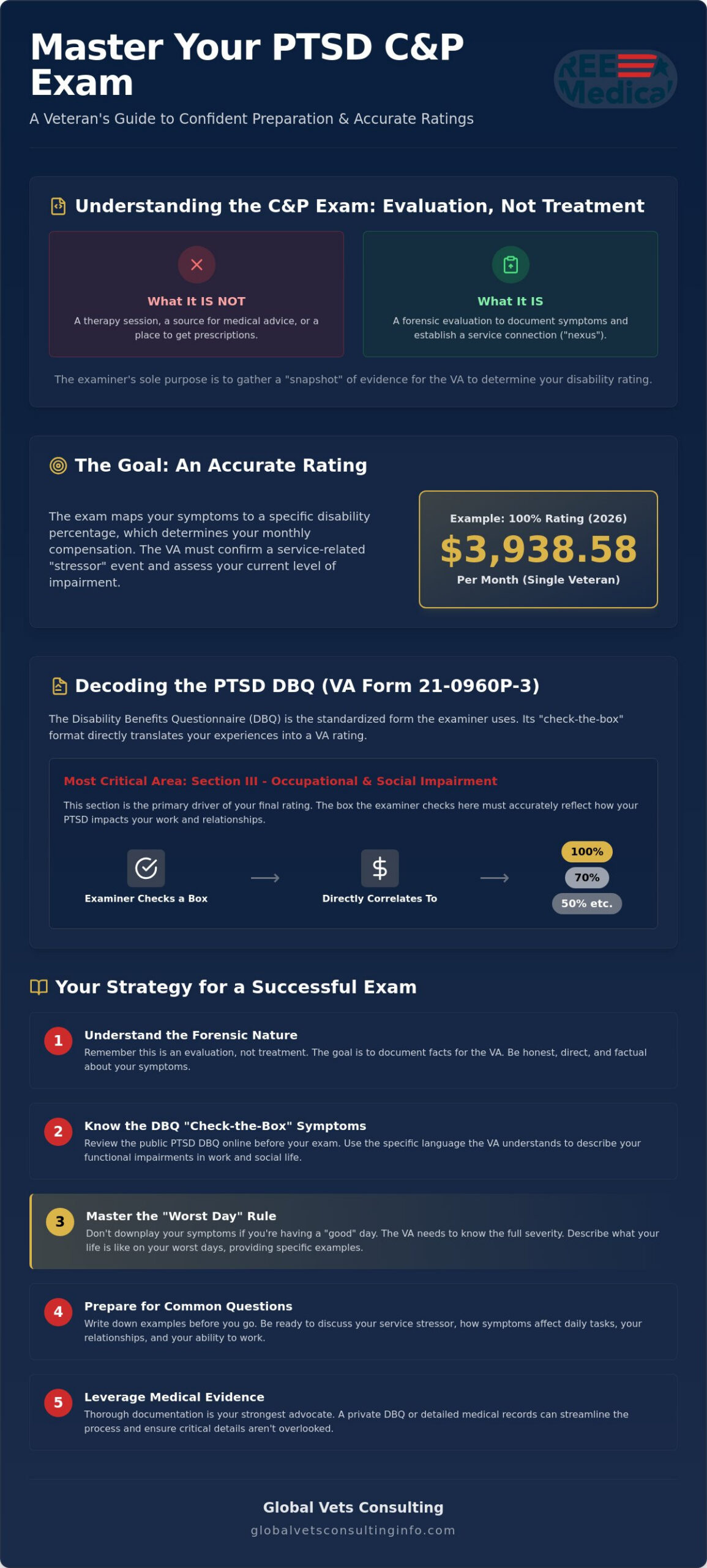
The Compensation and Pension (C&P) exam is a forensic evaluation used by the Department of Veterans Affairs to determine the severity of your service-connected condition. Unlike a standard doctor’s visit, a PTSD C&P Exam isn’t designed to provide you with medical care or a new treatment plan. Instead, the examiner’s primary goal is to establish a “nexus,” or a clear link, between your military service and your current symptoms.
Even if you already have a formal diagnosis of Post-traumatic stress disorder from a private provider, the VA requires this evaluation to map your symptoms to a specific disability percentage. These ratings range from 0% to 100% and determine your monthly compensation. For instance, following the 2.8% COLA increase effective December 2025, a 100% rating for a single veteran in 2026 is $3,938.58 per month. Gaining a clear understanding of the va disability claims process step by step is the first step in reducing the anxiety that often comes with exam day.
The Difference Between Treatment and Evaluation
It’s vital to remember that your C&P examiner is not your treating physician. They won’t write prescriptions or offer therapy during the session. The focus is entirely on gathering “snapshot” evidence. They want to see how your condition affects your occupational and social functioning right now. Because they only see you for a short window, providing meticulous documentation is essential to ensure they don’t miss the nuances of your daily struggles.
Why the VA Schedules These Exams
The VA schedules a PTSD C&P Exam for two main reasons. First, they must confirm that a specific “stressor” event occurred during your service that caused the condition. Second, they need to differentiate your symptoms from other potential issues. Many veterans deal with overlapping conditions like TBI or general anxiety; the examiner must determine which symptoms belong to which diagnosis to ensure your rating is accurate and fair.
The Role of the PTSD DBQ in Your Examination
The Disability Benefits Questionnaire, or DBQ, acts as the blueprint for your entire evaluation. When you sit down for your PTSD C&P Exam, the examiner isn’t just taking notes on a blank pad; they’re filling out a standardized form that translates your experiences into data points the VA understands. This document ensures that every examiner, regardless of their location, evaluates your claim using the same set of criteria.
Reviewing a dbq for mental health conditions before your PTSD C&P Exam allows you to use the specific language the VA uses to describe functional impairment. You can access the Public Disability Benefits Questionnaires (DBQs) to see exactly how your symptoms are categorized. If you’ve already secured a private dbq for va claims, it serves as a powerful piece of evidence that the examiner must consider alongside their own findings. This proactive approach helps ensure the examiner doesn’t overlook critical details of your condition.
Key Sections of the PTSD DBQ You Must Know
Section III: Occupational and Social Impairment. This is arguably the most critical part of the form. The examiner must select one box that best describes your level of impairment. This choice directly correlates to your rating percentage, whether it’s 30%, 50%, or 70%. Be prepared to discuss how your PTSD affects your ability to work and maintain relationships.
Section IV: Clinical Findings. In this area, the examiner records observations regarding your memory, judgment, and thought processes. It’s where they document the clinical evidence that supports the boxes they checked in previous sections. Understanding these nuances helps you stay in control of the narrative. If you’re looking for more support, exploring expert medical evidence education can help you feel fully prepared before you walk through the door.
Common PTSD C&P Exam Questions and How to Answer 🇺🇸
Entering your PTSD C&P Exam with a clear plan is the best way to ensure your story is accurately recorded. You shouldn’t rely on your memory alone during a high-stress evaluation. Instead, write down your symptoms and “worst day” examples before you walk in. For a scientific and in-depth analysis of the C&P exam, experts highlight that the quality of your testimony often dictates the rating outcome. Being honest and vulnerable is critical; downplaying your symptoms is the primary reason veterans receive a lower-than-deserved rating.
Your goal is to focus on “functional impact.” This means explaining what you can no longer do at work or at home rather than just how you feel. A stressor is the specific service-connected event that caused the condition, and you’ll be asked to describe it clearly. Use your notes to stay on track and prevent the examiner from rushing through your responses.
Top 5 Questions to Prepare For
- 1. Can you describe the events in service that led to your PTSD? This is the Stressor Question where you establish the service connection.
- 2. How does your PTSD interfere with your ability to work? Focus on lost productivity, conflicts with leadership, or inability to stay on task.
- 3. How has your condition affected your relationships with family and friends? Discuss isolation, irritability, or emotional numbing.
- 4. Do you experience flashbacks, nightmares, or intrusive thoughts? Be specific about how often these occur and how long they last.
- 5. Have you had thoughts of harming yourself or others? This is a severity assessment that often triggers higher rating tiers.
Explaining Social and Occupational Impairment
When discussing impairment, use specific examples to paint a picture of your daily life. Don’t just say you’re “stressed.” Instead, say, “I lost my last job because I couldn’t handle the noise and would snap at coworkers,” or “I haven’t been to a grocery store in six months due to crowds.” Explain the “why” behind your behaviors, such as hypervigilance or avoidance. If you feel overwhelmed by this process, our C&P Examination Preparation Education can give you the tools to speak with confidence.
How Global Vets Consulting Supports Your PTSD Claim
Navigating the complexities of the VA system is often a confusing and solitary experience for many veterans. Global Vets Consulting Worldwide 🇺🇸 changes that dynamic by acting as a steady guide and a dedicated partner through every phase of your claim. We provide the meticulous medical documentation and DBQ preparation education that veterans need to walk into their PTSD C&P Exam with total confidence. Our “Veterans Helping Veterans” ethos ensures you aren’t just a number in a database; you’re a peer receiving the respect and professional authority your service deserves.
If your va claim was denied for lack of evidence, it’s often because the initial documentation failed to bridge the gap between your symptoms and the VA’s legal requirements. We help you identify these specific evidentiary gaps. By focusing on proactive education and thorough evidence gathering, we ensure your PTSD C&P Exam results are supported by a robust clinical narrative that accurately reflects your daily struggles.
Empowering Veterans Through Education
Knowledge is the most effective tool for reducing anxiety and taking control of your claim. We teach you what is a dbq and how to use it as a strategic asset rather than just another government form. Our resources cover everything from mental health ratings to complex secondary service connections. This educational foundation allows you to speak the VA’s language, ensuring your symptoms are categorized correctly for the rating you’ve earned.
The Global Vets Advantage: Meticulous Documentation
We focus on the fine details that move the needle: accuracy, thoroughness, and strict compliance with VA standards. This meticulous approach reduces the likelihood of examiner oversight and streamlines the path to a successful rating increase. Our commitment to your success is round-the-clock, ensuring you have the resources you need whenever you need them.
- 📞 24/7 National Client Services Hotline
- 🤖 24/7 AI Veteran Intake Specialist
- 🌐 GlobalVetsConsultingInfo.com
- 🇺🇸 Worldwide Mission-Driven Support
Take Control of Your PTSD Disability Rating 🇺🇸
Securing an accurate disability rating requires a transition from being a passive participant to an empowered advocate. By applying the strategies we’ve discussed, from mastering the “worst day” rule to aligning your testimony with the DBQ criteria, you ensure your narrative remains the focus of the evaluation. Your PTSD C&P Exam is the definitive moment to translate your service-connected challenges into the standardized medical evidence the VA requires for a rating increase.
Global Vets Consulting Worldwide is here to ensure you don’t navigate this bureaucratic system alone. As a veteran-owned and operated consulting service, we specialize in the meticulous DBQ documentation and education needed to prevent denials before they happen. We provide a clear, predictable path forward so you can focus on your well-being while we focus on the accuracy of your claim evidence.
- 📞 24/7 National Client Services Hotline
- 🤖 24/7 AI Veteran Intake Specialist
- 🌐 GlobalVetsConsultingInfo.com
Start your claim preparation with Global Vets Consulting today and gain the peace of mind that comes from being thoroughly prepared. You’ve earned these benefits through your service; now it’s time to ensure the system recognizes the full extent of your sacrifice.
Frequently Asked Questions
What happens if I miss my PTSD C&P exam?
If you miss your scheduled appointment, the VA may deny your claim for “failure to report.” You must contact the VA and the third-party contractor immediately to show “good cause” and request a new date. Don’t wait for them to call you; being proactive is the only way to keep your claim moving forward without a technical denial.
Can I bring a spouse or friend with me to my PTSD exam?
You can usually bring a spouse or friend to support you, but the final decision rests with the examiner. Having a witness can be helpful for documenting symptoms you might overlook, such as night terrors or irritability. If the examiner doesn’t allow them in the room, they can still wait in the lobby and provide a written statement later to support your medical evidence.
How long does a PTSD C&P exam usually last?
A typical PTSD C&P Exam lasts anywhere from 45 minutes to two hours. The length often depends on whether it’s an initial claim or a review for a rating increase. You should prepare to stay as long as necessary to ensure every symptom on the DBQ is addressed. Don’t let a short exam discourage you; focus on the quality of the evidence you provide.
What should I do if the examiner was rude or didn’t listen?
You should file a formal complaint immediately if your examiner was unprofessional or ignored your testimony. Write a “Memorandum for Record” detailing the interaction and submit it to the VA through your claim portal. This creates a paper trail that can be used to request a new exam or challenge an unfavorable medical opinion if the report is inaccurate.
Can a private DBQ help if I have a bad C&P exam?
A private DBQ acts as a powerful counterbalance if a PTSD C&P Exam goes poorly. Because a private provider often spends more time reviewing your history, their report can offer a more thorough clinical picture. This meticulous documentation serves as essential evidence that the VA must consider, often helping to correct errors made by a rushed or dismissive examiner.

Article by
Willie Daniel
Willie Daniel is the Founder and Chief Executive Officer (CEO) of Global Vets Consulting (GVC) – National Veterans Disability Services, a veteran-led educational and medical evidence support organization dedicated to helping veterans better understand VA disability rating increases, DBQ medical evidence, secondary claims education, and C&P examination preparation.
He is a retired U.S. Army Medical Service Corps Officer with more than 27 years of honorable military service, a decorated Iraq combat veteran, and a retired federal official with the U.S. Department of Veterans Affairs. Throughout his military and federal career, Willie Daniel served in leadership, healthcare administration, operational, and veteran-support roles focused on improving services and support systems for servicemembers, veterans, and their families.
Drawing from decades of military leadership, healthcare administration, veteran advocacy, and federal government experience, Willie Daniel brings a practical, veteran-centered perspective to Global Vets Consulting’s educational articles, AI-powered veteran resources, video education initiatives, and outreach programs. His experience navigating military systems, medical documentation processes, and veteran-related administrative operations provides valuable insight into many of the challenges veterans face when seeking to better understand VA disability rating criteria, medical evidence, documentation strategies, and secondary condition education.
Through GVC’s “Veterans Helping Veterans” mission, his focus is on delivering clear, educational, and easy-to-understand information designed to empower veterans with knowledge, resources, and educational tools that may help them make more informed decisions regarding their individual VA disability journeys.
The information provided through GVC is intended for educational and informational purposes only and should not be considered legal or medical advice.
Disclaimer
Disclaimer: Global Vets Consulting, LLC (“GVC”) is a veteran-led educational and medical evidence support organization. GVC is not a law firm, is not a Veterans Service Organization (VSO), and is not affiliated with the U.S. Department of Veterans Affairs (VA) or any government agency.
Global Vets Consulting does not provide legal advice, medical advice, medical treatment, or healthcare services. GVC does not prepare, file, or submit VA disability claims on behalf of veterans. All information provided through this website, blog articles, videos, educational materials, AI tools, dashboards, templates, and communications is intended solely for general educational and informational purposes.
Veterans are encouraged to consult with accredited representatives, licensed attorneys, qualified medical providers, or Veterans Service Organizations regarding their specific legal, medical, or VA-related matters. VA disability decisions, ratings, and outcomes are determined solely by the U.S. Department of Veterans Affairs based on applicable laws, regulations, medical evidence, and individual circumstances. Past results do not guarantee future outcomes.