
Did you know that nearly 39% of initial disability claims are being rejected in 2026? It’s a staggering number that often leaves heroes feeling like their service was forgotten. Receiving a notification that your va claim denied for lack of evidence doesn’t mean your injury isn’t real. It usually means there’s a specific documentation gap that the VA’s automated systems flagged for a quick denial.
We understand the frustration of a rushed C&P exam where the examiner barely looked up from their screen. You might be staring at a decision letter and feeling the clock tick toward that one-year appeal limit. It’s an exhausting process that can make anyone feel ignored by the very system designed to help them. You aren’t alone in this fight, and a denial is simply the beginning of a more strategic approach to your benefits.
You can recover from this setback by identifying the missing link in your file. This article explains how to use private medical evidence and Disability Benefits Questionnaires (DBQs) to build a rock-solid supplemental claim. We’ll provide a clear, actionable plan to help you turn that denial into an approval and finally secure the service connection you’ve earned.
Key Takeaways
- Identify the specific documentation gap in your file by mastering the three pillars of evidence: a current diagnosis, an in-service event, and a medical nexus.
- Learn how to navigate the Supplemental Claim lane to submit new and relevant evidence while preserving your original effective date for back pay.
- Discover why a va claim denied for lack of evidence is usually a fixable documentation error rather than a final rejection of your service-connected injury.
- Understand the role of private Disability Benefits Questionnaires (DBQs) in providing the thorough clinical rationale that standard C&P exams often miss.
- Gain a clear roadmap for the one-year appeal window to ensure your claim remains active and your benefits are secured.
Why Your VA Claim Was Denied for Lack of Evidence
Receiving a decision letter that states your va claim denied for lack of evidence can feel like a personal rejection of your service. In technical terms, this usually means the VA rater couldn’t find a clear “nexus,” which is the medical link between your current health condition and your time in uniform. While the VA has a legal “Duty to Assist” you in gathering records, this system often fails. Raters may overlook private medical files or fail to trigger a follow-up when a C&P examiner provides a vague, negative report.
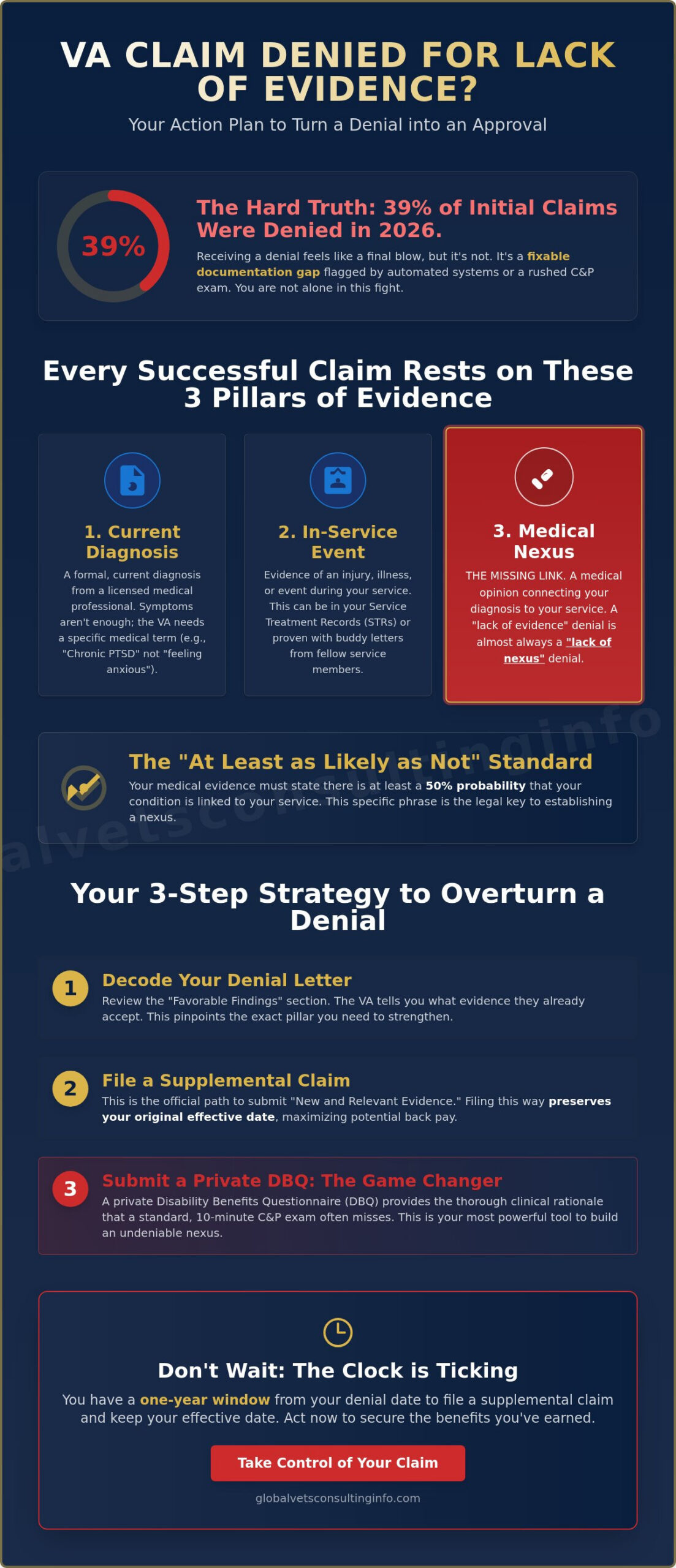
In 2026, the standards for documentation are more rigid than ever. With initial denial rates climbing to 39%, the VA’s increased reliance on automated screening means claims without airtight documentation are rejected faster than in previous years. If your C&P exam lasted only ten minutes, the examiner likely didn’t have enough time to review your full history, resulting in a “not service-connected” conclusion. You can’t rely on the system to find the evidence for you; you must present it clearly to ensure your story is heard.
Decoding the Language in Your Rating Decision Letter
Your path to an approval starts with reading between the lines of your denial letter. Look closely at the “Favorable Findings” section. This is a critical tool because it lists exactly what the VA already agrees with. For example, they might concede you had an injury in service but deny the claim because you don’t have a current diagnosis. By identifying whether the missing piece is the Diagnosis, the In-Service Event, or the Nexus, you can stop guessing and start building a targeted strategy for the Board of Veterans’ Appeals or a supplemental claim.
Under 38 CFR standards, “New and Relevant Evidence” is defined as information the VA hasn’t considered before that specifically addresses and overcomes the reason your claim was rejected.
The Three Pillars of Evidence Every Claim Needs
Every successful disability claim rests on three non-negotiable requirements. If your va claim denied for lack of evidence, it’s often because one of these structural supports is missing or too weak to satisfy a rater. You can think of these as the foundation of your case. Without all three, the VA cannot legally grant service connection, regardless of how much pain you are in.
First, you must have a current medical diagnosis from a licensed professional. You can’t simply report symptoms like “knee pain” or “difficulty sleeping.” The VA requires a formal diagnosis, such as “Patellofemoral Pain Syndrome” or “Chronic Sleep Apnea,” documented in your medical records. Second, you need evidence of an in-service event, injury, or illness. This is typically found in your Service Treatment Records (STRs), but it can also be proven through buddy letters that describe a specific incident during your deployment or training.
The third pillar is the Medical Nexus. This is the scientific bridge that connects your current diagnosis to your military service. Most “lack of evidence” denials are actually “Lack of Nexus” denials. The VA might agree you have a diagnosis and agree you served, but they don’t see a clear link between the two. Without a professional medical opinion stating that your service caused your current condition, the claim will fail every time.
The Critical Role of Medical Nexus Documentation
To win your claim, your medical evidence must state that your condition is “at least as likely as not” related to your service. This specific phrase means there is at least a 50% probability of a connection. Unfortunately, the opinion of a C&P examiner often carries more weight than your own personal testimony because they are viewed as medical experts. If their report is negative, you must counter it with stronger documentation. Understanding the VA disability claims process step by step helps you identify these gaps before you submit your next packet.
When you encounter a nexus rejection, the most effective path forward is to file a Supplemental Claim with new medical opinions. This allows you to submit a private DBQ or an independent medical opinion to challenge the VA’s findings. Strengthening your file with independent medical evidence education can provide the clinical rationale a rater needs to move your claim from a denial to an approval.
Turning a Denial into an Approval with Supplemental Claims
If you discover that your va claim denied for lack of evidence, you have three paths to choose from under the Appeals Modernization Act. Many veterans mistakenly choose a Higher-Level Review (HLR), hoping a senior rater will see what the first one missed. However, an HLR is often a dead end for evidence-based denials. In this lane, you cannot submit any new documentation. If the original rater said the evidence was missing, a senior rater will almost certainly reach the same conclusion based on that identical, incomplete file.
The most effective way to recover is by filing a Supplemental Claim using VA Form 20-0995. This path allows you to submit the specific documentation the VA noted was absent in your decision letter. You have exactly one year from the date on your notification to file this claim. Meeting this deadline is vital because it protects your effective date. This ensures you receive every penny of back pay you are owed from the time you first filed, rather than starting the clock over with a brand new claim.
In 2026, the VA’s internal goal for processing these claims is 125 days. While the average processing time as of April 2026 was approximately 59.5 days, the speed of your decision often depends on the clarity of your new evidence. Providing a rater with a private medical opinion that clarifies the link to your service is the most reliable way to turn a “no” into a “yes.” Once you’ve secured your service connection, veterans whose conditions have worsened should also explore using a DBQ for VA rating increase to ensure their compensation accurately reflects the true severity of their symptoms.
Gathering New and Relevant Evidence in 2026
Success in the supplemental lane hinges on the “New and Relevant” standard. “New” evidence means the VA has never seen it before. Simply resubmitting the same service records or the same doctor’s notes will result in another quick denial. Lay statements, often called buddy letters, provide excellent context for how your condition affects your daily life. While these are helpful, they cannot replace the clinical rationale required for a medical nexus. Relevant evidence must directly address the specific reason for denial, such as providing the missing nexus or a clear diagnosis.
To bridge this gap, many veterans use Using a DBQ for VA Supplemental Claims: Your 2026 Strategy to Win. If you need help understanding what evidence is missing from your file, reach out to our team for independent medical evidence education to build a stronger case for your benefits.
How Private DBQs Solve the Medical Evidence Gap
A Disability Benefits Questionnaire (DBQ) is a standardized form designed by the VA to ensure that medical evaluations provide the exact information needed for rating a disability. When your va claim denied for lack of evidence, it’s often because your medical records were disorganized or missing the specific clinical findings required by the 38 CFR Part 4. A private DBQ translates your medical history into the VA’s own language, making it much easier for a rater to assign an accurate percentage. This standardized format reduces the risk of a rater overlooking critical symptoms that justify your service connection. Beyond overcoming a denial, the same precision that makes a DBQ effective for establishing service connection also makes it the ideal tool for using a DBQ for VA rating increase when your condition worsens over time.
Private medical evidence is frequently more thorough than a standard C&P exam. Many veterans find that their government-contracted exams are rushed, sometimes lasting only 15 minutes. This brief window is rarely enough time to capture the full functional impact of a chronic condition. In contrast, a private provider can perform a comprehensive review of your history and symptoms. This ensures that your documentation is not just a summary of a single visit, but a detailed reflection of your daily reality. Having a doctor who understands the VA’s specific rating criteria is the key to bridging the gap between a diagnosis and an approval. Veterans who want to ensure their DBQs meet the VA’s exact technical standards in 2026 should consider professional DBQ preparation services to avoid the clerical errors and vague medical opinions that lead to preventable denials.
Global Vets Consulting streamlines this process by providing independent medical evidence education. We help you understand exactly what the VA is looking for in your documentation so you can avoid the common pitfalls that lead to denials. By focusing on technical accuracy and clinical rationale, we empower you to submit a claim that is ready for a favorable decision. You shouldn’t have to guess what evidence is missing from your file.
Why Global Vets Consulting Focuses on Medical Accuracy
Our “Veterans Helping Veterans” approach ensures that your documentation accurately reflects the true severity of your symptoms. We know that even small omissions in a medical report can result in a lower rating or a flat denial. We focus on education regarding symptom frequency, duration, and intensity to ensure your DBQ is airtight. This proactive strategy is essential in 2026, as the VA continues to use automated systems to filter out claims with weak medical support. Taking control of your evidence is the best way to protect your future benefits.
🌎 Worldwide Support:
- Professional medical evidence education
- Clear roadmap for supplemental claims
- Dedicated veteran-centric consulting
🇺🇸 Contact our 24/7 National Client Services Hotline for help with your evidence gap: Global Vets Consulting
Secure Your Earned Benefits with a Stronger Evidence Strategy
You now have a clear roadmap to move past a rejection and toward an approval. A va claim denied for lack of evidence isn’t a final verdict. It’s a signal that your file needs a more precise clinical rationale to satisfy the rater. By identifying which of the three pillars is missing and using the supplemental claim lane, you can protect your original effective date and secure the back pay you’ve earned through your service.
Global Vets Consulting is a veteran-owned and operated team that understands the challenges of the 2026 claims landscape. We specialize in DBQ preparation services that meet the VA’s strict documentation standards. Our 24/7 National Client Services Hotline is always available to help you understand the evidence gaps in your current file. We believe in empowering our fellow veterans with the technical accuracy required to challenge a negative C&P exam effectively.
🇺🇸 Get the Medical Evidence You Need to Win—Start Your DBQ Review Today
Take the next step with confidence. Your service was real, and your medical evidence should reflect that truth. We are here to help you bridge the gap and finally achieve the service connection you deserve.
Frequently Asked Questions
What is the most common reason for a VA claim denial?
The most common reason for denial is a missing medical nexus, which is the scientific link between your military service and your current health condition. Many veterans provide proof of an in-service injury and a current diagnosis but fail to include a professional medical opinion connecting them. In 2026, with denial rates reaching 39%, raters require specific clinical rationale to establish this service connection and grant benefits.
Can I submit new evidence after my VA claim is denied?
Yes, you can submit new and relevant evidence by filing a Supplemental Claim using VA Form 20-0995. This path is the most effective solution when a va claim denied for lack of evidence because it allows you to introduce documentation that wasn’t part of your original file. This new evidence must be relevant, meaning it must directly address the specific deficiency or documentation gap cited in your denial letter.
What is the difference between a Supplemental Claim and a Higher-Level Review?
A Supplemental Claim allows you to add new evidence to your file, whereas a Higher-Level Review is a closed record review where no new information can be submitted. You should choose the Supplemental lane if you need to provide a missing diagnosis or nexus statement. A Higher-Level Review is intended for cases where you believe the rater made a legal or factual error based on the existing evidence.
How long do I have to appeal a VA denial for lack of evidence?
You have exactly one year from the date printed on your VA decision notification letter to file an appeal. If you’ve had a va claim denied for lack of evidence, meeting this one-year deadline is vital because it protects your effective date. This ensures you receive all back pay from the time you first filed. Waiting longer than 365 days means the VA considers the decision final and you lose retroactive pay.
Do I need a lawyer to win my VA disability appeal?
No, you aren’t required to hire a lawyer to successfully appeal a VA decision. Many veterans manage the process themselves by focusing on high-quality medical documentation and independent medical evidence education. While a lawyer can provide legal advice, they can’t provide the clinical rationale or DBQs required to prove your medical conditions. Taking a proactive approach to your medical evidence is often the most direct path to success.
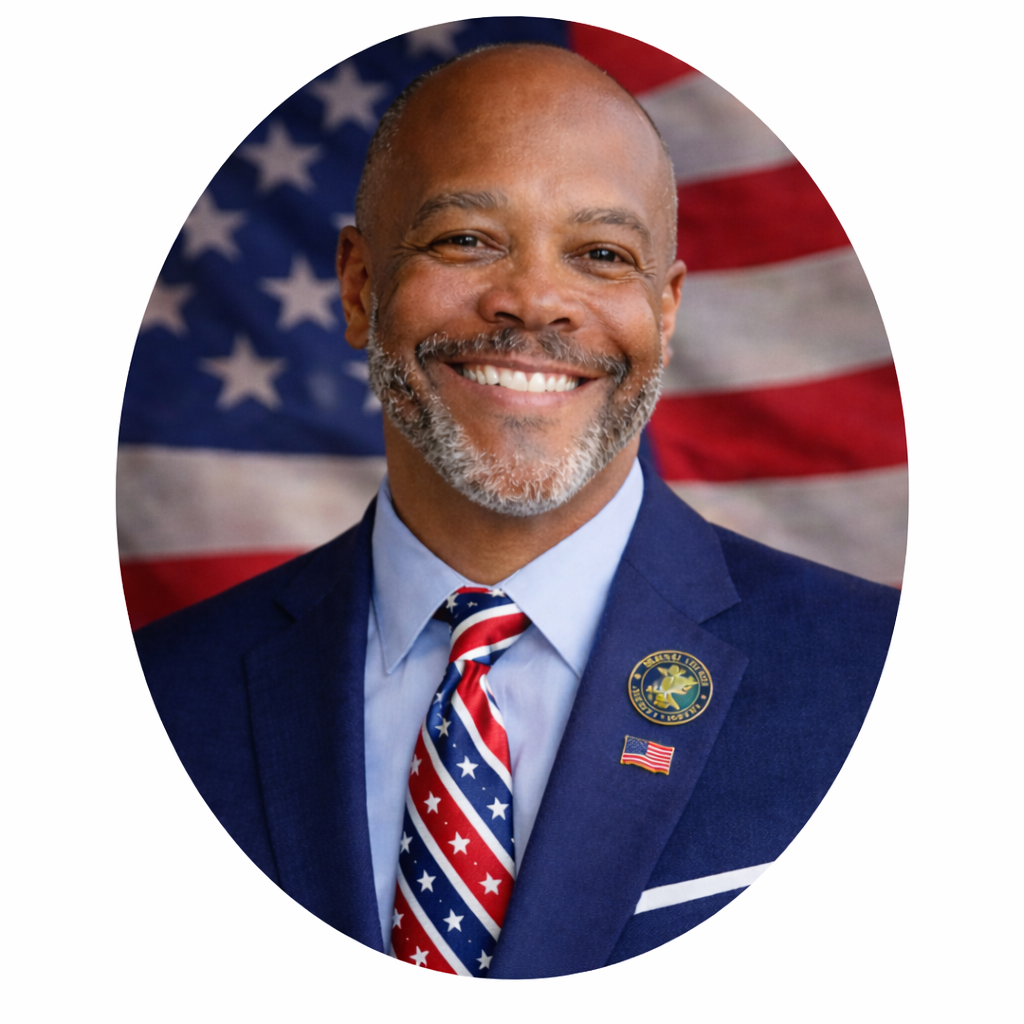
Article by
Willie Daniel
Willie Daniel is the Founder and Chief Executive Officer (CEO) of Global Vets Consulting (GVC) – National Veterans Disability Services, a veteran-led educational and medical evidence support organization dedicated to helping veterans better understand VA disability rating increases, DBQ medical evidence, secondary claims education, and C&P examination preparation.
He is a retired U.S. Army Medical Service Corps Officer with more than 27 years of honorable military service, a decorated Iraq combat veteran, and a retired federal official with the U.S. Department of Veterans Affairs. Throughout his military and federal career, Willie Daniel served in leadership, healthcare administration, operational, and veteran-support roles focused on improving services and support systems for servicemembers, veterans, and their families.
Drawing from decades of military leadership, healthcare administration, veteran advocacy, and federal government experience, Willie Daniel brings a practical, veteran-centered perspective to Global Vets Consulting’s educational articles, AI-powered veteran resources, video education initiatives, and outreach programs. His experience navigating military systems, medical documentation processes, and veteran-related administrative operations provides valuable insight into many of the challenges veterans face when seeking to better understand VA disability rating criteria, medical evidence, documentation strategies, and secondary condition education.
Through GVC’s “Veterans Helping Veterans” mission, his focus is on delivering clear, educational, and easy-to-understand information designed to empower veterans with knowledge, resources, and educational tools that may help them make more informed decisions regarding their individual VA disability journeys.
The information provided through GVC is intended for educational and informational purposes only and should not be considered legal or medical advice.
Disclaimer
Disclaimer: Global Vets Consulting, LLC (“GVC”) is a veteran-led educational and medical evidence support organization. GVC is not a law firm, is not a Veterans Service Organization (VSO), and is not affiliated with the U.S. Department of Veterans Affairs (VA) or any government agency.
Global Vets Consulting does not provide legal advice, medical advice, medical treatment, or healthcare services. GVC does not prepare, file, or submit VA disability claims on behalf of veterans. All information provided through this website, blog articles, videos, educational materials, AI tools, dashboards, templates, and communications is intended solely for general educational and informational purposes.
Veterans are encouraged to consult with accredited representatives, licensed attorneys, qualified medical providers, or Veterans Service Organizations regarding their specific legal, medical, or VA-related matters. VA disability decisions, ratings, and outcomes are determined solely by the U.S. Department of Veterans Affairs based on applicable laws, regulations, medical evidence, and individual circumstances. Past results do not guarantee future outcomes.