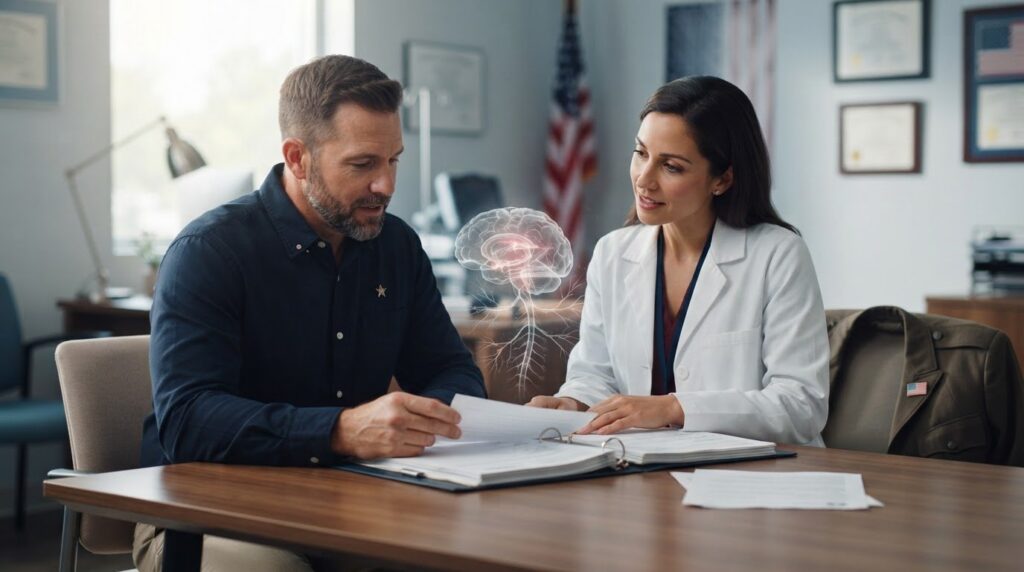
A diagnosis can identify a neurological condition, but it may not show how that condition affects your everyday life. A clear Neurological Conditions VA claim connects the diagnosis with documented symptoms, residual effects, and practical limitations.
It’s understandable to be unsure which symptoms matter, how medical records relate to service, or why rating criteria differ by condition. This guide explains broad neurological categories addressed in VA guidance and how to organize evidence that describes your experience accurately. You’ll also learn why functional effects matter, including when a condition involves traumatic brain injury (TBI).
Global Vets Consulting (GVC4Vets) connects veterans with independent physicians who provide medical documentation, including DBQs. Documentation can help describe a condition’s severity, but it can’t guarantee a VA decision. For support, call the 24/7 National Client Services Hotline or reach the 24/7 AI Veteran Intake Specialist Brittany™ at (727) 350-8387. Visit https://www.GlobalVetsConsultingInfo.com to learn more.
Key Takeaways
- Neurological Conditions VA claims are clearer when evidence connects a diagnosis with symptoms and their effects on daily activities.
- Condition-specific criteria may apply, and a diagnosis alone may not describe a condition’s full impact.
- Build a useful evidence file by gathering available records, organizing symptom history, and noting functional limitations.
- VA Disability Documentation Services can support your evidence preparation, while you remain responsible for filing your claim.
What Are VA Neurological Conditions, and Which Disorders May Be Considered?
VA neurological conditions are disorders affecting the brain, spinal cord, or nerves. These parts of the nervous system help control movement, sensation, thinking, and other body functions. A condition may affect one area or several, and symptoms can vary from person to person. This overview is a starting point: a diagnosis alone doesn’t establish a connection to military service or determine a claim outcome.
Which neurological conditions commonly appear in VA claim discussions?
Examples often discussed in neurological claims include:
- Traumatic brain injury (TBI)
- Epilepsy or seizure disorders
- Parkinson’s disease
- Peripheral neuropathy, which affects nerves outside the brain and spinal cord
- Migraines
This list isn’t exhaustive, and none of these examples is automatically service-connected. For a broader overview of the category, see Neurological disorder.
Why does the condition’s effect matter alongside its name?
A condition’s name provides medical context, but it may not capture what you experience day to day. Two people with the same diagnosis can have different symptoms, patterns, and limitations. For Neurological Conditions VA claims, distinguish the diagnosed condition from its symptoms and residual effects. These may include changes in balance, sensation, memory, or movement, when applicable.
Keep your description specific and based on your own experience. Note what happens and how it affects ordinary activities. Avoid assuming that any one symptom guarantees a particular result. The next step is to understand how VA evaluation considers condition-specific guidance and documented impairment.
How Does the VA Evaluate Neurological Conditions and Their Effects?
A diagnosis identifies a condition, but it may not show its full severity or impact. The VA considers the criteria for the specific condition and the evidence describing its effects. The applicable criteria depend on the neurological condition and its documented effects. Depending on the condition and supporting evidence, those effects may involve movement, sensation, cognition, or other functions. Not every category applies to every veteran.
What role do symptoms and residuals play in evaluation?
Records provide more context when they describe how symptoms occur and affect you, rather than naming the diagnosis alone. Treatment notes, test results, and your symptom history may help show patterns, changes over time, and effects on daily activities. For example, if you experience balance problems, describe their practical effect accurately. The National Institute of Neurological Disorders and Stroke (NINDS) offers general condition information, but claim evidence should reflect your own medical record and experience.
How does 38 CFR § 4.124a fit into the process?
38 CFR § 4.124a is the VA Schedule for Rating Disabilities section covering neurological conditions and convulsive disorders. It organizes condition-specific criteria and describes how certain impairments may be evaluated. It isn’t one rule applied identically to every diagnosis. For Neurological Conditions VA claims, compare the relevant criteria with evidence about your condition and its effects, rather than relying on the diagnosis name alone.
Keep descriptions factual and consistent with your records. Global Vets Consulting connects veterans with independent physicians who provide medical documentation, including DBQs. This documentation can support your claim, but it doesn’t guarantee a VA decision.
What Evidence Can Help Explain a Neurological Condition in a VA Claim?
An organized evidence file helps show what your records say and how the condition affects you. A doctor isn’t required to file a claim, but independent medical documentation can make a big difference in explaining a condition and its effects. Keep the information accurate and relevant. No single document guarantees a VA decision.
How can you organize symptom and treatment information?
Use this sequence to build a clear record:
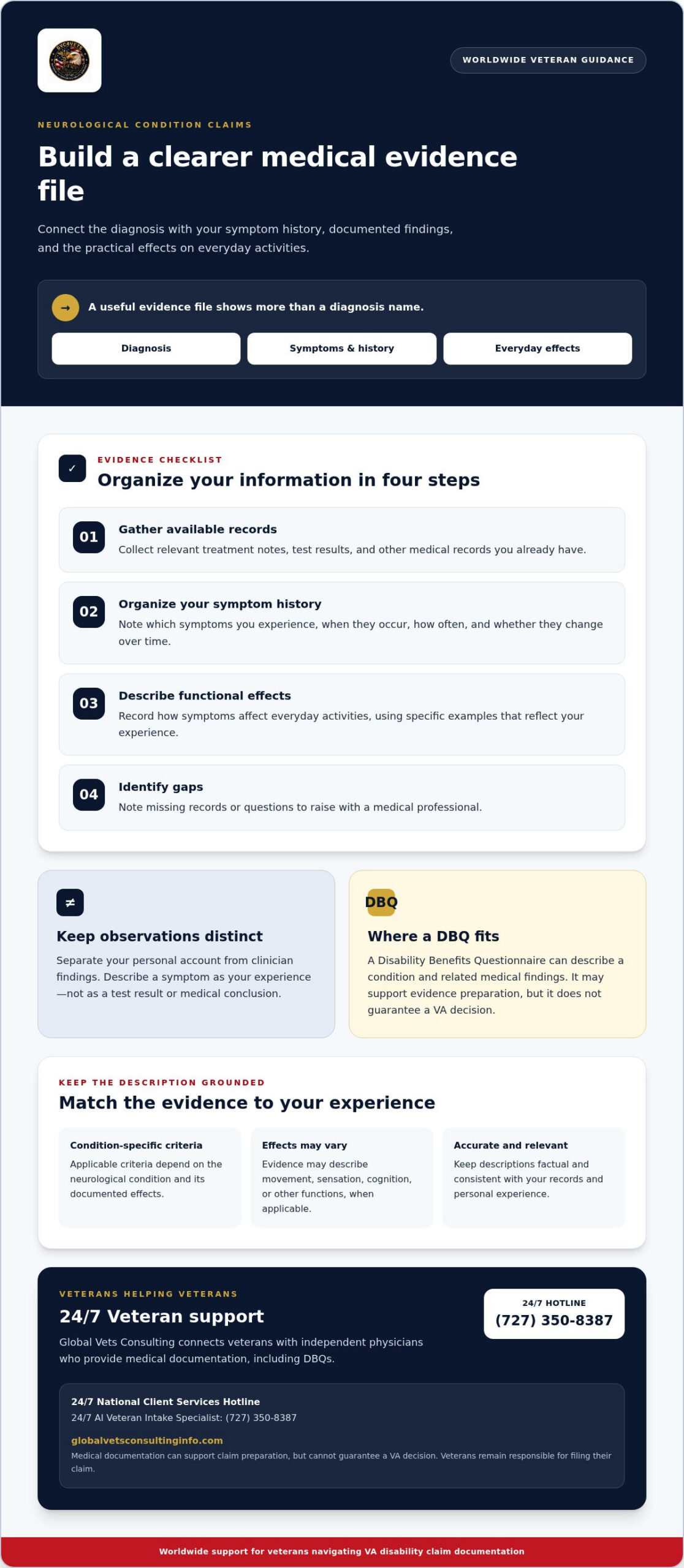
- Gather available records. Collect relevant treatment notes, test results, and other medical records you already have.
- Organize your symptom history. Note which symptoms you experience, when they occur, how often, and whether they change over time.
- Describe functional effects. Record how symptoms affect everyday activities, using specific examples that reflect your experience.
- Identify gaps. Note missing records or questions to raise with a medical professional.
Keep personal observations separate from findings documented by a clinician. For example, identify your account of a symptom as your experience rather than presenting it as a test result or medical conclusion. The guides “What is a DBQ? A Veteran’s Guide to Disability Benefits Questionnaires in 2026” and “VA Disability Claims Process Step by Step: A 2026 Veteran’s Guide” offer additional context about documentation and the claims process.
When might a DBQ support the medical evidence?
A Disability Benefits Questionnaire (DBQ) is medical documentation that can describe a condition and related findings. It may help present relevant information, but it doesn’t guarantee a favorable decision. If you already have a rating and are considering an increase, the guide “How to Use a DBQ for a VA Disability Rating Increase in 2026” focuses on that situation. The Federal Register’s VA Schedule for Rating Disabilities: Neurological Conditions document provides regulatory background. Distinguish proposed changes from current criteria when reviewing it.
For help with Neurological Conditions VA documentation, explore VA disability documentation support. Call the 24/7 National Client Services Hotline or reach the 24/7 AI Veteran Intake Specialist Brittany™ at (727) 350-8387.
How Can Global Vets Consulting Support Neurological Claim Documentation?
Clear medical documentation can help explain a neurological condition and its effects, but it doesn’t decide a claim or guarantee a rating. Global Vets Consulting (GVC4Vets) connects veterans with independent physicians who provide documentation, including Disability Benefits Questionnaires (DBQs). You don’t need a doctor to file a claim, and you remain responsible for filing it.
What happens when you seek documentation support?
The process follows a straightforward sequence:
- Free consultation before you pay anything. Discuss your documentation needs and claim context.
- Access your physician. GVC4Vets connects you with an independent physician for documentation.
- Evidence for your claim. Use the resulting documentation as supporting evidence alongside other relevant records.
This support may relate to Initial Claims, Increase Claims (DBQ), or VA Disability Documentation Services. A DBQ can document medical information, but the VA reviews the evidence and makes its own decision. Documentation does not promise approval or a particular rating.
How can veterans reach GVC4Vets?
If you’re preparing Neurological Conditions VA documentation, a direct conversation can help clarify the documentation process and what to prepare. Reach the team through either contact option:
- 24/7 National Client Services Hotline: (727) 350-8387
- 24/7 AI Veteran Intake Specialist Brittany™: (727) 350-8387
Take a clear next step: explore VA disability documentation support through Global Vets Consulting. GVC4Vets connects veterans with independent physicians for documentation, while you remain responsible for submitting your own claim.
Take Your Next Step With a Clear Plan
You don’t need to resolve every part of a claim at once. Choose one practical task: set aside time to review your records, write down unanswered questions, or decide what documentation you want to understand better. Keep the next action realistic, then return to other questions as you learn more. Preparation can be deliberate, not rushed.
If you’re deciding what to do next with Neurological Conditions VA documentation, focus on evidence that fits your situation rather than assumptions about what a diagnosis means for a claim. You deserve a clear explanation of your options and space to consider them at your own pace.
Global Vets Consulting provides VA disability documentation support, including DBQs through independent physicians. Explore the service and take your next step at Global Vets Consulting. For a free consultation before you pay anything, call the 24/7 National Client Services Hotline or reach the 24/7 AI Veteran Intake Specialist Brittany™ at (727) 350-8387.
Frequently Asked Questions
Is a neurological condition automatically service-connected by the VA?
No. A diagnosis by itself doesn’t establish that a neurological condition is connected to military service or predict the VA’s decision. Review records that may explain relevant history, such as when symptoms began and any documented events or treatment, then compare your situation with current VA guidance. The facts and criteria vary by claim, so don’t assume a diagnosis alone settles eligibility.
What neurological conditions may be considered for VA disability benefits?
Examples include traumatic brain injury (TBI), epilepsy, Parkinson’s disease, and peripheral neuropathy. This isn’t a complete list, and naming a condition doesn’t mean it automatically qualifies for benefits. Consider what evidence relates to your circumstances and how the condition is documented. People with the same diagnosis may have different symptoms or limitations, and criteria aren’t identical across conditions.
How does the VA evaluate neurological symptoms?
The evaluation depends on the criteria for the specific condition and evidence describing impairment or residual effects. Records that clarify symptom patterns and practical impacts can add context, but they don’t predict a particular rating. Review current VA guidance and 38 CFR § 4.124a, the schedule for neurological conditions and convulsive disorders, to identify provisions relevant to your condition and evidence.
Do I need a doctor to file a VA disability claim for a neurological condition?
No, a doctor isn’t required to file a claim. Independent medical documentation can make a big difference by helping describe the condition and its effects, but it doesn’t guarantee a VA decision. Keep supporting documentation with your other relevant records as you prepare your evidence. You remain responsible for filing the claim with the VA.
Can a DBQ help support a VA claim involving a neurological condition?
A Disability Benefits Questionnaire (DBQ) can provide structured medical documentation when it’s relevant to your condition and claim. It doesn’t guarantee a rating or replace the VA’s decision-making process. Global Vets Consulting connects veterans with independent physicians who provide documentation. You remain responsible for filing your claim, so consider how a DBQ fits with the other evidence you plan to submit.
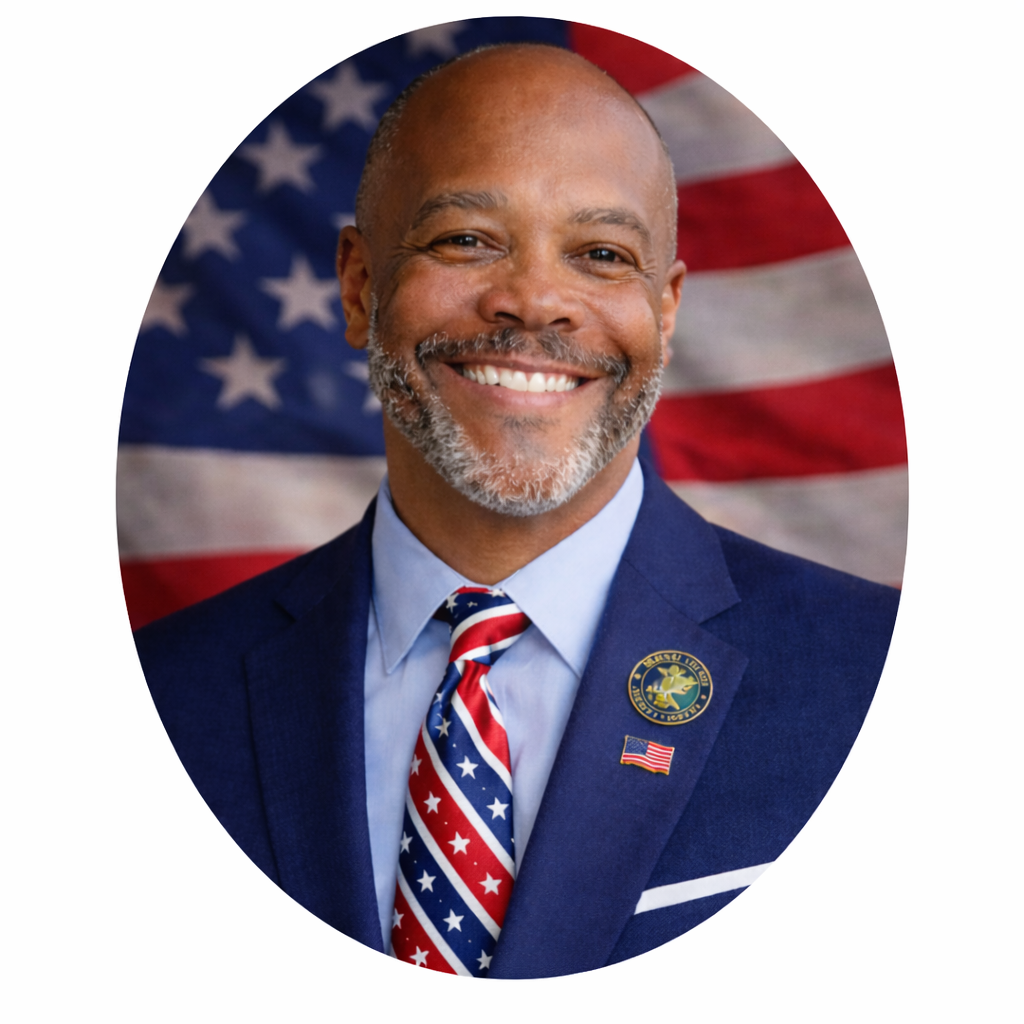
Article by
Willie Daniel
Willie Daniel is the Founder and Chief Executive Officer (CEO) of Global Vets Consulting (GVC4Vets) – National Veterans Disability Services, a veteran-led educational and medical evidence support organization dedicated to helping veterans better understand VA disability rating increases, DBQ medical evidence, secondary claims education, and C&P examination preparation.
He is a retired U.S. Army Medical Service Corps Officer with more than 27 years of honorable military service, a decorated Iraq combat veteran, and a retired federal official with the U.S. Department of Veterans Affairs. Throughout his military and federal career, Willie Daniel served in leadership, healthcare administration, operational, and veteran-support roles focused on improving services and support systems for servicemembers, veterans, and their families.
Drawing from decades of military leadership, healthcare administration, veteran advocacy, and federal government experience, Willie Daniel brings a practical, veteran-centered perspective to Global Vets Consulting’s educational articles, AI-powered veteran resources, video education initiatives, and outreach programs. His experience navigating military systems, medical documentation processes, and veteran-related administrative operations provides valuable insight into many of the challenges veterans face when seeking to better understand VA disability rating criteria, medical evidence, documentation strategies, and secondary condition education.
Through GVC’s “Veterans Helping Veterans” mission, his focus is on delivering clear, educational, and easy-to-understand information designed to empower veterans with knowledge, resources, and educational tools that may help them make more informed decisions regarding their individual VA disability journeys.
The information provided through GVC is intended for educational and informational purposes only and should not be considered legal or medical advice.
Disclaimer
Disclaimer: Global Vets Consulting, LLC (“GVC”) is a veteran-led educational and medical evidence support organization. GVC is not a law firm, is not a Veterans Service Organization (VSO), and is not affiliated with the U.S. Department of Veterans Affairs (VA) or any government agency.
Global Vets Consulting does not provide legal advice, medical advice, medical treatment, or healthcare services. GVC does not prepare, file, or submit VA disability claims on behalf of veterans. All information provided through this website, blog articles, videos, educational materials, AI tools, dashboards, templates, and communications is intended solely for general educational and informational purposes.
Veterans are encouraged to consult with accredited representatives, licensed attorneys, qualified medical providers, or Veterans Service Organizations regarding their specific legal, medical, or VA-related matters. VA disability decisions, ratings, and outcomes are determined solely by the U.S. Department of Veterans Affairs based on applicable laws, regulations, medical evidence, and individual circumstances. Past results do not guarantee future outcomes.