
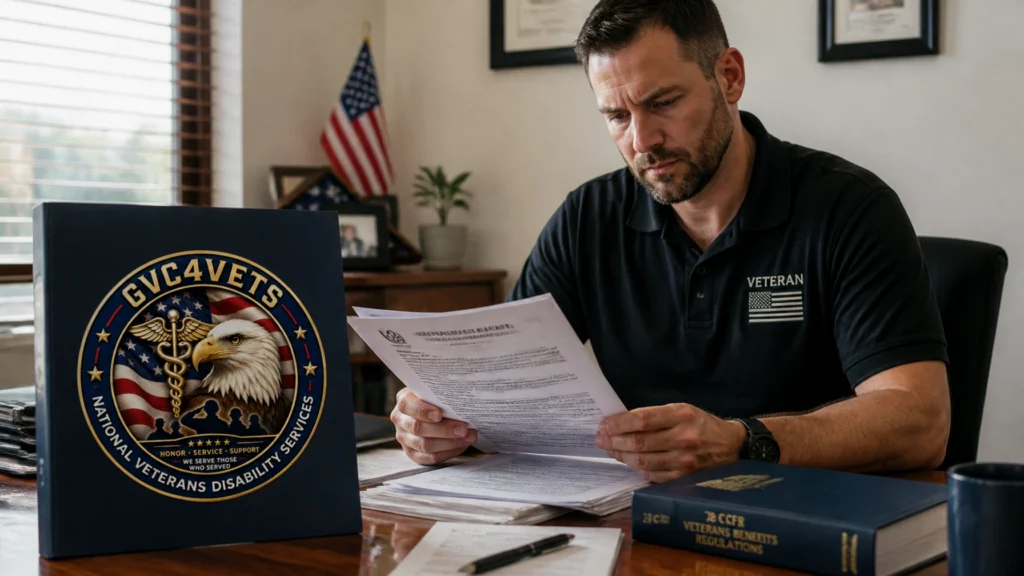
What if the reason your claim keeps getting denied isn’t because you aren’t "sick enough," but because the VA has quietly moved the goalposts while you weren't looking?
The game is changing. If you’ve been sitting on an intent to file or waiting for the "right time" to request a VA disability increase, your window of opportunity is narrowing. Recent shifts in 38 CFR updates and internal policy alerts at the Veterans Benefits Administration (VBA) have created a tactical minefield that only the most prepared veterans will navigate successfully.
At GVC4Vets, we don't just "help" with claims; we architect a mission-ready strategy to ensure your medical evidence is bulletproof before it ever hits a rater's desk.
Key Takeaways
- The Medication Trap: A new interim rule for 38 CFR § 4.10 attempted to base ratings on "medicated" symptom levels. While "paused," the text remains, creating massive confusion for raters.
- Objective Evidence is King: Subjective reports of pain are no longer enough. You must bridge the gap between "how you feel" and "how you function" using specific clinical data points.
- Grandfathering Protections: Filing now locks in current criteria, protecting you from future "modernization" efforts that often lead to lower ratings for respiratory and digestive systems.
- The GVC4Vets Advantage: Leveraging a network of over 800 independent physicians ensures your VA secrets to a winning claim are backed by rigorous medical documentation.
Table of Contents
- The 38 CFR § 4.10 "Policy Alert" Shell Game
- Why "Non-Enforcement" is a Red Herring
- Respiratory and Digestive Modernization: The Next Front
- Blueprint for Action: Moving from Subjective to Objective
- Pes Planus vs. Plantar Fasciitis: A Case Study in Precision
- Final Submission Checklist
- Frequently Asked Questions
1. The 38 CFR § 4.10 "Policy Alert" Shell Game
In February 2026, the VA dropped a bombshell in the Federal Register. They issued an interim final rule amending 38 CFR § 4.10, the general regulation governing how functional impairment is evaluated. The gist? They wanted to rate you based on how you function with medication.
Think about that. If your inhaler stops a total respiratory collapse, or your proton pump inhibitors keep your GERD from being a daily agony, the VA wanted to say, "You're fine," and hand you a 0% rating.
This is the ultimate "VA secret" they don't want you to realize: the system is designed to reward health, not compensate for the struggle of maintaining it. While the VA backpedaled due to veteran outrage, stating they would "not enforce" this rule at this time, the language still exists in the eCFR. This creates a "shadow policy" where unseasoned raters might still apply the logic of the new rule to your claim.

2. Why "Non-Enforcement" is a Red Herring
Don't be fooled by the VA's "non-enforcement" promise. In the world of VA claims, ambiguity equals denial. If your medical records only show that you are "stable on medication," a rater looking to clear their queue will see that as a reason to deny a VA disability increase.
To win in this environment, you must verify that your doctor documents your "functional impairment" during flare-ups and periods where medication reaches its limit. You need to use the "language of the rater." Don't just say your back hurts; you need a DBQ for Degenerative Disc Disease that specifies your range of motion (ROM) in degrees and notes "functional loss" under 38 CFR § 4.40.
3. Respiratory and Digestive Modernization: The Next Front
The VA is in a multi-year "modernization" cycle. We’ve seen it with the musculoskeletal system, and the respiratory (§§4.96–4.97) and digestive (§§4.110–4.114) systems are next on the chopping block.
When the VA "modernizes," they typically move away from broad symptoms and toward hyper-specific diagnostic tests (like PFTs for respiratory or endoscopic findings for digestive). If you have these conditions, you need to file for your Initial Claim or increase now.
Why? Because of Grandfathering. Under VA law, if you are rated under an old set of criteria, the VA cannot reduce you just because the rules changed. You stay protected as long as your condition doesn't show "actual improvement" under both the old and new rules.

4. Blueprint for Action: Moving from Subjective to Objective
The "mission" of your claim is to bridge the gap between your subjective daily struggle and the objective requirements of 38 CFR Part 4. GVC4Vets helps you build this bridge by connecting you with physicians who understand this necessity.
Tactical Steps to Secure Your Rating:
- Identify the Diagnostic Code: Every condition has a number. For example, Sleep Apnea is Diagnostic Code 6847. Know your target.
- Confirm Clinical Findings: If you are filing for a neurological condition, ensure your physician tests for things like calcaneal eversion or specific nerve sensory deficits.
- Ensure DBQ Accuracy: A rushed C&P examiner might miss the details. By having an independent medical evaluation through GVC4Vets, you control the narrative with evidence-based documentation.
- Document the "Daily Struggle": Provide your doctor with a log of your symptoms that occur despite medication. This counters the § 4.10 "medication trap."
5. Pes Planus vs. Plantar Fasciitis: A Case Study in Precision
One of the most common points of confusion in the VA system is foot claims. Veterans often use these terms interchangeably, but the VA sees them differently.
| Feature | Pes Planus (Flat Feet) | Plantar Fasciitis |
|---|---|---|
| VA Rating Criteria | Based on "Pronation" and "Deformity" | Based on "Pain" and "Response to Treatment" |
| Diagnostic Code | DC 5276 | DC 5269 (often rated by analogy) |
| Objective Evidence | Weight-bearing X-rays showing arch collapse | Tenderness on palpation, calcaneal spurs |
If you file for "foot pain" without specifying, you are leaving your rating to chance. You need a specific DBQ for Flat Feet to ensure the rater applies the correct diagnostic code.

Final Submission Checklist
Before you hit "Submit" on VA.gov, run through this mission checklist:
- Verify that all medical records are dated within the last 12 months.
- Confirm that your DBQ includes a "Nexus Statement" if this is an initial service-connection claim.
- Identify any "secondary" conditions (e.g., Depression secondary to Tinnitus) and ensure they are clearly linked.
- Ensure the GVC4Vets medical documentation clearly addresses "functional impairment" as required by 38 CFR § 4.10.
- Audit your "Statement in Support of Claim" to ensure it matches the clinical findings in your DBQ.
Frequently Asked Questions
Q: Can the VA reduce my rating if my medication makes me feel better?
A: Legally, they shouldn't if the symptoms are only suppressed, not cured. However, the new 38 CFR updates to § 4.10 make it critical to document how you function without the medication or during flare-ups.
Q: What is the "language of the rater"?
A: It's using specific terms from the rating schedule. Instead of saying "I can't walk," use "profoundly diminished gait" or specify the "range of motion" in degrees.
Q: Why should I use GVC4Vets instead of just going to my VA doctor?
A: VA doctors are often overworked and may not be familiar with the hyper-specific documentation requirements of a DBQ. GVC4Vets connects you with independent physicians who specialize in VA-compliant medical evidence.
Q: Is it too late to file for a VA disability increase?
A: No, but with "modernization" on the horizon for many body systems, filing sooner rather than later is a strategic necessity to secure "grandfathered" status.

Your service was an objective reality. Your disability rating should be, too. Don't let administrative shifts and "policy alerts" dictate your future.
Ready to build your mission-ready claim strategy?
Schedule your free consultation with GVC4Vets today.
Global Vets Consulting (GVC4Vets) – National Veterans Disability Services