

Your PTSD doesn’t just live in your mind; it physically alters your digestive system through the gut-brain axis. If you’re struggling with chronic stomach pain alongside your anxiety, you already know how these conditions feed into a cycle of discomfort. Filing for ibs secondary to ptsd often feels like a gamble, especially when you’re worried about a C&P examiner dismissing your symptoms or getting lost in the confusion of “VA math.” You’ve earned your benefits through service, and you shouldn’t have to feel neglected by a complex administrative system.
I’ll provide you with a clear roadmap to link these conditions and secure the higher combined rating you deserve. Following the May 1, 2026, update to the M21-1 manual and the Spicer v. McDonough ruling, the VA now recognizes a broader standard for secondary service connections. We’ll look at how to use accurate medical documentation and a private DBQ to support your claim. This guide covers the 2026 rating criteria and explains how the 2.8% COLA increase impacts your monthly compensation, ensuring you have the tools to move forward with steady confidence.
Key Takeaways
- Understand the biological link between chronic stress and digestive health, specifically how the gut-brain axis validates your secondary service connection.
- Identify the specific symptoms required for the 10%, 20%, and 30% VA ratings for ibs secondary to ptsd under the 2026 criteria for Diagnostic Code 7319.
- Learn the three essential components of a successful claim, including the specific medical nexus language needed to bridge your conditions.
- Discover how detailed DBQ education and accurate medical evidence can help reflect the true functional impact of your symptoms on your daily life.
- Navigate recent 2026 policy updates that broaden the standard for secondary claims, providing a clearer path toward a higher combined disability rating.
The Gut-Brain Connection: Why IBS is Often Secondary to PTSD
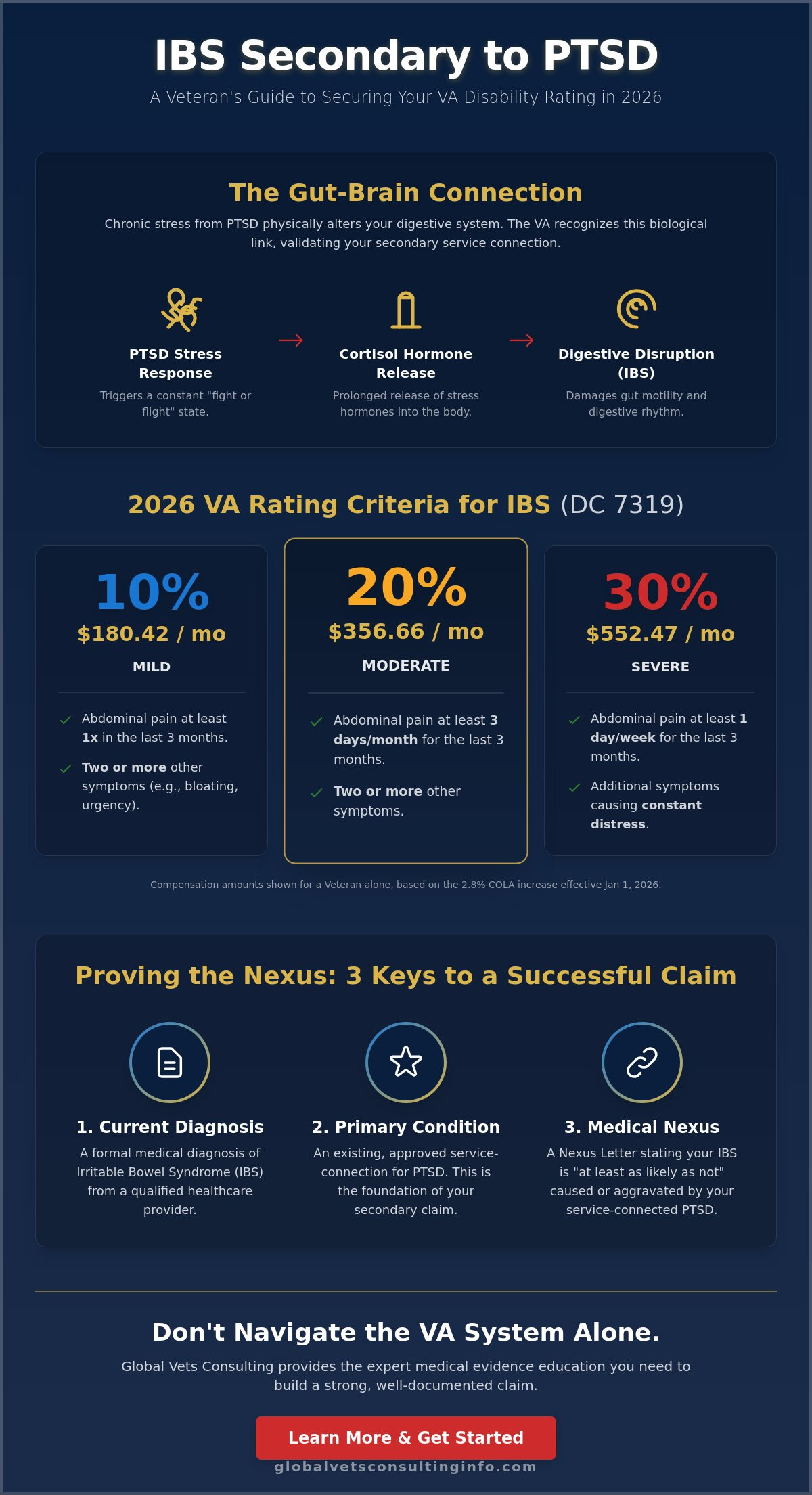
Your brain and your gut are constantly talking to each other through a complex network known as the Gut-Brain Axis. This bidirectional communication highway connects your central nervous system to your enteric nervous system, which is often called your “second brain.” For many veterans, Irritable Bowel Syndrome isn’t a standalone issue; it’s a physical manifestation of the neurological strain caused by trauma. When you live with PTSD, your body remains in a chronic “fight or flight” state. This survival mode triggers a prolonged release of cortisol, a stress hormone that eventually damages gut motility and disrupts your digestive rhythm. 🇺🇸
Because of this biological link, ibs secondary to ptsd is now one of the most frequent secondary conditions seen in the veteran community. The VA recognizes that the psychological toll of service often leaks into physical health. To secure the benefits you’ve earned, you must establish a Nexus. A Nexus is the essential medical bridge that proves your secondary IBS is “at least as likely as not” caused or aggravated by your service-connected PTSD.
Common Symptoms of IBS in Veterans
Living with IBS involves much more than occasional stomach upset. Veterans frequently deal with a specific set of physical symptoms that can make holding a steady job or attending social events nearly impossible. These manifestations include chronic abdominal pain, persistent bloating, and significant changes in bowel habits like diarrhea or constipation. When you are documenting ibs secondary to ptsd, it’s vital to record how these symptoms fluctuate. PTSD-induced anxiety often triggers immediate “flares,” where a sudden spike in stress leads to a digestive emergency. These episodes aren’t coincidences; they are direct evidence of the gut-brain connection in action. 🇺🇸
VA Ratings for IBS Secondary to PTSD in 2026
The VA evaluates Irritable Bowel Syndrome under 38 CFR § 4.114, using Diagnostic Code 7319. In 2026, these ratings are determined by the frequency and severity of your symptoms over the previous three months. Because you are filing for ibs secondary to ptsd, these percentages are added to your existing rating through the VA’s specific method of calculation. Clinical studies highlight a high prevalence of IBS in veterans with PTSD, which provides the medical foundation for your claim. 🇺🇸
Understanding how these ratings interact is vital for achieving a higher combined disability rating. If you already have a service connection for PTSD, adding a secondary digestive condition can push your total compensation into a higher bracket. You can review the VA disability claims process step by step to better understand how the VA calculates these combined ratings and what to expect during the review. Following the 2.8% COLA increase that took effect on January 1, 2026, these monthly payments have reached new levels for the current year.
Understanding the 10%, 20%, and 30% IBS Ratings
- 10% Rating: This level applies if you experience abdominal pain related to defecation at least once in the previous three months, accompanied by at least two other symptoms like bloating, urgency, or changes in stool form. For a veteran alone, this rating currently provides a monthly payment of $180.42.
- 20% Rating: You qualify for this rating if your abdominal pain occurs at least three days per month over the previous three months, along with two or more secondary symptoms. This rating results in a monthly payment of $356.66.
- 30% Rating: This is the maximum schedular rating for IBS. It requires abdominal pain related to defecation at least once per week in the previous three months, plus additional symptoms that cause constant distress. This maximum rating provides $552.47 per month.
Documentation is the key to moving from a 10% to a 30% rating. Every missed day of work or social withdrawal due to a digestive flare should be recorded to show the functional impact of your condition. If you need assistance gathering this data, exploring secondary VA claims education can provide the clarity you need to present a strong case to the examiner. 🇺🇸
Proving the Nexus: Evidence Needed for Your Secondary Claim
Winning a claim for ibs secondary to ptsd requires more than just describing your symptoms to an examiner. You must satisfy a three-part requirement to establish a legal and medical connection. First, you need a current, formal diagnosis of IBS. Second, you must have an existing service-connected rating for PTSD. Finally, you need a medical nexus that bridges the two. This nexus is typically a written opinion where a qualified medical professional states that your digestive condition is “at least as likely as not” caused or aggravated by your mental health condition. While buddy letters from family or friends provide helpful context about your daily struggles, objective medical evidence is what ultimately wins the claim. 🇺🇸
To maximize your impact, consider the interaction between your conditions. Pairing a DBQ for mental health conditions with a digestive system DBQ creates a comprehensive picture of how your PTSD triggers gastrointestinal distress. This dual-documentation approach leaves little room for the VA to claim your symptoms are unrelated. If you’re ready to strengthen your file, our secondary VA claims education can guide you through the process of gathering this critical evidence.
Why a Private DBQ Outperforms a Standard C&P Exam
Many veterans find themselves frustrated after a rushed 15-minute C&P exam where the examiner barely looks at their records. A private medical evaluation provides the time and thoroughness that a standard contractor exam often lacks. By using a private DBQ, you ensure that every symptom is documented according to the strict 38 CFR criteria. Understanding the benefits of using a private DBQ helps you prevent common examiner oversights, such as failing to record the frequency of your flares or the specific level of abdominal distress you endure. 🇺🇸
Securing Your Rating with Global Vets Consulting 🇺🇸
Success in a claim for ibs secondary to ptsd depends on the precision of your medical evidence. Global Vets Consulting is a veteran-owned and operated partner dedicated to simplifying this complex process. We operate with a “Veterans Helping Veterans” mission, providing a level of duty and respect that only those who have served can truly offer. Our focus is on educating you about the claims process and providing access to detailed, accurate Disability Benefits Questionnaires (DBQs) that reflect the true severity of your symptoms. 🇺🇸
We understand the anxiety that comes with interacting with a bureaucratic system. To support you, we maintain constant accessibility through our 24/7 National Client Services Hotline and our 24/7 AI Veteran Intake Specialist. This ensures you have a steady guide available whenever you need clarity. Our goal is to move you from a state of confusion to a clear roadmap where every piece of medical documentation is standardized and thorough. We don’t just provide information; we offer a predictable path toward the benefits you’ve earned through your service.
Professional DBQ Preparation for Digestive Conditions
Gathering evidence for gastrointestinal issues requires a specific understanding of how the VA views functional impairment. We streamline the evidence-gathering process to reduce the stress of filing for ibs secondary to ptsd or other related conditions like GERD. Our expertise in secondary claims education ensures that your documentation addresses the 38 CFR criteria with meticulous detail. By focusing on high-quality medical evidence education, we help you present a case that is difficult to ignore. 🇺🇸
🌎 Worldwide Support:
- 📞 24/7 National Client Services Hotline: 866-200-0235
- 🤖 24/7 AI Veteran Intake Specialist
- 🌐 Website: GlobalVetsConsultingInfo.com
Don’t leave your combined rating to chance or wait for an appeal where legal fees might eat into your backpay. Get started today with Global Vets Consulting and take control of your evidence-gathering process. 🇺🇸
Take Control of Your Path to a Higher VA Rating 🇺🇸
You now have the tools to connect your physical symptoms to your service-connected mental health. Understanding the biological link through the gut-brain axis is the first step toward a successful claim for ibs secondary to ptsd. By documenting your symptoms according to the 2026 diagnostic criteria and securing a strong medical nexus, you can move forward with steady confidence. You don’t have to face the complexities of “VA math” or the stress of a C&P exam alone.
Our team is ready to serve as your knowledgeable advocate. As a veteran-owned and operated partner, we specialize in secondary claims education and standardized DBQ documentation. This ensures your condition is accurately represented in your file. You can access our 24/7 National Client Services Hotline at any time to begin your journey toward the rating you’ve earned. We prioritize your peace of mind by offering a clear, predictable path through the evidence-gathering process.
Secure the Evidence You Need for Your VA Claim with Global Vets Consulting
You’ve served your country with honor, and it’s time your benefits reflect the true impact of your service. Stay focused on your health while we help you navigate the documentation you need for a successful outcome.
Frequently Asked Questions
Can I get a 100% VA rating for IBS secondary to PTSD?
You cannot receive a 100% schedular rating for IBS alone because the maximum rating under Diagnostic Code 7319 is 30%. However, adding this 30% to your existing PTSD rating can help you reach a 100% combined disability rating through “VA math.” If your combined service-connected conditions prevent you from maintaining gainful employment, you may also qualify for Total Disability based on Individual Unemployability (TDIU), which pays at the 100% rate. 🇺🇸
What is a ‘Medical Nexus’ for IBS and PTSD?
A medical nexus is a professional opinion that establishes the link between your digestive condition and your service-connected mental health. To be successful, a qualified professional must state that your ibs secondary to ptsd is “at least as likely as not” caused or aggravated by your PTSD. This bridge is the most critical piece of evidence because it proves your stomach issues are a physical result of your psychological trauma. 🇺🇸
Do I need a formal diagnosis of IBS before filing a secondary claim?
You must have a formal, current diagnosis of Irritable Bowel Syndrome in your medical records before submitting your claim. The VA requires evidence of a chronic condition to grant service connection. Filing without a diagnosis often leads to a denial because the VA may view your symptoms as temporary or unrelated to your service-connected disabilities. 🇺🇸
How does the VA rate IBS if I also have GERD?
The VA typically applies the “anti-pyramiding” rule for digestive conditions, which means you’ll likely receive a single rating for your gastrointestinal symptoms. If you have both IBS and GERD, the VA evaluates the symptoms of both and assigns a rating under the diagnostic code that provides the highest compensation. It’s vital to document all symptoms thoroughly to ensure the combined impact on your life is recognized. 🇺🇸
Why was my IBS secondary to PTSD claim denied?
Most denials for ibs secondary to ptsd occur because of a missing medical nexus or a lack of a formal diagnosis. If your claim was denied, the examiner likely didn’t see enough evidence to connect your digestive flares to your PTSD triggers. Many veterans face denials after a rushed C&P exam, which is why providing independent medical evidence and a private DBQ is often necessary to overcome a negative examiner opinion. 🇺🇸

Article by
Willie Daniel
Willie Daniel is the Founder and Chief Executive Officer (CEO) of Global Vets Consulting (GVC) – National Veterans Disability Services, a veteran-led educational and medical evidence support organization dedicated to helping veterans better understand VA disability rating increases, DBQ medical evidence, secondary claims education, and C&P examination preparation.
He is a retired U.S. Army Medical Service Corps Officer with more than 27 years of honorable military service, a decorated Iraq combat veteran, and a retired federal official with the U.S. Department of Veterans Affairs. Throughout his military and federal career, Willie Daniel served in leadership, healthcare administration, operational, and veteran-support roles focused on improving services and support systems for servicemembers, veterans, and their families.
Drawing from decades of military leadership, healthcare administration, veteran advocacy, and federal government experience, Willie Daniel brings a practical, veteran-centered perspective to Global Vets Consulting’s educational articles, AI-powered veteran resources, video education initiatives, and outreach programs. His experience navigating military systems, medical documentation processes, and veteran-related administrative operations provides valuable insight into many of the challenges veterans face when seeking to better understand VA disability rating criteria, medical evidence, documentation strategies, and secondary condition education.
Through GVC’s “Veterans Helping Veterans” mission, his focus is on delivering clear, educational, and easy-to-understand information designed to empower veterans with knowledge, resources, and educational tools that may help them make more informed decisions regarding their individual VA disability journeys.
The information provided through GVC is intended for educational and informational purposes only and should not be considered legal or medical advice.
Disclaimer
Disclaimer: Global Vets Consulting, LLC (“GVC”) is a veteran-led educational and medical evidence support organization. GVC is not a law firm, is not a Veterans Service Organization (VSO), and is not affiliated with the U.S. Department of Veterans Affairs (VA) or any government agency.
Global Vets Consulting does not provide legal advice, medical advice, medical treatment, or healthcare services. GVC does not prepare, file, or submit VA disability claims on behalf of veterans. All information provided through this website, blog articles, videos, educational materials, AI tools, dashboards, templates, and communications is intended solely for general educational and informational purposes.
Veterans are encouraged to consult with accredited representatives, licensed attorneys, qualified medical providers, or Veterans Service Organizations regarding their specific legal, medical, or VA-related matters. VA disability decisions, ratings, and outcomes are determined solely by the U.S. Department of Veterans Affairs based on applicable laws, regulations, medical evidence, and individual circumstances. Past results do not guarantee future outcomes.