
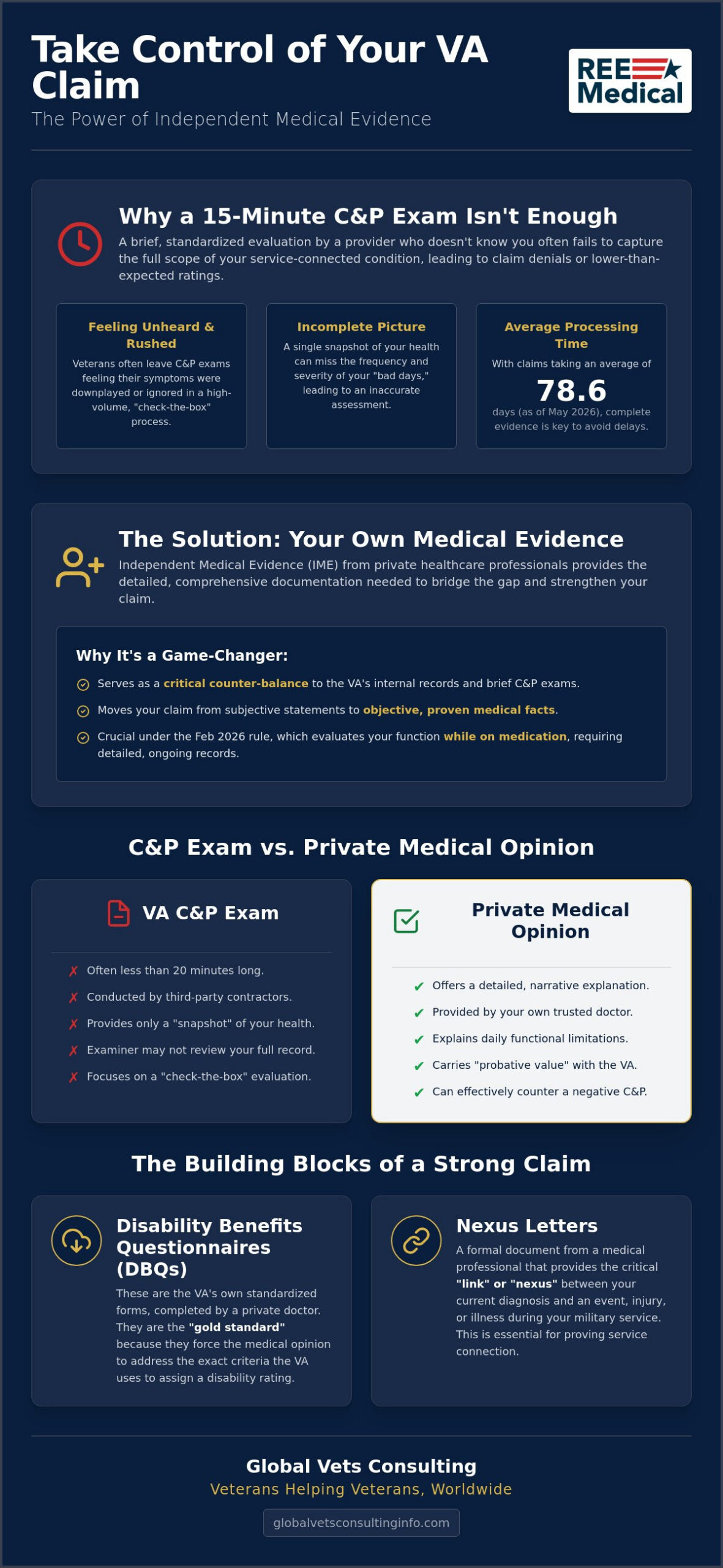
Why should a fifteen-minute C&P exam with a provider who barely knows your name determine the future of your disability benefits? It’s a question many veterans ask after leaving an appointment feeling unheard and rushed. You know your body better than anyone, yet the VA often relies on brief, standardized evaluations that may not capture the full extent of your symptoms or their service connection. This gap in documentation is frequently why claims are denied or ratings come back lower than expected. Using Independent Medical Evidence is the most effective way to bridge this gap and ensure the VA sees a complete, accurate picture of your disability.
We agree that the system can feel stacked against you, but you don’t have to settle for an incomplete record. Our goal is to help you take control of your claim by providing a clear, predictable path toward the benefits you deserve. This article will show you how to use private medical documentation to strengthen your claim, overcome unfavorable C&P results, and navigate the latest 2026 rating criteria. With the average claim taking about 78.6 days to process as of May 2026, ensuring your evidence is airtight from the start is the best way to secure the rating you’ve rightfully earned 🇺🇸.
Key Takeaways
- Understand how Independent Medical Evidence serves as a vital counter-balance to the VA’s internal records and often rushed C&P examinations.
- Learn why private medical documentation provides a more comprehensive view of your daily limitations than a typical fifteen-minute VA evaluation.
- Discover the essential steps for gathering high-quality evidence, starting with a clear distinction between direct and secondary service connections.
- Gain insights into the importance of standardized Disability Benefits Questionnaires (DBQs) and how they accurately reflect your true level of disability.
- Explore how specialized medical evidence education can help you secure a successful VA rating increase and the benefits you’ve rightfully earned.
What is Independent Medical Evidence for VA Claims?
When you file a VA disability claim, the evidence you submit is the foundation of your case. Independent Medical Evidence refers to clinical documentation, opinions, and findings provided by healthcare professionals who aren’t employed by the Department of Veterans Affairs. This evidence serves as a critical counter-balance to the VA’s internal medical records and the often brief Compensation and Pension (C&P) examinations. Essentially, Independent Medical Evidence is the bridge between a veteran’s service-connected condition and the VA’s specific rating criteria.
The year 2026 has become a pivotal time for medical documentation. With the implementation of the February 17, 2026, interim final rule, the VA now evaluates disability ratings based on how a veteran functions while on medication. This policy shift makes detailed, private evidence more important than ever. You need records that accurately reflect your functional limitations, rather than just a snapshot from a single day. Outside of the VA system, an Independent Medical Examination (IME) is a standard tool used to provide an unbiased look at a person’s health, and it’s just as powerful for your VA claim 🇺🇸.
The Role of Medical Evidence in the VA Rating System
The VA uses your evidence to answer two primary questions: is your condition service-connected, and how severe are your symptoms? Many veterans rely on “subjective” evidence, which includes personal statements about how they feel. While your voice is important, the VA prioritizes “objective” medical findings. These are measurable results like range-of-motion tests, diagnostic imaging, and clinical observations. High-quality evidence moves your claim from “I think I have this” to “the medical record proves I have this.”
Types of Independent Evidence: DBQs and Nexus Letters
To win your claim or secure a VA rating increase, you generally need two specific types of documentation:
- Disability Benefits Questionnaires (DBQs): These are standardized forms that the VA uses to evaluate the severity of a disability. Private DBQs are considered the gold standard because they ensure your doctor addresses the exact criteria the VA uses to assign a percentage.
- Nexus Letters: A nexus letter is a formal document from a medical professional that provides the “link” between your current diagnosis and your military service. Without this link, the VA may deny service connection, even if your condition is severe.
Securing this documentation helps you present a complete picture that the VA’s internal system might miss. It’s about ensuring your records reflect the reality of your life, not just a line in a government database 🌐.
Private Medical Opinions vs. The VA C&P Examination
There is a common misconception that Compensation and Pension (C&P) exams are the final word on your disability claim. In reality, these evaluations are often conducted by third-party contractors who may spend less than 20 minutes reviewing a condition that has impacted you for decades. This “Independence Myth” suggests that a VA-ordered examiner is the most qualified to assess your health, but many veterans leave these appointments feeling their symptoms were downplayed or ignored. Independent Medical Evidence provides the necessary depth that a brief, high-volume exam simply cannot offer.
The legal weight of your own medical documentation is significant. Under federal regulations, the VA is required to consider all competent medical evidence submitted by a claimant. This means that an opinion from your own doctor carries “probative value” if it is well-reasoned and supported by clinical findings. Understanding Medical Professionals’ Role in VA Disability Adjudication is essential because it highlights how private evidence can effectively counter a negative C&P result. While a C&P examiner often follows a “check-the-box” approach, a private medical opinion offers a detailed narrative that explains exactly how your disability affects your ability to work and function daily 🇺🇸.
Why the VA Relies on Contract Examiners
The VA has shifted much of its evaluation workload to third-party companies like VES and QTC. While this was intended to reduce the claims backlog, it created new challenges for veterans. Common complaints include examiners who haven’t read the veteran’s service treatment records or those who rush through physical assessments. When an examiner only sees a snapshot of your health, they might miss the frequency of your “bad days.” This is why having your own Independent Medical Evidence is a strategic necessity to ensure the full truth is on the record.
The Advantage of a Private DBQ 📋
A private physician can take the time to review your entire va disability claims process step by step, ensuring that every symptom is documented according to the 38 CFR Part 4 (Schedule for Rating Disabilities). Unlike a contract examiner who may be juggling dozens of appointments, a private doctor can focus on the nuances of your specific condition. This level of meticulousness is often the difference between a 10% and a 70% rating. If you feel your current documentation is lacking, exploring medical evidence education can help you understand how to better present your case to the VA 🌐.
How to Gather High-Quality Independent Medical Evidence
Building a strong file requires more than just a stack of papers. You need a methodical plan to ensure your claim stands up to the VA’s scrutiny. Under federal regulation, the VA has a legal obligation to consider Competent medical evidence from any qualified source. However, the burden of proving the severity and nexus of your condition often rests on you. Proactively gathering Independent Medical Evidence is the best way to avoid the long wait times associated with appeals 🇺🇸.
Follow these four steps to organize your documentation:
- Step 1: Identify your conditions. You must distinguish between direct service connections and secondary conditions caused or aggravated by an existing disability.
- Step 2: Secure your records. Obtain your complete Service Treatment Records (STRs) and private medical history. A doctor cannot provide a valid opinion without reviewing these files.
- Step 3: Partner with a specialist. Work with a medical professional who understands VA terminology and Disability Benefits Questionnaire (DBQ) requirements.
- Step 4: Submit a Fully Developed Claim. Organize everything before submission to avoid the VA claim denied for lack of evidence trap.
Essential Components of a Valid Medical Nexus Opinion
The most critical part of your evidence is the Nexus Opinion. To be accepted, the provider must use the VA standard: “at least as likely as not.” This means there is a 50% or greater probability that your condition was caused by your service. A simple diagnosis isn’t enough; you need a clinical rationale based on medical literature to explain why the link exists. This logical bridge is what turns a medical record into winning evidence 📋.
Documenting Mental Health and Secondary Conditions
When you are filing for a DBQ for mental health conditions, the evidence must reflect your specific level of social and industrial impairment. For secondary claims, Independent Medical Evidence is often the only way to prove that a condition like sleep apnea or radiculopathy is proximately due to a primary service-connected issue. If you’re ready to strengthen your documentation and secure the rating you’ve earned, visit Global Vets Consulting for expert education on the evidence process 🌐.
Securing Your VA Rating Increase with Global Vets Consulting
Global Vets Consulting operates with a clear “Veterans Helping Veterans” mission. We’ve been veteran-owned and operated since 2021, and we know exactly how it feels to have a claim stall due to insufficient records. Our primary goal is to provide the education you need to leverage Independent Medical Evidence effectively. This isn’t just about filling out forms; it’s about ensuring your medical history is translated into the specific language the VA requires for a successful outcome 🇺🇸.
Meticulousness is the foundation of our approach. Small errors on a questionnaire can lead to months of unnecessary appeals. We emphasize accuracy because the financial stakes are high. As of January 2026, a 100% disability rating for a veteran alone is $3,938.58 per month. Ensuring your documentation is accurate from the start helps you stay ahead of the system. We help you understand what is a dbq and how to use it to capture your true level of impairment. If you have questions right now, our 24/7 National Client Services Hotline is available to assist you 📞.
Professional DBQ Preparation for Veterans 🇺🇸
Our educational resources focus on streamlining the evidence-gathering process. By using standardized, high-quality forms, you can present your symptoms in a way that aligns with the VA’s own rating schedules. This reduces the chance of a contract examiner overlooking a critical symptom during a rushed appointment. We teach you how to ensure your questionnaires accurately reflect the severity of your service-connected conditions, providing the objective data needed for a fair evaluation 🌐.
Your Next Steps Toward a Rating Increase
If your current rating doesn’t match your physical or mental reality, it’s time to take action. Learning how to use a dbq for a va disability rating increase is a vital step in getting the compensation you’ve rightfully earned. Independent Medical Evidence is your strongest tool in this process. Contact Global Vets Consulting today to access expert guidance and resource awareness. We are ready to help you navigate the complexities of the VA system with confidence and integrity.
GlobalVetsConsultingInfo.com
Take Control of Your VA Disability Claim Journey
Securing the benefits you earned requires more than just showing up to a C&P exam. Independent Medical Evidence is the most powerful tool you have to ensure your records reflect the true severity of your condition. By providing a detailed narrative and objective clinical findings, you can bridge the gap between your daily struggles and the VA’s complex rating criteria. Whether you’re filing for a rating increase or appealing a prior denial, high-quality medical documentation ensures your voice is heard 🇺🇸.
Global Vets Consulting is veteran-owned and operated since 2021. We’re dedicated to providing the education and resources you need for a successful outcome. We offer worldwide support for all veterans and maintain a 24/7 National Client Services Hotline to answer your questions whenever they arise. Don’t let a rushed evaluation determine your future. Contact Global Vets Consulting for your DBQ and medical evidence needs today! We’re here to serve as your steady guide and reliable partner. You’ve served your country; now it’s time to secure the benefits you deserve 🌐.
Frequently Asked Questions
What is the most important piece of medical evidence for a VA claim?
The most important piece of medical evidence is objective clinical documentation that establishes both a clear service connection and the current severity of your symptoms. This typically includes a combination of your Service Treatment Records and a current diagnosis supported by diagnostic testing or imaging. While personal statements provide necessary context, the VA prioritizes measurable data like range-of-motion results or psychiatric evaluations that align with the 38 CFR Part 4 rating criteria.
Can the VA ignore my private doctor’s DBQ?
No, the VA cannot legally ignore a private Disability Benefits Questionnaire (DBQ). Under 38 C.F.R. § 3.159, the department is required to evaluate all Independent Medical Evidence provided by the claimant. If the private DBQ is completed by a competent medical professional and provides a thorough clinical rationale, the VA must weigh it against their own internal findings. They cannot simply dismiss it because it came from a non-VA source.
How much does it cost to get Independent Medical Evidence in 2026?
The cost for private medical documentation varies significantly based on the complexity of your medical history and the specialty of the healthcare provider. Fees are typically determined by the amount of time a doctor must spend reviewing your Service Treatment Records to provide a well-reasoned opinion. While some general evaluations are less expensive, specialized opinions from board-certified experts often require a more thorough review process due to the meticulous nature of the documentation required.
What happens if my C&P exam contradicts my private medical evidence?
If a C&P exam contradicts your private records, the VA rater must determine which piece of evidence has more probative value. This is where Independent Medical Evidence becomes crucial. If your private doctor provides a more detailed rationale and has reviewed your entire service history, their opinion often carries more weight than a rushed contract exam. You can also use a Higher-Level Review to challenge a decision that ignores your private evidence.
Do I need a Nexus Letter if I already have a DBQ?
You often need a Nexus Letter if your DBQ doesn’t explicitly explain the causal link between your military service and your current diagnosis. While some DBQs include a section for medical opinions on service connection, a separate Nexus Letter allows a doctor to provide a more comprehensive clinical rationale. This is especially important for secondary claims, such as linking sleep apnea to service-connected PTSD, where the medical link isn’t always obvious to a VA rater.
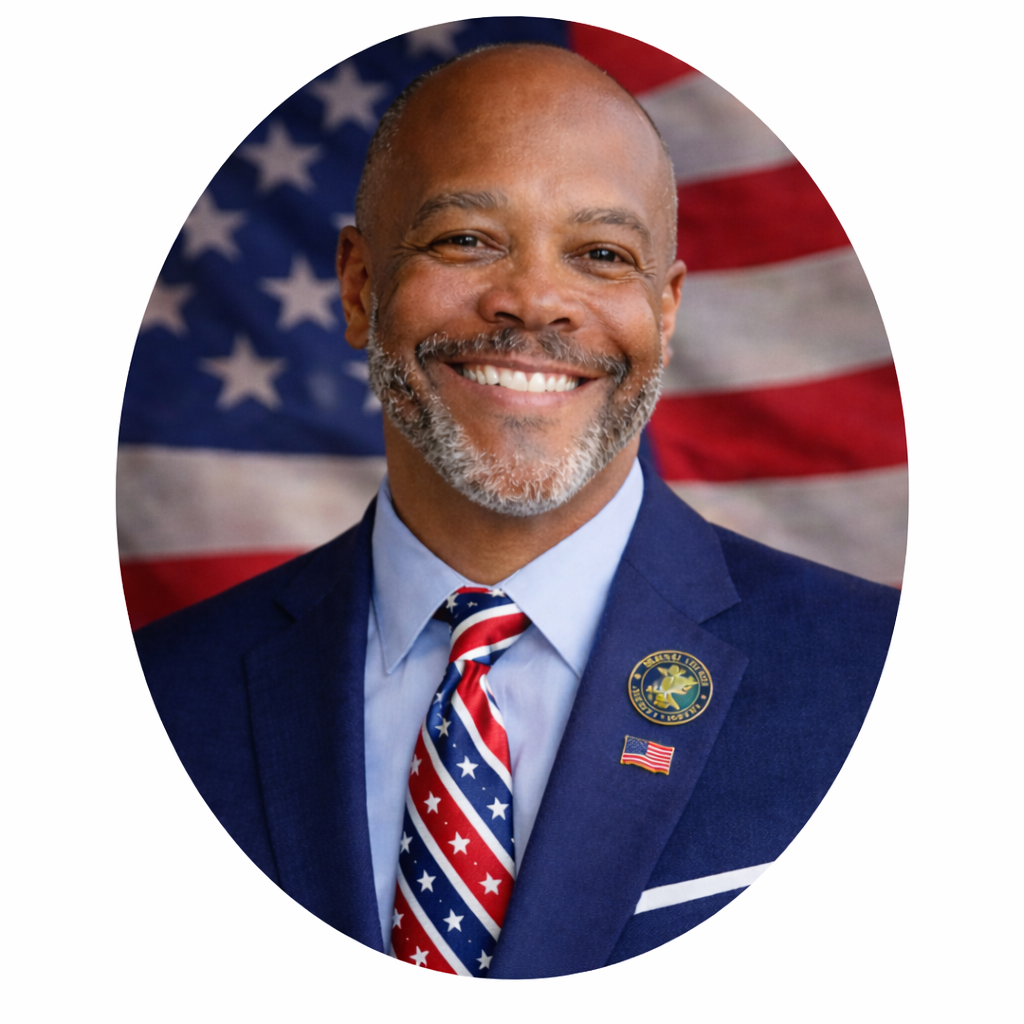
Article by
Willie Daniel
Willie Daniel is the Founder and Chief Executive Officer (CEO) of Global Vets Consulting (GVC) – National Veterans Disability Services, a veteran-led educational and medical evidence support organization dedicated to helping veterans better understand VA disability rating increases, DBQ medical evidence, secondary claims education, and C&P examination preparation.
He is a retired U.S. Army Medical Service Corps Officer with more than 27 years of honorable military service, a decorated Iraq combat veteran, and a retired federal official with the U.S. Department of Veterans Affairs. Throughout his military and federal career, Willie Daniel served in leadership, healthcare administration, operational, and veteran-support roles focused on improving services and support systems for servicemembers, veterans, and their families.
Drawing from decades of military leadership, healthcare administration, veteran advocacy, and federal government experience, Willie Daniel brings a practical, veteran-centered perspective to Global Vets Consulting’s educational articles, AI-powered veteran resources, video education initiatives, and outreach programs. His experience navigating military systems, medical documentation processes, and veteran-related administrative operations provides valuable insight into many of the challenges veterans face when seeking to better understand VA disability rating criteria, medical evidence, documentation strategies, and secondary condition education.
Through GVC’s “Veterans Helping Veterans” mission, his focus is on delivering clear, educational, and easy-to-understand information designed to empower veterans with knowledge, resources, and educational tools that may help them make more informed decisions regarding their individual VA disability journeys.
The information provided through GVC is intended for educational and informational purposes only and should not be considered legal or medical advice.
Disclaimer
Disclaimer: Global Vets Consulting, LLC (“GVC”) is a veteran-led educational and medical evidence support organization. GVC is not a law firm, is not a Veterans Service Organization (VSO), and is not affiliated with the U.S. Department of Veterans Affairs (VA) or any government agency.
Global Vets Consulting does not provide legal advice, medical advice, medical treatment, or healthcare services. GVC does not prepare, file, or submit VA disability claims on behalf of veterans. All information provided through this website, blog articles, videos, educational materials, AI tools, dashboards, templates, and communications is intended solely for general educational and informational purposes.
Veterans are encouraged to consult with accredited representatives, licensed attorneys, qualified medical providers, or Veterans Service Organizations regarding their specific legal, medical, or VA-related matters. VA disability decisions, ratings, and outcomes are determined solely by the U.S. Department of Veterans Affairs based on applicable laws, regulations, medical evidence, and individual circumstances. Past results do not guarantee future outcomes.