

What if the difference between your current rating and the 100% compensation you deserve isn’t your symptoms, but how they’re translated onto a single piece of paper? You likely feel that your PTSD doesn’t just stay the same; it’s a weight that shifts and often grows more difficult to manage as years pass. It’s frustrating when your monthly disability check fails to reflect the daily reality of your social and occupational impairment. Utilizing a professional dbq for increase in ptsd rating is often the most effective way to ensure the VA sees the full picture of your mental health.
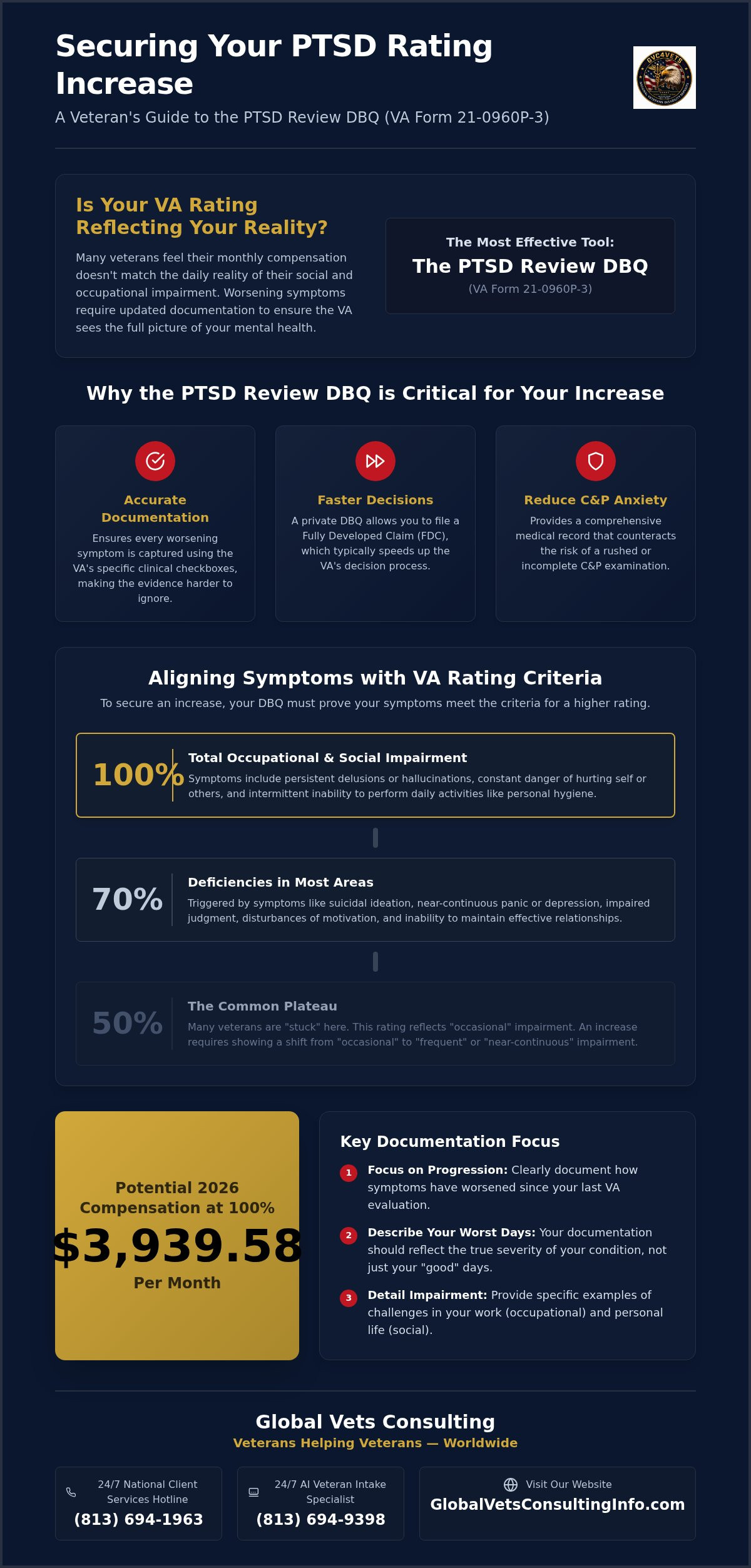
We understand the anxiety that comes with “VA math” and the fear that a C&P examiner might downplay your struggles during an exam. This 2026 guide provides a clear roadmap for using VA Form 21-0960P-3 to document worsening symptoms with clinical precision. You’ll learn the specific medical triggers for the 70% and 100% brackets, how to leverage independent medical evidence, and the steps to secure the updated 2026 compensation rates, which reach $3,939.58 for a veteran at the 100% level.
Key Takeaways
- Understand why the PTSD Review DBQ (VA Form 21-0960P-3) is the essential tool for documenting symptom progression since your last evaluation.
- Learn how to align your medical evidence with the VA’s strict criteria for 70% and 100% ratings when preparing a dbq for increase in ptsd rating.
- Discover how to accurately describe occupational and social impairment by focusing on your worst days and specific workplace challenges.
- See how private medical documentation can reduce C&P exam anxiety by providing a comprehensive record that the VA cannot easily ignore.
What is a PTSD Review DBQ and Why is it Critical?
The PTSD Review Disability Benefits Questionnaire (DBQ), officially known as VA Form 21-0960P-3, is the specialized document used for veterans who are already service-connected but need a higher rating. It’s the primary evidence a VA Rater uses to compare your current mental health against the General Rating Formula for Mental Disorders. Using a professional dbq for increase in ptsd rating is critical for several reasons:
- 🇺🇸 Accurate Documentation: It ensures every worsening symptom is captured using the VA’s specific clinical checkboxes. This standardized format makes it much harder for the VA to ignore your evidence.
- 🌎 FDC Eligibility: Including a private DBQ in your package allows you to file a Fully Developed Claim. This typically speeds up the decision process and helps you get your results faster.
- 📞 Reducing Anxiety: It provides a detailed medical record that counteracts the risk of a rushed, 15 minute C&P examination. You enter the process with your evidence already established.
This document serves as your voice in the system. It bridges the gap between your daily struggles and the bureaucratic requirements of the VA.
Initial vs. Review DBQs: Knowing the Difference
Navigating the various VA disability benefits for PTSD requires knowing which form applies to your situation. While an initial DBQ establishes service connection, the review version is purely about progression.
- The Core Focus: Initial claims require a stressor link; Review DBQs focus almost exclusively on “Occupational and Social Impairment.” This evidence shows exactly how your PTSD creates barriers in your work and personal life.
- Medical Requirements: You don’t need to re-litigate your diagnosis. The doctor simply documents how your symptoms have intensified since your last rating was granted.
- The Outcome: Submitting a Review DBQ is the most direct path to a va claim for increase because it provides the Rater with a ready to use evaluation.
By focusing on these specifics, you ensure your dbq for increase in ptsd rating is meticulously prepared to reflect your current reality and secure the compensation you deserve.
The VA Rating Criteria for PTSD: Aligning Symptoms with 70% and 100%
The VA evaluates PTSD through a specific lens of occupational and social impairment, assigning ratings at 0, 10, 30, 50, 70, or 100 percent. To secure a successful dbq for increase in ptsd rating, your documentation must align with the VA’s official rating criteria for PTSD. The VA assigns a rating bracket based on where the majority of your symptoms fall within the general rating formula, a concept known as the preponderance of symptoms.
The 70% threshold is a major milestone, typically involving near-continuous panic, suicidal ideation, and deficiencies in most areas of daily life. At the 100% level, the criteria shift toward total impairment, characterized by persistent delusions, hallucinations, or a constant danger of hurting yourself or others.
The Jump from 50% to 70%: The Most Common Increase
Many veterans find themselves “stuck” at the 50% level even as their symptoms worsen. This often happens because the evidence doesn’t clearly highlight the transition from “occasional” to “frequent” impairment. A 70% rating is triggered by specific indicators like impaired judgment, disturbances of motivation, and an inability to maintain effective relationships. Documenting these shifts on your DBQ is essential for moving past the 50% plateau.
Documenting Total Impairment for 100% PTSD
Securing a 100% rating requires proving total occupational and social impairment. A properly prepared dbq for increase in ptsd rating must capture your inability to function in work settings and your intermittent inability to perform activities of daily living (ADLs), such as maintaining hygiene or managing finances. If you’re unsure how your symptoms fit these categories, our team can help you understand the mental health documentation process to ensure your claim is accurate. This level of detail prevents the VA from overlooking the true severity of your condition.
How to Document ‘Occupational and Social Impairment’ on Your DBQ
Translating your daily struggles into clinical language is the most challenging part of a dbq for increase in ptsd rating. The VA Rater isn’t looking for a simple list of symptoms; they’re looking for how those symptoms prevent you from living a normal life. To ensure your medical evidence is accurate, follow these four steps during your evaluation process.
- Focus on your worst days. Many veterans instinctively downplay their pain during interviews. You must describe your symptoms as they appear at their peak severity, not how you feel on a rare good day.
- Connect symptoms to workplace failures. Don’t just say you’re stressed. Detail specific instances where your PTSD led to conflict with supervisors, caused you to walk off a job, or resulted in termination.
- Detail social isolation. Explain how your condition affects your marriage or your ability to participate in family events. The VA needs to see the impact on your social impairment as much as your occupational one.
- Support every check-box. Ensure that every box checked on the dbq for mental health conditions includes descriptive remarks in the “Comments” section to provide context for the Rater.
The Clinical Interview: What to Prepare
Preparation is your best defense against a rushed or inaccurate evaluation. Start by gathering buddy letters from coworkers or family members who witness your struggles firsthand. These statements provide a 360-degree view of your impairment that a single interview cannot capture. Additionally, keep a log of the frequency and duration of your panic attacks or flashbacks. Providing your doctor with hard data rather than vague estimates makes your dbq for increase in ptsd rating much harder for the VA to dismiss. If you need assistance gathering this documentation, you can contact our veteran intake specialists for guidance on building a stronger evidence package.
Using Private DBQ Services to Secure Your Rating Increase
A standard C&P exam often lasts only 15 minutes. This brief window is rarely enough for a stranger to understand the complexities of your daily life or the progression of your symptoms. Private medical evidence offers a comprehensive alternative by ensuring a deeper clinical evaluation. When you submit a professional dbq for increase in ptsd rating, you provide the VA with standardized, high-quality data that is much harder for a Rater to overlook. Understanding what is a dbq and its specific 2026 requirements ensures your documentation meets the latest administrative standards.
Many veterans face a va claim denied for lack of evidence because their current records don’t explicitly bridge the gap between a diagnosis and functional impairment. Independent Medical Evidence Education solves this by:
- Translating Symptoms: Ensuring every struggle is described using the exact clinical language the VA requires for higher rating brackets.
- Closing Evidence Gaps: Identifying where your current medical records fall short of the 70% or 100% threshold.
- Empowering the Veteran: Giving you the tools to take control of your claim rather than leaving your future to the “C&P exam lottery.”
Global Vets Consulting: Veterans Helping Veterans 🇺🇸
We operate with a mission-driven focus because we’ve been in your boots and understand the stakes. Our team provides the meticulous documentation needed to reflect the true severity of your condition.
- 📞 24/7 National Client Services Hotline: Access immediate guidance and support whenever you need it.
- 🇺🇸 Veteran-Owned and Operated: We bring a sense of duty and integrity to every evidence package we help you prepare.
- 🌎 Worldwide Support: We assist US veterans across the globe in navigating the complexities of the dbq for increase in ptsd rating process.
Our methodical approach ensures you feel informed and empowered throughout the increase process. We’re here to be your steady guide and reliable ally.
Secure the Rating Your Service Has Earned
You now have the tools to translate your daily mental health struggles into the precise clinical language the VA requires. By documenting your symptoms with accuracy and focusing on functional impairment, you can secure the compensation you’ve earned through your service. Utilizing a professional dbq for increase in ptsd rating ensures your claim is supported by a meticulous record that the VA cannot easily overlook.
🌎 GlobalVetsConsultingInfo.com
📞 24/7 AI Veteran Intake Specialist
🇺🇸 Veteran-Owned and Operated | Worldwide Support
We’re dedicated to providing a clear, predictable path forward for our fellow veterans. Get the Evidence You Need for Your PTSD Increase at Global Vets Consulting today. Don’t let a confusing system stand between you and your earned benefits. We’re ready to stand with you as a reliable ally and steady guide.
Frequently Asked Questions
Can I submit a private DBQ for a PTSD increase instead of going to a C&P exam?
You can certainly submit a private dbq for increase in ptsd rating as part of a Fully Developed Claim. While the VA is legally required to consider private medical evidence, they may still request that you attend a VA-contracted C&P exam. However, having a professionally prepared questionnaire ensures your file contains a detailed clinical perspective that the examiner must address, often leading to a much more accurate evaluation of your symptoms.
What symptoms are required for a 70% PTSD rating in 2026?
A 70% rating requires evidence of deficiencies in most areas of life, such as work, family relations, and judgment. Key symptoms for this bracket in 2026 include near-continuous panic or depression, suicidal ideation, and chronic sleep impairment. Your medical documentation must show that your symptoms cause significant social and occupational impairment. This prevents the VA from assigning a lower rating that doesn’t reflect your daily reality.
How long does the VA take to process a PTSD rating increase with a DBQ?
Processing times vary based on the VA’s current backlog, but claims submitted with a completed dbq for increase in ptsd rating typically move faster through the Fully Developed Claim program. Most veterans see a decision within 120 to 150 days. By providing all necessary medical evidence upfront, you eliminate the need for the VA to gather additional records, which is often the primary cause of lengthy administrative delays.
What happens if my private DBQ contradicts the VA’s C&P exam results?
If a private DBQ and a C&P exam offer conflicting opinions, the VA Rater must evaluate the probative value of each document. Under the benefit of the doubt rule, if the evidence is in relative equipoise, the decision should favor the veteran. A private DBQ is often considered more persuasive if the provider explicitly states they reviewed your entire C-file and conducted a more thorough clinical interview.
Is it possible to get a 100% PTSD rating without being hospitalized?
Hospitalization isn’t a requirement for a 100% PTSD rating. The VA grants this level based on total occupational and social impairment rather than specific medical treatments. You must demonstrate symptoms like persistent delusions, a constant danger of hurting yourself or others, or a complete inability to function in work and social settings. Accurate documentation of these severe symptoms is the key to securing the highest rating regardless of your treatment history.
Article by
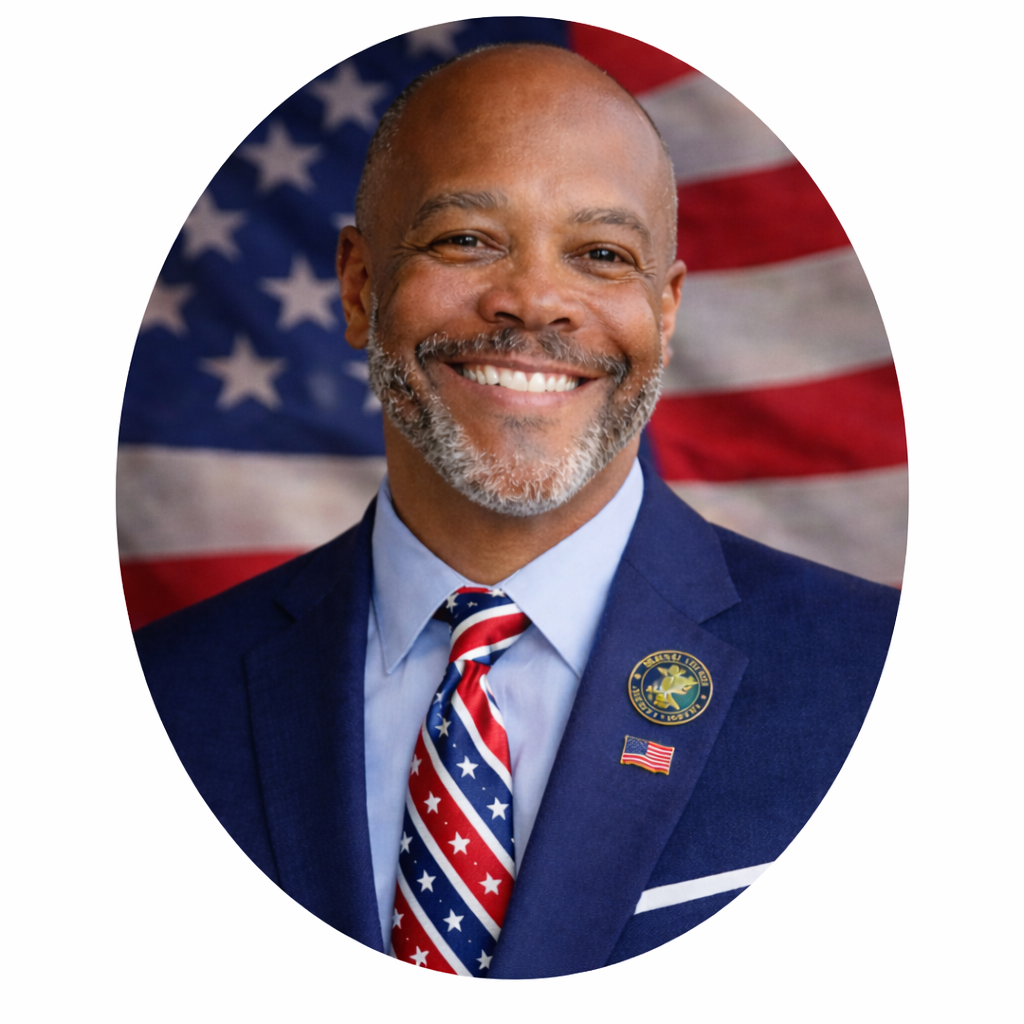
Willie Daniel
Willie Daniel is the Founder and Chief Executive Officer (CEO) of Global Vets Consulting (GVC4Vets) – National Veterans Disability Services, a veteran-led educational and medical evidence support organization dedicated to helping veterans better understand VA disability rating increases, DBQ medical evidence, secondary claims education, and C&P examination preparation.
He is a retired U.S. Army Medical Service Corps Officer with more than 27 years of honorable military service, a decorated Iraq combat veteran, and a retired federal official with the U.S. Department of Veterans Affairs. Throughout his military and federal career, Willie Daniel served in leadership, healthcare administration, operational, and veteran-support roles focused on improving services and support systems for servicemembers, veterans, and their families.
Drawing from decades of military leadership, healthcare administration, veteran advocacy, and federal government experience, Willie Daniel brings a practical, veteran-centered perspective to Global Vets Consulting’s educational articles, AI-powered veteran resources, video education initiatives, and outreach programs. His experience navigating military systems, medical documentation processes, and veteran-related administrative operations provides valuable insight into many of the challenges veterans face when seeking to better understand VA disability rating criteria, medical evidence, documentation strategies, and secondary condition education.
Through GVC’s “Veterans Helping Veterans” mission, his focus is on delivering clear, educational, and easy-to-understand information designed to empower veterans with knowledge, resources, and educational tools that may help them make more informed decisions regarding their individual VA disability journeys.
The information provided through GVC is intended for educational and informational purposes only and should not be considered legal or medical advice.
Disclaimer
Disclaimer: Global Vets Consulting, LLC (“GVC”) is a veteran-led educational and medical evidence support organization. GVC is not a law firm, is not a Veterans Service Organization (VSO), and is not affiliated with the U.S. Department of Veterans Affairs (VA) or any government agency.
Global Vets Consulting does not provide legal advice, medical advice, medical treatment, or healthcare services. GVC does not prepare, file, or submit VA disability claims on behalf of veterans. All information provided through this website, blog articles, videos, educational materials, AI tools, dashboards, templates, and communications is intended solely for general educational and informational purposes.
Veterans are encouraged to consult with accredited representatives, licensed attorneys, qualified medical providers, or Veterans Service Organizations regarding their specific legal, medical, or VA-related matters. VA disability decisions, ratings, and outcomes are determined solely by the U.S. Department of Veterans Affairs based on applicable laws, regulations, medical evidence, and individual circumstances. Past results do not guarantee future outcomes.

