
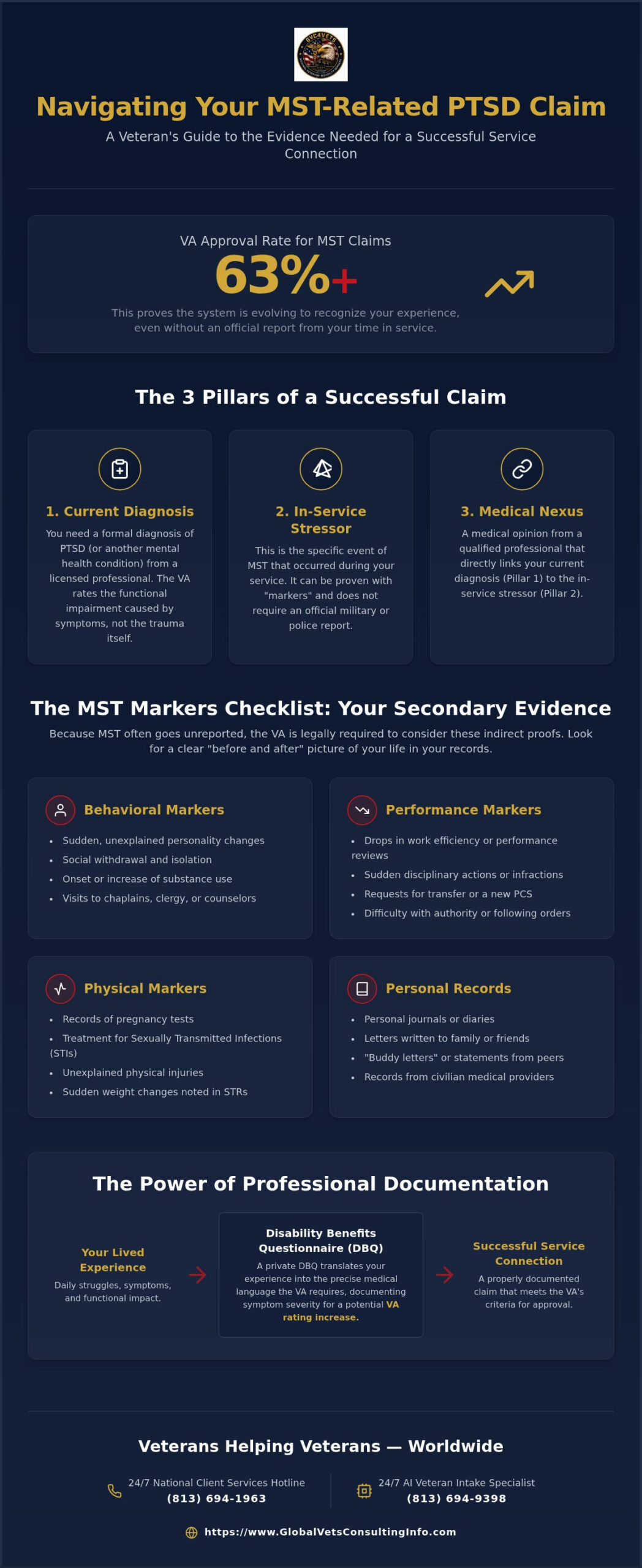
Did you know that the VA approval rate for MST-related claims climbed to over 63 percent in recent years? This shift proves that the system is finally evolving to recognize the reality of your experience, even if you never filed an official report during your service. We know the fear of being re-traumatized by a cold, bureaucratic process is a heavy burden to carry. It is frustrating to feel like your word isn’t enough when you are dealing with the daily weight of trauma. In 2026, the evidence needed for mst ptsd claim approval focuses heavily on “markers,” which are indirect proofs of the events you endured. 🇺🇸
You will learn exactly how to identify these markers and use professional medical documentation to support your claim. We are here to show you that a lack of a formal military report does not have to be the end of your journey. This guide provides a clear checklist of acceptable evidence, explains how a private Disability Benefits Questionnaire (DBQ) helps verify your symptoms, and outlines how to navigate the process with confidence and clarity. By documenting the functional impact of your condition, you can move toward the successful service connection you have earned.
Key Takeaways
- Understand the three essential components for success: a formal diagnosis, a service-connected stressor, and a medical nexus linking the two.
- Discover how to identify behavioral and performance “markers” that serve as the critical evidence needed for mst ptsd claim success when official reports are missing. 🇺🇸
- Learn why a private Disability Benefits Questionnaire (DBQ) acts as a vital bridge to document the severity of your symptoms for a VA rating increase.
- Follow a step-by-step process to gather Service Treatment Records (STRs) and personnel files to build a comprehensive evidence packet.
- Gain clarity on how to utilize professional medical evidence to reduce anxiety and prepare for the C&P examination process.
What is the Evidence Needed for MST PTSD Claim Success? 📋
To build a winning case, you must first understand how the VA views your history. The VA does not grant a disability rating for the experience of trauma itself. Instead, they provide compensation for the resulting mental health condition, which is typically Post-Traumatic Stress Disorder (PTSD). The evidence needed for mst ptsd claim approval relies on three specific pillars: a current medical diagnosis, a documented in-service stressor, and a medical nexus that connects the two. Establishing the evidence needed for mst ptsd claim success requires a strategic approach to medical documentation that goes beyond just telling your story.
Because the Department of Veterans Affairs acknowledges that survivors rarely report these incidents through official channels, they allow for “secondary evidence.” This means you don’t need a restricted or unrestricted report from the time of the incident to succeed. Instead, you can use “markers.” These are indirect proofs of the event, such as sudden changes in behavior, performance, or health that occurred during or shortly after your service. These markers serve as a valid substitute for a formal military report.
Diagnosis vs. Experience: What the VA Actually Rates
The VA compensates you for the functional impairment caused by your symptoms, not the trauma you survived. You need a formal diagnosis of PTSD from a licensed mental health professional to move forward. Utilizing a dbq for mental health conditions is a powerful way to ensure your symptoms are documented with the precision the VA requires. It translates your daily struggles into the specific language the Rater needs to see, helping to bridge the gap between your personal experience and a formal rating.
The ‘Stressor’ Requirement in 2026
A “stressor” is the specific event or series of events that caused your PTSD. In the context of Military Sexual Trauma, this includes any sexual assault or harassment that occurred during your service. While an official police or military report is considered the “gold standard” of proof, it isn’t the only way to establish your claim. Markers of behavior change are legally recognized as valid substitutes for a paper trail that may never have existed. We focus on helping you identify these markers to prove your stressor happened.
The MST Markers Checklist: Secondary Evidence for Your Claim 🇺🇸
When you are gathering the evidence needed for mst ptsd claim success, you must look beyond the incident itself and focus on the “markers” left in its wake. These markers are behavioral or circumstantial signs that a traumatic event occurred. Because MST is frequently unreported, the VA is legally required to consider these indirect proofs. You don’t need a police report to win; you need to show a clear “before and after” picture of your life. The VA’s MST General Fact Sheet notes that many survivors experience long-term emotional and physical effects that manifest in their service records. If you are unsure where to start, you can consult with a veteran-led team to understand how your history aligns with VA requirements.
- Behavioral Markers: Document sudden personality changes, social withdrawal, or the onset of substance use.
- Performance Markers: Identify drops in work efficiency, unexpected disciplinary actions, or sudden requests for a permanent change of station (PCS) or transfer.
- Physical Markers: Look for evidence of pregnancy tests, treatment for STIs, or unexplained physical injuries in your medical files.
- Personal Records: Gather journals, letters sent home, or private medical records from civilian providers.
Identifying Markers in Your Service Treatment Records (STRs)
Your STRs often contain “indirect” mentions of trauma. Look for visits to chaplains, clergy, or off-base counseling centers that might not explicitly state the cause of distress but show you were seeking help. Highlight any STI testing or unexplained weight changes during the relevant period to draw the Rater’s attention to these physical markers. These small details are often the most compelling evidence needed for mst ptsd claim approval in cases without a formal report.
The Power of Buddy Statements (VA Form 21-10210)
Buddy statements from fellow service members, family, or spouses are incredibly persuasive. These individuals can testify to the specific changes they observed in you. A strong statement focuses on your behavior before the trauma compared to your behavior after. For example; if a roommate noticed you stopped going to the chow hall or became hyper-vigilant, their written testimony provides the human context that clinical records sometimes lack. Ensure these statements are specific and signed using the official VA Form 21-10210.
Professional Medical Documentation: DBQs and Nexus Letters
Identifying behavioral markers is a major step, but medical documentation is what converts those markers into a monthly benefit. The evidence needed for mst ptsd claim success must include a professional assessment that quantifies your symptoms. Without this, you risk having your va claim denied for lack of evidence. A private Disability Benefits Questionnaire (DBQ) ensures that your social and occupational impairments are recorded in a way that aligns with the VA’s rating schedule. This document is the primary tool used to justify a VA rating increase by proving the severity of your condition.
Why a Professional DBQ Matters for MST Claims
Standard C&P exams can be stressful and sometimes fail to capture the full scope of your trauma during a brief appointment. A private DBQ allows you to work with a provider who understands your history and takes the time to document every symptom accurately. Global Vets Consulting assists in the education and preparation of these vital forms, ensuring that every limitation is clearly articulated. This proactive approach helps you avoid the “one-shot” risk of a standard exam and provides the thorough evidence needed for mst ptsd claim approval.
Establishing the Medical Nexus
The medical nexus is the legal bridge between your service and your current health. Your provider must state that your PTSD is “at least as likely as not” caused by the MST you experienced. This specific phrasing is the standard required for service connection. A qualified psychologist or psychiatrist uses your behavioral markers to form this professional medical opinion. They look at the “before and after” picture we discussed to prove that your current diagnosis is directly linked to your time in uniform. To get started on your documentation, connect with our intake specialists today.
How to Assemble and Submit Your Evidence Packet 📞
Assembling the evidence needed for mst ptsd claim success requires a methodical approach to organization. You aren’t just submitting forms; you’re building a complete narrative of your service and recovery. By organizing your packet before you file, you reduce the risk of delays and ensure the Rater sees a clear picture of your experience. Follow this step-by-step checklist to prepare your submission:
- Step 1: Secure your current PTSD diagnosis through a qualified mental health provider to establish the medical foundation.
- Step 2: Gather all Service Treatment Records (STRs) and personnel files to identify the behavioral or performance markers found in previous steps.
- Step 3: Collect Buddy Statements and personal documentation, such as journals or emails, that provide a human perspective on your changes.
- Step 4: Complete a professional DBQ to clearly outline the severity of your symptoms and how they impact your daily life.
Filing VA Form 21-526EZ for MST
When you fill out the “Stressor” section of your VA disability claim, you don’t have to provide a graphic or exhaustive account of the trauma if it causes you distress. Instead; focus on the dates, locations, and the markers you’ve identified. If the process feels overwhelming, you can request to work with an MST Outreach Coordinator at your local VA regional office. These coordinators are trained to handle your case with sensitivity and respect. 🇺🇸
Final Review: Ensuring Your Evidence is ‘Fully Developed’
Submitting a Fully Developed Claim (FDC) is the fastest path to a decision. As of June 2026, the average time to complete disability-related claims is approximately 71.3 days. Providing all your evidence needed for mst ptsd claim approval upfront helps the VA move your file through the system more efficiently. Global Vets Consulting is here to support you through every step of the medical evidence education process.
- 📞 24/7 National Client Services Hotline
- 🌐 24/7 AI Veteran Intake Specialist
- 💻 GlobalVetsConsultingInfo.com
Secure Your Future with Strong Medical Evidence 🇺🇸
You now have a clear roadmap for identifying the evidence needed for mst ptsd claim success in 2026. By focusing on behavioral markers and securing a professional medical nexus, you can overcome the hurdle of missing military reports. It’s vital to remember that your symptoms deserve accurate documentation. A private DBQ is the most effective tool to ensure the VA recognizes the full impact of your trauma on your daily life and career. This structured approach moves you from confusion to a position of steady confidence.
Global Vets Consulting is a veteran-owned and operated organization dedicated to simplifying the medical evidence education process. We provide the expertise you need to document your conditions with precision. Our 24/7 AI Veteran Intake Specialist and National Client Services Hotline are available round the clock to offer immediate support. You don’t have to face this complex system alone; we’re here to guide you every step of the way.
Get the Professional DBQ Support You Earned – Contact Global Vets Consulting Today
You served your country with honor, and it’s time to receive the benefits you’ve rightfully earned. We’re ready to help you build a stronger claim and move forward with peace of mind.
Frequently Asked Questions
What if I never reported the MST to my command or the police?
You can still successfully file a claim even without an official report. The VA acknowledges that military sexual trauma is frequently under-reported due to fear of retaliation or social stigma. Instead of a police report, you can provide secondary evidence like personal journals, buddy statements, or medical records showing a sudden change in health. This flexibility ensures that survivors have a fair path to benefits regardless of their initial reporting status.
What exactly are ‘markers’ in an MST PTSD claim?
Markers are circumstantial signs or behavioral changes that suggest a traumatic event occurred. These are essential parts of the evidence needed for mst ptsd claim success when a paper trail is missing. Examples include sudden drops in work performance, requests for transfers, onset of substance abuse, or visits to a chaplain. By documenting these shifts in your personnel or medical files, you provide the VA with the indirect proof they require to verify your stressor.
Can I get VA disability for MST even if I was discharged years ago?
There is no time limit for filing a VA disability claim for MST-related conditions. Whether you were discharged two years ago or thirty years ago, you are still eligible to apply for compensation. The VA evaluates your current diagnosis and its link to your service, not how long you waited to file. Many veterans find that their symptoms worsen over time, making it even more important to secure the benefits and medical support they deserve now.
How do I prove my PTSD is related to MST without a paper trail?
Proving your claim without a paper trail involves gathering “secondary evidence” that documents the impact of the trauma on your life. This is the primary evidence needed for mst ptsd claim approval for many survivors. You should gather buddy statements from friends or family who witnessed your personality changes and pull service records that show disciplinary actions or medical visits for unexplained physical symptoms. These pieces of evidence work together to establish the occurrence of the stressor.
Should I use a private doctor for my PTSD DBQ?
Using a private doctor for your PTSD DBQ can provide a more thorough and accurate assessment of your symptoms. Private providers often spend more time reviewing your history than a VA examiner might during a standard C&P exam. This ensures that every functional limitation is documented using the specific language the VA requires for a rating. A well-prepared private DBQ acts as a professional shield, helping to reduce the anxiety often associated with the claims process.
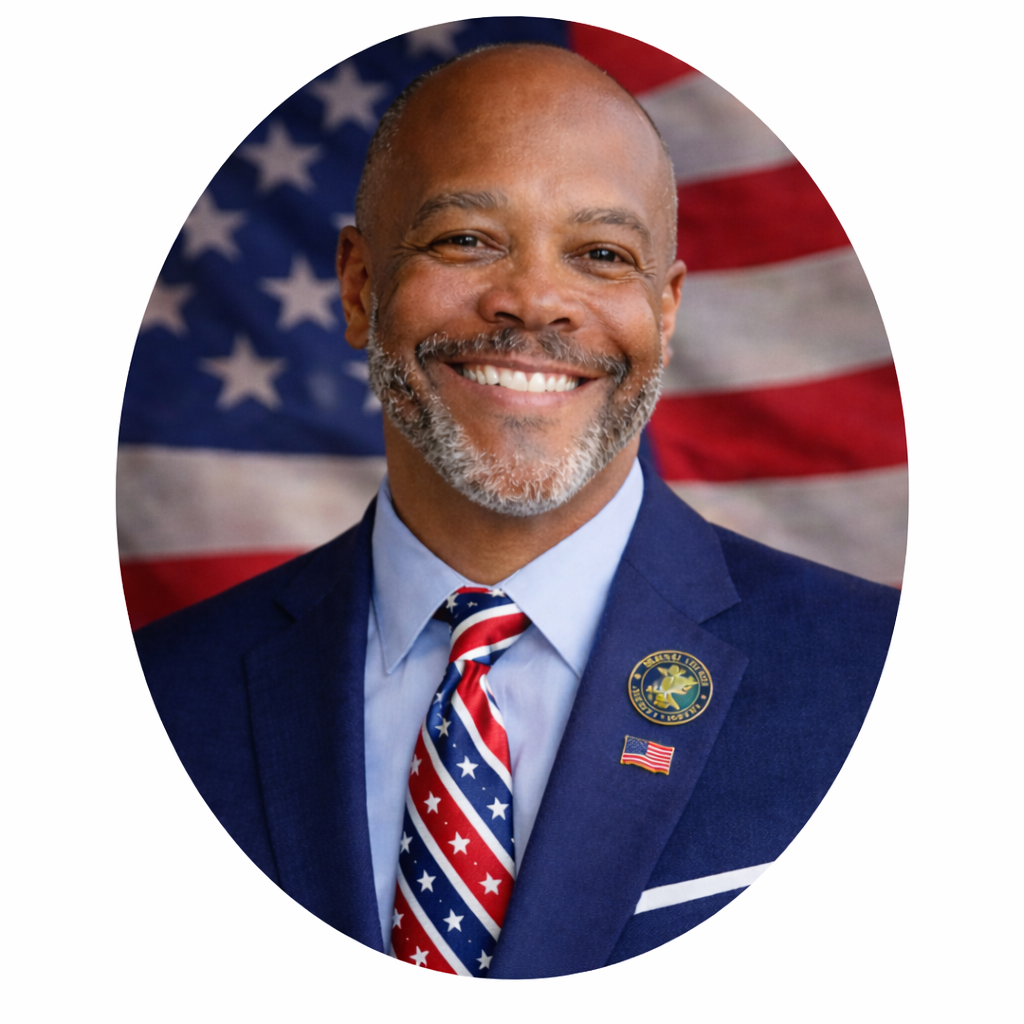
Article by
Willie Daniel
Willie Daniel is the Founder and Chief Executive Officer (CEO) of Global Vets Consulting (GVC) – National Veterans Disability Services, a veteran-led educational and medical evidence support organization dedicated to helping veterans better understand VA disability rating increases, DBQ medical evidence, secondary claims education, and C&P examination preparation.
He is a retired U.S. Army Medical Service Corps Officer with more than 27 years of honorable military service, a decorated Iraq combat veteran, and a retired federal official with the U.S. Department of Veterans Affairs. Throughout his military and federal career, Willie Daniel served in leadership, healthcare administration, operational, and veteran-support roles focused on improving services and support systems for servicemembers, veterans, and their families.
Drawing from decades of military leadership, healthcare administration, veteran advocacy, and federal government experience, Willie Daniel brings a practical, veteran-centered perspective to Global Vets Consulting’s educational articles, AI-powered veteran resources, video education initiatives, and outreach programs. His experience navigating military systems, medical documentation processes, and veteran-related administrative operations provides valuable insight into many of the challenges veterans face when seeking to better understand VA disability rating criteria, medical evidence, documentation strategies, and secondary condition education.
Through GVC’s “Veterans Helping Veterans” mission, his focus is on delivering clear, educational, and easy-to-understand information designed to empower veterans with knowledge, resources, and educational tools that may help them make more informed decisions regarding their individual VA disability journeys.
The information provided through GVC is intended for educational and informational purposes only and should not be considered legal or medical advice.
Disclaimer
Disclaimer: Global Vets Consulting, LLC (“GVC”) is a veteran-led educational and medical evidence support organization. GVC is not a law firm, is not a Veterans Service Organization (VSO), and is not affiliated with the U.S. Department of Veterans Affairs (VA) or any government agency.
Global Vets Consulting does not provide legal advice, medical advice, medical treatment, or healthcare services. GVC does not prepare, file, or submit VA disability claims on behalf of veterans. All information provided through this website, blog articles, videos, educational materials, AI tools, dashboards, templates, and communications is intended solely for general educational and informational purposes.
Veterans are encouraged to consult with accredited representatives, licensed attorneys, qualified medical providers, or Veterans Service Organizations regarding their specific legal, medical, or VA-related matters. VA disability decisions, ratings, and outcomes are determined solely by the U.S. Department of Veterans Affairs based on applicable laws, regulations, medical evidence, and individual circumstances. Past results do not guarantee future outcomes.