
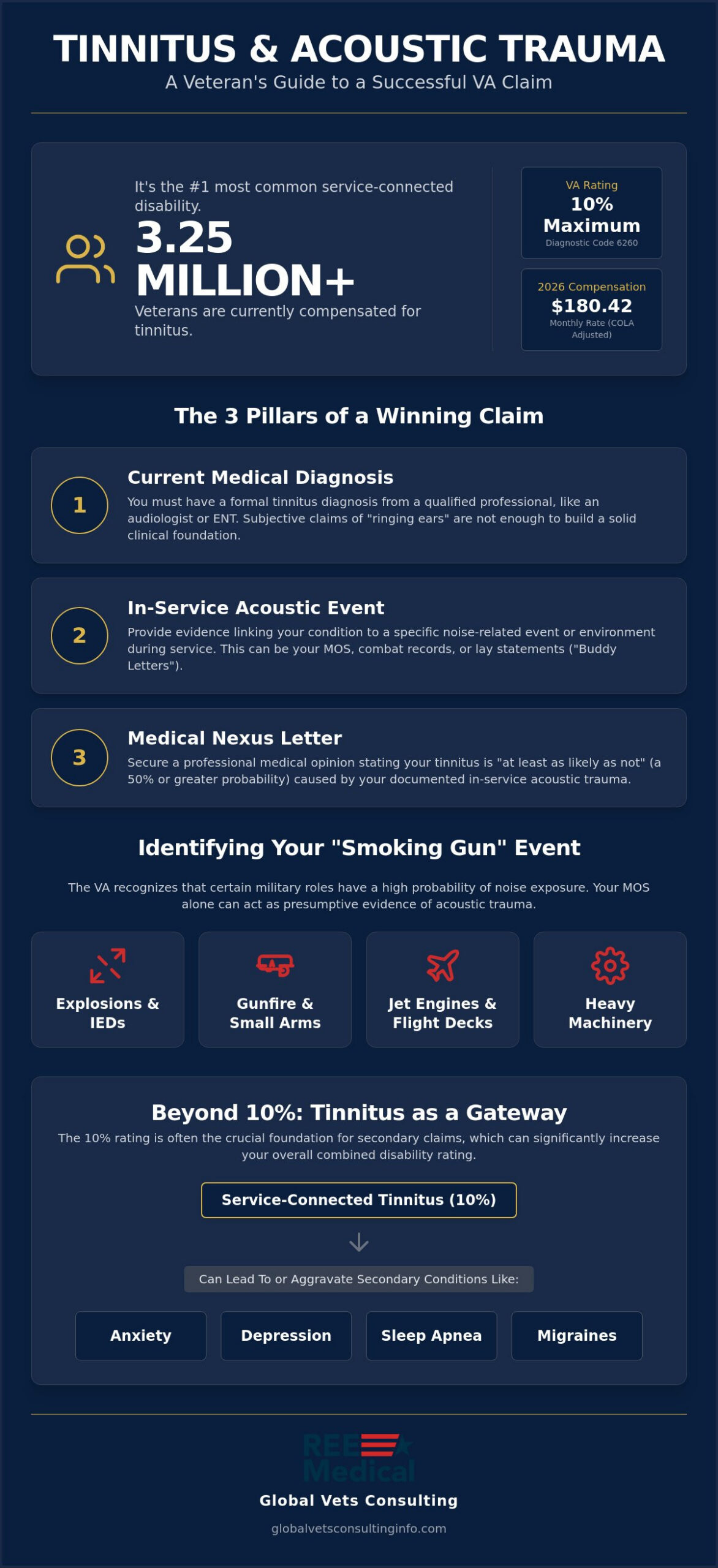
Did you know that more than 3.25 million veterans currently receive compensation for tinnitus, making it the single most common service-connected disability? Despite its prevalence, many veterans find themselves stuck in a cycle of frustration when filing a va claim for tinnitus secondary to acoustic trauma, facing a 10% rating cap and confusing “nexus” requirements. If you’ve spent years dealing with a constant ringing in your ears after exposure to gunfire, jet engines, or heavy machinery, you know it’s more than just a minor annoyance; it’s a direct result of your service.
We understand the anxiety that comes with managing the VA’s complex bureaucracy, especially when you feel your medical documentation is thin. You’ve earned your benefits, and we’re here to help you secure them. This 2026 guide provides the exact steps to link your diagnosis to specific service events and explains the $180.42 monthly compensation rate under the latest COLA adjustments. We will walk you through the three pillars of a winning claim, from securing the right medical evidence to preparing for your C&P exam. You’ll gain a clear roadmap to move through the system with confidence and build a stronger case for a higher combined disability rating.
Key Takeaways
- Secure a formal audiology diagnosis to move beyond subjective symptoms and establish a solid clinical foundation for your claim.
- Identify and document specific in-service acoustic trauma events, such as proximity to explosions or heavy machinery, to satisfy the VA’s service-connection requirements.
- Follow our step-by-step roadmap for filing a va claim for tinnitus secondary to acoustic trauma to ensure your application is accurate and complete.
- Leverage Disability Benefits Questionnaires (DBQs) to provide the standardized medical evidence that helps VA raters assign your earned disability rating.
- Understand how to use your tinnitus diagnosis as a gateway to secondary conditions, potentially increasing your overall combined disability rating.
Understanding Tinnitus Secondary to Acoustic Trauma
Tinnitus is often described as a persistent ringing, buzzing, or hissing in the ears that occurs without any external sound source. For many of us, this isn’t just a minor distraction; it’s a constant reminder of our time in uniform. When this condition stems from exposure to high-intensity noise, it’s medically classified as Acoustic Trauma. This damage can occur instantly during a blast or develop over years of working near loud machinery or jet engines.
When you file a va claim for tinnitus secondary to acoustic trauma, you’re establishing that your current diagnosis is a direct result of specific noise-related events during your service. Under the 2026 rating schedule, the VA rates tinnitus under Diagnostic Code 6260. This carries a maximum rating of 10 percent, whether it affects one ear or both. While this percentage is capped, its real value lies in how it contributes to your combined rating and opens the door for secondary claims.
Why Acoustic Trauma is the ‘Smoking Gun’ for Veterans
The VA recognizes that certain military roles are inherently loud. If your records show you served in combat arms, worked on a flight deck, or operated heavy industrial equipment, you have a strong foundation. This history serves as the “smoking gun” because it identifies the exact mechanism of injury. The VA has a duty to assist you in gathering records, but being able to point to specific acoustic events makes the process much more predictable. Your MOS alone can often act as presumptive evidence of noise exposure.
The 10% Cap and the Path to a Higher Combined Rating
Many veterans overlook the 10 percent rating because the monthly compensation amount seems low. However, this rating often serves as the essential foundation for secondary mental health or sleep apnea claims. By following the va disability claims process step by step, you can use this initial service connection as a bridge to a more accurate reflection of your total health. Securing this link is about more than just the 10 percent; it’s about validating your service-related injuries and building a comprehensive benefits profile.
The Three Pillars of a Successful Secondary Tinnitus Claim
Success for your va claim for tinnitus secondary to acoustic trauma depends on three fundamental elements. The VA requires a specific framework of evidence to move a claim from “submitted” to “service-connected.” Without these pillars, even the most severe symptoms can face a denial because the administrative link hasn’t been established properly.
The first pillar is a current medical diagnosis. You cannot simply claim that your ears are ringing; you must have a formal diagnosis of tinnitus documented in your medical records by a qualified professional, such as an audiologist or an ENT. The second pillar involves providing evidence of an in-service acoustic event. This requires documentation of your proximity to IEDs, heavy machinery, or frequent small arms fire during your time in uniform. Finally, you must secure a medical nexus. This is a professional medical opinion stating your tinnitus is “at least as likely as not” caused by the acoustic trauma you experienced. The VA defines the “at least as likely as not” standard as a 50% or greater probability threshold that the service event caused the current condition.
Documenting Your Noise Exposure History
Personnel files don’t always capture every loud event you experienced. If your records are missing specific blast exposures, lay statements from those you served with can corroborate your history. These “Buddy Letters” provide the context that dry paperwork often misses. Additionally, VA raters use the MOS Noise Exposure Listing to determine the probability of trauma based on your specific military job. If your MOS is classified as high-risk, it strengthens your case significantly.
Establishing the Secondary Link
Tinnitus is frequently filed as a secondary service connection to existing hearing loss or other ear-related trauma. Proving this link requires precise data that mirrors the VA’s internal rating criteria. Understanding what is a dbq for va claims can help you see how professional medical evidence is structured to meet these requirements. If you’re feeling overwhelmed by the paperwork, looking into medical evidence education can provide the clarity you need to move forward.
Step-by-Step: Filing Your Claim for Tinnitus Secondary to Acoustic Trauma
Filing a va claim for tinnitus secondary to acoustic trauma requires a methodical approach to ensure the VA rater has every piece of evidence they need to approve your benefits. You aren’t just filling out a form; you’re building a structured medical argument. We’ve broken the process down into four clear steps to help you navigate the system with confidence and precision.
- Step 1: Secure a formal audiology examination. You must confirm the diagnosis and rule out non-service-related causes such as earwax buildup or unrelated infections.
- Step 2: Gather your records. Pull your service treatment records (STRs) and personnel files. Look for specific mentions of noise exposure, blast injuries, or roles in high-noise environments that support your history of trauma.
- Step 3: Obtain professional documentation. Secure a Disability Benefits Questionnaire (DBQ) and a Nexus Letter. These documents translate your symptoms into the specific jargon the VA uses to evaluate claims.
- Step 4: Submit your application. Use VA Form 21-526EZ on VA.gov. Ensure all secondary evidence is clearly labeled so the rater can easily follow the logic of your claim.
Writing an Effective Statement in Support of Claim
Your personal statement is your chance to tell your story in your own words. Don’t just say your ears ring. Describe the frequency, severity, and duration of your symptoms. Explain how the ringing interferes with your sleep, concentration, or social life. When describing the acoustic trauma event, be specific about the date, location, and the type of noise involved. This narrative should align perfectly with the dates and events found in your personnel files.
What to Expect at the C&P Exam
The Compensation and Pension (C&P) exam is a high-stakes meeting where the examiner will ask when the ringing started and what triggers it. Be honest about your worst days and how the condition affects your daily life. Having your own private medical evidence is a critical safeguard during a va claim for tinnitus secondary to acoustic trauma. If the C&P exam is rushed or unfavorable, your independent documentation provides a necessary counterpoint. If you need help gathering this evidence, explore our medical evidence education resources to strengthen your case and protect your rating.
Strengthening Your Evidence with Professional DBQs
A Disability Benefits Questionnaire (DBQ) is the specific tool that bridges the gap between your physical symptoms and the VA’s rating criteria. It provides the exact data points that raters need to assign a percentage. When filing a va claim for tinnitus secondary to acoustic trauma, relying solely on a standard C&P exam can be risky. These exams are often rushed, sometimes lasting only 15 minutes, which doesn’t leave enough time to document the full impact of your symptoms. Private medical evidence allows for a thorough, meticulous review of your history that an overburdened system might overlook.
Global Vets Consulting operates with a “Veterans Helping Veterans” mission. We understand the importance of high-quality claim documentation because we’ve been in your boots. Our focus is on providing standardized medical evidence that speaks the VA’s language, ensuring your history of noise exposure is presented with professional authority. This approach transforms a confusing administrative process into a clear, predictable path toward the benefits you’ve earned.
The Global Vets Difference: Accuracy and Integrity
Many veterans find their va claim denied for lack of evidence because their records didn’t clearly link their current condition to their service. Professional DBQ preparation prevents this common pitfall by organizing your medical data into a format the VA recognizes immediately. It removes the guesswork for the rater and builds a stronger case from the start. We prioritize accuracy to ensure your va claim for tinnitus secondary to acoustic trauma stands up to the highest level of scrutiny.
Next Steps: Secure Your Rating Increase
Taking action now ensures your 2026 benefits reflect your true level of disability. Don’t let your earned compensation stay capped at a lower level because of incomplete paperwork. Learning how to use a dbq for a va disability rating increase is the first step toward a more secure future for you and your family. Our team is ready to provide the education and resources you need to succeed.
🇺🇸 Global Vets Consulting: Worldwide
📞 24/7 National Client Services Hotline
🤖 24/7 AI Veteran Intake Specialist
🌐 Website: GlobalVetsConsultingInfo.com
Take Command of Your VA Disability Rating
Securing your earned benefits requires more than just submitting a form; it demands a strategic alignment of medical evidence and service history. By establishing the three pillars of a successful claim, you ensure your history of noise exposure is fully recognized by the VA. Professional DBQ documentation remains the most effective tool to protect your rating against rushed exams and common evidence-based denials. Navigating a va claim for tinnitus secondary to acoustic trauma doesn’t have to be a solo mission when you have the right support.
As a veteran-owned and operated firm, we’re dedicated to providing the standardized medical evidence needed for accurate evaluations. Secure the medical evidence you need for your VA claim—Contact Global Vets Consulting today. Our team is standing by to help you translate your service-related injuries into the documentation the VA requires.
🇺🇸 Global Vets Consulting: Worldwide
📞 24/7 National Client Services Hotline: 800-484-1859
🤖 24/7 AI Veteran Intake Specialist
You’ve served your country with honor, and now it’s time to ensure the system works for you. Take the next step today to secure the disability rating you earned.
Frequently Asked Questions
Can I get more than a 10% rating for tinnitus if it’s in both ears?
No, the VA caps the disability rating for tinnitus at 10 percent under Diagnostic Code 6260. This maximum applies regardless of whether you experience ringing in one ear or both. Even if your symptoms are severe and bilateral, the rating won’t exceed this limit. However, this 10 percent is still valuable as it contributes to your overall combined rating and provides a foundation for secondary claims like anxiety or sleep disturbances.
What if my tinnitus started years after I left the military?
You can still secure compensation even if your symptoms didn’t become debilitating until years after you left the military. The key is establishing a clear link back to your service-related noise exposure through a professional medical opinion. Since tinnitus can be a latent condition, a nexus letter becomes your most important piece of evidence. It explains to the VA that the damage occurred during your service, even if the symptoms took time to manifest.
Is tinnitus a presumptive condition for veterans?
Tinnitus is not officially a presumptive condition, meaning the VA doesn’t automatically assume it’s service-connected based on where or when you served. Instead, you must provide evidence of an in-service event and a current diagnosis. However, the VA does maintain a list of military occupational specialties (MOS) with high noise exposure. If your job is on that list, the rater is much more likely to concede that you experienced the necessary acoustic trauma during your service.
What is the difference between a direct and a secondary service connection for tinnitus?
Direct service connection links your tinnitus to a specific event during your military service, while secondary connection links it to an existing service-connected disability. For example, if you already have service-connected hearing loss, you can file a va claim for tinnitus secondary to acoustic trauma that caused that initial damage. This secondary path is often easier to prove because the VA has already acknowledged that your ears were damaged during your time in uniform.
How much does a private DBQ for tinnitus cost and is it worth it?
Private medical evidence costs vary depending on the provider, but the value lies in the accuracy and thoroughness of the documentation. Unlike a standard C&P exam that might be rushed, a private DBQ allows for a complete evaluation of your symptoms and history. This level of detail is often what secures an approval for a va claim for tinnitus secondary to acoustic trauma. Investing in high-quality evidence can save you months of frustration in the appeals process.
Article by
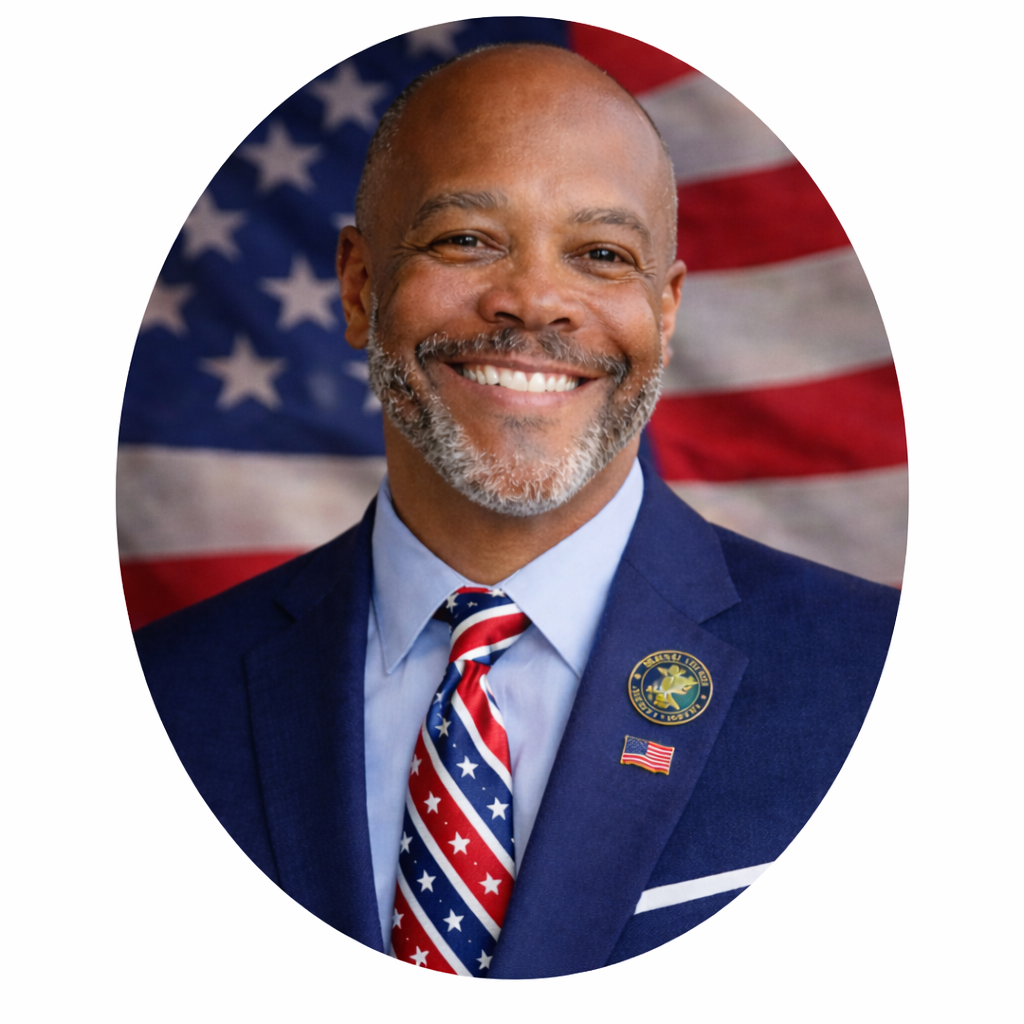
Willie Daniel
Willie Daniel is the Founder and Chief Executive Officer (CEO) of Global Vets Consulting (GVC) – National Veterans Disability Services, a veteran-led educational and medical evidence support organization dedicated to helping veterans better understand VA disability rating increases, DBQ medical evidence, secondary claims education, and C&P examination preparation.
He is a retired U.S. Army Medical Service Corps Officer with more than 27 years of honorable military service, a decorated Iraq combat veteran, and a retired federal official with the U.S. Department of Veterans Affairs. Throughout his military and federal career, Willie Daniel served in leadership, healthcare administration, operational, and veteran-support roles focused on improving services and support systems for servicemembers, veterans, and their families.
Drawing from decades of military leadership, healthcare administration, veteran advocacy, and federal government experience, Willie Daniel brings a practical, veteran-centered perspective to Global Vets Consulting’s educational articles, AI-powered veteran resources, video education initiatives, and outreach programs. His experience navigating military systems, medical documentation processes, and veteran-related administrative operations provides valuable insight into many of the challenges veterans face when seeking to better understand VA disability rating criteria, medical evidence, documentation strategies, and secondary condition education.
Through GVC’s “Veterans Helping Veterans” mission, his focus is on delivering clear, educational, and easy-to-understand information designed to empower veterans with knowledge, resources, and educational tools that may help them make more informed decisions regarding their individual VA disability journeys.
The information provided through GVC is intended for educational and informational purposes only and should not be considered legal or medical advice.
Disclaimer
Disclaimer: Global Vets Consulting, LLC (“GVC”) is a veteran-led educational and medical evidence support organization. GVC is not a law firm, is not a Veterans Service Organization (VSO), and is not affiliated with the U.S. Department of Veterans Affairs (VA) or any government agency.
Global Vets Consulting does not provide legal advice, medical advice, medical treatment, or healthcare services. GVC does not prepare, file, or submit VA disability claims on behalf of veterans. All information provided through this website, blog articles, videos, educational materials, AI tools, dashboards, templates, and communications is intended solely for general educational and informational purposes.
Veterans are encouraged to consult with accredited representatives, licensed attorneys, qualified medical providers, or Veterans Service Organizations regarding their specific legal, medical, or VA-related matters. VA disability decisions, ratings, and outcomes are determined solely by the U.S. Department of Veterans Affairs based on applicable laws, regulations, medical evidence, and individual circumstances. Past results do not guarantee future outcomes.