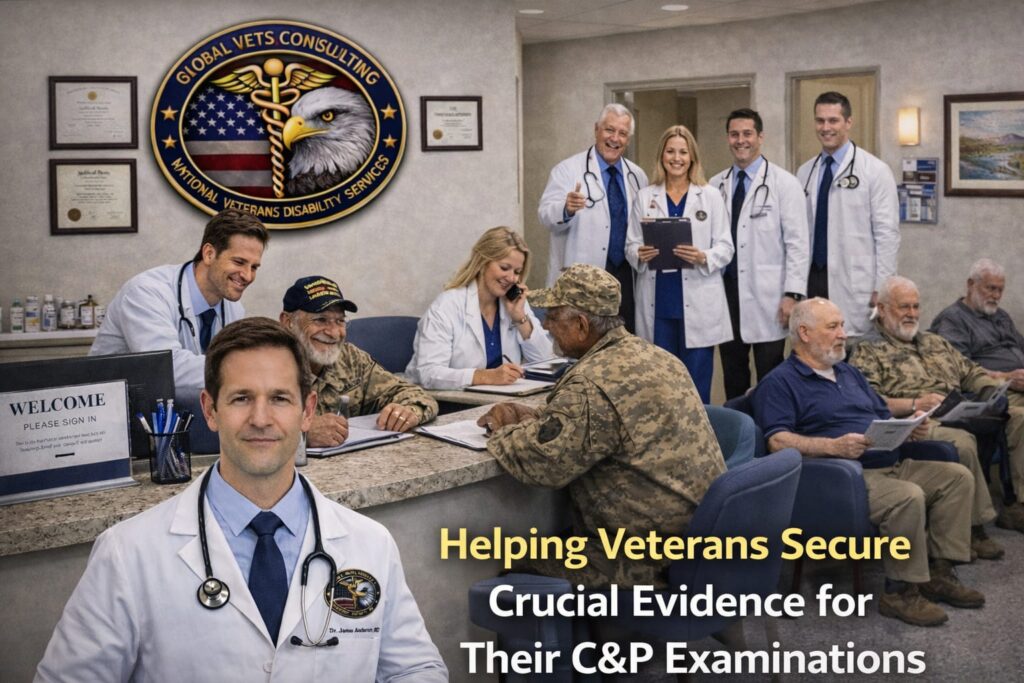

Did you know that in 2026, approximately 93% of Compensation and Pension exams are conducted by outside contractors rather than VA staff? This shift means you’ll likely walk into an office belonging to a company like VES or OptumServe, which can feel impersonal and intimidating. It’s natural to feel anxious about being “tricked” or worried that a brief appointment won’t capture the reality of your daily struggle with chronic pain or mental health. You’ve served your country, and the last thing you want is for a lack of evidence to stand between you and your 2.8% COLA adjusted 2026 benefits.
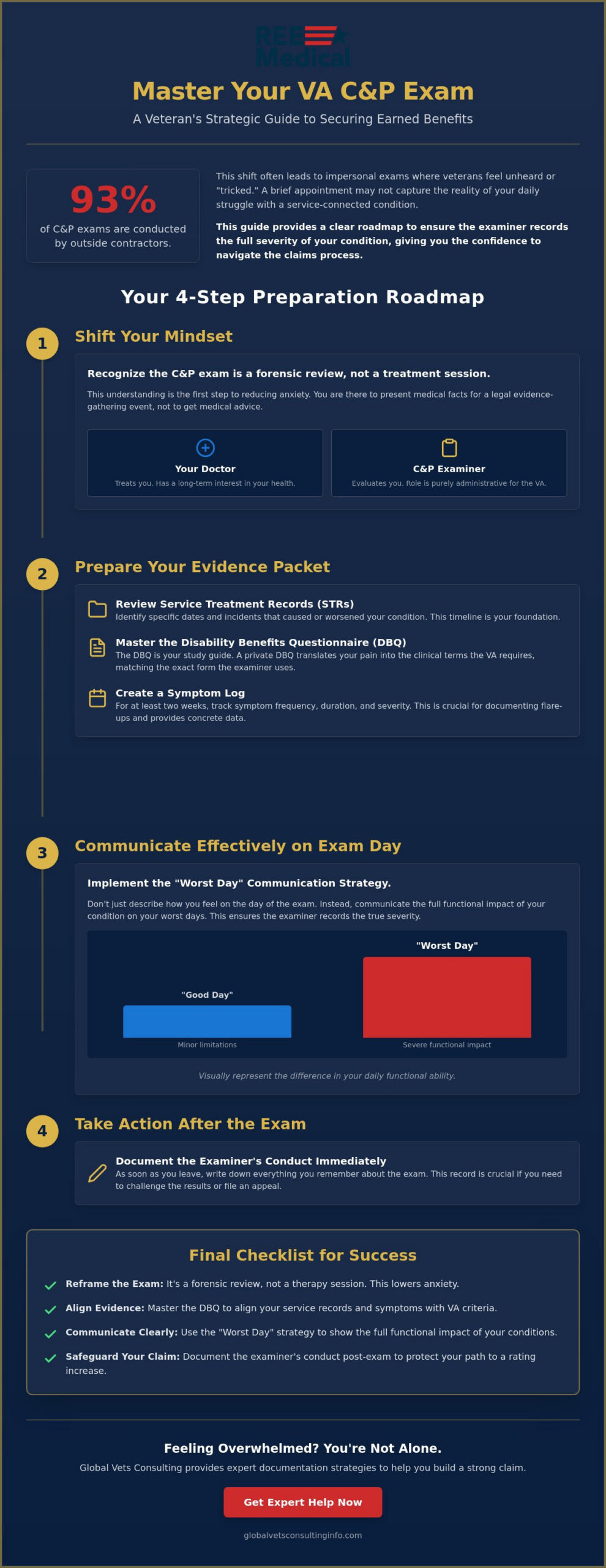
We understand that the stakes are high. Learning how to prepare for a c&p exam isn’t about memorizing a script; it’s about aligning your medical evidence with the VA’s specific criteria before you even step through the door. This guide will help you master the process with practical preparation steps, proven documentation strategies, and techniques to handle the pressure. By the end of this article, you’ll have a clear roadmap to ensure the examiner records the full severity of your condition, giving you the confidence to navigate the claims process with peace of mind.
Key Takeaways
- Recognize that the C&P exam is a forensic review rather than a treatment session to help lower your anxiety and frame your evidence properly. 🇺🇸
- Master how to prepare for a c&p exam by aligning your service treatment records with the specific Disability Benefits Questionnaires (DBQs) used by examiners.
- Implement the “Worst Day” communication strategy to ensure the examiner records the full functional impact of your conditions.
- Learn the essential post-exam actions, such as documenting the examiner’s conduct, to safeguard your path toward a VA rating increase.
What is a C&P Exam and How to Cope With VA Claim Stress
A Compensation and Pension (C&P) exam is a specific medical review used to verify the service connection and symptom severity of your condition. It isn’t a standard doctor’s visit. Instead, it’s a “snapshot” in time that provides the Veterans Benefits Administration (VBA) with the medical data needed to make a rating decision. Understanding this distinction is the first step in learning how to prepare for a c&p exam effectively. When you realize this is a legal evidence-gathering event rather than a treatment session, you can set more realistic expectations and reduce the pressure you feel to “perform.”
Managing exam anxiety starts with focusing on the facts of your medical history rather than the uncertainty of the outcome. Preparation is the best antidote to claim stress. By controlling the variables you can, such as your documentation and symptom descriptions, you move from a place of worry to a place of action. 🇺🇸
Identifying the Source of Exam Anxiety
Many veterans feel like they’re being interrogated during these appointments, which naturally triggers a defensive response. You should reframe this encounter as a professional opportunity to present the facts of your military service and medical history. Stress often stems from a lack of documentation, leaving you feeling vulnerable to the examiner’s interpretation. To stay focused, use grounding techniques like sticking to your medical truth rather than worrying about the examiner’s personal opinion during the appointment.
The Role of the Examiner vs. Your Doctor
It’s vital to remember that C&P examiners are there to evaluate, not to treat your symptoms or prescribe new medications. They don’t have a long-term interest in your health outcomes like your primary care physician does. Because their role is purely administrative, your private medical evidence serves as the foundation of a successful claim. By bringing strong documentation to the table, you ensure the examiner has the right information to support your VA disability claim. This proactive approach is a core part of how to prepare for a c&p exam and secure your earned benefits.
Practical Preparation: Gathering Your Medical Evidence and DBQs
Preparation is more than just showing up on time. You need to walk in with a clear, documented history that leaves no room for guesswork. Start by reviewing your service treatment records (STRs) to identify specific dates and incidents that caused or worsened your condition. This timeline is your foundation. When you understand exactly what is in your file, you can speak to it with authority. Consulting the official VA guide to claim exams can provide additional clarity on what the agency expects from this encounter. 🇺🇸
The most effective way to align your evidence is through a Disability Benefits Questionnaire (DBQ). This document mirrors the exact form the examiner will use to evaluate you. Think of what is a dbq as your primary study guide for the exam. It allows you to organize an “Evidence Packet” so that no symptom is overlooked during the brief, often 15-minute window of the appointment. Organizing your records ahead of time is a critical step in how to prepare for a c&p exam.
Why a Private DBQ is Your Best Preparation Tool
A private DBQ ensures the “language” of your claim matches the specific VA rating criteria. It translates your physical or emotional pain into the clinical terms the VBA requires. For example, having a completed dbq for mental health conditions provides a vital baseline. It shows the examiner that your symptoms have been professionally reviewed before you even met. If you’re feeling overwhelmed, exploring expert documentation strategies can help you organize this information efficiently.
Creating a Symptom Log
Don’t rely on your memory alone. Track the frequency, duration, and severity of your symptoms for at least two weeks before your appointment. This log is especially crucial for documenting flare-ups. In musculoskeletal claims, a flare-up is defined as a period of significantly increased pain or decreased functional ability, often triggered by physical activity or environmental changes. Bringing these specifics helps you master how to prepare for a c&p exam by providing concrete data instead of vague descriptions.
Exam Day Strategy: How to Communicate Your Symptoms Effectively
Walking into your VA claim exam (C&P exam) requires a specific communication mindset. Many veterans fall into the trap of saying “I’m fine” out of habit when the examiner asks how they are. You must resist this reflex. Being honest doesn’t mean exaggerating; it means providing a thorough account of your limitations. If you’re wondering how to prepare for a c&p exam, the most vital rule is the “Worst Day” Rule. You should describe your symptoms as they appear at their most severe. If you only describe how you feel “right now” on a good day, the VA may incorrectly assume your condition is less severe than it truly is.
Focus on functional loss rather than just pain levels. Instead of saying “my back hurts,” explain the real world impact: “I can’t lift my child” or “I can’t sit for more than ten minutes without numbness.” This shift helps the examiner understand your level of disability in a way that aligns with rating schedules. 🇺🇸
Addressing the ‘Range of Motion’ Test
During physical exams, the examiner will likely test your range of motion. You must stop the movement at the exact point where pain, fatigue, or weakness begins. Don’t push through the pain just to be “tough.” Under the DeLuca criteria, the examiner is required to consider how pain, lack of endurance, and incoordination affect your movement. If you’re seeking a VA rating increase, accurately showing where your movement stops is essential for a fair evaluation.
Communicating Mental Health Impacts
When discussing mental health, focus on social and occupational impairment. Link your symptoms to specific challenges, such as difficulty maintaining relationships or missed work days. This provides the clinical evidence needed to show how the condition affects your life. If an examiner tries to rush the session, politely stay on track. Say, “I have a few more specific symptoms regarding my social life that I need to ensure are in the record.” This ensures the examiner captures the full scope of your condition before the session ends. Master how to prepare for a c&p exam by being your own best advocate in the room.
Next Steps: What to Do After Your C&P Exam
Your responsibility to your claim continues the moment you step into the parking lot. Immediately after leaving the appointment, find a quiet place to write down the examiner’s name, the total time spent in the room, and any specific tests they failed to perform. If you were there for a musculoskeletal issue and they didn’t use a goniometer for range of motion, document that omission. Effective documentation of the appointment is just as vital as knowing how to prepare for a c&p exam before you arrived. 🇺🇸
You won’t see results from a contracted exam on MyHealtheVet immediately. You must request a copy of the results through a FOIA request or by contacting your VSO. If the examiner was dismissive, unprofessional, or spent less than ten minutes on a complex mental health review, you’ve likely had a “bad” exam. Understanding how the va disability claims process step by step continues will help you stay proactive if you need to challenge the examiner’s findings.
When to Submit a Statement in Support of Claim
If the exam didn’t accurately reflect your condition, don’t wait for a denial letter. Write a formal memo to the VA using Form 21-4138, Statement in Support of Claim. Document discrepancies while they’re fresh in your mind. This creates a paper trail that can be used during an HLR or Supplemental Claim if the initial decision is unfavorable. You should also remember to file for your travel reimbursement, which is currently set at 41.5 cents per mile for 2026.
Preparing for a Potential Rating Increase
The goal of this entire process is to ensure your medical evidence translates into an accurate rating. Review how your results align with a dbq for va disability rating increase to see if the examiner’s notes meet the next highest percentage bracket. If you feel your evidence wasn’t fully captured or the examiner ignored your “worst day” symptoms, we’re here to help. 📞
Global Vets Consulting
🌎 Worldwide
🌐 GlobalVetsConsultingInfo.com
☎️ 24/7 National Client Services Hotline
🤖 24/7 AI Veteran Intake Specialist
Finalize Your Preparation and Secure Your Rating
Mastering how to prepare for a c&p exam requires a fundamental shift in perspective. You’ve learned that this appointment is a formal evidence-gathering event rather than a standard medical checkup. By aligning your medical records with the specific language of Disability Benefits Questionnaires and utilizing the “Worst Day” rule, you ensure the examiner sees the full impact of your service-connected conditions. Don’t let the bureaucratic process intimidate you. Your service earned these benefits, and thorough documentation is the key to securing them.
Ready to walk into your exam with confidence? Get your professional DBQ documentation from Global Vets Consulting today. Our veteran-owned and operated team specializes in standardized VA documentation to help you present a clear, undeniable case. We provide round-the-clock support through our 24/7 National Client Services Hotline to ensure you’re never navigating this system alone. You’ve already done the hard work in the field; now it’s time to finish the mission at home. We’re standing by to help you secure the rating you deserve. 🇺🇸
Frequently Asked Questions
Can I bring a spouse or friend to my C&P exam for support?
You can generally bring a spouse, friend, or caregiver to your C&P exam for emotional support or to help recall specific symptoms. While the examiner has the final say on who enters the private exam room, having a witness is often beneficial for veterans dealing with memory issues or severe anxiety. If the examiner refuses to let your support person enter, ask them to note the reason in your file immediately.
What happens if I miss my C&P exam appointment?
If you miss your C&P exam, you must contact the VA or the contract examiner immediately to provide “good cause” for your absence. Failing to show up without rescheduling can result in the VA making a decision based only on existing evidence, which often leads to a claim denial. It is critical to confirm your contact information is updated with the VA to avoid missing any scheduled notices.
How long does it take to get a VA decision after the C&P exam in 2026?
In 2026, most veterans receive a VA decision within four to five months after their C&P exam, though complex claims involving multiple conditions may take longer. The VA continues to utilize outside contractors for 93% of exams to improve processing speeds and reduce the backlog. You can track your claim status through the VA.gov portal or by contacting your VSO for real-time updates on your specific file.
Should I bring my own medical records and DBQs to the exam room?
You should bring a copy of your medical records and any completed Disability Benefits Questionnaires (DBQs) to use as a personal reference during the appointment. While the examiner is supposed to review your digital file beforehand, having physical copies ensures you can reference specific dates or symptoms accurately. This is a vital part of learning how to prepare for a c&p exam to ensure no critical evidence is overlooked.
What if the C&P examiner says my condition is not service-connected?
The examiner provides a medical opinion, but the Veterans Benefits Administration makes the final rating decision based on the entire evidence file. If an examiner suggests your condition isn’t service-connected, you have the right to submit a Supplemental Claim with new medical evidence or request a Higher-Level Review. Understanding how to prepare for a c&p exam includes knowing your rights to challenge a negative medical opinion through the formal appeals process.

Article by
Willie Daniel
Willie Daniel is the Founder and Chief Executive Officer (CEO) of Global Vets Consulting (GVC) – National Veterans Disability Services, a veteran-led educational and medical evidence support organization dedicated to helping veterans better understand VA disability rating increases, DBQ medical evidence, secondary claims education, and C&P examination preparation.
He is a retired U.S. Army Medical Service Corps Officer with more than 27 years of honorable military service, a decorated Iraq combat veteran, and a retired federal official with the U.S. Department of Veterans Affairs. Throughout his military and federal career, Willie Daniel served in leadership, healthcare administration, operational, and veteran-support roles focused on improving services and support systems for servicemembers, veterans, and their families.
Drawing from decades of military leadership, healthcare administration, veteran advocacy, and federal government experience, Willie Daniel brings a practical, veteran-centered perspective to Global Vets Consulting’s educational articles, AI-powered veteran resources, video education initiatives, and outreach programs. His experience navigating military systems, medical documentation processes, and veteran-related administrative operations provides valuable insight into many of the challenges veterans face when seeking to better understand VA disability rating criteria, medical evidence, documentation strategies, and secondary condition education.
Through GVC’s “Veterans Helping Veterans” mission, his focus is on delivering clear, educational, and easy-to-understand information designed to empower veterans with knowledge, resources, and educational tools that may help them make more informed decisions regarding their individual VA disability journeys.
The information provided through GVC is intended for educational and informational purposes only and should not be considered legal or medical advice.
Disclaimer
Disclaimer: Global Vets Consulting, LLC (“GVC”) is a veteran-led educational and medical evidence support organization. GVC is not a law firm, is not a Veterans Service Organization (VSO), and is not affiliated with the U.S. Department of Veterans Affairs (VA) or any government agency.
Global Vets Consulting does not provide legal advice, medical advice, medical treatment, or healthcare services. GVC does not prepare, file, or submit VA disability claims on behalf of veterans. All information provided through this website, blog articles, videos, educational materials, AI tools, dashboards, templates, and communications is intended solely for general educational and informational purposes.
Veterans are encouraged to consult with accredited representatives, licensed attorneys, qualified medical providers, or Veterans Service Organizations regarding their specific legal, medical, or VA-related matters. VA disability decisions, ratings, and outcomes are determined solely by the U.S. Department of Veterans Affairs based on applicable laws, regulations, medical evidence, and individual circumstances. Past results do not guarantee future outcomes.