

What if the difference between a 10% and 100% rating isn’t actually your medical diagnosis, but the quality of the evidence you provide? This is the reality many veterans face when pursuing va disability benefits. It’s natural to feel frustrated by inconsistent C&P exams or the fear that your claim will be denied due to a perceived lack of documentation. 🇺🇸
We understand that the system can feel like an overwhelming maze, especially with the 2026 COLA changes and shifting VA priorities. You’ve served your country with honor, and you shouldn’t have to struggle to access the support you’ve earned. This guide is designed to act as your steady ally, providing the clarity and professional insight you need to move forward with confidence and peace of mind.
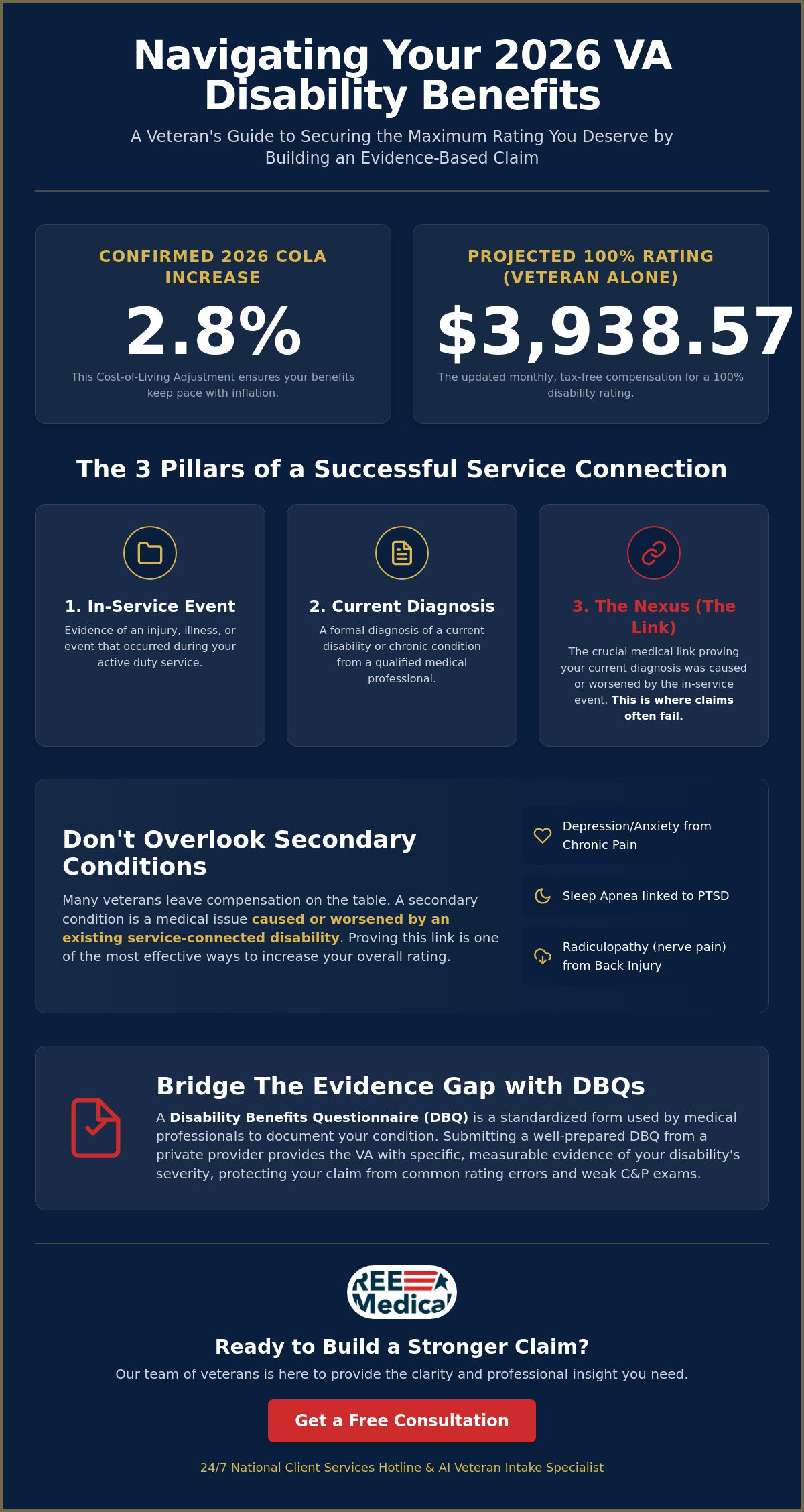
You’ll learn how to master the 2026 landscape, including the confirmed 2.8% pay increase that brings a 100% rating for a veteran alone to $3,938.57 per month. We’ll preview how to use Disability Benefits Questionnaires (DBQs) effectively and explain why the VA’s current focus on functional impairment makes secondary claims more critical than ever. It’s time to secure the maximum rating you deserve through meticulous documentation and a clear, step-by-step strategy.
Key Takeaways
- Identify eligibility requirements for va disability benefits in 2026, including coverage for physical, chronic, and mental health conditions.
- Explore how secondary service connections allow you to link new medical issues to primary disabilities for a potential rating increase.
- Learn how to utilize Disability Benefits Questionnaires (DBQs) to provide thorough medical evidence and protect your claim from common rating errors.
- Gain a clear understanding of “VA Math” and how the confirmed 2.8% COLA adjustment will affect your monthly compensation.
What are VA Disability Benefits and Who Qualifies in 2026?
va disability benefits are tax-free monthly payments designed to support veterans who sustained injuries or developed illnesses during active duty service. These payments aren’t a handout; they’re a hard-earned outcome for the sacrifices you made during your military career. The scope of coverage is extensive, including physical injuries like joint damage, chronic illnesses like respiratory issues, and mental health conditions. For example, many veterans seek VA disability benefits for PTSD or anxiety that developed as a direct result of their service. 🇺🇸
As we move through 2026, the PACT Act remains a critical factor for eligibility. It expanded the list of “presumptive conditions” related to toxic exposures, such as burn pits and Agent Orange. This means if you served in specific locations during certain timeframes, the VA assumes your condition was caused by service. You won’t need to prove the service connection for these specific illnesses, which simplifies the process significantly. Keeping up with the VA disability claims process step by step: A 2026 Veteran’s Guide will help you identify if your specific service history qualifies you for these streamlined benefits. 🌎
Service Connection: The Three Pillars of a Claim
To secure a rating for va disability benefits, you’ll need to establish a service connection through three specific requirements. Following this logical progression ensures your claim is built on a solid foundation:
- In-Service Event: Evidence of an injury, illness, or the aggravation of a pre-existing condition that occurred during your service.
- Current Diagnosis: A formal medical diagnosis of a disability or chronic condition from a qualified healthcare provider.
- The Nexus: A medical link that proves your current diagnosis was caused or worsened by the in-service event.
Establishing a strong nexus is often where claims fail. If the medical evidence doesn’t clearly show the link between your service and your current health, the VA may deny the claim. This is why meticulous documentation and education on medical evidence are essential for every veteran. 📞
Types of VA Disability Benefits and Secondary Conditions
Understanding the different paths to service connection is vital for securing the full scope of va disability benefits. Most veterans begin their journey with a direct service connection. This path applies when a condition is a straight result of an event, injury, or exposure that happened during active duty. You can find the foundational rules for these VA disability compensation benefits on the official department website to ensure your initial claim meets the basic requirements. 🇺🇸
However, many veterans leave significant compensation on the table by overlooking secondary service connections. A secondary condition is a medical issue caused or worsened by an existing service-connected disability. If your primary service-connected condition triggers a new health problem, that new issue is also compensable. Additionally, if your health has declined since your last evaluation, you may be eligible for a VA rating increase. This ensures your monthly check accurately reflects your current level of functional impairment. 🌎
Common Secondary Conditions Veterans Often Overlook
Secondary claims are often the most effective way to bridge the gap toward a higher combined rating. These connections aren’t always obvious, but they’re grounded in documented medical evidence. Some of the most frequent examples include:
- Depression or anxiety that develops as a result of chronic physical pain or tinnitus.
- Sleep apnea that is medically linked to PTSD or service-connected respiratory conditions.
- Radiculopathy (nerve pain or numbness) that stems from service-connected back or spinal injuries.
Mental health is a frequent secondary claim that requires specific documentation. If you’re struggling with emotional health due to physical service-connected injuries, reviewing a DBQ for Mental Health Conditions: A Veteran’s Guide to VA Evidence in 2026 🇺🇸 can provide the clarity needed to document your symptoms correctly. 📞
It’s important to have a clear strategy when identifying these medical links. Gaining a better understanding of secondary VA claims education can help you present a stronger, more meticulous case during the evaluation process.
The Evidence Gap: Using DBQs to Support Your Claim
Many veterans encounter a frustrating “Evidence Gap” during the claims process. This gap occurs when your medical records don’t align with the specific criteria the VA uses to assign a rating. To bridge this divide, you must understand the role of Disability Benefits Questionnaires (DBQs). These standardized forms are the exact tools the VA uses to evaluate the severity of your condition and determine your eligibility for va disability benefits. 🇺🇸
Relying solely on a Compensation and Pension (C&P) exam can be risky. These exams are often brief, sometimes lasting only 15 minutes, which may not be enough time to capture the full extent of your functional impairment. In contrast, submitting a private DBQ completed by a qualified medical professional provides a more comprehensive medical history. This meticulous documentation ensures the VA rater has the precise data points needed to assign a percentage that matches the 2026 VA disability rates you’ve earned. 🌎
Why Private Medical Evidence is the Key to a 2026 Claim
Providing your own medical evidence allows you to take control of the narrative. It ensures that every symptom is documented according to the VA’s Schedule for Rating Disabilities, leaving less room for administrative errors or oversight. If you’re unsure where to start, reading What is a DBQ for VA Claims? A Veteran’s Guide to Disability Benefits Questionnaires in 2026 🇺🇸 will help you understand how these forms function in the current landscape.
For complex claims, an Independent Medical Opinion or Nexus Letter is often the missing piece. This document provides the professional link between your service and your current diagnosis, which is vital for securing va disability benefits. We’re here to help you understand this process. Explore our Disability Benefits Questionnaire education to ensure your medical evidence is thorough and accurate. 📞
2026 VA Disability Rates and Maximizing Your Rating
The 2026 Cost-of-Living Adjustment (COLA) has been confirmed at 2.8%, providing a necessary boost to your monthly compensation. This increase ensures that your va disability benefits maintain their purchasing power against inflation. For a veteran living alone, a 10% disability rating now results in $180.42 per month. At the 100% level, that monthly payment reaches $3,938.57. These amounts scale upward if you have a spouse, children, or dependent parents, making it vital to keep your dependency records updated with the VA. 🇺🇸
Maximizing your rating requires a firm grasp of “VA Math.” The VA doesn’t use simple addition to combine multiple disabilities. Instead, they use a descending efficiency scale. For instance, if you have two separate 50% ratings, your combined rating isn’t 100%; it’s 80%. This happens because the second 50% is taken from the remaining “healthy” portion of your body. To reach a higher tier, you must focus on the “Fully Developed Claim” strategy. By submitting all medical evidence and DBQs upfront, you reduce the VA’s guesswork and increase the likelihood of an accurate, higher rating on the first attempt. 🌎
Steps to Increase Your VA Disability Rating in 2026
If your service-connected condition has worsened since your last evaluation, you have the right to seek a VA rating increase. Following a structured process is the most effective way to secure the benefits you’ve earned. You can learn more about this by reviewing How to Use a DBQ for a VA Disability Rating Increase in 2026. Follow these logical steps to move forward:
- Step 1: Review your current rating decision. Identify specific symptoms that have progressed or look for new secondary conditions that have developed as a result of your primary injury.
- Step 2: Obtain a professional Disability Benefits Questionnaire (DBQ). This document provides the technical medical evidence required to prove the increased severity of your condition.
- Step 3: File a ‘Claim for Increase’ or a ‘Supplemental Claim’. Submit your new medical evidence immediately to ensure your claim is processed as a Fully Developed Claim.
Securing the maximum va disability benefits is about meticulous documentation and persistence. Don’t let an outdated rating define your support. By using the right educational resources and medical evidence, you can ensure your compensation reflects your current reality. 📞
Secure Your Future with Meticulous Medical Evidence
Securing the maximum va disability benefits requires more than just a diagnosis; it demands a strategic approach to medical evidence. By mastering the 2026 landscape and identifying overlooked secondary conditions, you ensure your rating truly reflects your daily reality. The “Evidence Gap” is often the only obstacle standing between you and the compensation you’ve earned through your service. 🇺🇸
Global Vets Consulting has been veteran-owned and operated since 2021, specializing in the detailed medical documentation education necessary for successful claims. We’ve integrated modern technology like our 24/7 AI Veteran Intake Specialist to provide immediate support whenever you need it. This combination of peer experience and technical precision offers a clear, predictable path forward for every veteran we serve. 🌎
You’ve already done the hard work of serving our nation. Now, let’s work together to make sure you receive the recognition and support you deserve. Stay focused, stay documented, and keep moving toward your goals. 📞
Frequently Asked Questions
How much is the VA disability pay increase for 2026?
The confirmed cost-of-living adjustment (COLA) for 2026 is 2.8%. This increase took effect on December 1, 2025, and was first reflected in the benefit payments issued on January 1, 2026. This adjustment ensures your compensation keeps pace with inflation, bringing a 100% rating for a veteran alone to $3,938.57 per month.
Can I get VA disability benefits if I was discharged years ago?
Yes, you can apply for va disability benefits at any time, regardless of how long you’ve been out of the service. There’s no deadline for filing a disability claim. As long as you can provide medical evidence linking your current condition to your military service, you’re eligible to seek the compensation you’ve earned. Many veterans successfully file for new or increased ratings decades after their separation date.
What happens if the VA denies my disability claim for lack of evidence?
If your claim is denied due to a lack of evidence, you can file a Supplemental Claim by submitting “new and relevant” evidence. This is the ideal time to provide a private Disability Benefits Questionnaire (DBQ) or a Nexus Letter. These documents provide the specific clinical details and service-connection proof that the VA rater may have missed in your initial application.
Is a private DBQ better than a VA C&P exam?
A private DBQ is often more thorough because it’s completed by a provider who can spend more than a few minutes reviewing your full medical history. While the VA may still require you to attend a C&P exam, having your own medical evidence on file ensures the rater has a complete picture of your functional impairment. This proactive step helps prevent the common rating errors that occur during brief, inconsistent government exams.
How long does it take to get a decision on a VA disability claim in 2026?
Most va disability benefits claims are processed within 125 to 150 days, though complex cases involving multiple secondary conditions can take longer. You can often speed up this timeline by filing a “Fully Developed Claim.” This means you submit all your medical evidence, including private DBQs, at the same time you file your application so the VA doesn’t have to wait for external records.

Article by
Willie Daniel
Willie Daniel is the Founder and Chief Executive Officer (CEO) of Global Vets Consulting (GVC) – National Veterans Disability Services, a veteran-led educational and medical evidence support organization dedicated to helping veterans better understand VA disability rating increases, DBQ medical evidence, secondary claims education, and C&P examination preparation.
He is a retired U.S. Army Medical Service Corps Officer with more than 27 years of honorable military service, a decorated Iraq combat veteran, and a retired federal official with the U.S. Department of Veterans Affairs. Throughout his military and federal career, Willie Daniel served in leadership, healthcare administration, operational, and veteran-support roles focused on improving services and support systems for servicemembers, veterans, and their families.
Drawing from decades of military leadership, healthcare administration, veteran advocacy, and federal government experience, Willie Daniel brings a practical, veteran-centered perspective to Global Vets Consulting’s educational articles, AI-powered veteran resources, video education initiatives, and outreach programs. His experience navigating military systems, medical documentation processes, and veteran-related administrative operations provides valuable insight into many of the challenges veterans face when seeking to better understand VA disability rating criteria, medical evidence, documentation strategies, and secondary condition education.
Through GVC’s “Veterans Helping Veterans” mission, his focus is on delivering clear, educational, and easy-to-understand information designed to empower veterans with knowledge, resources, and educational tools that may help them make more informed decisions regarding their individual VA disability journeys.
The information provided through GVC is intended for educational and informational purposes only and should not be considered legal or medical advice.
Disclaimer
Disclaimer: Global Vets Consulting, LLC (“GVC”) is a veteran-led educational and medical evidence support organization. GVC is not a law firm, is not a Veterans Service Organization (VSO), and is not affiliated with the U.S. Department of Veterans Affairs (VA) or any government agency.
Global Vets Consulting does not provide legal advice, medical advice, medical treatment, or healthcare services. GVC does not prepare, file, or submit VA disability claims on behalf of veterans. All information provided through this website, blog articles, videos, educational materials, AI tools, dashboards, templates, and communications is intended solely for general educational and informational purposes.
Veterans are encouraged to consult with accredited representatives, licensed attorneys, qualified medical providers, or Veterans Service Organizations regarding their specific legal, medical, or VA-related matters. VA disability decisions, ratings, and outcomes are determined solely by the U.S. Department of Veterans Affairs based on applicable laws, regulations, medical evidence, and individual circumstances. Past results do not guarantee future outcomes.

