
Why settle for a 70% disability check when your service-connected conditions make it impossible to hold down a steady job? Many veterans are unaware that total disability individual unemployability (TDIU) exists specifically to bridge the gap between their current rating and the financial reality of being unable to work. It’s frustrating to feel like the system doesn’t see the full picture of your struggle, especially when examiners fail to account for how your symptoms stop you from performing specific workplace tasks. 🇺🇸
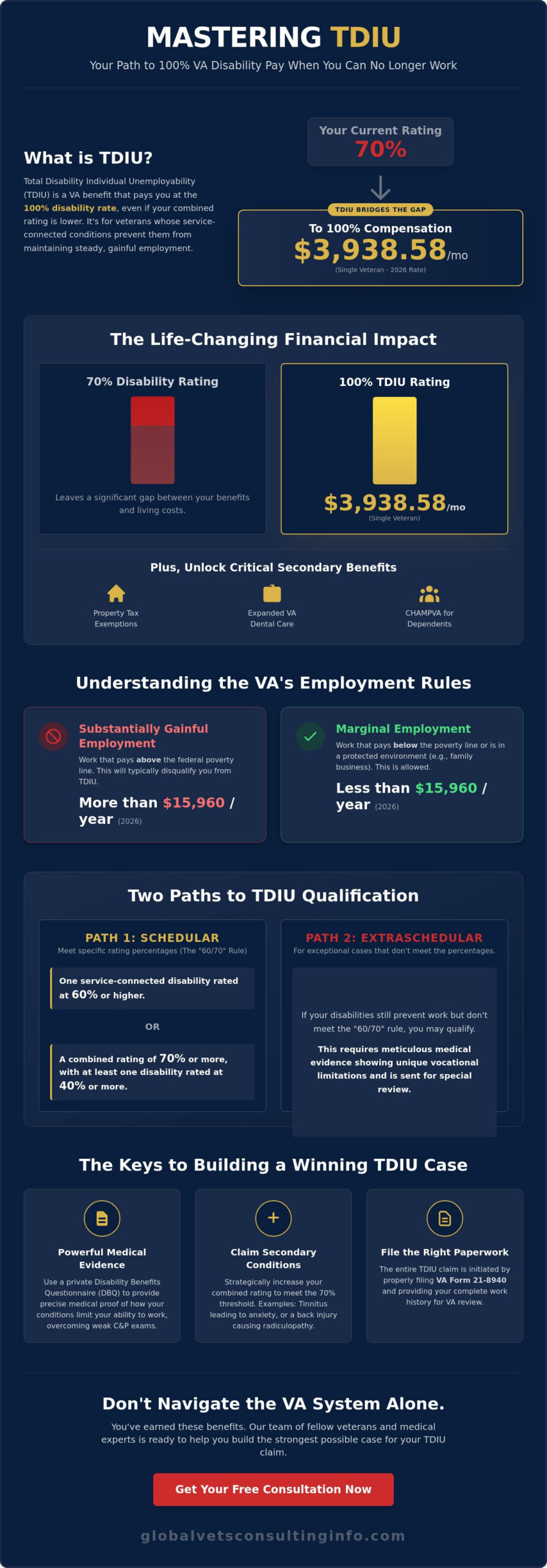
We know the stress of trying to survive on a partial rating while your conditions keep you out of the workforce. You shouldn’t have to guess whether your income qualifies as “marginal” or if you meet the 2026 federal poverty threshold of $15,960. You’ve earned the security of the 100% compensation rate, which currently provides $3,938.58 per month for a single veteran. Our goal is to replace that confusion with a clear, predictable path forward.
This guide will help you master the complexities of TDIU and learn how to secure 100% level compensation even if your combined rating is lower. We will break down the exact medical evidence required to win your claim, explain the 2026 COLA adjustments, and show you how to use private documentation to overcome weak C&P exams.
Key Takeaways
- Discover how total disability individual unemployability allows you to secure the 100% compensation rate even when your combined rating is lower.
- Learn to navigate the “60/70” rule and understand the critical difference between schedular and extraschedular paths to success.
- Understand how utilizing a dbq for va disability rating increase provides the precise medical evidence needed to prove vocational limitations.
- Stay informed on the 2026 income thresholds and how the VA defines “substantially gainful employment” for unemployability claims.
- Master the step-by-step process for filing VA Form 21-8940 and coordinating with past employers to build a strong case for your benefits.
What is Total Disability Individual Unemployability (TDIU)?
Total disability individual unemployability is a specific benefit managed by the Veterans Benefits Administration Compensation Service that allows veterans to be paid at the 100% rate, even if their combined rating is lower. While “VA math” often leaves veterans stuck at a 70% or 80% rating, TDIU recognizes that the actual impact of your disabilities might be total. If your service-connected conditions prevent you from holding down a steady job, this benefit provides the financial safety net you’ve earned.
The core requirement centers on your inability to maintain what the VA calls “substantially gainful employment.” This is a vocational standard rather than a purely medical one. In 2026, securing this status is more critical than ever. With the recent 2.8% cost-of-living adjustment, the gap between a partial rating and total disability pay has widened, making the move to 100% compensation a vital step for your long-term financial stability.
Understanding Substantially Gainful vs. Marginal Employment
Many veterans worry that any income will disqualify them. This isn’t true. Substantially gainful employment generally refers to a job that pays more than the federal poverty threshold, which is $15,960 for a single person in 2026. If you earn less than this, your work is considered “marginal employment.” You can also qualify if you work in a “protected work environment,” such as a family business or a sheltered workshop where special accommodations are made that wouldn’t exist in a typical competitive job.
The Financial Impact: 100% Pay vs. Lower Ratings
The difference in monthly take-home pay is life-changing. When you compare 2026 VA disability rates, a single veteran at the 70% level receives significantly less than the $3,938.58 monthly payment provided at the 100% level. Beyond the check, reaching the total disability threshold often triggers secondary benefits. These can include property tax exemptions in many states, expanded dental care through the VA, and CHAMPVA healthcare for your dependents.
Meeting the VA Rating Requirements: Schedular vs. Extraschedular TDIU
To qualify for the schedular version of total disability individual unemployability, the VA generally looks for specific percentage thresholds. You must have one service-connected disability rated at 60% or higher. Alternatively, you can qualify with a combined rating of 70% if at least one of those disabilities is rated at 40% or more. This is commonly known as the “60/70” rule. However, “VA Math” often works against you. Because the VA doesn’t simply add percentages together, reaching that 70% mark can feel like an uphill battle without a clear strategy. Having the combined disability rating explained is essential to understanding exactly how the VA calculates your total percentage and why your numbers may be lower than expected. You can find the official breakdown of these eligibility rules on the VA Individual Unemployability page. 🇺🇸
How to Increase Your Combined Rating for TDIU Eligibility
If you’re stuck at a 50% or 60% combined rating, the most effective path forward is often identifying secondary conditions. Many veterans don’t realize their primary service-connected issues cause new, compensable problems. For example, chronic tinnitus often leads to anxiety or sleep disturbances. Similarly, a service-connected back injury might cause radiculopathy in your legs. Using secondary conditions to increase va rating is a proven way to hit the 70% threshold required for schedular TDIU.
The Extraschedular Path: When Percentages Aren’t Enough
What happens if your disabilities don’t meet the 60% or 70% marks, but you still can’t work? You may qualify for “extraschedular” TDIU. This path is for exceptional cases where your symptoms interfere with employment in a way the standard rating schedule doesn’t capture. If you face frequent hospitalizations or have unique symptoms that make a 9-to-5 job impossible, your claim is referred to the Director of Compensation Service for a specialized review. Proving an extraschedular case requires meticulous medical evidence that highlights your specific vocational limitations. If you’re unsure where your rating stands, exploring educational resources for VA rating increases can help you determine the best path for your specific situation.
Essential Medical Evidence: Using DBQs to Prove Unemployability
Standard Compensation and Pension (C&P) exams are frequently too narrow to support a successful claim. While these exams focus on the severity of a diagnosis, they often ignore the critical link between your symptoms and your specific job duties. To secure total disability individual unemployability, your medical evidence must do more than list a condition; it must demonstrate functional loss in a workplace setting. You can find a high-level overview of these requirements in the VA Individual Unemployability Fact Sheet, but winning your claim requires deeper, more personalized documentation. 🇺🇸
The strategic use of a dbq for va disability rating increase gives your private medical provider the opportunity to speak directly to the VA Rater. Raters typically look at the “Functional Impact” and “Remarks” sections of the DBQ first. If these sections don’t explicitly state how your service-connected conditions make regular attendance or task completion impossible, your claim may face an uphill battle. We focus on helping you understand how to ensure these documents are thorough and accurate.
Linking Symptoms to Workplace Limitations
Effective evidence bridges the gap between a medical symptom and a lost paycheck. For example, a dbq for mental health conditions can prove that severe social impairment prevents you from performing customer-facing work or collaborating with a team. Physical limitations are just as vital to document. If your service-connected back or knee conditions prevent you from sitting, standing, or lifting as required by your previous MOS or civilian career, those specific limitations must be recorded to prove you’re unable to maintain gainful employment.
The Importance of Independent Medical Opinions (IMOs)
An Independent Medical Opinion, often paired with a Nexus letter, provides the “vocational narrative” the VA needs. This narrative explains exactly why your diagnosis results in an inability to work. It acts as a professional bridge that connects your medical history to your current financial reality. If you’re ready to strengthen your claim with precise documentation, explore our Disability Benefits Questionnaire education and resources to get started today. 🌎
How to Apply for TDIU and Handle Common VA Roadblocks
Applying for total disability individual unemployability requires a methodical approach to ensure the VA has every piece of evidence needed to make a favorable decision. You don’t want your claim to sit in the backlog because of a missing signature or a vague medical statement. Follow these steps to submit a strong, organized package: 🇺🇸
- Step 1: Complete VA Form 21-8940. This is your formal application for increased compensation based on unemployability.
- Step 2: Submit VA Form 21-4192 to every employer you’ve worked for in the last five years. This form asks them to confirm your employment dates and the reasons you left.
- Step 3: Attach all private DBQs and independent medical evidence. Submitting these together creates a “Fully Developed Claim,” which can help speed up the process.
- Step 4: Monitor your claim status on VA.gov. Be prepared to respond quickly if the VA requests a Vocational Rehabilitation (Chapter 31) evaluation to assess your work capacity.
What to Do if Your Former Employer Won’t Cooperate
One of the biggest hurdles is getting a former boss to sign Form 21-4192. If an employer ignores your requests or has gone out of business, the VA follows the “Good Faith Effort” rule. You must document your attempts to reach them. Keep a log of phone calls, saved emails, or certified mail receipts. If they still won’t cooperate, submit a personal statement (Lay Evidence) explaining your efforts and the circumstances of your departure. This ensures your total disability individual unemployability claim moves forward despite an uncooperative former employer.
Moving Toward Permanent and Total (P&T) Status
Securing TDIU is a major victory, but the ultimate goal for many is reaching 100 percent p&t va disability status. When the VA determines your conditions are unlikely to improve, they may grant “Permanent and Total” protection. This means you are no longer subject to future re-examinations, providing long-term stability for your benefits and your family’s future. It’s about more than just the monthly check; it’s about the peace of mind that comes with a protected rating. 🌎
Get the professional DBQ documentation you need to win your TDIU claim today.
Take Charge of Your 100% Disability Compensation Today
Securing total disability individual unemployability is a strategic process that requires more than just meeting a percentage threshold. It’s about documenting the real-world impact your service-connected conditions have on your ability to maintain a job. By mastering the 2026 requirements and utilizing precise medical evidence like DBQs, you can bridge the gap to 100% level pay. This journey isn’t just about the money; it’s about the long-term stability and healthcare protections that come with a total rating.
Don’t let confusing forms or uncooperative former employers stand in the way of your financial security. At Global Vets Consulting, we have been Veteran-Owned and Operated since 2021. We specialize in 2026 VA compliance to help you navigate these hurdles with steady confidence. Our team understands the mission because we’ve lived it ourselves. We provide the educational resources you need to build a bulletproof claim and secure the rating you deserve.
🇺🇸 Secure Your TDIU Evidence with Global Vets Consulting
📞 24/7 National Client Services Hotline
You’ve earned these benefits through your service and sacrifice. The path to 100% compensation is within reach when you have the right evidence in hand. Take the next step toward the total support you deserve today. 🇺🇸
Frequently Asked Questions
Can I work at all while receiving TDIU benefits?
You can work while receiving total disability individual unemployability benefits if your work is considered marginal or occurs in a protected environment. Marginal employment means your annual earned income stays below the 2026 federal poverty threshold of $15,960. Protected environments include jobs where an employer makes significant accommodations for your service-connected disabilities that wouldn’t be available in a standard competitive workplace.
Is TDIU permanent, or will the VA re-evaluate me?
TDIU is not automatically permanent unless the VA grants you Permanent and Total (P&T) status. If your award letter doesn’t specify P&T, the VA might schedule periodic re-evaluations to see if your condition has improved enough for you to return to work. Once you achieve P&T status, the VA typically stops scheduling routine future examinations, providing you with a more stable and predictable benefit.
What is the income limit for TDIU in 2026?
The earned income limit for a single veteran seeking total disability individual unemployability in 2026 is $15,960. This figure is based on the Federal Poverty Level guidelines. If you earn more than this amount, the VA may consider your employment substantially gainful, which could lead to a denial or termination of your benefits. Always report changes in your income to avoid potential overpayment issues with the Veterans Benefits Administration.
Does my age affect my eligibility for individual unemployability?
Your age does not legally impact your eligibility for individual unemployability benefits. VA regulations specifically state that age cannot be a factor when determining if a veteran is unable to work due to service-connected disabilities. Whether you’re 25 or 75, the focus remains entirely on how your medical conditions interfere with your ability to secure and follow a substantially gainful occupation.
Can I receive Social Security Disability (SSDI) and TDIU at the same time?
You can receive both Social Security Disability Insurance (SSDI) and TDIU concurrently. While the VA only considers service-connected conditions for your rating, the Social Security Administration looks at your total health picture. Winning one claim can often provide helpful evidence for the other, as both programs acknowledge your inability to work. Receiving both benefits is a common way for veterans to maximize their financial support.
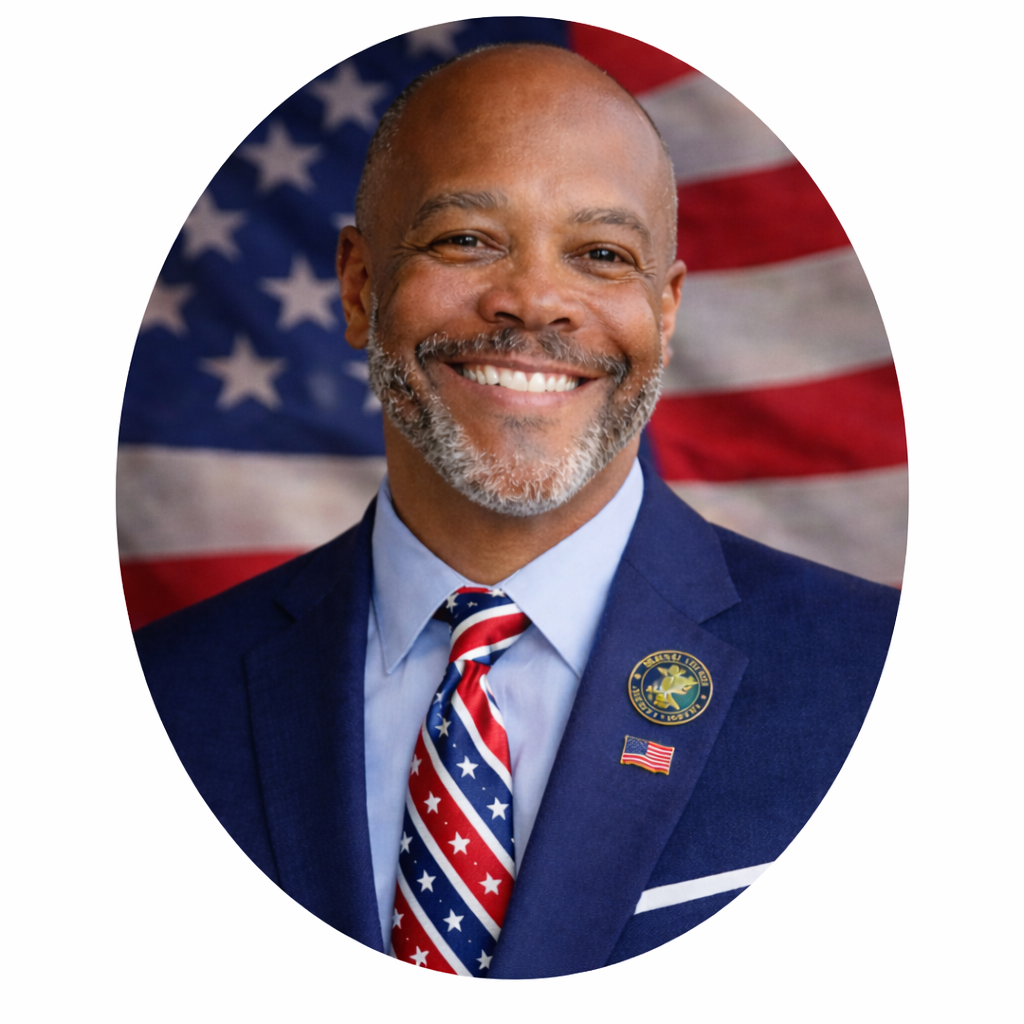
Article by
Willie Daniel
Willie Daniel is the Founder and Chief Executive Officer (CEO) of Global Vets Consulting (GVC) – National Veterans Disability Services, a veteran-led educational and medical evidence support organization dedicated to helping veterans better understand VA disability rating increases, DBQ medical evidence, secondary claims education, and C&P examination preparation.
He is a retired U.S. Army Medical Service Corps Officer with more than 27 years of honorable military service, a decorated Iraq combat veteran, and a retired federal official with the U.S. Department of Veterans Affairs. Throughout his military and federal career, Willie Daniel served in leadership, healthcare administration, operational, and veteran-support roles focused on improving services and support systems for servicemembers, veterans, and their families.
Drawing from decades of military leadership, healthcare administration, veteran advocacy, and federal government experience, Willie Daniel brings a practical, veteran-centered perspective to Global Vets Consulting’s educational articles, AI-powered veteran resources, video education initiatives, and outreach programs. His experience navigating military systems, medical documentation processes, and veteran-related administrative operations provides valuable insight into many of the challenges veterans face when seeking to better understand VA disability rating criteria, medical evidence, documentation strategies, and secondary condition education.
Through GVC’s “Veterans Helping Veterans” mission, his focus is on delivering clear, educational, and easy-to-understand information designed to empower veterans with knowledge, resources, and educational tools that may help them make more informed decisions regarding their individual VA disability journeys.
The information provided through GVC is intended for educational and informational purposes only and should not be considered legal or medical advice.
Disclaimer
Disclaimer: Global Vets Consulting, LLC (“GVC”) is a veteran-led educational and medical evidence support organization. GVC is not a law firm, is not a Veterans Service Organization (VSO), and is not affiliated with the U.S. Department of Veterans Affairs (VA) or any government agency.
Global Vets Consulting does not provide legal advice, medical advice, medical treatment, or healthcare services. GVC does not prepare, file, or submit VA disability claims on behalf of veterans. All information provided through this website, blog articles, videos, educational materials, AI tools, dashboards, templates, and communications is intended solely for general educational and informational purposes.
Veterans are encouraged to consult with accredited representatives, licensed attorneys, qualified medical providers, or Veterans Service Organizations regarding their specific legal, medical, or VA-related matters. VA disability decisions, ratings, and outcomes are determined solely by the U.S. Department of Veterans Affairs based on applicable laws, regulations, medical evidence, and individual circumstances. Past results do not guarantee future outcomes.