
A denied nexus letter isn’t the end of the road; it’s often just a sign that your medical evidence didn’t meet the VA’s specific logic. With the May 1, 2026, update to the M21-1 manual, the “but-for” causation standard has broadened, giving you more leverage than ever to link your health issues. You know your body better than anyone, and it”s frustrating when the system fails to recognize how a service-connected back injury has led to depression or how diabetes has caused neuropathy. Having your va secondary conditions explained is the first step toward ensuring your total disability rating reflects the reality of your daily life.
We understand the anxiety that comes with a C&P exam and the confusion over which forms to file. This article provides a predictable path forward, focusing on the meticulous documentation needed to prove causation under the latest 2026 regulations. You’ll learn how to identify high-probability secondary links, gather the right medical evidence, and navigate the claims process with the confidence of a veteran who has a solid plan in place. Let’s look at how to turn your current diagnoses into a successful claim for the benefits you’ve earned through your service.
Key Takeaways
- Understand the specific criteria for secondary service connection, including the “Aggravation” rule that links new health issues to your existing service-connected disabilities.
- Explore common medical pathways like PTSD to hypertension or back pain to radiculopathy with va secondary conditions explained to help you identify frequently overlooked links.
- Identify the critical role of Disability Benefits Questionnaires (DBQs) and nexus letters in providing the precise clinical data VA raters require to grant a connection.
- Learn a methodical step-by-step strategy to document your functional impairment and secure a current medical diagnosis before filing your secondary claim.
- Build confidence for your upcoming C&P exam by understanding how to present clear medical evidence that supports a higher combined disability rating. 🇺🇸
What is a VA Secondary Condition? Understanding the Link
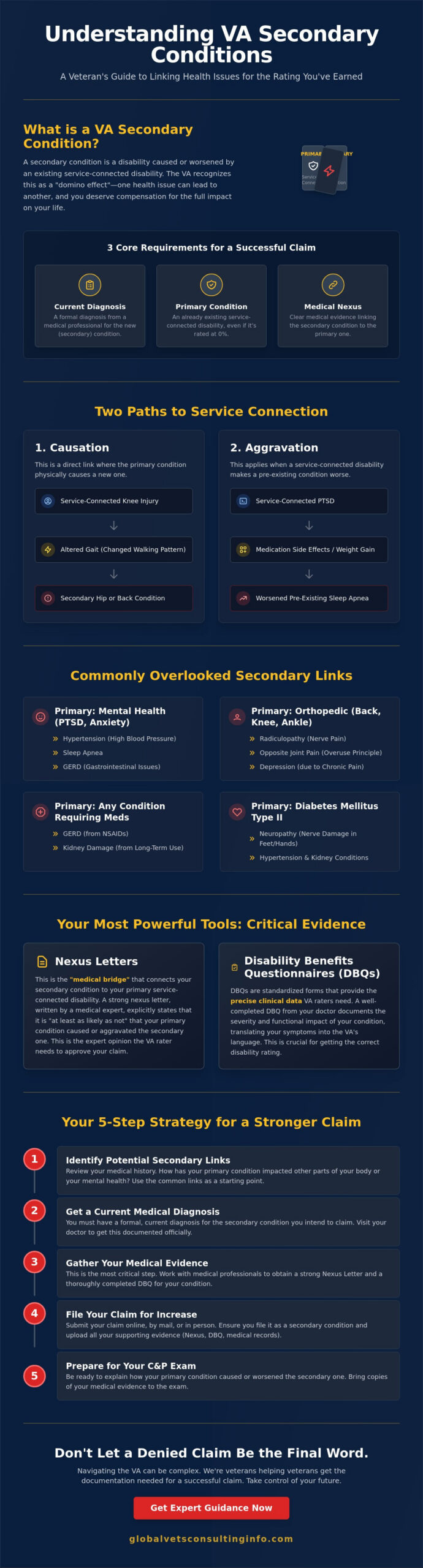
A VA secondary condition is any disability that is proximately due to or the result of an existing service-connected condition. This concept is vital for veterans because it acknowledges that the human body is an interconnected system; an injury in one area often leads to complications elsewhere. To have your va secondary conditions explained simply, think of it as a domino effect. When your primary service-connected disability triggers a new medical issue, that new issue is eligible for compensation. 🇺🇸
To successfully link these disabilities, you must meet three specific requirements. First, you need a current medical diagnosis for the new condition. Second, you must have an existing service-connected primary condition, even if it is currently rated at 0%. Third, you must provide a medical nexus, which is the professional evidence linking the two. This documentation is a powerful tool for achieving a VA rating increase that truly reflects your physical or mental health.
Causation vs. Aggravation: Two Paths to Benefits
Direct causation occurs when a primary disability physically causes a secondary one. For example, if you have a service-connected knee injury, the way you walk might change to compensate for the pain. This altered gait can lead to a secondary hip or back condition. Aggravation is different. This rule applies when a service-connected disability makes a pre-existing, non-service-connected condition worse. A common scenario involves service-connected PTSD worsening a veteran’s pre-existing sleep apnea due to medication side effects or weight gain. Both paths lead to the same goal: earning the benefits you deserve.
Why Secondary Claims Matter in 2026
Understanding “VA Math” is essential for maximizing your Veterans’ benefits. The VA doesn’t simply add percentages together; it calculates based on your remaining “whole person” percentage. Because secondary ratings combine with your primary ones, they are often the key to reaching the 100% P&T threshold. Documenting every related symptom ensures your total rating isn’t held back by a lack of evidence. In 2026, with updated causation standards, having your va secondary conditions explained correctly can be the difference between a denied claim and a successful outcome. 🇺🇸
Common VA Secondary Conditions and Their Primary Links
Identifying the most common connections is a critical step in building your case. When you have va secondary conditions explained through clinical logic, the path to a higher rating becomes much clearer. One frequently overlooked area is the “overuse” principle. This happens when a service-connected injury to one limb, such as a left ankle, causes you to overcompensate. Over time, this extra stress leads to secondary issues in the opposite limb, like a right knee or hip condition. The VA recognizes these biomechanical shifts as valid links for compensation.
Another major pathway involves medication side effects. Many veterans take daily NSAIDs or other prescriptions for service-connected pain. While these medications manage symptoms, they can also cause secondary digestive issues like GERD or even kidney damage. If you can show your primary condition required the medication that caused the new diagnosis, you have a strong secondary claim. Before you submit your evidence, it’s helpful to review the official process for How To File A VA Disability Claim to ensure your paperwork is in order.
The Mental Health Domino Effect
Mental health conditions rarely exist in isolation. Veterans often find that linking secondary conditions to mental health, such as sleep apnea or hypertension secondary to PTSD, is a viable route to a rating increase. These links are biologically sound; chronic anxiety often leads to physical symptoms like high blood pressure or gastrointestinal distress. However, the VA frequently denies these claims without a strong independent medical opinion to bridge the gap between your mind and your body.
Biological Mechanisms the VA Recognizes
The VA also acknowledges intermediate steps like weight gain. If a service-connected back injury limits your mobility and leads to obesity, that weight gain can be the bridge to secondary sleep apnea or Type 2 diabetes. Similarly, chronic physical pain often acts as a catalyst for secondary depression or neurological issues like radiculopathy. If you feel numbness or tingling in your limbs due to a service-connected spinal strain, you’re experiencing a secondary condition. If you’re unsure where to start, seeking Secondary VA Claims Education can help you map out these complex biological pathways. Having your va secondary conditions explained through these recognized mechanisms ensures no part of your health is ignored. 🇺🇸
The Role of Medical Evidence and DBQs in Secondary Claims
Winning a secondary claim requires more than just describing your symptoms to a rater. The VA needs a “Nexus Letter” or a detailed medical opinion that explicitly connects your new condition to your primary service-connected disability. Without this document, your claim is likely to be denied for a lack of medical evidence. Having your va secondary conditions explained through professional documentation is the only way to ensure the rater understands the biological relationship between your ailments. 🇺🇸
Disability Benefits Questionnaires (DBQs) play a vital role in this process by providing the specific clinical data the VA requires for a rating. While the VA might schedule a Compensation and Pension (C&P) exam, a DBQ completed by a private provider can often be more comprehensive and focused on your specific functional impairment. This level of detail is crucial when you want to avoid the common “denied for lack of evidence” trap. By submitting a Fully Developed Claim (FDC), you provide everything the VA needs upfront, which often leads to a more predictable and faster outcome.
Bridging the Nexus Gap
To establish a successful link, your medical evidence must meet the “at least as likely as not” standard. This means there is a 50% or greater probability that your secondary condition was caused or aggravated by your primary disability. This is the VA definition of a secondary claim in practice. Professional documentation addresses the “pathophysiology” of the connection, explaining the medical science behind how one condition triggers another. If you need help gathering this evidence, exploring Disability Benefits Questionnaires education can provide the clarity you need to move forward. 🇺🇸
Common Evidence Mistakes
Filing without a current diagnosis is the most frequent reason for denial. You cannot claim a condition exists based on symptoms alone; a healthcare professional must officially diagnose it before you file. Another mistake is relying on the VA to find the link in your old service treatment records. The burden of proof remains on you. If you don’t provide a clear nexus, the VA isn’t obligated to connect the dots for you. Meticulous preparation is the only path to a successful va secondary conditions explained strategy.
Filing Your Secondary Claim: A Step-by-Step Strategy
Success in the VA system requires a methodical approach and a clear understanding of medical logic. Your first step is to identify your primary service-connected condition and analyze its potential secondary effects. If you’re service-connected for a musculoskeletal issue, look for signs of nerve damage or compensatory injuries in other joints. Once you’ve identified a link, you must obtain a current medical diagnosis from a healthcare professional. A diagnosis is the foundation of your claim; without it, the VA cannot move forward with an evaluation. 🇺🇸
After securing your diagnosis, the next logical step is to gather independent medical evidence. You need a high-quality DBQ that clearly states your secondary condition is “proximately due to” your primary service-connected disability. This specific phrasing is essential for the rater to grant service connection. Finally, you will submit your evidence through the VA disability claims process. Having va secondary conditions explained as a series of actionable steps helps you maintain focus and reduces the stress of the bureaucracy.
Partnering with Global Vets Consulting
We operate with a “Veterans Helping Veterans” ethos, providing the support we wish we had during our own claims. Our team specializes in medical documentation and DBQ preparation education to ensure your evidence is meticulous and accurate. You don’t have to wait for business hours to start your journey. Our 24/7 National Client Services Hotline provides immediate support for your intake process, while our AI Veteran Intake Specialist streamlines the evidence-gathering phase. This tech-forward approach ensures your claim is handled with the precision and respect it deserves. 🇺🇸
Immediate Action Steps
Review your current rating decision for any “noted” conditions that were identified by a doctor but not previously rated. These are often the most straightforward secondary claims to establish. If you’re ready to take the next step toward the rating you’ve earned, use the resources below to begin your journey. 🇺🇸
- 🌎 Website: GlobalVetsConsultingInfo.com
- 📞 Contact us today to begin your independent medical evidence education.
- 📑 Ensure your va secondary conditions explained strategy includes a current diagnosis and a strong medical nexus.
Secure Your Earned Disability Rating Today
Navigating the VA system doesn’t have to be a solo mission. You now understand how the dominos of your health are connected and why even a 0% rating on a primary condition can unlock the benefits you deserve through secondary links. By prioritizing a current diagnosis and securing high-quality DBQs, you move from a place of frustration to a position of steady confidence. This va secondary conditions explained roadmap is designed to help you ensure the VA recognizes the full scope of your service-connected injuries under the 2026 standards.
Global Vets Consulting is veteran-owned and operated; we understand the weight of a denied claim. We are specialists in DBQ preparation and medical evidence education, dedicated to helping you bridge the nexus gap with precision. Our 24/7 National Client Services Hotline is ready to provide the immediate support you need for a predictable path forward. Don’t leave your combined rating to chance when you can partner with an advocate who speaks the VA’s language.
Get the medical evidence you need at GlobalVetsConsultingInfo.com
You earned these benefits through your sacrifice; now it’s time to ensure they accurately reflect your health. 🇺🇸
Frequently Asked Questions
Can I file for a secondary condition if my primary condition is rated at 0%?
Yes, you can file for a secondary condition even if your primary service-connected disability is currently rated at 0%. The VA requirement for a secondary claim is that the primary condition is service-connected; the specific percentage doesn’t prevent you from linking new health issues. This is a common part of having va secondary conditions explained, as many veterans use a 0% rating as the foundation for successful secondary claims that lead to a higher combined rating. 🇺🇸
How much does a secondary condition increase my VA disability rating?
The increase depends on the specific rating assigned to the secondary condition and how it combines with your existing ratings through “VA Math.” For instance, if you’re already at 50% and a secondary condition is rated at 30%, your total rating won’t simply be 80% because the VA calculates based on your remaining “whole person” percentage. This process is why documenting every symptom is critical to reaching higher compensation tiers like the 2026 100% rate of approximately $3,934.75.
Is sleep apnea always a secondary condition to PTSD?
No, sleep apnea isn’t always secondary to PTSD, but it’s a very common pathway the VA recognizes when supported by medical evidence. To succeed, you must provide a medical nexus explaining how PTSD symptoms or medications caused or aggravated your sleep apnea. Having va secondary conditions explained by a medical professional who understands the biological link between mental health and respiratory issues is essential to proving this connection and avoiding a denial. 🇺🇸
What happens if my secondary claim is denied for lack of evidence?
If your claim is denied for lack of evidence, you can file a Supplemental Claim using VA Form 20-0995 to submit new and relevant medical documentation. This is often the time to secure a stronger nexus letter or a detailed DBQ that clearly addresses the “but-for” causation standard updated in May 2026. Taking this step ensures that your medical evidence meets the specific clinical requirements that the VA rater previously found missing.
Do I need a new C&P exam for a secondary condition?
Yes, the VA will typically schedule a new Compensation and Pension (C&P) exam to evaluate the severity of your secondary condition. However, if you submit a Fully Developed Claim with a private DBQ, the rater may have enough information to decide your claim without a new exam. Meticulous preparation of your own medical evidence can sometimes streamline the process and reduce the anxiety associated with repeated VA examinations. 🇺🇸

Article by
Willie Daniel
Willie Daniel is the Founder and Chief Executive Officer (CEO) of Global Vets Consulting (GVC) – National Veterans Disability Services, a veteran-led educational and medical evidence support organization dedicated to helping veterans better understand VA disability rating increases, DBQ medical evidence, secondary claims education, and C&P examination preparation.
He is a retired U.S. Army Medical Service Corps Officer with more than 27 years of honorable military service, a decorated Iraq combat veteran, and a retired federal official with the U.S. Department of Veterans Affairs. Throughout his military and federal career, Willie Daniel served in leadership, healthcare administration, operational, and veteran-support roles focused on improving services and support systems for servicemembers, veterans, and their families.
Drawing from decades of military leadership, healthcare administration, veteran advocacy, and federal government experience, Willie Daniel brings a practical, veteran-centered perspective to Global Vets Consulting’s educational articles, AI-powered veteran resources, video education initiatives, and outreach programs. His experience navigating military systems, medical documentation processes, and veteran-related administrative operations provides valuable insight into many of the challenges veterans face when seeking to better understand VA disability rating criteria, medical evidence, documentation strategies, and secondary condition education.
Through GVC’s “Veterans Helping Veterans” mission, his focus is on delivering clear, educational, and easy-to-understand information designed to empower veterans with knowledge, resources, and educational tools that may help them make more informed decisions regarding their individual VA disability journeys.
The information provided through GVC is intended for educational and informational purposes only and should not be considered legal or medical advice.
Disclaimer
Disclaimer: Global Vets Consulting, LLC (“GVC”) is a veteran-led educational and medical evidence support organization. GVC is not a law firm, is not a Veterans Service Organization (VSO), and is not affiliated with the U.S. Department of Veterans Affairs (VA) or any government agency.
Global Vets Consulting does not provide legal advice, medical advice, medical treatment, or healthcare services. GVC does not prepare, file, or submit VA disability claims on behalf of veterans. All information provided through this website, blog articles, videos, educational materials, AI tools, dashboards, templates, and communications is intended solely for general educational and informational purposes.
Veterans are encouraged to consult with accredited representatives, licensed attorneys, qualified medical providers, or Veterans Service Organizations regarding their specific legal, medical, or VA-related matters. VA disability decisions, ratings, and outcomes are determined solely by the U.S. Department of Veterans Affairs based on applicable laws, regulations, medical evidence, and individual circumstances. Past results do not guarantee future outcomes.