
What if the biggest obstacle to your VA rating increase isn’t the backlog, but the “duty to assist” itself? While you’re waiting on the VA to gather your records, months of potential compensation can slip away. Understanding what is a fully developed claim for an increase is the first step toward taking control of your timeline. In 2026, the average processing time for disability claims has dropped to about 80 days, but veterans who submit a Fully Developed Claim (FDC) often see decisions even faster, typically within a 70 to 100 day window.
We understand the frustration of feeling like your claim is stuck in a black hole because of missing paperwork or vague medical evidence. You’ve earned your benefits, and you shouldn’t have to worry about a denial just because the system is complex. This guide will show you how to fast-track your increase by submitting a complete package with the right Disability Benefits Questionnaires (DBQs). We’ll break down exactly what “sufficient evidence” looks like this year, how to avoid the pitfalls that kick you out of the FDC program, and the specific steps you need to take to secure the maximum accurate rating for your condition. 🇺🇸
Key Takeaways
- Understand what is a fully developed claim for an increase and how it allows you to bypass the VA’s lengthy evidence-gathering phase.
- Identify the specific medical evidence and Disability Benefits Questionnaires (DBQs) required to substantiate the worsening of your service-connected conditions.
- Compare the timeline benefits of an FDC versus a standard claim to see how you can potentially save months of processing time.
- Learn the strategic steps for documenting your symptoms accurately to ensure your rating reflects the true severity of your health challenges.
- Discover the common mistakes that can accidentally downgrade your FDC to a standard claim and how to avoid them for a faster decision. 🇺🇸
Understanding the Fully Developed Claim (FDC) for a VA Rating Increase
When you ask yourself, what is a fully developed claim for an increase, think of it as a decision-ready package. Instead of the VA spending months tracking down your private medical records, you hand them everything they need on day one. The Veterans Benefits Administration (VBA) processes millions of claims annually. In 2026, volume is higher than ever, with over 2 million claims already processed by June. The FDC program is designed to help you cut through that high volume by doing the heavy lifting of evidence gathering yourself.
An increase claim specifically targets conditions that are already service-connected but have grown more severe. If your range of motion has decreased or your mental health symptoms have intensified since your last evaluation, you’re likely eligible for a VA rating increase. By filing an FDC, you certify that there is no more evidence for the VA to find. This certification is a powerful tool that signals your claim is ready for an immediate rating decision.
- The Certification: You formally state that you have no further evidence to submit.
- The Increase Factor: This path is specifically for worsening service-connected conditions.
- The Incentive: Successful FDCs may be eligible for up to a year of retroactive compensation.
Why Speed Matters: The Fast-Track Advantage
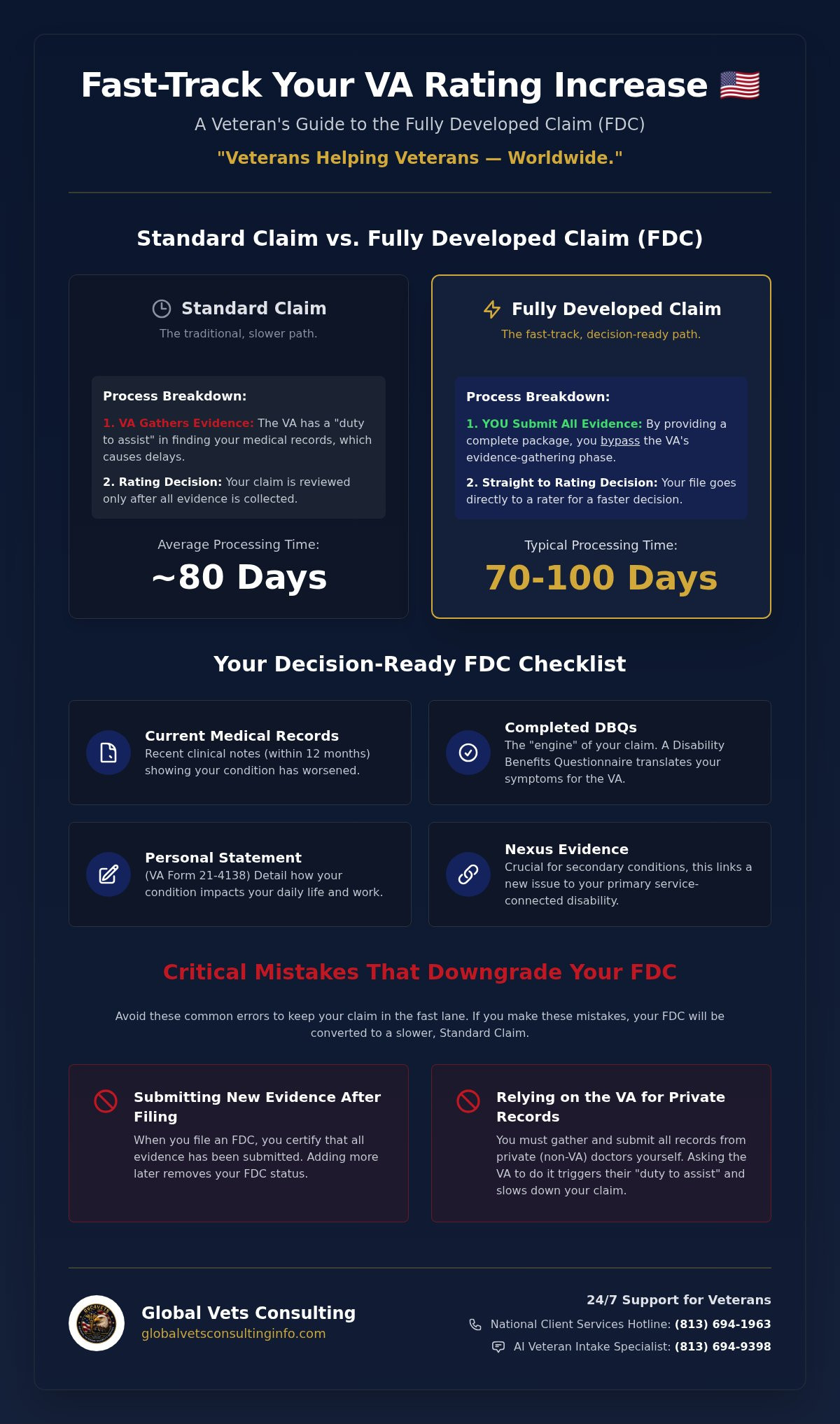
In 2026, the average wait for a standard claim is around 80.7 days. However, a properly filed FDC for an increase often moves through the system within a 70 to 100 day window. By bypassing the lengthy evidence-gathering phase, your file lands directly on a rater’s desk. This speed is critical. It gets you to your accurate rating faster and ensures your benefits reflect your current level of disability without unnecessary delays.
The FDC Certification Requirement
You must be 100% certain of your documentation before you hit submit. When you file an FDC, you essentially waive the VA’s duty to assist in gathering further records. If you submit additional evidence after your initial filing, the VA will move your claim into the standard processing lane. This doesn’t mean you’ll be denied, but it does mean you lose your spot in the fast lane. Accuracy in your initial submission is the only way to maintain your FDC status.
The Essential Evidence: What Makes an Increase Claim Fully Developed?
Submitting a decision-ready file requires more than just a stack of papers. When you ask what is a fully developed claim for an increase, you’re looking for the specific formula that proves your condition meets a higher rating tier. The evidence you provide must be current, typically from within the last 12 months, and it must demonstrate a clear decline in your health or functional capacity. The goal is to leave the VA rater with zero questions about the severity of your symptoms.
Your evidence package should be comprehensive and include the following components:
- Current Medical Records: Recent clinical notes that highlight the increased frequency, duration, or severity of your symptoms.
- Completed DBQs: Standardized forms that capture the exact data points required for a rating decision.
- VA Form 21-4138: A personal statement detailing how the condition impacts your daily life and ability to work.
- Nexus Evidence: If you’re seeking an increase for a secondary condition, you’ll need evidence linking it to your primary service-connected disability.
The Role of DBQs in an Increase Claim
Disability Benefits Questionnaires are the engine of a successful FDC. A professional DBQ for VA disability rating increase translates your daily struggles into the specific medical codes and legal criteria the VA uses. This documentation ensures the rater doesn’t have to hunt for information; it presents your case in a format they already understand and trust. If you need help understanding these requirements, our team at Global Vets Consulting provides the education necessary to substantiate your claim effectively.
Private vs. VA Medical Records
If you’ve received treatment outside the VA system, you must upload those records yourself. Relying on the VA to track down private records triggers their “duty to assist,” which automatically moves your claim into the standard lane. This adds significant time to your wait. By providing high-quality medical evidence upfront, you keep your claim on the fast track and maintain your FDC status. Don’t let a missing record from a private specialist be the reason your increase is delayed by months.
Standard vs. Fully Developed: Which Path Should You Take?
Choosing the right filing path for your increase depends on your current level of documentation. In a standard claim, the VA utilizes its “duty to assist” to gather records on your behalf. While this sounds helpful, it often adds significant delays to your timeline. The VA must wait for responses from various medical providers, which can take months. When you understand what is a fully developed claim for an increase, you realize it is a strategic trade-off. You do the upfront work of gathering evidence to ensure a faster result.
Risk management is a critical part of this decision. If the VA determines that medical records are missing or if you submit additional evidence after your initial filing, your FDC will automatically be downgraded to a standard claim. This transition does not harm your chances of receiving an increase, but it does remove you from the expedited processing lane. You can view the VA disability claims process step by step to see how these timelines diverge in practice.
When to Choose a Standard Claim
A standard claim is the appropriate choice if you cannot access old military treatment records or if your condition is complex and lacks a clear diagnosis. If you are still undergoing testing and expect your medical records to change significantly in the coming months, the VA’s assistance in gathering that evidence can be beneficial. It ensures your file is eventually complete, even if the process is slower.
When the FDC is the Clear Winner
The FDC is the superior option when you have a completed private DBQ in hand and your medical evidence is already organized. Your goal is to minimize the time your file spends in the “National Work Queue.” By providing a decision-ready package, you answer the question of what is a fully developed claim for an increase by proving your case meets the higher rating criteria on day one. If you are ready to take control of your claim, contact Global Vets Consulting to learn how our educational resources can help you prepare a winning FDC package. 🇺🇸
How to Secure Documentation for a Successful FDC Increase
Executing a successful increase claim requires a methodical approach to medical evidence. Understanding what is a fully developed claim for an increase requires a shift in perspective; you aren’t just filing a form, you’re building a clinical case for your health. To ensure your claim stays in the fast lane, follow these four steps to secure your documentation.
- Step 1: Schedule an evaluation with a medical provider who understands VA rating criteria. They must know how to translate your physical or mental limitations into the specific metrics the VA uses to determine disability percentages.
- Step 2: Ensure your DBQ accurately reflects the “worst days” of your condition. If you’re having a good day during your exam, you must still describe the frequency and severity of your symptoms when they are at their peak.
- Step 3: Review your Disability Benefits Questionnaire for completeness. A single missing signature or an unchecked box regarding range of motion can stall your claim for months.
- Step 4: Use the VA.gov portal to upload all evidence simultaneously with your VA Form 21-526EZ. Filing online is the fastest method in 2026 and provides an immediate digital trail of your submission.
Avoiding the ‘Lack of Evidence’ Trap
Many increase claims fail because the medical notes are too vague. Phrases like “patient is doing okay” can be misinterpreted by raters as a sign of improvement rather than a temporary baseline. If your VA claim was denied for lack of evidence, the best path forward is often a Supplemental Claim backed by a new, high-quality DBQ that addresses the rater’s specific concerns. Specificity is the only way to prove your condition has worsened.
Partnering with Global Vets Consulting
At Global Vets Consulting, we specialize in the education you need to make your file truly “decision-ready.” We help you understand what is a fully developed claim for an increase by focusing on the meticulous details that matter to the VBA. Our team provides the resources and support necessary to substantiate your claim with confidence. If you’re ready to take control of your rating increase, our 24/7 National Client Services Hotline is available to help you start your journey. 📞 🇺🇸
Worldwide
GlobalVetsConsultingInfo.com
Take Control of Your VA Rating Increase Journey
You now have a clear roadmap for navigating the VA’s expedited processing lane. By understanding what is a fully developed claim for an increase, you can bypass the standard delays that keep many veterans waiting for months. The key lies in your ability to present a decision-ready file that includes specialized medical evidence and completed Disability Benefits Questionnaires. This proactive approach ensures the VA has every document necessary to evaluate the worsening of your service-connected conditions from the moment you hit submit.
Don’t let missing paperwork or vague clinical notes result in a lower rating than you deserve. As a veteran-owned and operated consulting firm, we understand the importance of meticulous documentation. We provide the specialized DBQ medical documentation education you need to substantiate your claim with confidence and accuracy. Our 24/7 National Client Services Hotline is ready to assist you in taking the next step toward the benefits you’ve earned.
Secure your medical evidence today with Global Vets Consulting
You’ve served your country with honor; now it’s time to ensure your compensation reflects your current reality. 📞 🇺🇸
Frequently Asked Questions
How much faster is a fully developed claim for an increase?
An FDC is typically processed within 70 to 100 days, making it significantly faster than the standard claims process. While the average time for all disability claims in mid-2026 is approximately 80.7 days, standard claims often take much longer due to the lengthy evidence-gathering phase. By submitting a decision-ready package, you bypass these administrative delays and move your file directly to a rater’s desk for evaluation.
Can I submit new evidence after I file an FDC?
You shouldn’t submit new evidence after your initial filing if you want to maintain your FDC status. If you upload additional medical records after your claim is submitted, the VA will automatically transition your file to the standard processing lane. This won’t lead to a denial, but it does mean you’ll lose your spot in the expedited timeline. It’s vital to ensure your documentation is 100% complete before hitting submit.
What happens if the VA decides my FDC isn’t actually fully developed?
If the VA determines that your claim requires more evidence to reach a decision, they’ll move it into the standard claims process. This usually happens if the rater identifies missing private treatment records or determines they must fulfill their “duty to assist” to clarify a medical point. Your claim will continue to move forward without penalty, but the processing time will increase as the VA gathers the necessary documentation themselves.
Do I still need to attend a C&P exam if I file an FDC with a private DBQ?
You’ll likely still be required to attend a Compensation and Pension (C&P) examination even if you submit a private Disability Benefits Questionnaire. The VA uses these exams to verify your current symptoms and their severity through their own contracted providers. However, providing a high-quality private DBQ ensures the examiner has a clear, documented baseline. This helps substantiate what is a fully developed claim for an increase and reduces the risk of an inaccurate evaluation.
Is there a specific form for a fully developed claim for increase?
The primary form for filing what is a fully developed claim for an increase is the VA Form 21-526EZ. As of 2026, you must use the version dated January 2026 to ensure compliance with current VBA regulations. This form contains a specific certification section where you formally state that you have no further evidence to submit. Checking this box is what officially enters your increase claim into the FDC program for faster processing.
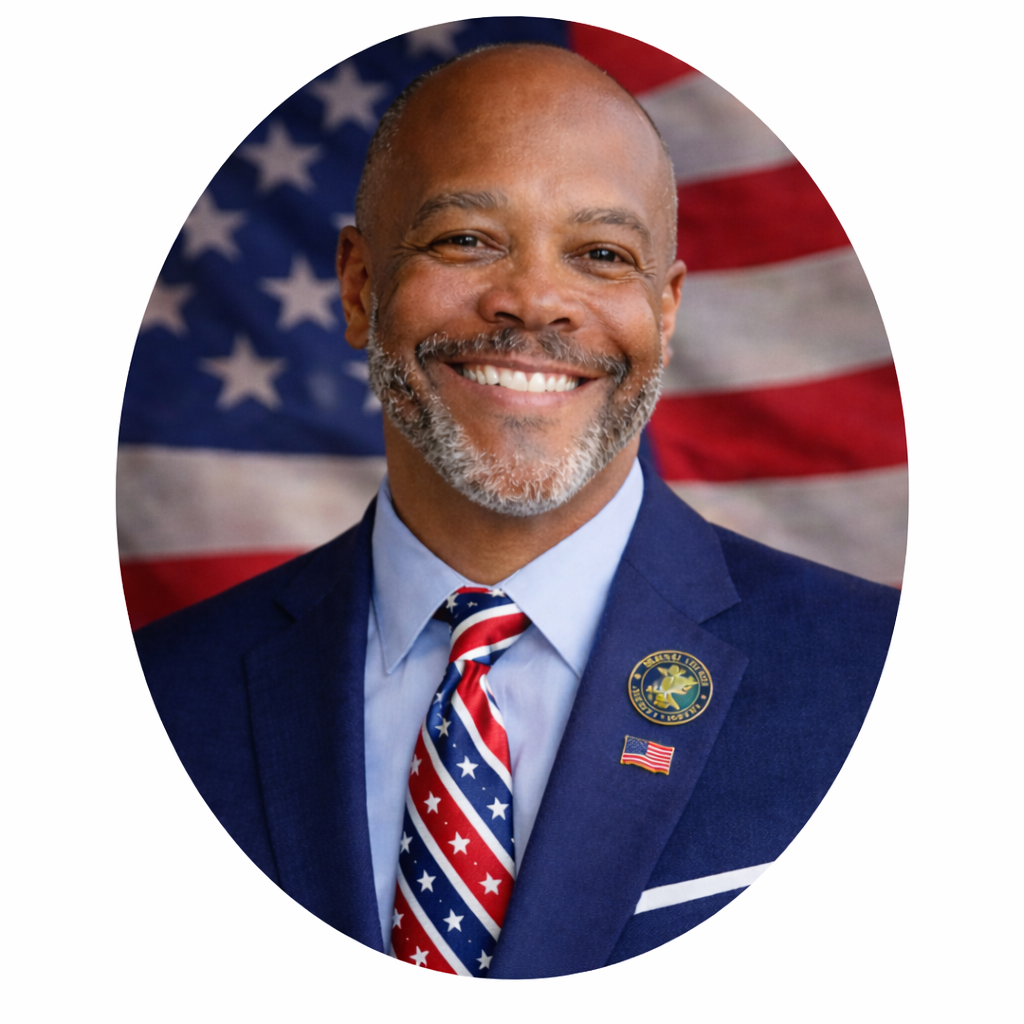
Article by
Willie Daniel
Willie Daniel is the Founder and Chief Executive Officer (CEO) of Global Vets Consulting (GVC4Vets) – National Veterans Disability Services, a veteran-led educational and medical evidence support organization dedicated to helping veterans better understand VA disability rating increases, DBQ medical evidence, secondary claims education, and C&P examination preparation.
He is a retired U.S. Army Medical Service Corps Officer with more than 27 years of honorable military service, a decorated Iraq combat veteran, and a retired federal official with the U.S. Department of Veterans Affairs. Throughout his military and federal career, Willie Daniel served in leadership, healthcare administration, operational, and veteran-support roles focused on improving services and support systems for servicemembers, veterans, and their families.
Drawing from decades of military leadership, healthcare administration, veteran advocacy, and federal government experience, Willie Daniel brings a practical, veteran-centered perspective to Global Vets Consulting’s educational articles, AI-powered veteran resources, video education initiatives, and outreach programs. His experience navigating military systems, medical documentation processes, and veteran-related administrative operations provides valuable insight into many of the challenges veterans face when seeking to better understand VA disability rating criteria, medical evidence, documentation strategies, and secondary condition education.
Through GVC’s “Veterans Helping Veterans” mission, his focus is on delivering clear, educational, and easy-to-understand information designed to empower veterans with knowledge, resources, and educational tools that may help them make more informed decisions regarding their individual VA disability journeys.
The information provided through GVC is intended for educational and informational purposes only and should not be considered legal or medical advice.
Disclaimer
Disclaimer: Global Vets Consulting, LLC (“GVC”) is a veteran-led educational and medical evidence support organization. GVC is not a law firm, is not a Veterans Service Organization (VSO), and is not affiliated with the U.S. Department of Veterans Affairs (VA) or any government agency.
Global Vets Consulting does not provide legal advice, medical advice, medical treatment, or healthcare services. GVC does not prepare, file, or submit VA disability claims on behalf of veterans. All information provided through this website, blog articles, videos, educational materials, AI tools, dashboards, templates, and communications is intended solely for general educational and informational purposes.
Veterans are encouraged to consult with accredited representatives, licensed attorneys, qualified medical providers, or Veterans Service Organizations regarding their specific legal, medical, or VA-related matters. VA disability decisions, ratings, and outcomes are determined solely by the U.S. Department of Veterans Affairs based on applicable laws, regulations, medical evidence, and individual circumstances. Past results do not guarantee future outcomes.