
If you think the VA’s “Duty to Assist” is a safety net for your disability claim, you might actually be handing over control of your medical evidence to a backlogged system. It’s exhausting to watch your status sit in “Evidence Gathering” for months while you worry about an unpredictable C&P exam. You deserve a process that values your time and recognizes the reality of your service-connected conditions. The primary benefits of a fully developed claim in 2026 aren’t just about the initial clock; they’re about moving the burden of proof into your hands to ensure a higher degree of accuracy from day one. 🇺🇸
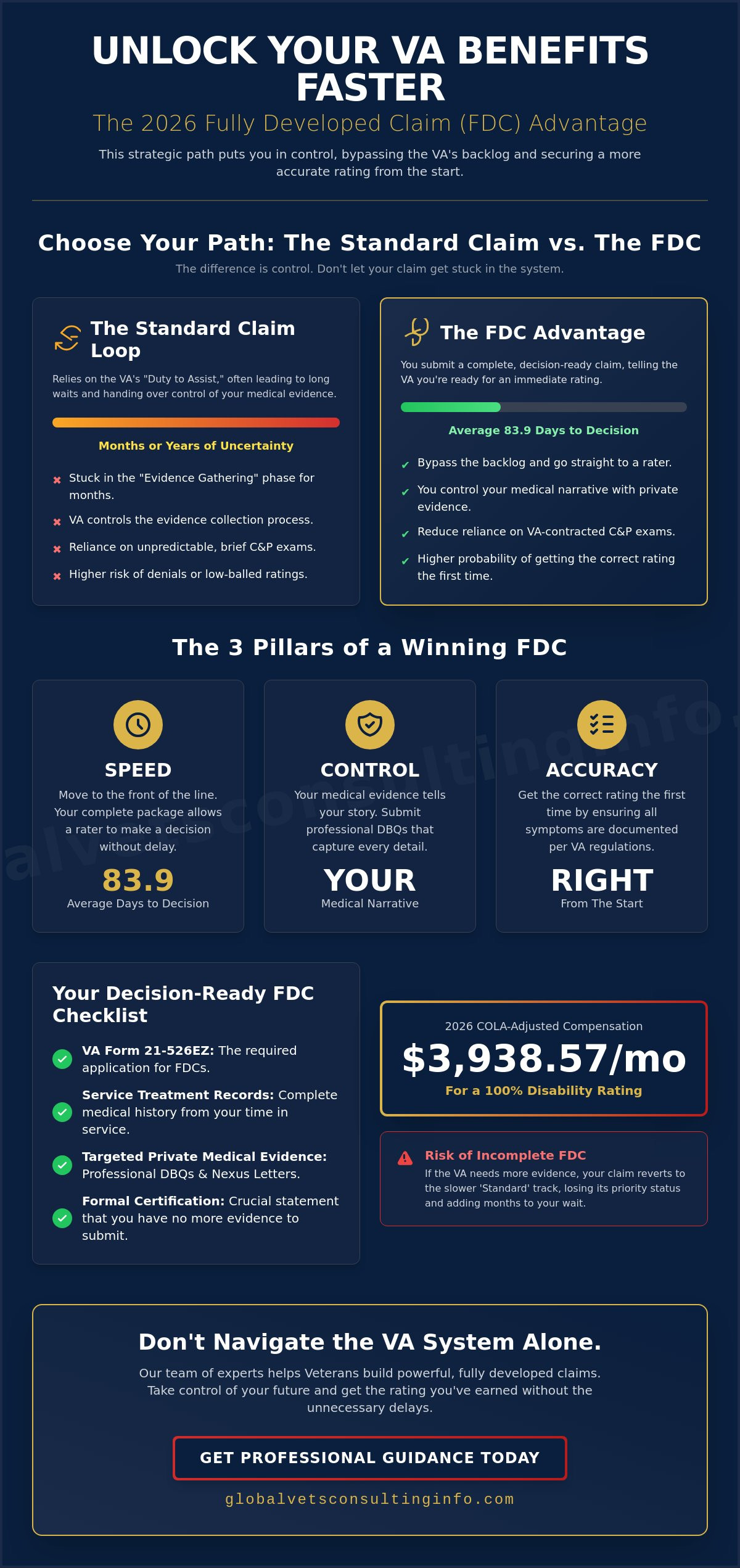
We understand the anxiety that comes with navigating these complex requirements. While May 2026 data shows average FDC processing times at 83.9 days, the true advantage is avoiding the “Evidence Gathering” loop that often leads to denials or lowballed ratings. By submitting a complete package, you’re positioning yourself for the 2026 COLA-adjusted rates, such as $3,938.57 for a 100% rating, without the need for unnecessary follow-up exams. This guide will walk you through the FDC program requirements and show you how to leverage private medical evidence to secure the benefits you’ve earned.
Key Takeaways
- Learn how to bypass the standard VA “Evidence Gathering” loop by certifying that your claim is complete and ready for an immediate decision.
- Discover the strategic benefits of a fully developed claim, specifically how it shifts control of the medical narrative from the VA back to the veteran.
- Understand why generic medical records often fail and how targeted medical evidence ensures every symptom is documented according to the 38 CFR Part 4 schedule.
- Explore how professional DBQ support helps you meet strict Nexus requirements and reduces your reliance on unpredictable C&P examinations.
- Identify the “Certification” factor and why explicitly stating no further evidence is required is the engine that drives a faster VA rating.
What is a Fully Developed Claim (FDC) in 2026?
A Fully Developed Claim (FDC) is a strategic filing method where you submit all supporting medical and service evidence at the same time you submit your application. Unlike a standard claim, where the VA spends months gathering records on your behalf, an FDC requires you to take the lead. You must include a formal certification stating that you have no additional evidence to provide. This tells the Veterans Benefits Administration (VBA) that your file is ready for an immediate decision. The FDC program is the most efficient path to a VA rating in 2026.
The primary difference between a standard claim and an FDC lies in the VA’s “Duty to Assist.” In a standard claim, the VA is legally required to help you gather evidence. While this sounds like a benefit, it often leads to significant delays as the agency waits for responses from private doctors or other government offices. One of the main benefits of a fully developed claim is that it eliminates this “Evidence Gathering” loop. By providing everything upfront, you remove the administrative hurdles that keep most claims stuck for months.
The Core Components of an FDC Application
The foundation of your submission is the VA Form 21-526EZ. This specific form includes the required certification that makes your claim “fully developed.” In the 2026 landscape, simply submitting your service treatment records isn’t always enough. High quality private medical documentation and clear evidence of a service connection are essential to prevent the VA from needing to order additional records. This proactive approach ensures the rater has everything they need to evaluate your condition accurately.
The Risks of an Incomplete FDC
Precision is vital because the VA maintains strict standards for what qualifies as “fully developed.” If the VA determines that your evidence is insufficient or that more records are needed from a federal source, they will revert your claim to the “Standard” track. Missing a single Disability Benefits Questionnaire (DBQ) or a required signature can cause this shift. Once your claim moves to the standard track, it loses its priority status, which can add months of waiting to your decision window.
The 3 Primary Benefits of a Fully Developed Claim
Choosing the right filing strategy is just as important as the medical evidence you provide. While many veterans believe the VA’s internal process is sufficient, the primary benefits of a fully developed claim center on speed, control, and accuracy. By front-loading your file, you move your application to the front of the line for a rater’s review. This proactive approach minimizes the time your claim spends sitting in administrative limbo while the VA waits for third-party medical records.
Speed: Bypassing the VA Backlog
Current 2026 data shows the VA Fully Developed Claims program yields a decision in approximately 83.9 days. While standard claims might appear to move at a similar pace on paper, they often lack the depth required for a high-value rating on the first try. An FDC allows the rater to move straight to the decision phase because you’ve already provided the necessary service treatment records and nexus letters. This efficiency often leads to faster access to retroactive pay and your updated monthly compensation, which is vital given the 2.8% COLA increase for 2026.
Integrity: Ensuring Your Symptoms are Accurately Documented
One of the most overlooked benefits of a fully developed claim is the control it gives you over your medical narrative. Instead of relying on a fifteen-minute C&P exam where a doctor might miss critical details, you can submit professional DBQs that capture every symptom according to the 38 CFR Part 4 schedule. This level of detail ensures a higher degree of accuracy in your initial rating. It also significantly reduces the need for a higher-level review, which can add months or even years to your wait time. If you want to ensure your evidence is captured correctly before you hit submit, you can explore our resources at Global Vets Consulting for professional guidance.
- Reduced Wait Times: Eliminates the back-and-forth of evidence requests from the VA.
- Narrative Control: Your private medical evidence speaks for you rather than a contracted examiner.
- First-Time Accuracy: Higher probability of getting the correct rating without long-term appeals.
Strategic Evidence: How to Build a Winning FDC
Building a winning claim requires more than just filling out a form. You must establish a “Nexus,” which is the medical link between your current condition and your time in uniform. While the VA has a duty to assist, one of the main benefits of a fully developed claim is that you provide this professional medical opinion yourself. Instead of sending hundreds of pages of generic records that might confuse a rater, you should focus on medical evidence for VA disability claims that specifically addresses the VA’s rating criteria. The quality of your evidence determines the speed of the FDC, not just the quantity of paperwork you submit. Before you file, reviewing the complete VA claim evidence requirements checklist for 2026 ensures you understand exactly which documents the rater needs to see in your file.
Lay evidence also plays a vital role in a successful submission. Buddy letters from those you served with can fill critical gaps in service treatment records, especially for events that were not documented at the time of injury. This creates a more complete picture for the rater and strengthens your narrative. If the VA still issues a denial despite your best efforts, understanding the VA decision review process is your next logical step to protect your effective date and continue your pursuit of benefits.
The Power of the Private DBQ
A Disability Benefits Questionnaire (DBQ) is a powerful tool because it uses the exact language VA raters are trained to look for. By using a private DBQ, you ensure that every symptom is captured clearly and comprehensively. This is a proactive way of avoiding common VA claim mistakes that often lead to low ratings or deferred decisions. A well-prepared DBQ can often serve as the primary evidence, potentially making a C&P exam a mere formality or even unnecessary.
Organizing Your Submission for the Rater
VA raters are often overworked and manage high caseloads. You can make it easy for them to say “Yes” by organizing your evidence chronologically. Start with a “Statement in Support of Claim” that acts as a roadmap for your file. Summarize your evidence and point the rater directly to the specific pages that prove your service connection and current symptom severity. For personalized education on gathering the right documentation for your case, visit Global Vets Consulting today.
Why Professional DBQ Support is the Engine of the FDC
The engine that drives the success of your submission is the Disability Benefits Questionnaire (DBQ). While the VA provides its own examiners, many veterans find themselves stuck in the “C&P Lottery,” where a rushed examiner might overlook the severity of their symptoms. One of the greatest benefits of a fully developed claim is the ability to submit a private DBQ that captures every symptom according to the 38 CFR Part 4 schedule for ratings. This ensures that the rater has a clear, medically accurate picture of your condition before they even open your file. 🇺🇸
At Global Vets Consulting, our “Veterans Helping Veterans” mission means we approach your documentation with the duty and respect you earned. We focus on meticulousness because we know that a single missing detail can be the difference between a 10% and a 70% rating. You can engage with our 24/7 AI Veteran Intake Specialist right now to identify which of your conditions are ready for an FDC. This technology allows you to begin the process immediately, providing a clear path forward without unnecessary delays.
Streamlining the Intake Process
We utilize standardized forms to reduce the administrative burden on you. This structured approach helps transition your file from “Evidence Gathering” to a potential rating increase through targeted documentation. By providing the rater with everything they need in a format they understand, you significantly increase the likelihood of a favorable decision. Meticulous preparation is the only way to bypass the unpredictable nature of contracted C&P examinations.
Take the Next Step Toward Your Earned Benefits
There is a profound peace of mind that comes from knowing your claim is truly “fully developed.” You no longer have to wait for the VA to find records that may or may not exist. You’ve taken control of your narrative and your financial future. Start your FDC journey with Global Vets Consulting today and ensure your service is honored with the benefits you deserve. 🌎
- 24/7 National Client Services Hotline: Access support whenever you need it.
- Expert Resource Awareness: Stay informed on the latest 2026 VA rating changes.
- Mission-Driven Focus: Work with a team that understands the veteran experience.
Take Control of Your 2026 VA Rating Today
You now have the roadmap to move your claim out of the standard backlog and into the fast lane. By front-loading your submission with high-quality medical evidence, you eliminate the need for the VA to search for missing records. One of the most significant benefits of a fully developed claim is the level of control it provides over your own medical narrative. This strategy ensures your rating is based on thorough documentation rather than an unpredictable C&P examination.
Global Vets Consulting has been veteran-owned and operated since 2021. We specialize in DBQ preparation to ensure your symptoms are captured with the accuracy you deserve. Our team understands the weight of this process because we’ve been in your boots. You can reach our 24/7 National Client Services Hotline at any time to discuss your educational needs. 🇺🇸
Secure the medical evidence you need for a winning FDC at GlobalVetsConsultingInfo.com
Your service is a matter of record; your benefits should be too. Take the next step with confidence and secure the future you’ve earned.
Frequently Asked Questions
Is a fully developed claim really faster than a standard claim in 2026?
As of May 2026, VA data shows FDC decisions averaging 83.9 days while standard claims average 77.1 days. While the raw numbers are close, the FDC program remains the superior choice for veterans with complex medical histories. It prevents your file from getting stuck in the “Evidence Gathering” stage for months. By submitting all records upfront, you eliminate the administrative back-and-forth that often leads to unpredictable delays and multiple requests for information.
Can I submit more evidence after I have filed a fully developed claim?
Yes, you can submit more evidence, but doing so will likely move your claim to the standard processing track. The FDC program requires you to certify that you have no further evidence to provide at the time of filing. If you discover new medical records later, the VA will simply process your claim as a standard application. You won’t lose your effective date, but you will lose the priority status of the FDC program.
Do I still have to go to a C&P exam if I file an FDC with a private DBQ?
You might still be required to attend a C&P exam, though a high-quality private DBQ can sometimes make it unnecessary. One of the primary benefits of a fully developed claim is that it provides the rater with sufficient evidence to make a decision immediately. If your private medical documentation is comprehensive and follows the 38 CFR Part 4 schedule, the VA rater may determine that an additional exam isn’t needed to confirm your rating.
What happens if the VA decides my FDC is not actually fully developed?
If the VA determines your claim is incomplete, they will transition it to the standard claim track. This typically happens if they identify missing federal records or if you submit additional evidence after the initial filing. Your claim doesn’t get denied for this reason; it just means the VA will now use their “Duty to Assist” to gather the necessary information. This transition ensures your case continues to move forward without requiring a new application.
Can I use the FDC process for a VA rating increase?
Yes, the FDC program is an excellent choice for a VA rating increase. Since your condition is already service-connected, you only need to provide medical evidence showing that your symptoms have worsened. By submitting a private DBQ that captures your current level of disability, you provide a clear path for the rater to adjust your compensation without waiting for the VA to request updated medical records from your doctors.
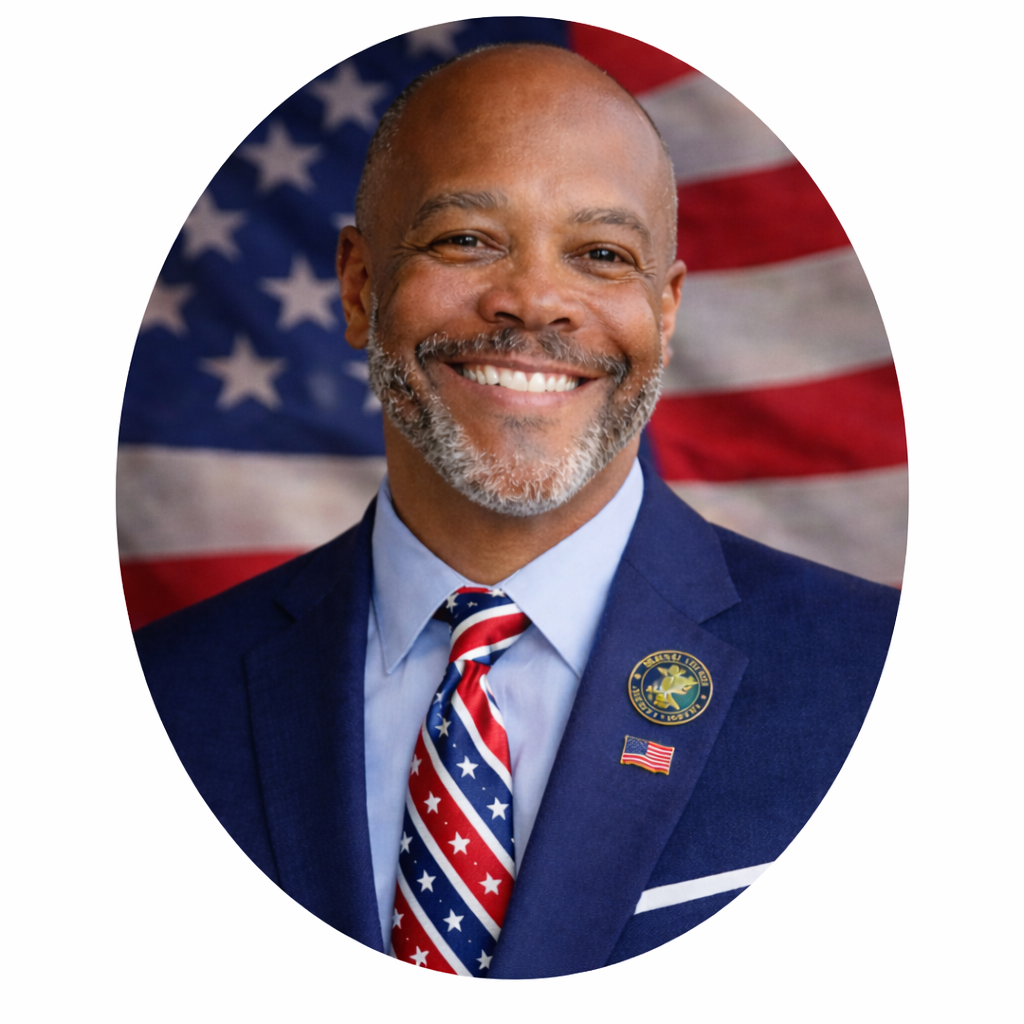
Article by
Willie Daniel
Willie Daniel is the Founder and Chief Executive Officer (CEO) of Global Vets Consulting (GVC) – National Veterans Disability Services, a veteran-led educational and medical evidence support organization dedicated to helping veterans better understand VA disability rating increases, DBQ medical evidence, secondary claims education, and C&P examination preparation.
He is a retired U.S. Army Medical Service Corps Officer with more than 27 years of honorable military service, a decorated Iraq combat veteran, and a retired federal official with the U.S. Department of Veterans Affairs. Throughout his military and federal career, Willie Daniel served in leadership, healthcare administration, operational, and veteran-support roles focused on improving services and support systems for servicemembers, veterans, and their families.
Drawing from decades of military leadership, healthcare administration, veteran advocacy, and federal government experience, Willie Daniel brings a practical, veteran-centered perspective to Global Vets Consulting’s educational articles, AI-powered veteran resources, video education initiatives, and outreach programs. His experience navigating military systems, medical documentation processes, and veteran-related administrative operations provides valuable insight into many of the challenges veterans face when seeking to better understand VA disability rating criteria, medical evidence, documentation strategies, and secondary condition education.
Through GVC’s “Veterans Helping Veterans” mission, his focus is on delivering clear, educational, and easy-to-understand information designed to empower veterans with knowledge, resources, and educational tools that may help them make more informed decisions regarding their individual VA disability journeys.
The information provided through GVC is intended for educational and informational purposes only and should not be considered legal or medical advice.
Disclaimer
Disclaimer: Global Vets Consulting, LLC (“GVC”) is a veteran-led educational and medical evidence support organization. GVC is not a law firm, is not a Veterans Service Organization (VSO), and is not affiliated with the U.S. Department of Veterans Affairs (VA) or any government agency.
Global Vets Consulting does not provide legal advice, medical advice, medical treatment, or healthcare services. GVC does not prepare, file, or submit VA disability claims on behalf of veterans. All information provided through this website, blog articles, videos, educational materials, AI tools, dashboards, templates, and communications is intended solely for general educational and informational purposes.
Veterans are encouraged to consult with accredited representatives, licensed attorneys, qualified medical providers, or Veterans Service Organizations regarding their specific legal, medical, or VA-related matters. VA disability decisions, ratings, and outcomes are determined solely by the U.S. Department of Veterans Affairs based on applicable laws, regulations, medical evidence, and individual circumstances. Past results do not guarantee future outcomes.