

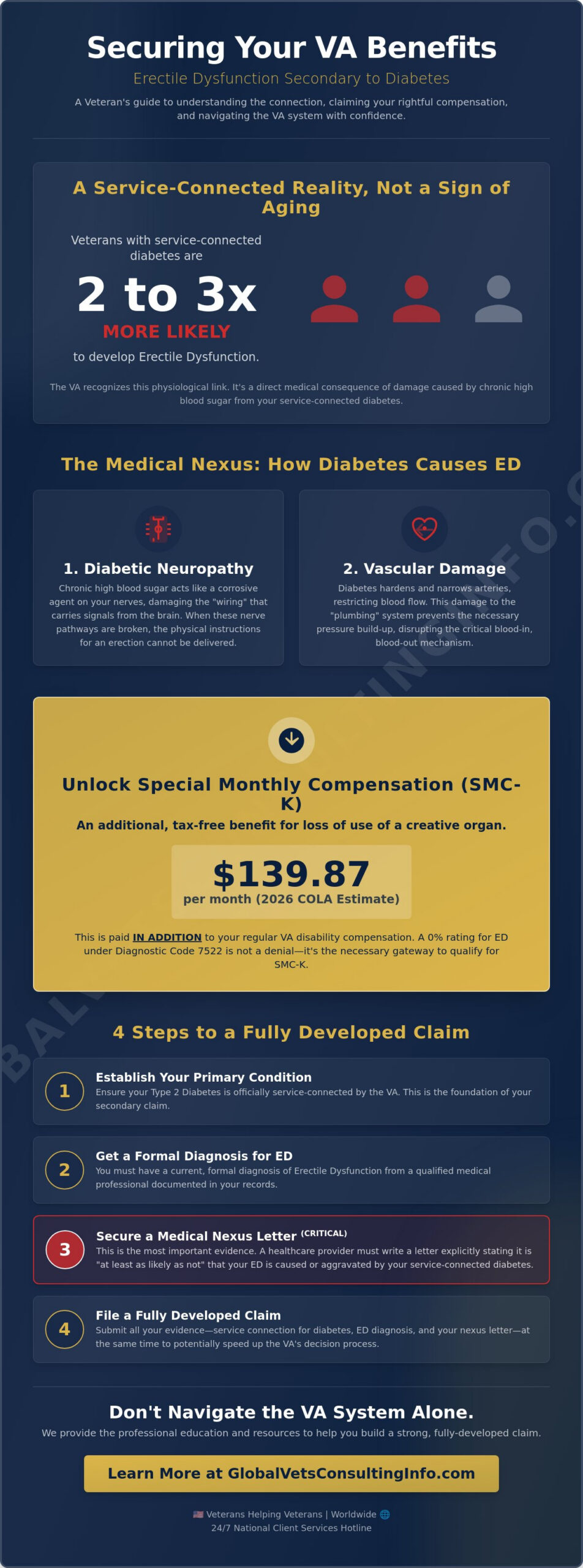
Did you know that men with diabetes are two to three times more likely to experience erectile dysfunction than those without the condition? For many veterans, this isn’t just a frustrating symptom of getting older; it’s a direct physiological result of your service-connected diabetes. If you’ve felt embarrassed to speak up or worried that your claim would be denied based on your age alone, you aren’t alone. It’s understandable to feel overwhelmed by the complexities of proving erectile dysfunction secondary to diabetes, especially when the VA’s requirements for a medical nexus feel like a moving target.
We’re here to help you cut through the confusion and take control of your claim. You’ll learn exactly how to establish the medical link necessary to secure your benefits, including the Special Monthly Compensation (SMC-K) rate of $139.87 for 2026. This article provides a step-by-step look at the medical evidence you need and how the 2.8 percent COLA increase affects your potential compensation. By understanding the specific criteria for Diagnostic Code 7522, you can move forward with the steady confidence that your service and your health are being properly recognized.
Key Takeaways
- Learn why erectile dysfunction secondary to diabetes is recognized by the VA as a compensable condition and how it qualifies you for Special Monthly Compensation (SMC-K).
- Understand the physiological link between diabetic neuropathy and vascular damage to effectively explain how your primary condition causes or aggravates ED.
- Discover the specific requirements for your claim, including the necessity of a formal diagnosis and an established service connection for Type 2 Diabetes.
- Identify the critical components of a “Fully Developed Claim” to avoid common documentation errors and ensure your medical evidence meets VA standards.
Understanding Erectile Dysfunction Secondary to Diabetes for Veterans
A secondary condition is a disability that is caused or aggravated by an existing service-connected illness. When you file a claim for erectile dysfunction secondary to diabetes, you’re telling the VA that your primary endocrine condition has led to new physical limitations. This distinction is critical because it opens the door for additional monthly compensation and medical recognition of the full scope of your health challenges.
It’s vital to normalize this conversation for our community. Erectile dysfunction is a physiological health issue, not a personal failing or a simple sign of aging. Verified medical data shows that men with diabetes are 2 to 3 times more likely to experience these symptoms. High blood sugar levels over time damage the intricate systems required for normal function, making this a direct medical consequence of your service-connected diabetes.
What is SMC-K and How Does it Apply to ED?
The VA generally evaluates ED under Diagnostic Code 7522, which typically results in a 0% disability rating. While a 0% rating might seem like a denial, it actually serves as the gateway to Special Monthly Compensation (SMC) under Category K. This category is reserved for the loss of use of a creative organ. SMC-K is a flat-rate monthly benefit paid in addition to your regular disability percentage. For 2026, this benefit provides an extra $139.87 per month to veterans who establish a service connection.
The Legal Basis for Secondary Service Connection
Your claim is grounded in 38 CFR § 3.310, the regulation governing secondary service connections. This rule states that if a service-connected disability causes or worsens another condition, the new condition must also be compensated. Diabetes is one of the most common parent conditions for these claims because it frequently leads to complications in the vascular and neurological systems. Establishing erectile dysfunction secondary to diabetes as a service-connected condition is a matter of proving that your diabetes proximately caused the secondary issue.
🌐 GlobalVetsConsultingInfo.com
📞 24/7 National Client Services Hotline
The Medical Link: How Diabetes Causes Erectile Dysfunction
Understanding how high blood sugar impacts your body is the first step in building a strong claim. The Medical Link Between Diabetes and ED is well-documented in clinical research, proving that erectile dysfunction secondary to diabetes is a physiological reality rather than just a consequence of aging. When blood glucose levels remain high for extended periods, they systematically damage the neurological and vascular systems your body relies on for normal function.
Diabetic Neuropathy and Nerve Signaling
Think of your nerves as the intricate wiring in a house. Chronic high blood sugar acts like a corrosive agent, fraying these wires over time. This is known as autonomic neuropathy. When your brain sends a signal for an erection, the message can’t get through because the physical cables are damaged. This breakdown in communication is a primary driver of erectile dysfunction secondary to diabetes, as the physical target never receives the necessary instructions from the brain.
Vascular Health and Blood Flow
If the nerves are the wiring, your blood vessels are the plumbing. Diabetes often causes the arteries to narrow and harden, which restricts the necessary “blood-in” flow. When the blood-in, blood-out mechanism is disrupted, the body can’t maintain the pressure required for performance. This vascular damage is often an early warning sign of broader cardiovascular issues, making it a critical medical marker that the VA needs to understand through your evidence.
It’s also important to look at your prescriptions. Some medications for blood pressure or diabetes management can unintentionally exacerbate these symptoms. When you combine these side effects with the psychological stress of managing a chronic illness, it creates a complex medical picture that requires clear documentation. If you’re looking for more details on how to present this evidence to the VA, our resources on secondary VA claims education can provide the clarity you need to move forward.
How to File a VA Claim for ED Secondary to Diabetes
Securing your earned benefits requires a methodical approach to documentation. You must first verify that your Type 2 Diabetes is already service-connected. Without this foundation, a claim for erectile dysfunction secondary to diabetes can’t be established. Once that is confirmed, your next step is obtaining a formal diagnosis from a medical professional to prove the condition exists.
The Importance of the Medical Nexus
The “nexus” is the essential bridge between your primary and secondary conditions. It is a formal medical opinion stating it’s “at least as likely as not” that your diabetes caused the ED. A lack of specific medical evidence is the most common reason the VA denies secondary claims. For a detailed look at the overall timeline and requirements, read our VA Disability Claims Process Step by Step: A 2026 Veteran’s Guide.
Using a DBQ to Strengthen Your Claim
A standardized Disability Benefits Questionnaire (DBQ) ensures the VA rater has all the necessary clinical data in a format they recognize. This documentation confirms the severity of your erectile dysfunction secondary to diabetes and provides the technical details needed for a successful rating. Using a private DBQ often provides more thorough evidence than relying solely on a C&P exam. You can learn more about how these forms work in our guide, What is a DBQ? A Veteran’s Guide to Disability Benefits Questionnaires in 2026.
Access our Secondary VA Claims Education to ensure your documentation is fully developed and accurate.
Professional Documentation: Ensuring Your Claim is Fully Developed
Submitting a claim for erectile dysfunction secondary to diabetes requires more than just a statement of your symptoms. Many veterans face denials because they file without a formal medical diagnosis or fail to provide a clear nexus to their service-connected diabetes. To avoid these common mistakes, you should aim for a Fully Developed Claim (FDC). By providing all necessary medical evidence at the time of submission, you help the VA process your decision more efficiently, reducing the time spent waiting for additional records.
Why ‘VA Math’ and Ratings Matter
While the VA typically assigns a 0% rating for ED, this designation is a vital component of your overall disability picture. It serves as a gateway to other secondary ratings. For example, the stress and physical limitations of ED often lead to secondary conditions like depression or anxiety. Documenting every symptom ensures that your total disability picture reflects the true impact on your life. This comprehensive approach prevents the VA from overlooking the compounding effects of your chronic illness, which is essential for any future VA rating increase.
The Global Vets Consulting Advantage
We operate with a “Veterans Helping Veterans” mission, providing a steady guide through the complexities of the VA system. Our focus is on simplifying the administrative burden so you can prioritize your health. We offer specialized education on how to gather the right medical evidence and prepare for your C&P examination. You don’t have to navigate this bureaucratic path alone; we’re here to ensure your documentation is meticulous and accurate.
Take control of your health and your benefits today. You’ve earned these outcomes through your service, and proper documentation is the key to securing them. Get the professional DBQ documentation you need for your secondary claim to move forward with confidence.
🌎 Worldwide Support
📞 24/7 National Client Services Hotline
🌐 GlobalVetsConsultingInfo.com
Secure the Compensation and Recognition You Deserve
You now have the roadmap to establish erectile dysfunction secondary to diabetes as a service-connected condition. By understanding the vascular and neurological links discussed earlier, you can present a clear case to the VA. Focus on securing a formal diagnosis and a strong medical nexus to bridge the gap between your primary diabetes and your secondary symptoms.
We’ve been veteran-owned and operated since 2021. Our team focuses on simplifying the administrative burden so you can focus on your health. We provide the expertise needed to navigate the nuances of secondary service connection evidence. You don’t have to navigate these complex systems alone; we’re here to help you move forward with steady confidence.
Secure your secondary claim documentation with Global Vets Consulting. Our 24/7 National Client Services Hotline 🇺🇸 is standing by to assist you. You served with honor, and we’re proud to stand as your partner in this process. Take the next step toward the benefits you’ve earned today.
Frequently Asked Questions
Is erectile dysfunction automatically service-connected if I have diabetes?
No, service connection for erectile dysfunction is not automatic just because you have a diagnosis of diabetes. You must establish a medical link between the two conditions through a nexus letter. This document should provide a clinical explanation of how your service-connected diabetes caused or aggravated the ED. Without this specific evidence, the VA will likely deny the secondary connection even if both diagnoses are present in your medical records.
How much does the VA pay for erectile dysfunction secondary to diabetes?
The VA pays a flat monthly rate for this condition through Special Monthly Compensation (SMC) Category K. For 2026, the SMC-K rate is $139.87 per month. This benefit is paid on top of your existing disability compensation. Since the VA typically assigns a 0% rating for ED, the primary financial impact comes from this specific SMC-K payment rather than an increase in your overall disability percentage.
Can I claim ED as secondary to diabetes even if I am over 60 years old?
You can absolutely claim ED as secondary to diabetes if you are over 60. The VA cannot legally deny a claim based solely on your age if there is medical evidence linking the condition to your service-connected diabetes. Providing documentation of diabetic neuropathy or vascular damage helps prove the physiological cause. This evidence shifts the focus from natural aging to the actual damage caused by your service-connected illness.
What evidence do I need to win an ED secondary claim?
You need three primary pieces of evidence: a current diagnosis, a service-connected primary condition, and a medical nexus letter. The nexus letter must state that your erectile dysfunction secondary to diabetes is “at least as likely as not” caused by your diabetes. Using a Disability Benefits Questionnaire (DBQ) also helps ensure the VA has all the necessary clinical details to evaluate the severity and cause of your condition accurately.
What is the VA rating for erectile dysfunction in 2026?
The standard VA rating for erectile dysfunction in 2026 remains 0% under Diagnostic Code 7522. This 0% rating is not a denial of your claim; it is a formal acknowledgment of service connection. Once this rating is established, it triggers the eligibility for Special Monthly Compensation (SMC-K). This ensures you receive the additional $139.87 monthly benefit for the loss of use of a creative organ despite the 0% rating.

Article by
Willie Daniel
Willie Daniel is the Founder and Chief Executive Officer (CEO) of Global Vets Consulting (GVC) – National Veterans Disability Services, a veteran-led educational and medical evidence support organization dedicated to helping veterans better understand VA disability rating increases, DBQ medical evidence, secondary claims education, and C&P examination preparation.
He is a retired U.S. Army Medical Service Corps Officer with more than 27 years of honorable military service, a decorated Iraq combat veteran, and a retired federal official with the U.S. Department of Veterans Affairs. Throughout his military and federal career, Willie Daniel served in leadership, healthcare administration, operational, and veteran-support roles focused on improving services and support systems for servicemembers, veterans, and their families.
Drawing from decades of military leadership, healthcare administration, veteran advocacy, and federal government experience, Willie Daniel brings a practical, veteran-centered perspective to Global Vets Consulting’s educational articles, AI-powered veteran resources, video education initiatives, and outreach programs. His experience navigating military systems, medical documentation processes, and veteran-related administrative operations provides valuable insight into many of the challenges veterans face when seeking to better understand VA disability rating criteria, medical evidence, documentation strategies, and secondary condition education.
Through GVC’s “Veterans Helping Veterans” mission, his focus is on delivering clear, educational, and easy-to-understand information designed to empower veterans with knowledge, resources, and educational tools that may help them make more informed decisions regarding their individual VA disability journeys.
The information provided through GVC is intended for educational and informational purposes only and should not be considered legal or medical advice.
Disclaimer
Disclaimer: Global Vets Consulting, LLC (“GVC”) is a veteran-led educational and medical evidence support organization. GVC is not a law firm, is not a Veterans Service Organization (VSO), and is not affiliated with the U.S. Department of Veterans Affairs (VA) or any government agency.
Global Vets Consulting does not provide legal advice, medical advice, medical treatment, or healthcare services. GVC does not prepare, file, or submit VA disability claims on behalf of veterans. All information provided through this website, blog articles, videos, educational materials, AI tools, dashboards, templates, and communications is intended solely for general educational and informational purposes.
Veterans are encouraged to consult with accredited representatives, licensed attorneys, qualified medical providers, or Veterans Service Organizations regarding their specific legal, medical, or VA-related matters. VA disability decisions, ratings, and outcomes are determined solely by the U.S. Department of Veterans Affairs based on applicable laws, regulations, medical evidence, and individual circumstances. Past results do not guarantee future outcomes.