
Why does the VA often ignore a stack of private medical records from your personal doctor while giving full weight to a 15-minute C&P exam? It’s incredibly frustrating to feel like the system is rigged against the experts who actually know your medical history. You’ve spent years documenting your symptoms, yet the VA often treats that evidence as secondary or irrelevant. This disconnect is usually the main reason claims are denied or underrated, leaving you to wonder how to get va to acknowledge private medical evidence effectively.
You deserve a rating that reflects your true physical or mental health status. We understand the confusion over technical jargon and the stress of feeling like an examiner missed key details. This guide provides the strategic steps to ensure the VA gives your private medical records the weight they deserve to win your disability claim. We’ll explore the importance of standardized DBQs, the impact of the 2025 Elizabeth Dole Act on 2026 claims, and how to present your evidence so it meets the VA’s strict probative standards.
Key Takeaways
- Understand why “probative value” is the essential legal standard the VA uses to weigh private treatment records under 38 CFR.
- Learn how a standardized Disability Benefits Questionnaire (DBQ) translates your private medical history into the specific language of the VA Schedule for Rating Disabilities.
- Identify the requirements for the Fully Developed Claim (FDC) lane to ensure your evidence is reviewed efficiently without unnecessary administrative delays.
- Discover strategic documentation methods for how to get va to acknowledge private medical evidence to help you secure the accurate disability rating you deserve.
Understanding the VA’s Duty to Acknowledge Private Medical Evidence 🇺🇸
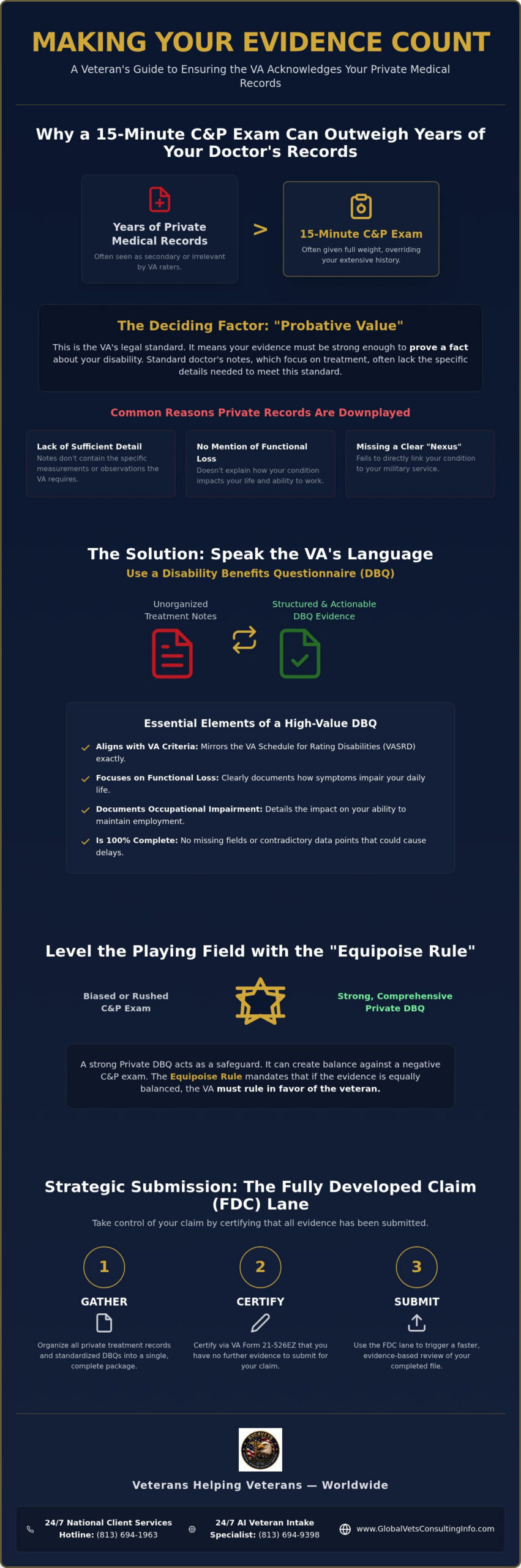
The VA rater isn’t allowed to simply toss your private records into the “ignore” pile. Under the VA’s legal duty established in 38 CFR, the agency must consider all evidence of record. However, there’s a massive difference between submitting evidence and substantiating a claim. If you want to know how to get va to acknowledge private medical evidence, you must understand “probative value.” This term refers to evidence that actually proves a fact in your case. Standard doctor notes often lack the specific measurements required by the VA Schedule for Rating Disabilities, which is why they frequently fail to move the needle.
Competent vs. Credible Evidence
Competent medical evidence is evidence provided by a person who is qualified through education, training, or experience to offer medical diagnoses or opinions. While your family doctor is a trusted ally, a specialist’s opinion usually carries more weight in the VA’s eyes. You should ensure your private doctor’s board certifications and professional credentials are included with your submission to establish their authority on the specific condition.
Common Reasons the VA Downplays Private Records
The VA often uses C&P exams to override private records by claiming the private notes “lack sufficient detail.” Standard treatment notes focus on medical care, not disability ratings. If your records don’t explicitly address functional loss or provide a clear nexus, the rater will likely default to the examiner’s findings. Learning how to get va to acknowledge private medical evidence requires you to provide documentation that includes a strong nexus statement and uses standardized forms like DBQs to prevent the VA from dismissing your evidence as non-probative.
The Power of the DBQ: Speaking the VA’s Language 🇺🇸
Submitting a stack of unorganized treatment notes often leads to a quick denial. While the VA encourages veterans to submit their private medical records, raters frequently struggle to find the specific data points required for a rating. The Disability Benefits Questionnaire (DBQ) is the gold standard because it mirrors the VA Schedule for Rating Disabilities (VASRD) exactly. By using these forms, you force the VA to compare apples to apples. Understanding what is a DBQ ensures your medical evidence is presented in the precise format the rater is trained to process.
Essential Elements of an Acknowledged DBQ
A high-quality DBQ must include detailed symptom checklists that align with VA rating criteria. It’s vital to focus on the “functional loss” and “occupational impairment” sections, as these directly determine your disability percentage. For a DBQ to be considered actionable by a rater, it must be completely filled out with no missing fields or contradictory data points. This level of meticulousness is the most effective strategy for how to get va to acknowledge private medical evidence without requiring further clarification.
Private DBQ vs. C&P Exam Results
A private DBQ provides a necessary safeguard against biased or rushed C&P examinations. If you find your VA claim denied for lack of evidence, your private DBQ serves as a primary rebuttal tool. It brings the “Equipoise Rule” into play. This rule mandates that if the evidence for and against a claim is equally balanced, the VA must rule in favor of the veteran. Accessing expert DBQ resources can help you ensure your private evidence is strong enough to trigger this legal protection.
Strategic Submission: The Fully Developed Claim (FDC) Lane
The Fully Developed Claim (FDC) program is a powerful tool for veterans who want to take charge of their documentation. When you use this lane, you’re making a legal certification that you’ve submitted all the evidence needed to decide your claim. This is a proactive strategy for how to get va to acknowledge private medical evidence because it limits the VA’s ability to claim the record is incomplete. By providing a finished file, you’re essentially saying the claim is ready for a decision today.
- Step 1: Gather all private treatment records and standardized DBQs into a single, organized package.
- Step 2: Certify through VA Form 21-526EZ that you have no further evidence to submit.
- Step 3: Submit via the FDC lane to trigger a faster, evidence-based review process.
- Step 4: Monitor your status on the VA portal to ensure your records moved into the ‘Evidence Gathering’ phase.
Why FDC is the Best Route for Private Evidence
The FDC lane is designed to bypass the administrative delays that occur when the VA tries to gather records on your behalf. By doing the legwork yourself, you ensure that the rater sees exactly what you want them to see. This process protects the integrity of your private medical file by positioning your doctor’s findings as the central evidence. Understanding the VA disability claims process step by step helps you navigate this lane with confidence and avoid redundant C&P exams.
Uploading Evidence Correctly in 2026
In 2026, the VA’s electronic systems favor searchable documents. If your records are just blurry scans, they might be overlooked by a busy rater. Always use high-resolution, searchable PDF formatting for your uploads. Using a ‘Statement in Support of Claim’ allows you to act as your own advocate, pointing the rater to specific pages in your private records that prove your diagnosis and nexus. Our team can help you understand the requirements for VA rating increases through proper documentation.
Strengthening Your Case with Professional DBQ Support 🇺🇸
At Global Vets Consulting, we approach medical documentation with a sense of duty and respect. As a veteran-owned business, we use a “Veterans Helping Veterans” ethos to help you navigate the bureaucracy. We specialize in standardized DBQ forms that act as the primary bridge between private medicine and VA ratings. This meticulous approach is exactly how to get va to acknowledge private medical evidence without the usual friction. By focusing on probative evidence, we help you avoid the common pitfalls that lead to claim denials or low ratings.
Expert Education on Disability Ratings
Education is your strongest tool in the claims process. You need to understand exactly how your condition is rated under the VASRD to ensure your records are effective. For instance, using a DBQ for Mental Health Conditions ensures that symptoms like social and occupational impairment are documented correctly. We also provide education on secondary service connection, which can fundamentally shift your evidence strategy. Linking a secondary condition to an existing disability often provides the missing piece the VA needs to grant a rating increase.
Ready to Move Forward?
Taking control of your claim means providing the VA with evidence they cannot legally ignore. Meticulousness in your DBQ preparation isn’t just about paperwork; it’s about securing the future you earned. Our 24/7 National Client Services Hotline is standing by to support you through the evidence-gathering phase. We also offer a 24/7 AI Veteran Intake Specialist to help you get started immediately. Reach out to Global Vets Consulting today to secure your DBQ and move closer to an accurate rating. Your service earned these benefits, and we are here to help your evidence win them.
Secure Your Earned Benefits with Probative Evidence 🇺🇸
Navigating the VA claims process doesn’t have to feel like an uphill battle against a wall of silence. By shifting your focus from simply submitting records to providing probative evidence through standardized DBQs, you take control of your narrative. Utilizing the Fully Developed Claim lane further ensures that your private medical history remains the centerpiece of your evaluation. Understanding how to get va to acknowledge private medical evidence effectively is the most critical step toward securing an accurate disability rating in 2026.
Global Vets Consulting is veteran-owned and operated since 2021, and we specialize in the meticulous preparation of the documentation needed for successful evaluations. Our team is dedicated to providing the education you need to bridge the gap between private healthcare and VA ratings. If you’re ready to move forward, secure the DBQ you need to win your claim with Global Vets Consulting today. You can reach our 24/7 National Client Services Hotline at any time for immediate support. You served with honor; now let’s ensure your evidence reflects the true impact of that service.
Frequently Asked Questions
Can the VA ignore my private doctor’s DBQ?
The VA is legally required to consider all evidence of record, including a DBQ from your private doctor. However, they may assign it less weight if it lacks sufficient detail or fails to address specific rating criteria. To ensure the rater gives your evidence the weight it deserves, the documentation must be complete and consistent with your overall medical history.
How do I know if the VA received my private medical evidence?
You can verify the status of your submission by logging into the VA.gov portal or your eBenefits account. Your private medical records should appear under the “Files” or “Documents” tab once they are processed. If you submitted via the Fully Developed Claim lane, the system will track these documents as part of the evidence used to reach a decision.
Do I still have to go to a C&P exam if I submit a private DBQ?
Yes, you must attend any scheduled C&P exam even if you have already provided a private DBQ. Failure to attend can result in an immediate claim denial. While your private evidence is a powerful tool for how to get va to acknowledge private medical evidence, the VA uses their own exams to verify findings and resolve any conflicting medical opinions in your file.
What makes private medical evidence ‘actionable and sufficient’ for a rating?
Evidence is considered actionable and sufficient when it provides enough clinical data for a rater to assign a disability percentage without needing a new C&P exam. This means the records must include a clear diagnosis, a detailed symptom checklist, and specific measurements or functional loss data. Standardized forms like DBQs help you learn how to get va to acknowledge private medical evidence effectively.
Can I submit private medical evidence after my claim is already filed?
You can continue to upload private medical evidence for up to one year from the date the VA receives your claim. However, if you originally filed through the Fully Developed Claim program, submitting new records after the initial filing will move your case into the standard processing lane. This change may extend your total processing time, which averaged 68.6 days in July 2026.
Article by
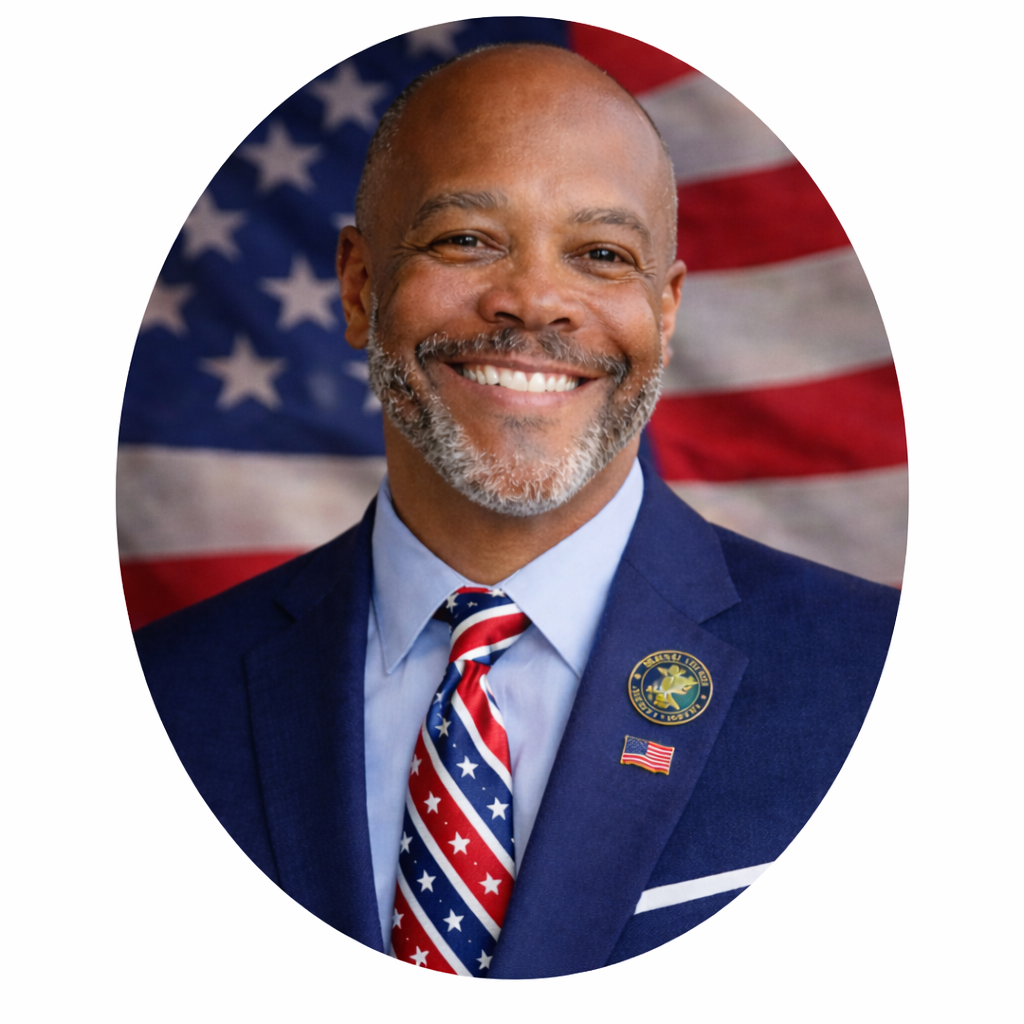
Willie Daniel
Willie Daniel is the Founder and Chief Executive Officer (CEO) of Global Vets Consulting (GVC4Vets) – National Veterans Disability Services, a veteran-led educational and medical evidence support organization dedicated to helping veterans better understand VA disability rating increases, DBQ medical evidence, secondary claims education, and C&P examination preparation.
He is a retired U.S. Army Medical Service Corps Officer with more than 27 years of honorable military service, a decorated Iraq combat veteran, and a retired federal official with the U.S. Department of Veterans Affairs. Throughout his military and federal career, Willie Daniel served in leadership, healthcare administration, operational, and veteran-support roles focused on improving services and support systems for servicemembers, veterans, and their families.
Drawing from decades of military leadership, healthcare administration, veteran advocacy, and federal government experience, Willie Daniel brings a practical, veteran-centered perspective to Global Vets Consulting’s educational articles, AI-powered veteran resources, video education initiatives, and outreach programs. His experience navigating military systems, medical documentation processes, and veteran-related administrative operations provides valuable insight into many of the challenges veterans face when seeking to better understand VA disability rating criteria, medical evidence, documentation strategies, and secondary condition education.
Through GVC’s “Veterans Helping Veterans” mission, his focus is on delivering clear, educational, and easy-to-understand information designed to empower veterans with knowledge, resources, and educational tools that may help them make more informed decisions regarding their individual VA disability journeys.
The information provided through GVC is intended for educational and informational purposes only and should not be considered legal or medical advice.
Disclaimer
Disclaimer: Global Vets Consulting, LLC (“GVC”) is a veteran-led educational and medical evidence support organization. GVC is not a law firm, is not a Veterans Service Organization (VSO), and is not affiliated with the U.S. Department of Veterans Affairs (VA) or any government agency.
Global Vets Consulting does not provide legal advice, medical advice, medical treatment, or healthcare services. GVC does not prepare, file, or submit VA disability claims on behalf of veterans. All information provided through this website, blog articles, videos, educational materials, AI tools, dashboards, templates, and communications is intended solely for general educational and informational purposes.
Veterans are encouraged to consult with accredited representatives, licensed attorneys, qualified medical providers, or Veterans Service Organizations regarding their specific legal, medical, or VA-related matters. VA disability decisions, ratings, and outcomes are determined solely by the U.S. Department of Veterans Affairs based on applicable laws, regulations, medical evidence, and individual circumstances. Past results do not guarantee future outcomes.