Will your CPAP machine still guarantee a 50% VA rating under the new 2026 rules? It’s natural to feel anxious when the VA updates respiratory ratings, especially if you rely on that monthly compensation to support your family. You’ve already dealt with the exhaustion of sleep apnea; you shouldn’t have to struggle with a confusing bureaucratic system too. Proving a service connection for a condition diagnosed years after discharge is a significant hurdle for many of our brothers and sisters in arms, and interpreting the 2026 VA Sleep Apnea Rating criteria requires a precise approach to medical documentation.
This guide provides a clear, step-by-step path to understand these changes so you can protect your benefits or secure a well-deserved increase. We’ll examine the new focus on treatment effectiveness, explore secondary conditions like heart disease or mental health, and detail the specific medical evidence needed for a successful claim. By understanding these administrative shifts now, you can ensure your documentation accurately reflects the severity of your condition and the impact it has on your daily life.
Key Takeaways
- Understand the critical shift from “prescribed treatment” to “treatment effectiveness” within the 2026 VA rating schedule for respiratory conditions.
- Learn how to establish a secondary service connection by linking sleep apnea to existing service-connected disabilities like mental health or physical injuries.
- Discover how a comprehensive Sleep Apnea DBQ provides the detailed medical evidence necessary to support and protect your VA Sleep Apnea Rating.
- Identify the specific requirements for reaching a 100% rating or qualifying for TDIU benefits if your condition prevents you from maintaining gainful employment.
VA Sleep Apnea Rating Criteria: Understanding the 2026 Standards
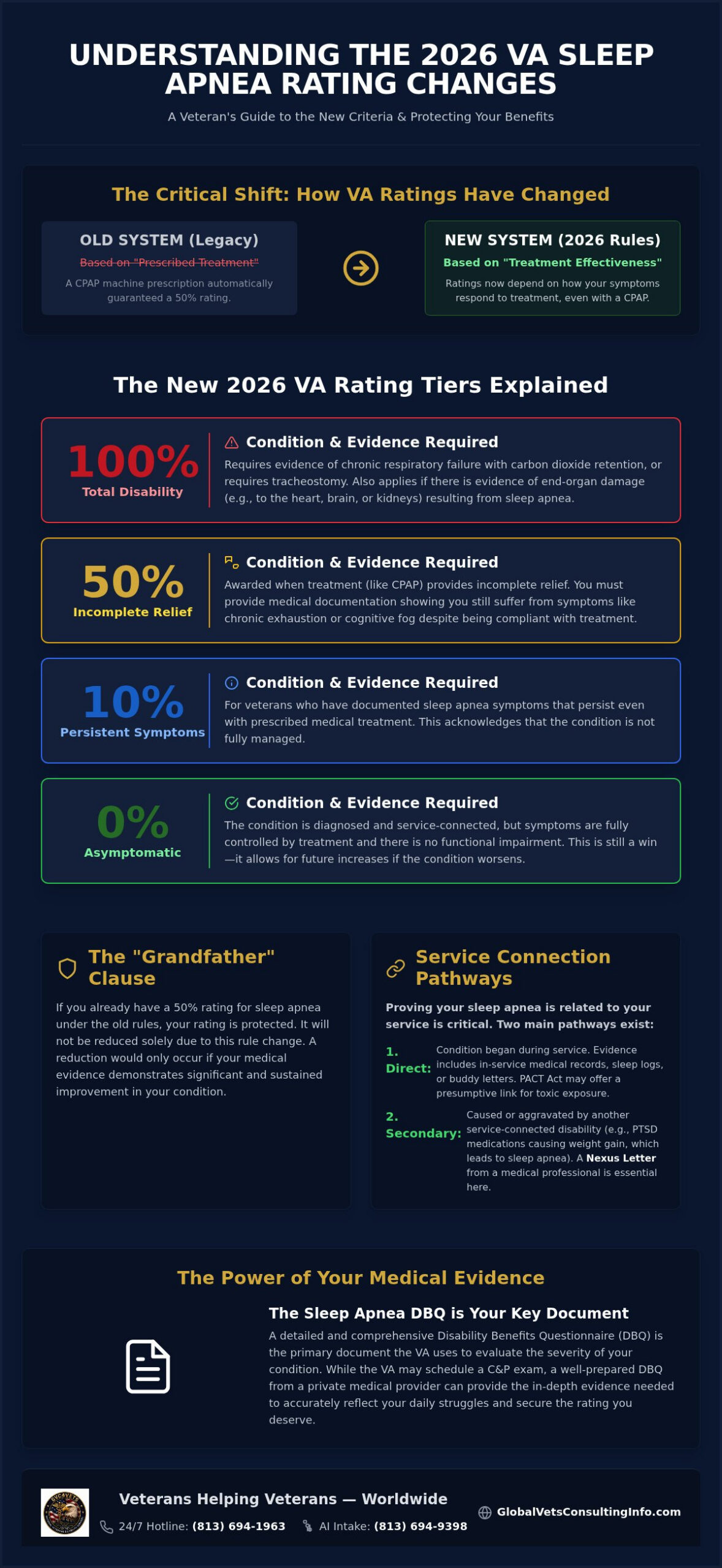
The Department of Veterans Affairs has fundamentally changed how it evaluates your VA Sleep Apnea Rating. Under the 2026 standards, the focus has moved from the mere prescription of a CPAP machine to “treatment effectiveness.” This means your disability compensation is now tied to how your body responds to medical intervention rather than just the device you use.
The 2026 rating tiers are structured as follows:
- 0%: Asymptomatic status where symptoms are fully controlled by treatment.
- 10%: Documented symptoms that persist despite using prescribed treatment.
- 50%: Incomplete relief from symptoms or a lack of response to treatment.
- 100%: Total disability, which now requires evidence of end-organ damage affecting the heart, brain, or kidneys.
If you already hold a 50% rating under the old rules, the “Grandfathering” provision protects you. Your rating won’t decrease simply because the rules changed; it only changes if your medical evidence shows significant improvement. This ensures that veterans who have already secured their benefits aren’t unfairly penalized by administrative shifts.
The 2026 Rating Schedule vs. The Legacy System
The legacy system previously offered a 30% rating for persistent daytime sleepiness and a 50% rating for any veteran required to use a CPAP. The new 2026 schedule eliminates these automatic triggers in favor of a symptoms-based approach to your VA Sleep Apnea Rating. Under these new rules, an asymptomatic veteran is defined as someone who experiences no functional impairment or sleep-related symptoms with or without the use of a breathing device.
Why the 50% CPAP Rating Changed
The VA’s rationale for this shift is based on the belief that modern CPAP technology is more effective and easier to use than older models. They assume that if a veteran is compliant with treatment, their symptoms should resolve. To counter this, you must document “incomplete relief” by showing that even with regular CPAP use, you still suffer from chronic exhaustion or cognitive fog. Accurate documentation is the only way to prove your condition remains severe.
Establishing Service Connection: Direct vs. Secondary Claims
Proving your condition relates to your service is the most critical step in securing a VA Sleep Apnea Rating. For a direct service connection, the VA looks for evidence that the condition began while you were on active duty. You can use sleep logs, medical records from your time in service, or buddy letters from those who witnessed your symptoms in the barracks. If you were exposed to burn pits or other toxins, the PACT Act may offer a presumptive pathway for respiratory-related apnea.
Many veterans struggle because they weren’t diagnosed until years after discharge. This is where a Nexus Letter becomes essential. It’s a formal medical opinion that “connects the dots” between your service and your current diagnosis. Without this evidence, the VA often denies claims by stating there’s no clear link.
Common Secondary Conditions for Sleep Apnea
Sleep apnea is frequently rated as a secondary condition. For example, medications for PTSD can cause weight gain, which directly contributes to obstructive sleep apnea. Alternatively, mechanical obstructions from service-connected allergic rhinitis or sinusitis often aggravate breathing issues. Understanding how to prove service connection through these secondary links is often the most successful strategy for veterans today.
The Importance of ‘VA Math’ in Combined Ratings
A 50% VA Sleep Apnea Rating can significantly boost your total combined disability percentage, though VA math isn’t a simple addition of numbers. Even if you receive a 0% rating, consider it a victory. It means the VA acknowledges your condition is service-connected. This status allows you to file for a rating increase later if your symptoms worsen without having to re-prove the initial connection. If you need assistance documenting these links, our team offers specialized Secondary VA Claims Education to guide you through the process.
The Role of the Sleep Apnea DBQ in Your Claim
A Disability Benefits Questionnaire (DBQ) is the standardized document the VA uses to evaluate the severity of your medical condition. It’s the primary tool that determines your VA Sleep Apnea Rating. While the VA often relies on its own contracted C&P exams, these appointments can be as short as 15 minutes and often fail to capture the full scope of your struggles. A private DBQ allows for a much more comprehensive view of your symptoms. It ensures that critical data points, such as your Apnea-Hypopnea Index (AHI) and the specific findings of your sleep study, are presented clearly to the rater. For a deeper look at these forms, read our guide on What is a DBQ? A Veteran’s Guide.
Preparing for Your C&P Examination
Success at a C&P exam requires intentional communication. You should focus on describing your “worst-day” symptoms rather than how you feel during the appointment. If you experience chronic daytime exhaustion, cognitive fog, or morning headaches that impact your productivity, ensure the examiner records these details. It’s a highly effective strategy to bring your private medical evidence and completed DBQ to the exam. This ensures the examiner has access to your full medical history, which can prevent them from overlooking critical findings that support your claim.
How Global Vets Consulting Supports Your Documentation
We take a “Veterans Helping Veterans” approach to evidence education. Our team understands the meticulousness required to document a claim properly so you aren’t neglected by complex systems. By focusing on detailed medical status and functional limitations, we help you avoid frequent VA claim mistakes that lead to frustrating denials. If you’re ready to strengthen your evidence, our Sleep Apnea Claims Education provides the resources you need to move forward with confidence.
Maximizing Your VA Rating: TDIU and 100% Criteria
For many veterans, a 50% VA Sleep Apnea Rating is a solid foundation, but it doesn’t always reflect the true impact on their livelihood. If your condition prevents you from maintaining substantially gainful employment, you may qualify for Total Disability Individual Unemployability (TDIU). This benefit pays at the 100% rate even if your combined rating is lower. To qualify, you generally need one disability rated at 60% or a combined rating of 70% with at least one condition at 40%. Documenting chronic daytime somnolence is vital here; if you’re too exhausted to function safely or productively, the VA must consider how that affects your ability to earn a living.
Proving Unemployability Due to Sleep Apnea
Gathering evidence from outside the doctor’s office is often the key to a successful TDIU claim. Employer statements that describe you falling asleep during meetings or struggling with cognitive impairment provide the VA with a clear picture of your workplace challenges. These letters should highlight how fatigue creates safety risks or reduces your output. In the context of VA disability, sedentary employment refers to jobs that are primarily performed while sitting and involve minimal physical exertion, such as office or clerical work. Even in these roles, the cognitive fog associated with sleep apnea can be a disqualifying factor.
Next Steps: 24/7 Support for Your Claim
The 2026 regulatory environment is shifting, so taking action now is the best way to protect your future compensation. Waiting for more changes could make it harder to secure the rating you’ve earned through your service. If you’re ready to improve your medical evidence, our team is standing by to guide you. Contact Global Vets Consulting for DBQ Education to start your journey toward a more accurate VA Sleep Apnea Rating. We’re dedicated to ensuring you have the tools to document your condition with the meticulousness the system requires.
Take Control of Your Future Benefits Today
Understanding the shift toward treatment effectiveness is the first step in protecting your disability compensation. You must ensure your medical evidence clearly documents persistent symptoms like chronic exhaustion even while using a CPAP. Leveraging secondary service connections and utilizing a comprehensive DBQ are the most effective strategies to secure a fair evaluation in this new regulatory environment. These tools are essential for maintaining or increasing your VA Sleep Apnea Rating as the 2026 standards take effect. As a veteran-owned and operated team since 2021, we provide worldwide support to ensure no one is left behind by complex administrative systems. Our 24/7 National Client Services Hotline is always available for your immediate intake needs. You’ve served your country with honor; now it’s time to ensure the system works for you. Take the next step in your journey with confidence and clarity. We’re here to help you document the severity of your condition accurately.
🇺🇸 Get Expert DBQ Education & Support Today
Frequently Asked Questions
Is sleep apnea a presumptive condition under the PACT Act?
Sleep apnea is not a presumptive condition under the PACT Act. While the PACT Act added many respiratory cancers and illnesses to the presumptive list, sleep apnea still requires a direct or secondary service connection. You can often link it to presumptive conditions like chronic rhinitis or sinusitis through a secondary claim. This pathway relies on proving that your toxic exposure led to airway obstructions that caused or aggravated your apnea.
Can the VA take away my 50% sleep apnea rating if I am already service-connected?
The VA cannot take away your current 50% rating solely because of the 2026 rule changes. If you were rated under the legacy system, you are grandfathered in at your current level. Your rating only faces a potential reduction if a future medical examination shows sustained, actual improvement in your condition. To protect your VA Sleep Apnea Rating, ensure your medical records consistently reflect the ongoing severity of your symptoms and any treatment limitations.
What is the difference between Obstructive, Central, and Complex sleep apnea for VA ratings?
Obstructive sleep apnea occurs when physical airway blockages stop your breathing, while Central sleep apnea involves the brain failing to send proper signals to breathing muscles. Complex sleep apnea is a combination of both types. For rating purposes, the VA evaluates all three under the same diagnostic code. The severity of your symptoms and the effectiveness of your treatment determine your percentage, regardless of which specific type you are diagnosed with.
Do I need a new sleep study if I already have a diagnosis from a private doctor?
You may not need a new sleep study if your private records are sufficiently detailed and recent. The VA requires a sleep study that includes specific data like the Apnea-Hypopnea Index (AHI) to confirm a diagnosis. If your private study meets these technical requirements, it serves as strong medical evidence. However, if the rater finds the previous study outdated or incomplete, they will likely schedule a new one through a C&P examination.
How do I link sleep apnea secondary to PTSD?
Linking sleep apnea secondary to PTSD requires a nexus letter from a medical professional. This letter must explain how your PTSD symptoms or treatments, such as medication-induced weight gain, directly caused or aggravated your sleep apnea. This connection is a common way to achieve a higher VA Sleep Apnea Rating. Providing a detailed Sleep Apnea DBQ alongside this medical opinion helps the rater understand the physiological link between your mental health and respiratory issues.

Article by
Willie Daniel
Willie Daniel is the Founder and Chief Executive Officer (CEO) of Global Vets Consulting (GVC4Vets) – National Veterans Disability Services, a veteran-led educational and medical evidence support organization dedicated to helping veterans better understand VA disability rating increases, DBQ medical evidence, secondary claims education, and C&P examination preparation.
He is a retired U.S. Army Medical Service Corps Officer with more than 27 years of honorable military service, a decorated Iraq combat veteran, and a retired federal official with the U.S. Department of Veterans Affairs. Throughout his military and federal career, Willie Daniel served in leadership, healthcare administration, operational, and veteran-support roles focused on improving services and support systems for servicemembers, veterans, and their families.
Drawing from decades of military leadership, healthcare administration, veteran advocacy, and federal government experience, Willie Daniel brings a practical, veteran-centered perspective to Global Vets Consulting’s educational articles, AI-powered veteran resources, video education initiatives, and outreach programs. His experience navigating military systems, medical documentation processes, and veteran-related administrative operations provides valuable insight into many of the challenges veterans face when seeking to better understand VA disability rating criteria, medical evidence, documentation strategies, and secondary condition education.
Through GVC’s “Veterans Helping Veterans” mission, his focus is on delivering clear, educational, and easy-to-understand information designed to empower veterans with knowledge, resources, and educational tools that may help them make more informed decisions regarding their individual VA disability journeys.
The information provided through GVC is intended for educational and informational purposes only and should not be considered legal or medical advice.
Disclaimer
Disclaimer: Global Vets Consulting, LLC (“GVC”) is a veteran-led educational and medical evidence support organization. GVC is not a law firm, is not a Veterans Service Organization (VSO), and is not affiliated with the U.S. Department of Veterans Affairs (VA) or any government agency.
Global Vets Consulting does not provide legal advice, medical advice, medical treatment, or healthcare services. GVC does not prepare, file, or submit VA disability claims on behalf of veterans. All information provided through this website, blog articles, videos, educational materials, AI tools, dashboards, templates, and communications is intended solely for general educational and informational purposes.
Veterans are encouraged to consult with accredited representatives, licensed attorneys, qualified medical providers, or Veterans Service Organizations regarding their specific legal, medical, or VA-related matters. VA disability decisions, ratings, and outcomes are determined solely by the U.S. Department of Veterans Affairs based on applicable laws, regulations, medical evidence, and individual circumstances. Past results do not guarantee future outcomes.