
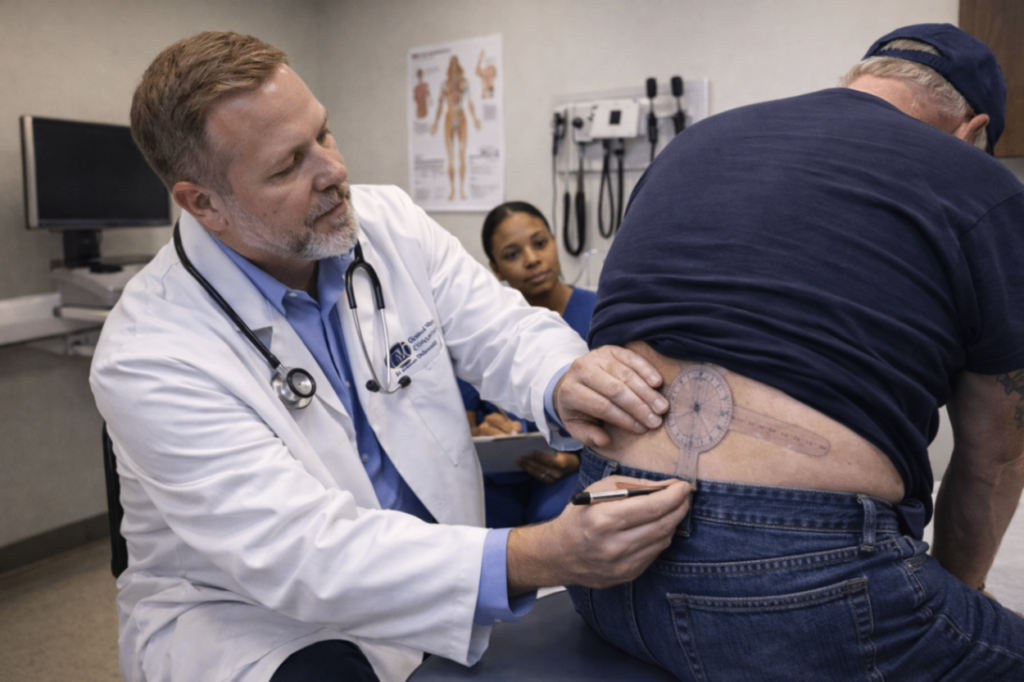
What if the reason your VA disability claim keeps getting denied or under-rated isn't the severity of your pain, but the complete lack of tactical precision in your medical documentation?
For thousands of veterans navigating the Department of Veterans Affairs disability system, the greatest obstacle is not proving that an injury occurred in service: it is translating a daily physical struggle into the rigid, clinical language that rating specialists and examiners demand under 38 C.F.R. Part 4. If your Independent Medical Evaluation (IME) or Compensation & Pension (C&P) exam results in vague phrases like "joint pain reported" or "limited motion," you are all but guaranteeing a 0% or 10% rating, regardless of how severely your condition impacts your quality of life.
At Global Vets Consulting (GVC4Vets) – National Veterans Disability Services, we treat every disability claim like a precise mission. You cannot approach the VA ratings schedule with guesswork; you need a definitive playbook. In this guide, we break down the exact mechanics of range-of-motion (ROM) testing, Disability Benefits Questionnaires (DBQs), and the legal frameworks required to secure an accurate, life-changing disability rating.
Table of Contents
- The Core Framework: The Trinity of Evidence and 38 CFR Part 4
- How ROM Is Actually Measured: Goniometers, Degrees, and Correia Standards
- Quantifying Functional Loss, Pain, and Flare-Ups (§ 4.40 & § 4.45)
- Mastering Your DBQ: Step-by-Step Execution Plan
- Frequently Asked Questions
Key Takeaways
- Degrees Trump Adjectives: Rating schedules rely on exact goniometer measurements, not subjective descriptions of discomfort.
- The Power of Pain on Movement: Under 38 C.F.R. § 4.59, pain upon motion must be considered as a limitation of motion, often establishing the baseline for a compensable rating.
- Active, Passive, and Contralateral Standards: Adequate exams must evaluate active and passive movement, weight-bearing states, and compare against undamaged joints per Correia v. McDonald.
- Functional Loss Documentation: Documenting flare-ups, fatigability, and incoordination bridges the gap between static clinic exams and real-world suffering.
The Core Framework: The Trinity of Evidence and 38 CFR Part 4

When preparing an initial claim or seeking an increase through our increase claims services, veterans must understand that the VA does not award benefits based on sympathy. They award benefits based on strict evidentiary compliance.
At GVC4Vets, we anchor every musculoskeletal claim in what we call the Trinity of Evidence:
- A Current Formal Diagnosis: Verified by ICD-10 codes and imaging (X-ray, MRI, CT scan) confirming structural pathology, arthritis, or joint damage.
- The Service Connection / In-Service Event: Proof that the condition originated, was aggravated, or is secondarily linked to your active-duty service.
- The Medical Nexus: A clear, reasoned medical opinion connecting your current diagnosis to your service history: ideally using the legal standard of "at least as likely as not (50% or greater probability)."
Once these three pillars are established, your case enters the jurisdiction of 38 C.F.R. Part 4 (Schedule for Rating Disabilities). The Disability Benefits Questionnaire (DBQ) serves as your official scorecard. If the DBQ lacks the specific data points required by rating specialists under specific diagnostic codes (such as Diagnostic Code 5260 for the knee or Diagnostic Code 5237 for the lumbar spine), the rater will default to the lowest compensable bracket or deny service connection entirely.
Explore our comprehensive services overview to see how our nationwide network of over 800 independent, licensed physicians helps veterans secure compliant, evidence-backed medical documentation.
How ROM Is Measured: Goniometers, Degrees, and Correia Standards
One of the most common pitfalls during rushed C&P examinations is sloppy, incomplete ROM documentation. Examiners occasionally write "normal range of motion" or "slight limitation noted" without recording a single numerical value. This practice violates both VA adjudication guidelines and federal case law.

To protect your claim, insist on: and verify: the following clinical standards during your evaluation:
1. Mandatory Goniometer Measurements
Examiners must use a goniometer to measure joint angles precisely in degrees across every plane of motion. For example, normal thoracolumbar forward flexion is 90 degrees. If your spine flexion stops at 45 degrees, the DBQ must record 45°, not merely "decreased."
2. Active vs. Passive and Weight-Bearing Assessments
Following binding precedents like Correia v. McDonald, an adequate joint examination must record range of motion under multiple conditions:
- Active motion (moving the joint yourself)
- Passive motion (the clinician gently moving the joint to its mechanical limit)
- Weight-bearing and non-weight-bearing states where applicable
- Contralateral joint comparison (measuring your healthy opposite joint to establish an individual baseline)
3. Pinpointing Pain Initiation
Under 38 C.F.R. § 4.59, if joint pain manifests at a specific point in the arc of motion, that point marks the functional limitation.
- Example: If your knee flexion reaches 120 degrees, but sharp, catching pain begins at 60 degrees, the examiner must document: "Flexion limited to 120°, with pain onset at 60°." This critical distinction separates a 0% non-compensable rating from a compensable rating.
If you are unsure where your current symptoms fit within the rating criteria, utilize our free VA disability calculator to estimate potential combined ratings based on standard diagnostic codes.
Quantifying Functional Loss, Pain, and Flare-Ups (§ 4.40 & § 4.45)
Pain is inherently subjective, but the legal requirement to account for its functional impact is entirely objective. Under 38 C.F.R. §§ 4.40 and 4.45, the VA is legally obligated to evaluate functional loss resulting from:
- Pain on movement
- Weakened movement
- Excess fatigability
- Incoordination
- Flare-ups (frequency, duration, severity, and resulting incapacitation)
The Flare-Up Log Strategy
Clinical exams capture a single snapshot in time, often on a good day. To bridge the gap between a 15-minute clinic visit and your day-to-day reality, GVC4Vets recommends maintaining a detailed Flare-Up Log.
Actionable Checklist for Flare-Ups:
- Track Frequency: Note how many times per week or month your condition flares up.
- Record Duration: Document how long each flare-up lasts (e.g., 2 to 4 days of severe stiffness and immobility).
- Detail Functional Impairment: List specific activities you cannot perform during flares: such as standing for more than 10 minutes, lifting groceries, driving, or climbing stairs.
- Request Degree Estimates: Ask your independent medical examiner to estimate additional loss of motion and function during flare-ups or after repeated use, as mandated by § 4.40.
Mastering Your DBQ: Step-by-Step Execution Plan
To ensure your medical evidence package stands up to rigorous scrutiny from VA rating specialists, execute this step-by-step checklist before submitting any claim:
- Verify ICD-10 Diagnoses: Confirm your medical records contain precise diagnostic terminology (e.g., Pes Planus, lumbar radiculopathy, or degenerative joint disease) rather than vague umbrella terms.
- Secure Independent Medical Documentation: Partner with licensed professionals who understand how to complete DBQs thoroughly, ensuring every check-box, narrative box, and functional impact section is fully addressed.
- Align with 38 C.F.R. Criteria: Cross-reference your expected ROM numbers against the specific Diagnostic Code brackets in 38 C.F.R. § 4.71a (musculoskeletal system) to verify whether your measurements cross the threshold for a higher rating tier.
- Attach Lay and Buddy Statements: Supplement your DBQ with a personal Statement in Support of Claim (VA Form 21-4138) that mirrors the clinical findings and details the real-world impact on your employment and daily life.
- Schedule a Free Consultation: If you are preparing an initial claim or fighting a previous under-rated decision, connect with our veteran advisors through a free consultation or reach out directly via our contact us page.
Frequently Asked Questions
What is the difference between active and passive range of motion in a VA exam?
Active range of motion is the degree to which you can move your joint independently under your own muscle power. Passive range of motion is the degree to which an examiner can gently move your joint further when relaxed. Both measurements are legally required on comprehensive DBQs to evaluate structural integrity and pain limits.
Can pain alone justify a compensable VA disability rating for joints?
Yes. Under 38 C.F.R. § 4.59 and federal court precedent (DeLuca v. Brown), if an examination reveals pain upon movement, the joint must be rated at least at the minimum compensable level for that joint, even if full range of motion is technically achievable.
Why is a goniometer mandatory for spine and limb exams?
Rating criteria in 38 C.F.R. Part 4 rely heavily on exact degree measurements (e.g., forward flexion limited to 30 degrees vs. 60 degrees). Without a goniometer, examiners provide subjective opinions that give raters legal justification to assign minimal or 0% ratings.
How does Global Vets Consulting help veterans with DBQs?
GVC4Vets connects veterans with a nationwide network of independent, licensed physicians who specialize in conducting thorough independent medical evaluations and ensuring VA-compliant medical documentation, including precise DBQs and nexus letters. Learn more about our initial claims support.

