
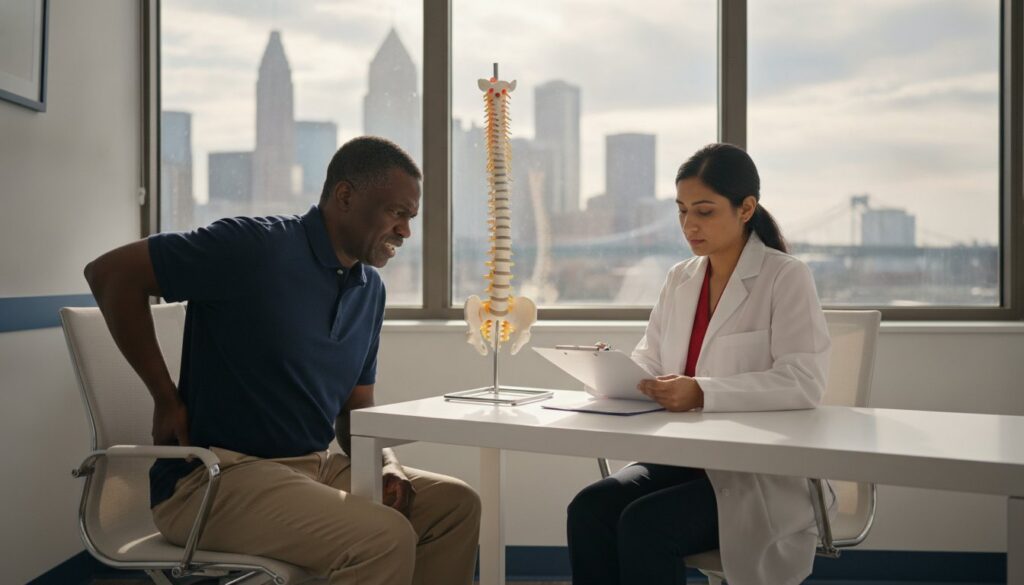
Your va rating for lumbosacral strain isn’t actually determined by the intensity of your pain, but by the precise degree your spine stops moving during a C&P exam. It’s a frustrating reality for many veterans who live with unpredictable back spasms and the inability to stand for long periods without agony. You likely feel that a ten minute exam can’t possibly capture the physical toll your service took on your lower back. We understand that anxiety, and we know that the complex VA system often feels like it’s designed to overlook the details of your condition.
In this guide, you’ll learn exactly how the VA evaluates lumbosacral strain and how to use medical evidence to secure the disability rating you earned. We’ll provide a clear breakdown of the 2026 rating criteria and explain how to document your symptoms through Disability Benefits Questionnaires (DBQs) to avoid an underrated claim. You’ll also discover how to successfully link secondary conditions like radiculopathy to ensure your total compensation reflects your true level of impairment. Let’s look at the steps you can take to move forward with confidence.
Key Takeaways
- Understand how the VA uses Diagnostic Code 5237 to evaluate chronic lower back pain and the specific criteria required for a service connection.
- Learn the exact Range of Motion measurements required to secure a 10% or 20% va rating for lumbosacral strain based on the latest 2026 standards.
- Explore how to link secondary conditions like sciatica or mental health to your back claim to maximize your total monthly compensation.
- Discover the vital role a Disability Benefits Questionnaire (DBQ) plays in capturing functional loss and unpredictable flare-ups for the VA rater.
- Prepare for your C&P exam with a clear strategy to ensure your medical evidence accurately reflects the physical limitations of your condition.
What is Lumbosacral Strain and How Does the VA Rate It? 🇺🇸
Lumbosacral strain refers to chronic pain, stiffness, and tension in the muscles and ligaments of your lower back. It’s one of the most common musculoskeletal claims we see among the veteran community. The VA evaluates this specific condition under Diagnostic Code 5237, which is the code for Lumbar Strain. While you might feel the pain every single day, the VA rater focuses on how that pain limits your physical movement. Understanding the VA disability claims process step by step is essential to ensure your submission is clean and contains the right medical evidence from the start.
Common Symptoms and Service Connection
Identifying your symptoms accurately is the first step toward a successful claim. Many veterans experience a range of physical limitations, including:
- 🇺🇸 Sharp or dull localized pain in the lower back
- 🇺🇸 Muscle spasms that cause sudden, involuntary movement
- 🇺🇸 Stiffness that makes bending or twisting difficult
- 🇺🇸 Tenderness in the lumbar region
To secure a va rating for lumbosacral strain, you must establish a “Nexus.” This is a clear link between your current back issues and your military service. This link doesn’t always require a single traumatic injury like a fall or a vehicle accident. Many veterans qualify based on the years of “wear and tear” caused by heavy gear, repetitive lifting, or the physical demands of your MOS. Documenting these service-connected activities is just as vital as documenting the pain itself.
The General Rating Formula for Spinal Conditions
The VA uses a standardized General Rating Formula for Diseases of the Spine to evaluate most back conditions. This means they group your strain with other issues like degenerative disc disease for rating purposes. A critical shift in VA policy has moved raters away from “pain-based” ratings toward “function-based” assessments. Your va rating for lumbosacral strain depends almost entirely on your Range of Motion (ROM). If you can still bend forward fully despite the pain, the VA may grant a 0% rating. However, if your movement is restricted, your rating increases. We’ll break down those specific measurements in the next section.
Range of Motion (ROM) and the 10% to 100% Rating Criteria
The VA uses a specific set of measurements to decide your level of disability. Instead of asking how much your back hurts on a scale of one to ten, the examiner uses a tool called a goniometer to measure exactly how far you can bend. This objective data is the primary driver for your va rating for lumbosacral strain. If your spine is “ankylosed,” which simply means it is permanently stiff or fused in one position, the rating criteria change significantly. Here is how the percentages typically break down based on your forward flexion, which is your ability to bend forward at the waist:
- 10% Rating: Your forward flexion is between 60° and 85°.
- 20% Rating: Your forward flexion is between 30° and 60°, or your muscle spasms are so severe they cause an abnormal, “frozen” gait.
- 40% Rating: Your forward flexion is 30° or less, or you have favorable ankylosis of the entire thoracolumbar spine (fused in a neutral position).
- 100% Rating: You have unfavorable ankylosis (fused in a curved or bent position). While rare for a strain alone, this applies if the entire spine is impacted.
Incapacitating Episodes and Intervertebral Disc Syndrome (IVDS)
If your back pain involves disc issues, the VA might use an alternative rating method based on “incapacitating episodes.” An incapacitating episode is defined as a period of acute signs and symptoms that requires “bed rest” prescribed by a physician. If you have frequent flare-ups that force you out of work and into bed, rating under IVDS might lead to a higher percentage than ROM alone. It’s a strategic choice that depends on your specific medical history and how your doctor documents your treatment. Preparing for a C&P exam requires precision, and many veterans find that reviewing their medical evidence with an expert reduces the risk of an underrated claim.
The Importance of the ‘First Point of Pain’
A common mistake during C&P exams is trying to “tough it out” and bend as far as possible. You should stop moving the moment you feel the first point of pain. If you push through the pain to show the doctor you’re “fine,” the examiner will record a higher range of motion, which can result in a lower va rating for lumbosacral strain. Your rating should reflect your functional loss during a flare-up, not just how you feel on a good day. Ensuring these details are captured accurately on your Disability Benefits Questionnaire (DBQ) is the most effective way to provide the VA with objective evidence of your true physical limitations.
Secondary Conditions: Increasing Your Combined VA Rating
A primary va rating for lumbosacral strain often fails to capture the full scope of how a back injury impacts your life. Back issues rarely stay localized; they frequently trigger a chain reaction of other medical problems. If your service connected back pain causes a new condition or worsens an existing one, you can claim those as secondary conditions. This is a critical strategy for many veterans to ensure their total combined rating reflects their true level of disability. 🇺🇸
Radiculopathy Secondary to Lumbosacral Strain
When the muscles and ligaments in your lower back are strained, they can put pressure on the nerves exiting the spinal column. This often leads to radiculopathy, which many veterans recognize as sciatica. Symptoms include sharp pain, “pins and needles,” or numbness that radiates down one or both legs. The VA can assign a separate rating for nerve damage in each leg. Because of the bilateral factor, having radiculopathy in both legs can provide a significant boost to your overall compensation. Securing a separate va rating for lumbosacral strain and the resulting nerve pain is often the most direct path to a fair outcome.
Mental Health and Lifestyle Impacts
Living with chronic, debilitating pain is exhausting and often leads to depression or anxiety. If your back injury has limited your ability to exercise, enjoy hobbies, or interact with your family, the psychological toll is a valid secondary claim. In some cases, limited mobility leads to weight gain, which can then be used as an intermediate step to link conditions like sleep apnea or hypertension. Veterans often find that a DBQ for mental health conditions is a necessary addition to their medical evidence folder when back pain leads to these significant lifestyle changes.
Total Disability Based on Individual Unemployability (TDIU)
If your lumbosacral strain is so severe that you cannot maintain “substantial gainful employment,” you might qualify for TDIU. Many back conditions prevent veterans from performing even sedentary work because they cannot sit or stand for more than a few minutes at a time. If you have a 40% rating for your back and other service connected issues that prevent you from working, TDIU allows you to be paid at the 100% rate. If your current rating doesn’t match your physical limitations, you should learn more about VA rating increases to secure the benefits you earned through your service.
How a Professional DBQ Secures Your Back Rating 📞
The Disability Benefits Questionnaire (DBQ) is the primary document a VA rater uses to decide your percentage. It acts as a blueprint of your disability, translating your physical pain into the technical language of the VA rating schedule. If your DBQ is missing specific data points, your va rating for lumbosacral strain will likely be lower than you deserve. A private DBQ allows you to walk into a C&P exam prepared, rather than anxious, because your medical evidence is already documented with precision. We specialize in educating you on how to use a DBQ for a VA disability rating increase to ensure that every symptom and functional limitation is captured accurately.
Avoiding Common VA Claim Mistakes
Many veterans make the mistake of “toughing it out” during their physical exam. If you hide your pain or push past your natural stopping point, the examiner will record a higher Range of Motion than you actually have on a daily basis. Vague medical records are another common pitfall. If your records simply say you have “back pain” without mentioning specific ROM degrees or frequency of flare-ups, you risk having your VA claim denied for lack of evidence. A detailed questionnaire prevents this by forcing the documentation of objective facts that the VA cannot ignore.
Take the Next Step with Global Vets Consulting 🌐
Our “Veterans Helping Veterans” mission is built on the belief that you shouldn’t have to navigate this complex system alone. We provide the educational resources and DBQ preparation guidance you need to present a professional, evidence-backed claim to the VA. Don’t let a rushed ten minute exam determine the future of your benefits. You’ve earned your compensation through service and sacrifice; we’re here to help you document it. 🇺🇸
- 📞 24/7 National Client Services Hotline: Immediate assistance is available whenever you need it.
- 🌐 Expert Education: We focus on musculoskeletal and neurological claims to maximize your accuracy.
- 🇺🇸 Veteran-Owned: We speak your language and understand the unique challenges of the claims process.
Contact us today at GlobalVetsConsultingInfo.com to begin your journey toward a fair va rating for lumbosacral strain. Our 24/7 AI Veteran Intake Specialist is ready to help you take the first step toward the outcome you deserve.
Secure the Benefits Your Service Earned 🇺🇸
Securing a fair va rating for lumbosacral strain requires more than just showing up to a medical appointment. It demands a strategy built on objective Range of Motion data and a clear understanding of how your back injury impacts your entire body. By focusing on precise ROM measurements and identifying secondary conditions like sciatica or chronic mental health struggles, you position yourself for the highest possible combined rating. A professionally prepared Disability Benefits Questionnaire (DBQ) ensures the VA rater sees the full extent of your functional loss, including those unpredictable flare-ups that a brief exam might miss.
You don’t have to face the complexities of the VA system alone. Our team is Veteran-Owned & Operated 🇺🇸 and dedicated to providing the education you need to succeed. We are Specialists in DBQ Documentation 🌐 and offer a 24/7 National Client Services Hotline 📞 to ensure you have support at every step of the way.
Ready to secure the rating you deserve? Connect with a Global Vets Consulting specialist today! You’ve done the hard work of serving our country; now let’s work together to ensure your benefits reflect that dedication.
Frequently Asked Questions
Can I get a 100% rating for lumbosacral strain?
You can receive a 100% rating, but it is rare for a muscle strain alone. This percentage requires unfavorable ankylosis of the entire spine, meaning your spine is permanently fixed in a bent or curved position. Most veterans with chronic back pain fall into the 10% to 40% range. If your condition prevents you from working, it’s often more effective to pursue Total Disability Based on Individual Unemployability (TDIU) rather than a 100% spinal rating.
What is the average VA rating for lower back pain?
Most veterans receive a 10% or 20% va rating for lumbosacral strain based on their forward flexion. A 10% rating is common for those who can bend forward between 60 and 85 degrees, while a 20% rating applies when movement is limited to between 30 and 60 degrees. Because the VA relies heavily on these specific measurements, many claims are underrated if the veteran doesn’t clearly document functional loss and flare-ups during their C&P exam.
How do I prove my lumbosacral strain is service-connected?
Proving service connection requires a current medical diagnosis, evidence of an in-service event, and a medical Nexus linking the two. This link doesn’t always require a single traumatic accident. You can establish service connection by documenting the repetitive physical stress, heavy lifting, or “wear and tear” associated with your specific MOS. Providing clear medical evidence that shows your back issues began or were aggravated during your time in uniform is the key to a successful claim.
Does the VA rate radiculopathy and lumbar strain separately?
Yes, the VA rates these as two distinct conditions under different diagnostic codes. Your va rating for lumbosacral strain covers the musculoskeletal issues in your back, while radiculopathy covers the neurological symptoms like pain or numbness in your legs. Because these affect different body systems, you can receive separate ratings for each. This is a vital strategy for veterans looking to increase their combined disability percentage through secondary service connections.
What happens if my C&P examiner didn’t use a goniometer?
If your examiner estimated your range of motion by sight rather than using a goniometer, the exam results are likely insufficient. The VA requires the use of this tool to ensure objective and accurate measurements of your spinal movement. If this occurred during your exam, it’s important to document the error immediately. You may need to submit a private Disability Benefits Questionnaire (DBQ) to provide the rater with the precise measurements required for a fair and accurate rating.

Article by
Willie Daniel
Willie Daniel is the Founder and Chief Executive Officer (CEO) of Global Vets Consulting (GVC) – National Veterans Disability Services, a veteran-led educational and medical evidence support organization dedicated to helping veterans better understand VA disability rating increases, DBQ medical evidence, secondary claims education, and C&P examination preparation.
He is a retired U.S. Army Medical Service Corps Officer with more than 27 years of honorable military service, a decorated Iraq combat veteran, and a retired federal official with the U.S. Department of Veterans Affairs. Throughout his military and federal career, Willie Daniel served in leadership, healthcare administration, operational, and veteran-support roles focused on improving services and support systems for servicemembers, veterans, and their families.
Drawing from decades of military leadership, healthcare administration, veteran advocacy, and federal government experience, Willie Daniel brings a practical, veteran-centered perspective to Global Vets Consulting’s educational articles, AI-powered veteran resources, video education initiatives, and outreach programs. His experience navigating military systems, medical documentation processes, and veteran-related administrative operations provides valuable insight into many of the challenges veterans face when seeking to better understand VA disability rating criteria, medical evidence, documentation strategies, and secondary condition education.
Through GVC’s “Veterans Helping Veterans” mission, his focus is on delivering clear, educational, and easy-to-understand information designed to empower veterans with knowledge, resources, and educational tools that may help them make more informed decisions regarding their individual VA disability journeys.
The information provided through GVC is intended for educational and informational purposes only and should not be considered legal or medical advice.
Disclaimer
Disclaimer: Global Vets Consulting, LLC (“GVC”) is a veteran-led educational and medical evidence support organization. GVC is not a law firm, is not a Veterans Service Organization (VSO), and is not affiliated with the U.S. Department of Veterans Affairs (VA) or any government agency.
Global Vets Consulting does not provide legal advice, medical advice, medical treatment, or healthcare services. GVC does not prepare, file, or submit VA disability claims on behalf of veterans. All information provided through this website, blog articles, videos, educational materials, AI tools, dashboards, templates, and communications is intended solely for general educational and informational purposes.
Veterans are encouraged to consult with accredited representatives, licensed attorneys, qualified medical providers, or Veterans Service Organizations regarding their specific legal, medical, or VA-related matters. VA disability decisions, ratings, and outcomes are determined solely by the U.S. Department of Veterans Affairs based on applicable laws, regulations, medical evidence, and individual circumstances. Past results do not guarantee future outcomes.