
A strong Peripheral Neuropathy VA claim depends on more than describing pain or numbness. Nerve findings, military service history, and the effect symptoms have on everyday activities all help show the fuller picture. Understanding how these pieces fit together can make it easier to organize your evidence and prepare for the claims process.
You may have questions about whether your medical records document a current condition, how it could relate to service or another service-connected disability, and what evidence helps explain its severity. This guide separates those issues into practical steps. You’ll learn how diagnosis, service connection, and severity evidence each play a role, and what symptom and functional details to discuss with a qualified medical professional.
A Disability Benefits Questionnaire (DBQ) can help organize relevant medical findings and limitations, but it doesn’t guarantee a VA decision or rating. Global Vets Consulting (GVC4Vets) is veteran-owned and operated, providing DBQ preparation and medical-documentation education. The 24/7 National Client Services Hotline and 24/7 AI Veteran Intake Specialist are available at (727) 350-8387. Visit https://www.GlobalVetsConsultingInfo.com for a digital resource.
Key Takeaways
- A Peripheral Neuropathy VA evaluation considers the affected nerve and documented impairment. Clear records of how symptoms affect function help explain the condition.
- Keep evidence of a current condition distinct from evidence connecting it to service or a service-connected disability.
- Discuss changes in sensation, strength, balance, and daily activities with a qualified medical professional so your experience can be documented.
- A DBQ can organize medical findings and functional limitations for consideration, but it doesn’t guarantee service connection, a specific rating, or claim approval.
What Is Peripheral Neuropathy, and How Can It Affect Veterans?
Peripheral neuropathy refers to damage or dysfunction in nerves outside the brain and spinal cord. These nerves carry messages related to sensation and movement, so changes may affect how you feel or control parts of your body. The Peripheral Neuropathy overview describes the condition’s classifications and possible causes. A qualified medical professional can assess your symptoms and determine whether you have it.
Which symptoms and body areas may be affected?
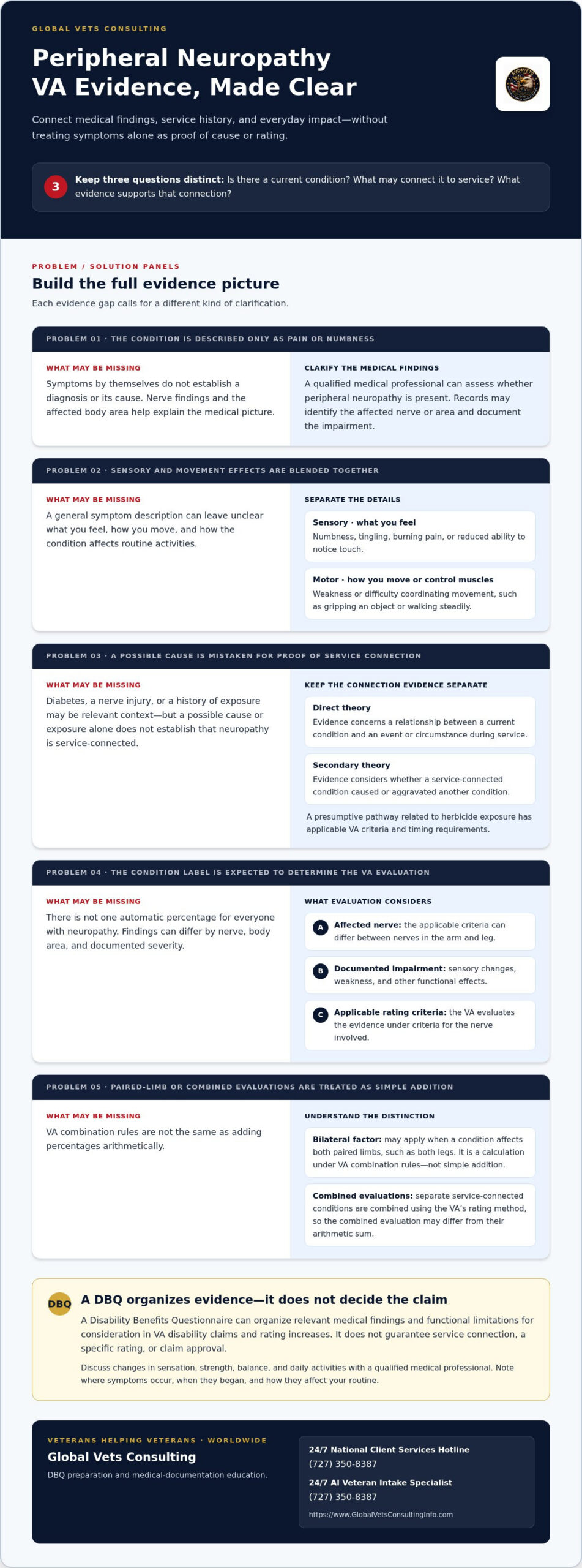
Symptoms depend on which nerves are involved and can affect areas such as the hands, feet, arms, or legs. Sensory changes may include numbness, tingling, burning pain, or reduced ability to notice touch. Some people also experience weakness or difficulty coordinating movement, which may affect tasks such as gripping an object or walking steadily. These examples aren’t a diagnosis, and symptoms can have different explanations.
Sensory symptoms change what you feel; motor symptoms affect how you move or control your muscles. When describing your experience, note where symptoms occur, when they began, and how they affect daily activities. Specific examples can help make the effect on your routine easier to explain during a medical evaluation.
How can peripheral neuropathy develop?
Possible causes include diabetes, physical injury to a nerve, and other health conditions or factors. Symptoms alone don’t establish the cause. A medical professional may consider your history and clinical findings when evaluating them, so avoid assuming that a particular symptom pattern proves a specific cause.
For a Peripheral Neuropathy VA claim, identifying a possible medical cause is separate from establishing a connection to military service. For example, diabetes or a history of exposure doesn’t automatically prove that an individual’s neuropathy is service-connected. That connection requires its own supporting evidence and consideration of the veteran’s circumstances. A clear understanding of the condition is a starting point, not a conclusion about eligibility or the outcome of a claim.
How Does the VA Evaluate Peripheral Neuropathy Ratings?
The VA evaluates peripheral neuropathy under the diagnostic criteria that apply to the affected nerve and the documented level of impairment. Relevant criteria appear in the neurological conditions section of the rating schedule. The evaluation depends on the medical evidence, not the condition’s label alone, so there isn’t one automatic percentage for everyone with neuropathy.
Why can ratings differ between veterans?
Findings can vary by nerve, body area, and severity. For example, evidence involving a nerve in the arm may be considered under different criteria from evidence involving a nerve in the leg. Records may also describe sensory changes, weakness, or other functional impairment differently for each person. Symptoms alone don’t determine an individual VA rating; the applicable criteria and documented findings matter.
For a Peripheral Neuropathy VA evaluation, records that identify the affected area and explain how the condition limits function can help show the extent of impairment. Upper and lower extremities may be evaluated under the criteria that apply to the nerves involved. The VA’s Agent Orange and peripheral neuropathy information provides context about a potential service-related pathway, but it doesn’t determine an individual’s rating.
What do bilateral and combined ratings mean?
If a condition affects both paired limbs, such as both legs, the bilateral factor may apply under VA combination rules. This is a calculation applied to qualifying disabilities affecting paired extremities, not a simple addition of the two percentages. The VA also combines evaluations for separate service-connected conditions using its rating method, so the combined evaluation may differ from the arithmetic sum.
These calculations depend on which conditions and limbs are service-connected and the applicable rules. For broader context on how evidence and decisions fit into a claim, see the VA disability claims process guide. If you’re organizing medical documentation, a DBQ may help present condition-specific findings and limitations for consideration, but it doesn’t determine the outcome.
What Evidence Can Connect Peripheral Neuropathy to Military Service?
A well-organized evidence file helps address three separate questions: Is there a current condition? What relevant event, exposure, or service-connected condition may be related to it? What evidence supports that connection? For a Peripheral Neuropathy VA claim, medical records and service history can help answer these questions, but no single document automatically establishes service connection.
A direct theory generally concerns a relationship between a current condition and an event or circumstance during service. A secondary theory considers whether a service-connected condition caused or aggravated another condition. Diabetes may be relevant to a veteran’s medical history, but its presence alone doesn’t establish that neuropathy is service-connected. The causes of peripheral neuropathy resource offers background on possible causes, not a finding about an individual claim.
Some veterans may consider a presumptive pathway related to herbicide exposure. Eligibility depends on the applicable VA criteria and timing, so exposure alone doesn’t establish qualification. Review current VA guidance for the requirements that apply to your circumstances.
What records may help document the condition and its history?
Gather relevant medical records, diagnostic findings, service records, and a clear history of your symptoms. A qualified medical professional determines the diagnosis and provides clinical findings. Your account can add context: note when symptoms began, where they occur, and how they’ve changed. Keep descriptions accurate and consistent with your records, and clarify differences rather than guessing.
Record the effect on everyday activities, too. Describe specific difficulties with walking, balance, handling objects, or routine tasks. For example, explain which activity is difficult and how often the problem occurs, based on your own experience. These details supplement medical documentation; they don’t replace it. A DBQ guide for veterans explains the form’s general purpose.
Global Vets Consulting provides DBQ preparation and medical-documentation education to help organize condition-specific records.
How Can a Peripheral Neuropathy DBQ Support Your VA Evidence?
A Disability Benefits Questionnaire (DBQ) can organize relevant medical findings and functional limitations in a consistent format for consideration as evidence. For a Peripheral Neuropathy VA claim, it may help present information about the diagnosed condition, affected areas, clinical findings, and reported effects on daily function. A DBQ is one part of the evidence. It doesn’t replace supporting records, a C&P examination, or the VA’s decision.
Global Vets Consulting (GVC4Vets) provides DBQ preparation and medical-documentation education. This is documentation support, not medical care or legal representation. A DBQ can’t guarantee service connection, a particular rating, or claim approval.
What information should a neuropathy-focused DBQ clearly document?
Condition-specific documentation should accurately reflect the medical professional’s assessment and clearly address:
- The diagnosed condition and relevant clinical findings.
- The affected nerves or body areas, as documented by the medical professional.
- Reported functional effects, such as limitations with movement or routine tasks.
Complete, accurate responses matter. Don’t guess at medical findings or leave important questions unclear. Make sure descriptions match the available clinical information. A DBQ helps organize evidence, but it doesn’t replace medical records or decide how the VA evaluates a claim.
What are practical next steps for veterans?
Before preparing condition-specific documentation, gather relevant medical records and service history. Then note questions or gaps to discuss with a qualified medical professional. If you already have a rating and are considering an increase, the DBQ rating-increase guide offers related context.
For help organizing DBQ evidence, contact the 24/7 National Client Services Hotline or the 24/7 AI Veteran Intake Specialist at (727) 350-8387. Visit Global Vets Consulting (GVC4Vets) for veteran-focused documentation education.
Take the Next Step with Clear Documentation
Start by gathering relevant medical records and service history, then note questions to discuss with a qualified medical professional. A clear, accurate record of your experience can help you prepare for the next stage. For Peripheral Neuropathy VA evidence, DBQ preparation and documentation education can help organize information without promising a decision or replacing medical judgment.
Global Vets Consulting (GVC4Vets), founded in 2021, focuses on DBQ preparation and evidence education for veterans. To organize your documentation, explore DBQ documentation support.
Reach the 24/7 National Client Services Hotline or the 24/7 AI Veteran Intake Specialist at (727) 350-8387, or visit Global Vets Consulting. Take the process one step at a time and keep your records grounded in your own experience.
Frequently Asked Questions
Can peripheral neuropathy qualify for VA disability benefits?
Yes, peripheral neuropathy may qualify if the evidence supports a current diagnosed condition and a connection to military service. That connection may involve an in-service event or exposure, or a service-connected condition that caused or worsened the neuropathy. For a Peripheral Neuropathy VA claim, a diagnosis by itself doesn’t establish service connection. The VA considers the evidence and circumstances of each claim.
How does the VA rate peripheral neuropathy?
The VA evaluates peripheral neuropathy using criteria for the nerve or nerves involved and the documented impairment. The same diagnosis can be evaluated differently depending on which areas are affected and what the medical evidence shows. Before relying on a particular diagnostic code or severity description, review the current VA rating schedule. Keep copies of examination reports and decisions so you can identify which findings informed the evaluation.
Is peripheral neuropathy presumptive for Agent Orange exposure?
Early-onset peripheral neuropathy is among the conditions VA recognizes in connection with qualifying herbicide exposure, but the presumption has specific requirements. VA guidance describes timing and severity criteria, including manifestation to a compensable degree within one year after leaving active service. Exposure alone doesn’t establish eligibility. Review current VA Agent Orange disease guidance for the applicable requirements and your circumstances.
Can a private DBQ help with a peripheral neuropathy VA claim?
A private DBQ may help present relevant medical information in a structured format for VA consideration. Its usefulness depends on accurate, complete information grounded in a medical professional’s assessment. A DBQ doesn’t independently establish a service connection or guarantee a rating, and the VA may consider it alongside other records or request an examination. Keep the completed form with the supporting clinical documents it refers to.
What evidence should I gather for a peripheral neuropathy claim?
Start with records that document the diagnosis, relevant treatment or test findings, and the history of your symptoms. Add service documents related to the event or exposure you believe is relevant, plus records for a service-connected condition if you’re presenting a secondary theory. A dated personal timeline can help you identify gaps or conflicting details to discuss with your clinician before submitting evidence.

Article by
Willie Daniel
Willie Daniel is the Founder and Chief Executive Officer (CEO) of Global Vets Consulting (GVC4Vets) – National Veterans Disability Services, a veteran-led educational and medical evidence support organization dedicated to helping veterans better understand VA disability rating increases, DBQ medical evidence, secondary claims education, and C&P examination preparation.
He is a retired U.S. Army Medical Service Corps Officer with more than 27 years of honorable military service, a decorated Iraq combat veteran, and a retired federal official with the U.S. Department of Veterans Affairs. Throughout his military and federal career, Willie Daniel served in leadership, healthcare administration, operational, and veteran-support roles focused on improving services and support systems for servicemembers, veterans, and their families.
Drawing from decades of military leadership, healthcare administration, veteran advocacy, and federal government experience, Willie Daniel brings a practical, veteran-centered perspective to Global Vets Consulting’s educational articles, AI-powered veteran resources, video education initiatives, and outreach programs. His experience navigating military systems, medical documentation processes, and veteran-related administrative operations provides valuable insight into many of the challenges veterans face when seeking to better understand VA disability rating criteria, medical evidence, documentation strategies, and secondary condition education.
Through GVC’s “Veterans Helping Veterans” mission, his focus is on delivering clear, educational, and easy-to-understand information designed to empower veterans with knowledge, resources, and educational tools that may help them make more informed decisions regarding their individual VA disability journeys.
The information provided through GVC is intended for educational and informational purposes only and should not be considered legal or medical advice.
Disclaimer
Disclaimer: Global Vets Consulting, LLC (“GVC”) is a veteran-led educational and medical evidence support organization. GVC is not a law firm, is not a Veterans Service Organization (VSO), and is not affiliated with the U.S. Department of Veterans Affairs (VA) or any government agency.
Global Vets Consulting does not provide legal advice, medical advice, medical treatment, or healthcare services. GVC does not prepare, file, or submit VA disability claims on behalf of veterans. All information provided through this website, blog articles, videos, educational materials, AI tools, dashboards, templates, and communications is intended solely for general educational and informational purposes.
Veterans are encouraged to consult with accredited representatives, licensed attorneys, qualified medical providers, or Veterans Service Organizations regarding their specific legal, medical, or VA-related matters. VA disability decisions, ratings, and outcomes are determined solely by the U.S. Department of Veterans Affairs based on applicable laws, regulations, medical evidence, and individual circumstances. Past results do not guarantee future outcomes.