

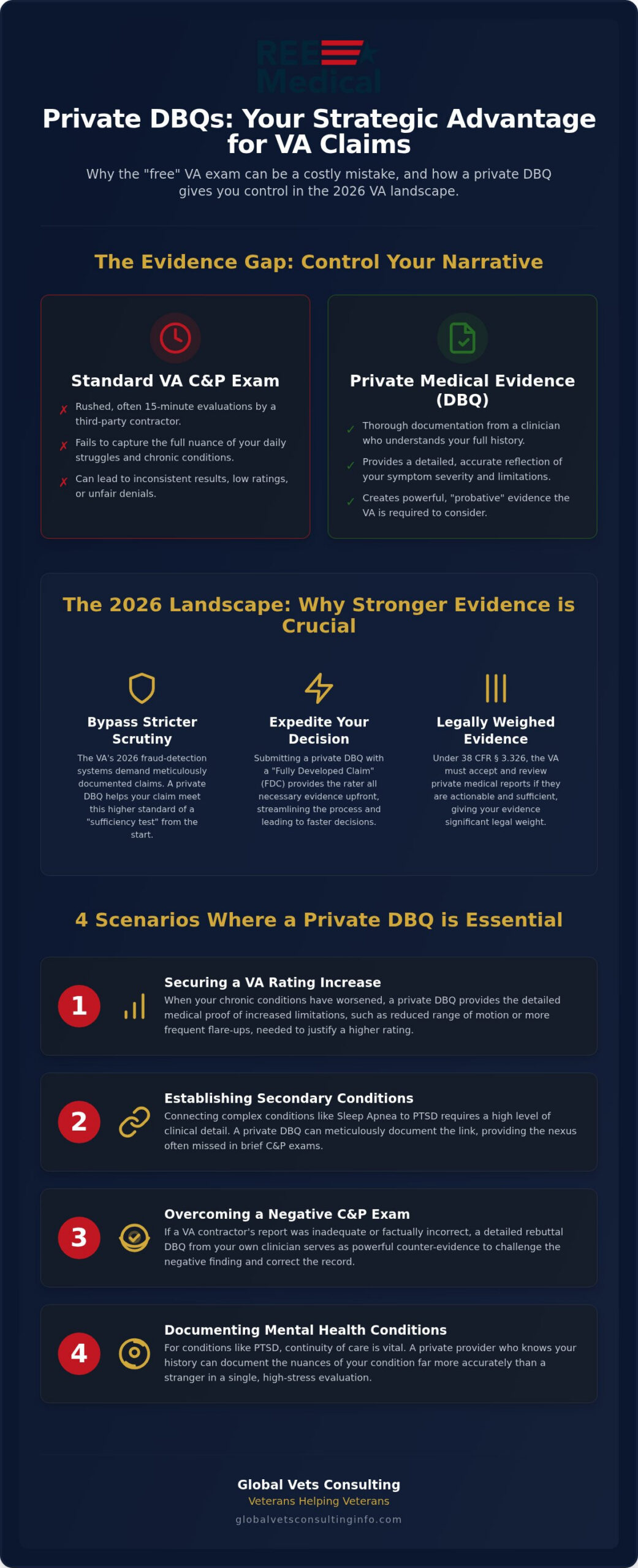
What if the “free” C&P exam provided by the VA is actually the most expensive mistake you’ll make in your disability claim? Relying solely on a rushed, third-party examiner often leads to inconsistent results that fail to capture the reality of your daily life. Knowing exactly when to get a private dbq for va claim is no longer just a luxury; it’s a tactical necessity in 2026. The VA has implemented stricter fraud-detection systems this year, making it more important than ever to present medical evidence that is both actionable and sufficient from the start.
We understand the anxiety that comes with the “VA math” trap and the fear that your private medical records are being ignored. You deserve a rating that reflects your actual symptoms, not a filtered version of them. This strategic guide explores the critical scenarios where a private DBQ makes the difference between a denial and your earned benefits. We will walk through how to navigate the 2026 landscape, avoid common documentation pitfalls, and build a “Fully Developed Claim” that stands up to the highest level of scrutiny.
Key Takeaways
- Learn why submitting private medical evidence via a Fully Developed Claim (FDC) is the most effective way to expedite your decision while maintaining control over your records.
- Identify high-impact scenarios for when to get a private dbq for va claim, such as filing for a rating increase or establishing a secondary service connection.
- Discover how to correctly navigate VA Form 21-526EZ by leveraging Section IV and the FDC checkbox to ensure your private evidence is prioritized by the rater.
- Understand the VA’s “sufficiency test” and how meticulous documentation helps your claim bypass the increased scrutiny of 2026 fraud-detection tools.
The Strategic Role of Private DBQs in 2026
A private Disability Benefits Questionnaire (DBQ) is a standardized medical form completed by a non-VA clinician to document your symptoms and functional limitations. These forms are the primary tool used by raters to assign a disability percentage. In 2026, the VA’s shift toward digital processing and automated screening makes these documents central to a successful Fully Developed Claim (FDC). By submitting a private DBQ, you provide the rater with a comprehensive view of your condition before they ever schedule a Compensation and Pension (C&P) exam. This proactive approach helps streamline the VBA ratings process by ensuring the medical evidence is complete from the start.
Understanding when to get a private dbq for va claim is vital because it addresses the evidence gap left by rushed exams. While a Nexus Letter links your condition to your service, the DBQ focuses on the current severity of your symptoms. It creates a clinical paper trail that is difficult for the VA to ignore during the rating phase. It’s about taking control of the narrative.
Why the VA Accept Private Medical Evidence
Under 38 CFR § 3.326, the VA is legally required to accept and review private medical reports if they are actionable and sufficient for rating purposes. A correctly formatted private DBQ acts as probative evidence. This means it carries weight because a qualified clinician who has spent time reviewing your full history completed it. This clinician isn’t a contractor who might only see you for fifteen minutes. Their thoroughness provides a more accurate reflection of your daily struggles.
Private vs. Public: The Evidence Gap
Many veterans face the frustration of inadequate exams from VA contractors. These exams often miss the nuance of chronic conditions like PTSD or sleep apnea. You can learn more about what is a dbq for va claims and how they provide the detailed data that public exams often lack. Using a private clinician ensures your symptoms are documented with the meticulousness required to prevent a denial or an underrated claim.
4 Specific Scenarios: When to Get a Private DBQ for Your VA Claim
Deciding when to get a private dbq for va claim often comes down to the complexity of your medical evidence. While the VA uses its own contractors, certain trigger events make private documentation a strategic advantage. If your current rating doesn’t match your daily reality, a private clinician can provide the depth needed for a successful outcome. This is especially true for veterans who feel their symptoms were minimized during previous evaluations.
Securing a VA Rating Increase
When chronic conditions worsen, you need more than just a standard check-up. You need a detailed record of your increased limitations. A private provider can spend the time necessary to document reduced range of motion or increased frequency of flare-ups. This is exactly how to use a dbq for a va disability rating increase in 2026 to ensure your compensation reflects your current health status. By using official Public Disability Benefits Questionnaires, your doctor can submit evidence that speaks the VA’s language while focusing on your specific symptoms.
Complex Secondary Conditions
Establishing a secondary service connection is notoriously difficult. Conditions like Sleep Apnea secondary to PTSD or Migraines secondary to Tinnitus require a high level of clinical detail. A private DBQ allows for meticulous symptom tracking that links musculoskeletal limitations to neurological issues. This level of precision is often missing from 15-minute C&P exams. If you’re feeling overwhelmed by these requirements, reaching out to Global Vets Consulting can help clarify your next steps.
A private DBQ is also essential when you need to overcome a negative C&P exam. If a contractor’s report was inadequate or factually incorrect, a rebuttal DBQ from your own clinician can provide the probative value needed to challenge the finding. For mental health conditions, where continuity of care is vital, a provider who knows your history can document the nuances of your condition far better than a stranger. This ensures your rating is based on long-term data rather than a single, high-stress snapshot.
How to Fill Out VA Form 21-526EZ Correctly with Private Evidence
Knowing when to get a private dbq for va claim is only half the battle; you must also know how to file it. The 2026 version of VA Form 21-526EZ requires precise execution to ensure your private evidence isn’t overlooked. Follow these steps to protect your claim:
- Step 1: Clearly list every condition you are claiming in Section IV. Accuracy here is vital for rater clarity.
- Step 2: Check the “Fully Developed Claim” (FDC) box to expedite processing.
- Step 3: Attach your private DBQ as “New and Material Evidence” directly to the application.
- Step 4: Verify the “Clinician Certification” section is signed and dated by your healthcare provider.
The FDC Advantage
Checking the FDC box can significantly reduce your wait time compared to the standard 12-month processing cycle. This efficiency is a major factor when considering when to get a private dbq for va claim. When you submit your private DBQ alongside your application, you provide a legally sufficient medical opinion that allows raters to move faster. If you need help organizing your documentation, explore our DBQ education resources today. 🇺🇸
Common 21-526EZ Mistakes to Avoid
One frequent error is failing to mention the attached DBQ in the “Remarks” section. Explicitly stating “See attached private DBQ for [Condition]” ensures the rater sees it immediately. Understanding the va disability claims process step by step helps you avoid these technical pitfalls that often lead to unnecessary denials. Meticulousness in the filing stage is your best defense against administrative errors.
Ensuring Your Private DBQ Meets VA Documentation Standards
The VA doesn’t reject private evidence simply because it comes from a non-VA doctor. They reject it when it fails the “actionable and sufficient” test under 38 CFR § 3.326. In 2026, the VA’s new automated screening tools specifically target “cookie-cutter” forms that lack depth. To pass this scrutiny, your private clinician must use the most current 2026 version of the questionnaire and provide a detailed clinical rationale for every finding. If the VA still orders a C&P exam after you’ve submitted your evidence, you must attend. Your private documentation then serves as a vital benchmark to ensure the contractor’s exam is accurate.
The ‘Insufficient for Rating’ Trap
Raters often flag private medical opinions as insufficient when they see missing checkboxes or vague symptom descriptions. A rater needs to see the “why” behind a diagnosis. If your doctor notes a limitation but doesn’t explain how it relates to your service-connected condition, the VA will likely order a new exam. Meticulousness is your best defense. Every symptom must be mapped to the specific criteria found in the VA’s rating schedule to ensure your evidence is considered probative.
Global Vets Consulting: Your Ally in Accurate Documentation
Our “Veterans Helping Veterans” model focuses on the meticulous documentation required to prevent unnecessary denials. We understand that establishing a service connection is about more than just a diagnosis. It’s about the clinical bridge between your service and your current health. This is particularly true for a dbq for mental health conditions, where nuanced symptom tracking is the difference between a 30% and 70% rating. Deciding when to get a private dbq for va claim is a strategic choice. We provide the education needed to ensure your medical evidence is comprehensive, accurate, and ready for 2026 standards. 🇺🇸
Take Control of Your VA Rating Today
Securing the rating you deserve in 2026 requires more than just submitting paperwork. It requires a strategy built on meticulous medical evidence. You’ve learned that a private DBQ acts as a safeguard against rushed C&P exams and provides the rater with a clear clinical picture of your symptoms. Whether you’re filing for a rating increase or a secondary service connection, identifying exactly when to get a private dbq for va claim is the first step toward securing the benefits you earned through your service.
You don’t have to face this complex system alone. Accurate documentation is the foundation of a successful Fully Developed Claim. By prioritizing thoroughness and technical accuracy, you reduce the risk of unnecessary denials and lengthy appeals. 🇺🇸 Veteran-Owned and Operated, we offer 🌐 Worldwide Support for Veterans and a 📞 24/7 National Client Services Hotline to assist you. Secure Your Accurate Medical Documentation Today at GlobalVetsConsultingInfo.com. Your health and your rating are worth the extra effort. Stay focused and take the next step with confidence.
Frequently Asked Questions
Can the VA reject a private DBQ from my own doctor?
Yes, but they can only do so if the report is “insufficient for rating purposes.” Under 38 CFR § 3.326, the VA is legally required to review private medical evidence that is actionable. Rejection typically occurs because of technical errors, missing signatures, or a lack of clinical rationale. Ensuring your doctor uses the correct 2026 form version is essential to avoid having your evidence dismissed by automated screening tools.
Do I still have to attend a C&P exam if I submit a private DBQ?
You must attend any C&P exam the VA schedules, even if you’ve already submitted a private medical opinion. Failing to show up often leads to an immediate denial of your claim. Your private documentation remains a vital part of your evidence file during this process. It acts as a critical counterbalance to the contractor’s findings, especially if the VA examiner’s report is rushed or fails to capture your daily symptom severity.
How much does it cost to get a private DBQ for a VA claim?
The cost varies significantly depending on the complexity of your condition and the provider’s specific fee schedule. It’s important to remember that the VA won’t reimburse you for any costs associated with a private medical evaluation. Veterans often find the investment is worthwhile when deciding when to get a private dbq for va claim, as accurate documentation can prevent the long-term financial loss of an underrated disability claim.
Is a private DBQ better than a VA C&P exam for a rating increase?
A private DBQ is often superior because your own clinician usually has a deeper understanding of your medical history. Unlike a contractor who might only see you for fifteen minutes, your doctor can document chronic symptom progression over several months or years. This level of thoroughness is vital for a VA rating increase. It ensures the rater sees the full extent of your limitations rather than a single snapshot from a potentially inadequate public exam.
What is the most common reason the VA denies a claim with a private DBQ?
The most frequent reason for denial is a lack of “clinical rationale.” If a doctor checks a box but doesn’t explain the medical reasoning behind the diagnosis or the severity of the symptoms, the VA will flag the evidence as insufficient. Other common issues include using outdated form versions or failing to address how a secondary condition is linked to a primary disability. Meticulousness in these clinical details remains the gold standard for 2026.
Article by
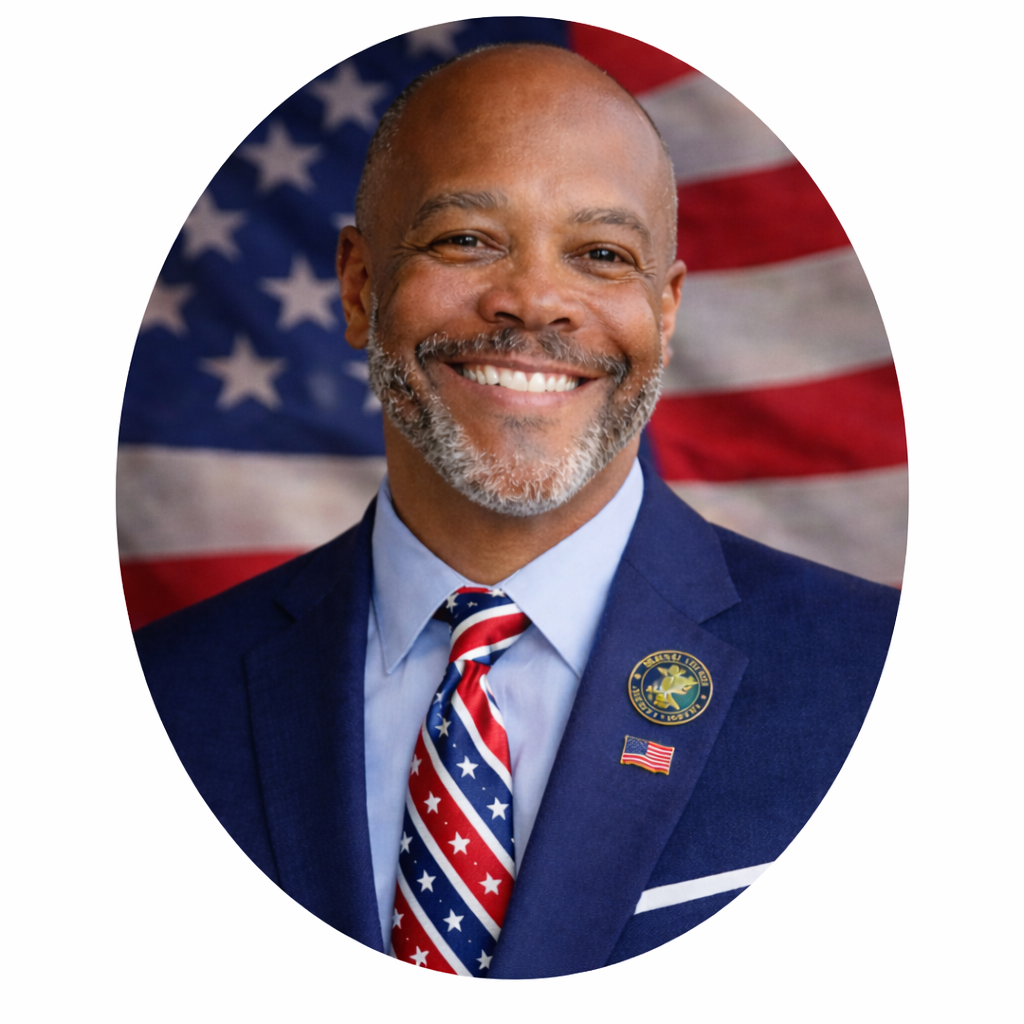
Willie Daniel
Willie Daniel is the Founder and Chief Executive Officer (CEO) of Global Vets Consulting (GVC) – National Veterans Disability Services, a veteran-led educational and medical evidence support organization dedicated to helping veterans better understand VA disability rating increases, DBQ medical evidence, secondary claims education, and C&P examination preparation.
He is a retired U.S. Army Medical Service Corps Officer with more than 27 years of honorable military service, a decorated Iraq combat veteran, and a retired federal official with the U.S. Department of Veterans Affairs. Throughout his military and federal career, Willie Daniel served in leadership, healthcare administration, operational, and veteran-support roles focused on improving services and support systems for servicemembers, veterans, and their families.
Drawing from decades of military leadership, healthcare administration, veteran advocacy, and federal government experience, Willie Daniel brings a practical, veteran-centered perspective to Global Vets Consulting’s educational articles, AI-powered veteran resources, video education initiatives, and outreach programs. His experience navigating military systems, medical documentation processes, and veteran-related administrative operations provides valuable insight into many of the challenges veterans face when seeking to better understand VA disability rating criteria, medical evidence, documentation strategies, and secondary condition education.
Through GVC’s “Veterans Helping Veterans” mission, his focus is on delivering clear, educational, and easy-to-understand information designed to empower veterans with knowledge, resources, and educational tools that may help them make more informed decisions regarding their individual VA disability journeys.
The information provided through GVC is intended for educational and informational purposes only and should not be considered legal or medical advice.
Disclaimer
Disclaimer: Global Vets Consulting, LLC (“GVC”) is a veteran-led educational and medical evidence support organization. GVC is not a law firm, is not a Veterans Service Organization (VSO), and is not affiliated with the U.S. Department of Veterans Affairs (VA) or any government agency.
Global Vets Consulting does not provide legal advice, medical advice, medical treatment, or healthcare services. GVC does not prepare, file, or submit VA disability claims on behalf of veterans. All information provided through this website, blog articles, videos, educational materials, AI tools, dashboards, templates, and communications is intended solely for general educational and informational purposes.
Veterans are encouraged to consult with accredited representatives, licensed attorneys, qualified medical providers, or Veterans Service Organizations regarding their specific legal, medical, or VA-related matters. VA disability decisions, ratings, and outcomes are determined solely by the U.S. Department of Veterans Affairs based on applicable laws, regulations, medical evidence, and individual circumstances. Past results do not guarantee future outcomes.

