
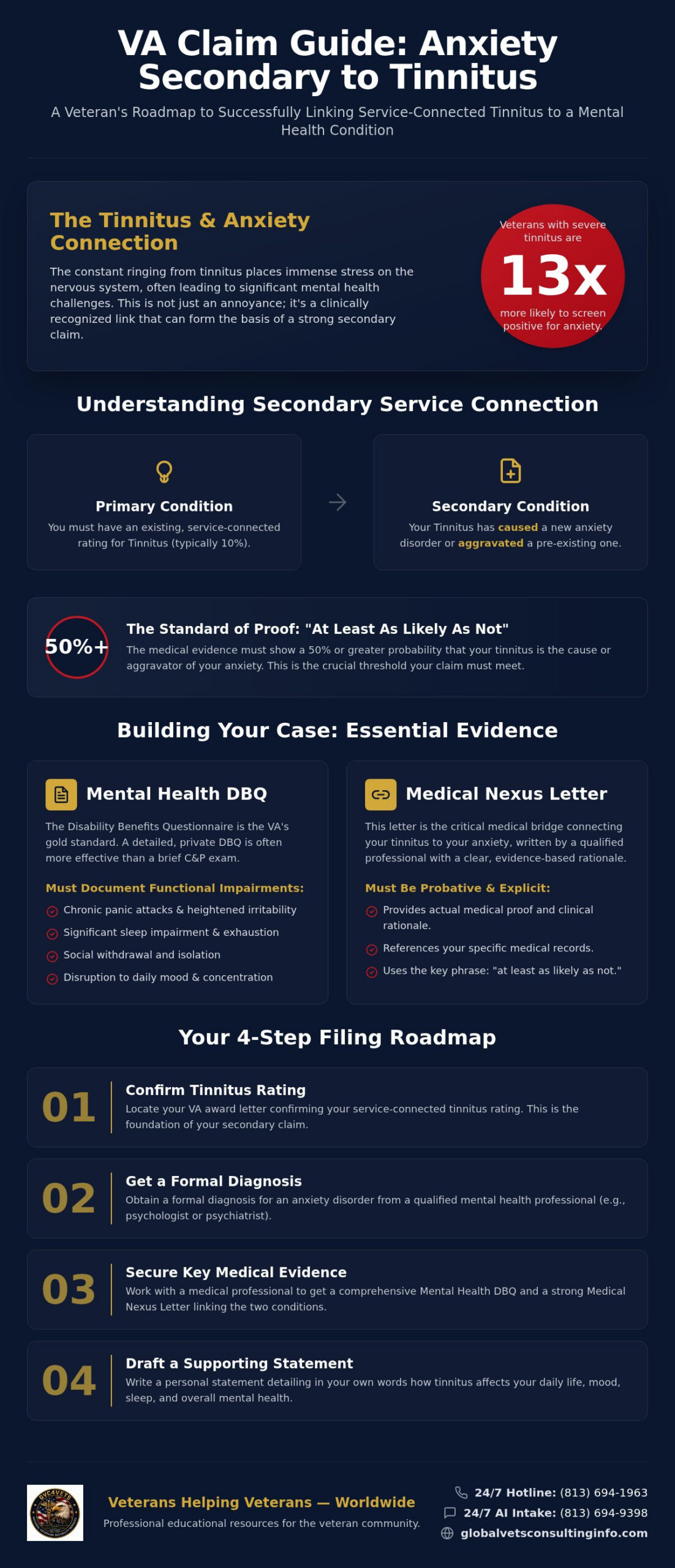
Veterans with severe tinnitus are 13 times more likely to screen positive for anxiety compared to those with little or no ear ringing. It’s a frustrating reality that many of us face every single day. That endless buzzing in your ears isn’t just a physical annoyance; it often leads to sleepless nights, irritability, and a constant state of mental exhaustion. When you decide to file a va claim for anxiety secondary to tinnitus, you shouldn’t be met with confusing bureaucracy or denials based on a supposed lack of medical evidence.
We understand the struggle of proving that your mental health is directly tied to your service-connected hearing issues. This guide provides a comprehensive roadmap to help you successfully link these conditions using professional medical education and the right Disability Benefits Questionnaires. We’ll walk you through the 2026 rating schedules, the importance of a strong nexus letter, and the exact paperwork needed to secure the rating you’ve earned. 🇺🇸 🌐
Key Takeaways
- Understand the clinical link between persistent ear ringing and mental health to establish a solid foundation for your secondary service connection. 🇺🇸
- Identify the specific medical evidence required, including the Mental Health DBQ, to successfully substantiate your va claim for anxiety secondary to tinnitus. 🌎
- Follow a clear, step-by-step roadmap for 2026 to organize your medical records and prepare for a successful C&P examination.
- Leverage professional educational resources to navigate complex VA regulations and work toward an increased combined disability rating.
The Link Between Tinnitus and Anxiety: Understanding Secondary Service Connection
Secondary service connection happens when a disability is either caused or aggravated by a condition the VA already recognizes as service-connected. When you file a va claim for anxiety secondary to tinnitus, you’re identifying a clear chain of events. The persistent buzzing or ringing of Tinnitus often keeps your nervous system in a “fight or flight” mode. This constant disruption of peace and sleep patterns creates a fertile ground for mental health struggles.
To succeed, your claim must meet the “at least as likely as not” medical standard. This means evidence shows a 50% or greater probability that your tinnitus is the culprit. The VA looks for two specific scenarios:
- Causation: Your tinnitus directly created a new anxiety disorder.
- Aggravation: Your tinnitus worsened a pre-existing anxiety condition beyond its natural progression.
Why the VA Recognizes the Tinnitus-Anxiety Connection
Chronic sound exposure is more than a physical symptom; it’s a psychological burden. The VA understands that incurable ringing can lead to sleep deprivation and social isolation. These factors are common triggers for comorbid mental health issues in the veteran community. By documenting how the sound affects your daily mood and concentration, you build a case based on clinical reality.
The Importance of a Primary Tinnitus Rating
A successful secondary claim requires a solid foundation. You must have an existing 10% rating for tinnitus before you can link anxiety to it. If you’re still working on that first step, follow our VA Disability Claims Process Step by Step: A 2026 Veteran’s Guide. Establishing service connection for the primary condition is the only way to unlock secondary benefits. 🇺🇸 🌎
Essential Evidence: The Role of the Mental Health DBQ and Nexus Letter
A successful va claim for anxiety secondary to tinnitus depends on high-quality medical evidence. The VA uses the Disability Benefits Questionnaire (DBQ) as the gold standard for evaluating mental health conditions. While treatment records show you’ve seen a doctor, a DBQ provides the standardized data raters need to assign an accurate percentage. The Nexus Letter acts as the medical bridge. It must be probative, meaning it offers actual proof through a doctor’s clinical rationale. It should explicitly state that your anxiety is “at least as likely as not” caused or aggravated by your tinnitus.
What a Mental Health DBQ Must Include
Your DBQ should document specific functional impairments that reflect your daily reality. This includes chronic panic attacks, sleep impairment, and social withdrawal. It’s not just about a diagnosis; it’s about how the constant ringing in your ears disrupts your life. For more details on these requirements, review our DBQ for Mental Health Conditions: A Veteran’s Guide to VA Evidence in 2026 🇺🇸. A thorough DBQ ensures every symptom is accounted for during the rating process.
Private DBQs vs. C&P Exams
Many veterans rely solely on a 15-minute C&P exam. These brief appointments often miss the nuances of your struggle. A private DBQ allows a qualified professional to spend the time necessary to capture your full health history. High-quality documentation is the best way to ensure your VA Claim Denied for Lack of Evidence doesn’t happen to you. If you need help understanding these documents, you can explore our medical evidence education resources to strengthen your case. 🌎 🇺🇸
Step-by-Step Guide: Filing Your Secondary Anxiety Claim in 2026
Filing a va claim for anxiety secondary to tinnitus requires a methodical approach to ensure the VA rater sees the full picture of your disability. The process moves beyond just submitting forms; it’s about building a narrative supported by clinical facts. Follow these steps to organize your submission:
- Step 1: Locate your service-connection award letter confirming your tinnitus rating.
- Step 2: Get a formal diagnosis of anxiety from a qualified mental health professional.
- Step 3: Secure a professional Mental Health DBQ and a Medical Nexus Letter that links your conditions.
- Step 4: Draft a Statement in Support of Claim (VA Form 21-4138) describing your daily struggles.
- Step 5: Submit your claim via VA.gov using Form 21-526EZ as a secondary condition.
Drafting Your Personal Impact Statement
Your impact statement is your voice in the process. Don’t just say you feel “anxious.” Instead, describe how the constant ringing makes you snap at your spouse or keeps you from focusing on technical tasks at work. Focus on specific episodes where the tinnitus triggered a panic response or caused social withdrawal. This personal context gives the rater a human perspective that medical codes alone cannot provide. 🇺🇸
Buddy Statements: Adding Lay Evidence
Lay evidence from spouses, friends, or coworkers provides external verification of your symptoms. A buddy statement should highlight changes in your behavior since the tinnitus began. It’s vital that these statements align with the findings in your medical DBQ. If you need help gathering the right documentation, explore our secondary VA claims education to ensure your evidence is airtight. 🌎
Maximizing Your Success with Global Vets Consulting 🌎
Our mission is built on the foundation of “Veterans Helping Veterans.” We believe that no one understands the challenges of military service better than those who have lived it. Navigating the VA system shouldn’t feel like a solo mission. Global Vets Consulting specializes in secondary VA claims education, giving you the tools to substantiate your va claim for anxiety secondary to tinnitus with high-quality medical evidence. We provide the precise Disability Benefits Questionnaires (DBQs) that help bridge the gap between your personal experience and the VA’s technical requirements. This allows you to present a case that is medically sound and easy for a rater to understand.
Our team is available whenever you need us. We offer a 24/7 National Client Services Hotline to provide immediate support to veterans worldwide. To get started quickly, you can use our 24/7 AI Veteran Intake Specialist. This modern tool streamlines the initial process and ensures your information is organized and ready for review from day one. We are ready to help. 🇺🇸
Why Professional Documentation Matters
Using professional medical documentation significantly reduces the risk of denials due to a “lack of evidence.” By submitting a Fully Developed Claim (FDC), you often experience faster processing times and fewer administrative delays. Our educational resources ensure your rating accurately reflects your specific level of social and industrial impairment. This is critical for securing a fair mental health rating that accounts for how your anxiety impacts your work and family life. Don’t leave your benefits to chance with incomplete records.
Get Started Today
The path to an increased combined disability rating starts with accurate evidence. You can reach our 24/7 National Client Services Hotline or visit our website to begin your journey. We provide the guidance you need to navigate this complex process with confidence. Our goal is your peace of mind.
Secure your professional DBQ and start your claim today!
Take Command of Your VA Benefits in 2026
The constant sound of tinnitus can erode your mental well-being, but the VA requires clinical proof to grant a rating. Securing a professional Nexus Letter and a comprehensive Mental Health DBQ is the most effective way to bridge the gap between your symptoms and a successful outcome. By following a structured, evidence-based approach, you can navigate the system with confidence and accuracy. Filing a va claim for anxiety secondary to tinnitus is a vital step toward the compensation you’ve earned through your service. 🇺🇸
As a veteran-owned and operated business, we provide specialized secondary VA claims education to support your mission. Our 24/7 National Client Services Hotline is always available to provide immediate assistance and medical evidence education. Start your secondary claim journey with a professional DBQ from Global Vets Consulting 🇺🇸. You don’t have to face the bureaucracy alone; we’re here to help you secure the rating you deserve. 🌎
Frequently Asked Questions
How much does a medical nexus letter for anxiety cost in 2026?
Costs for medical nexus letters vary across the industry based on the complexity of the case and the provider’s expertise. Some medical professionals charge flat fees, while others use different structures. We don’t provide specific pricing here, as every veteran’s medical history is unique. You should contact our 24/7 National Client Services Hotline for detailed information on how we can assist with your educational resources and documentation needs.
Article by
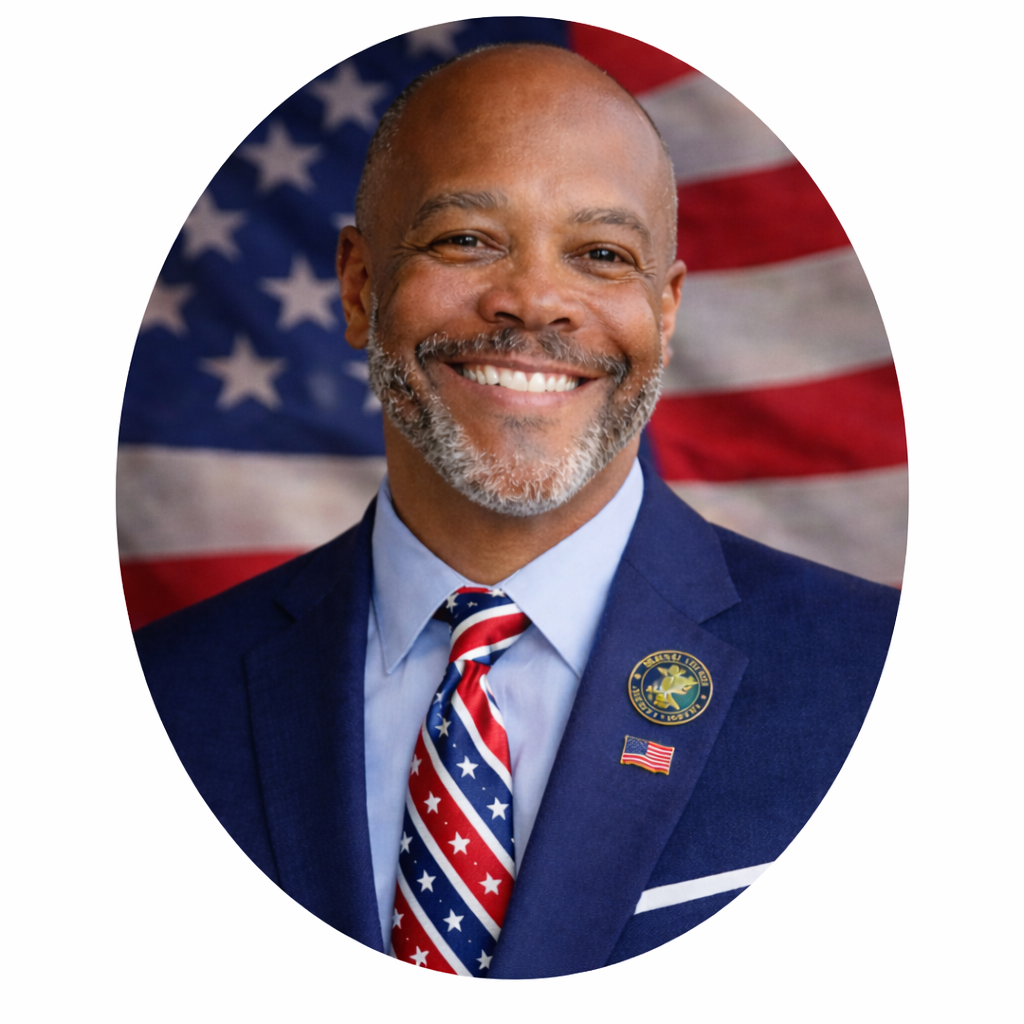
Willie Daniel
Willie Daniel is the Founder and Chief Executive Officer (CEO) of Global Vets Consulting (GVC4Vets) – National Veterans Disability Services, a veteran-led educational and medical evidence support organization dedicated to helping veterans better understand VA disability rating increases, DBQ medical evidence, secondary claims education, and C&P examination preparation.
He is a retired U.S. Army Medical Service Corps Officer with more than 27 years of honorable military service, a decorated Iraq combat veteran, and a retired federal official with the U.S. Department of Veterans Affairs. Throughout his military and federal career, Willie Daniel served in leadership, healthcare administration, operational, and veteran-support roles focused on improving services and support systems for servicemembers, veterans, and their families.
Drawing from decades of military leadership, healthcare administration, veteran advocacy, and federal government experience, Willie Daniel brings a practical, veteran-centered perspective to Global Vets Consulting’s educational articles, AI-powered veteran resources, video education initiatives, and outreach programs. His experience navigating military systems, medical documentation processes, and veteran-related administrative operations provides valuable insight into many of the challenges veterans face when seeking to better understand VA disability rating criteria, medical evidence, documentation strategies, and secondary condition education.
Through GVC’s “Veterans Helping Veterans” mission, his focus is on delivering clear, educational, and easy-to-understand information designed to empower veterans with knowledge, resources, and educational tools that may help them make more informed decisions regarding their individual VA disability journeys.
The information provided through GVC is intended for educational and informational purposes only and should not be considered legal or medical advice.
Disclaimer
Disclaimer: Global Vets Consulting, LLC (“GVC”) is a veteran-led educational and medical evidence support organization. GVC is not a law firm, is not a Veterans Service Organization (VSO), and is not affiliated with the U.S. Department of Veterans Affairs (VA) or any government agency.
Global Vets Consulting does not provide legal advice, medical advice, medical treatment, or healthcare services. GVC does not prepare, file, or submit VA disability claims on behalf of veterans. All information provided through this website, blog articles, videos, educational materials, AI tools, dashboards, templates, and communications is intended solely for general educational and informational purposes.
Veterans are encouraged to consult with accredited representatives, licensed attorneys, qualified medical providers, or Veterans Service Organizations regarding their specific legal, medical, or VA-related matters. VA disability decisions, ratings, and outcomes are determined solely by the U.S. Department of Veterans Affairs based on applicable laws, regulations, medical evidence, and individual circumstances. Past results do not guarantee future outcomes.