

Did you know that nearly 30% of the men and women who served in the Persian Gulf War now live with chronic, unexplained health issues? That is as many as 250,000 veterans facing daily pain without a clear diagnosis. It’s exhausting to fight a battle against your own body while simultaneously fighting a bureaucratic system that feels rigged against you. You probably feel anxious about an upcoming C&P exam or fear that a lack of evidence will lead to another claim denial.
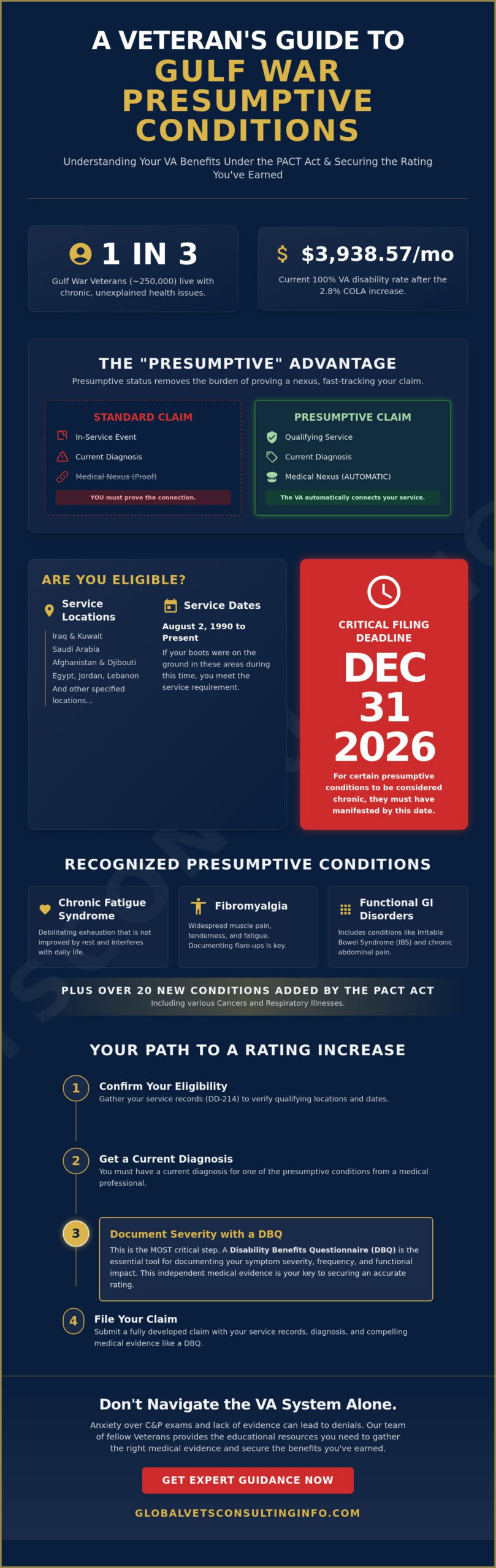
We’re here to change that by providing a clear path to understanding presumptive conditions for gulf war veterans under the latest PACT Act updates. With the December 31, 2026, deadline for filing certain presumptive claims fast approaching, and a 2.8% COLA increase boosting 100% disability rates to $3,938.57 per month, there’s never been a more critical time to act. This guide provides the definitive list of service-connected illnesses and a step-by-step strategy for gathering the medical evidence you need to secure the rating you’ve earned.
Key Takeaways
- Learn how presumptive status removes the burden of proving a nexus, allowing the VA to automatically link your illness to your service.
- Identify common Medically Unexplained Chronic Multisymptom Illnesses (MUCMIs) and understand why the December 31, 2026, filing deadline is critical for your claim.
- Explore the expanded list of presumptive conditions for gulf war veterans under the PACT Act, including new coverage for various cancers and respiratory diseases.
- Discover why a Disability Benefits Questionnaire (DBQ) is the essential tool for documenting symptom severity to secure an accurate VA rating increase.
- Gain a clear roadmap for gathering independent medical evidence to overcome common hurdles like C&P exam anxiety and claims denials.
What Are Presumptive Conditions for Gulf War Veterans?
Presumptive conditions for gulf war veterans are specific health issues that the VA automatically links to your military service. This means you don’t have to provide a “nexus” or a doctor’s letter proving that your time in Southwest Asia caused your current illness. A presumptive service connection is a legal shortcut that allows veterans to bypass the requirement of proving a specific event caused their disability.
For decades, many who served in the 1990-1991 conflict struggled with a cluster of symptoms often referred to as Gulf War syndrome. Because these conditions were often medically unexplained, proving a direct link was nearly impossible. The VA now recognizes that if you served in certain locations during specific windows of time, the environment itself was the cause. This shift in policy acknowledges the toxic reality of the battlefield without forcing you to produce impossible documentation.
Qualifying Service Locations and Dates
Eligibility depends on where and when you served. The core locations include Iraq, Kuwait, Saudi Arabia, and the neutral zone between Iraq and Saudi Arabia. Thanks to the PACT Act, the list has expanded to include Afghanistan, Djibouti, Egypt, Jordan, and Lebanon. For most presumptive conditions for gulf war veterans, your service must have occurred between August 2, 1990, and the present day. If your boots were on the ground in these areas, you’ve already cleared the first hurdle of service connection.
The ‘Presumptive’ Advantage for Your Claim
This status fundamentally changes the VA disability claims process step by step. In a standard claim, you’re responsible for showing an in-service event, a current diagnosis, and a medical link between them. With a presumptive condition, the VA concedes that link automatically. You don’t need to dig through decades of records to find a single day you were exposed to a specific toxin. This helps reduce the anxiety of a claim denial due to “lack of evidence” and moves you closer to the rating you deserve.
Medically Unexplained Chronic Multisymptom Illnesses (MUCMI)
Many veterans live with a frustrating reality: they feel sick, but their doctors can’t find a single laboratory cause. These are known as Medically Unexplained Chronic Multisymptom Illnesses (MUCMIs). They represent the core of what many call “Gulf War Syndrome.” The VA recognizes these as presumptive conditions for gulf war veterans because they often involve overlapping symptoms across several body systems simultaneously.
To qualify for benefits, your symptoms must have persisted for at least six months. These conditions must also have manifested either during your active duty service or before the current deadline of December 31, 2026. This recognition is a major pillar of The PACT Act and Your VA Benefits, ensuring that “unexplained” doesn’t mean “uncompensated” for those who served in the Persian Gulf.
Chronic Fatigue Syndrome and Fibromyalgia
Debilitating exhaustion that doesn’t improve with rest is more than just being tired. It’s a systemic issue that can derail your career and family life. For a Chronic Fatigue Syndrome rating, you must document how this fatigue interferes with daily activities. Similarly, Fibromyalgia requires proof of widespread muscle pain. It’s vital to track the frequency and severity of your flare-ups in your medical records to provide a clear picture of your functional loss. If you’re unsure how to present this evidence, exploring independent medical evidence education can provide the clarity you need.
Functional Gastrointestinal Disorders
Conditions like Irritable Bowel Syndrome (IBS), functional dyspepsia, and chronic abdominal pain are frequent complaints among Gulf War vets. These are often rated as presumptive because they are functional rather than structural. If your GI issues are caused or aggravated by another service-connected condition, you should learn how these conditions are often rated as secondary VA claims to ensure your symptoms are accurately reflected in your file. Understanding the nuances of medical documentation helps you move forward with confidence.
The PACT Act: Expanded Presumptive Coverage in 2026
The PACT Act represents the largest expansion of veteran benefits in decades, fundamentally changing how the VA handles toxic exposure claims. This legislation added over 20 new presumptive conditions for gulf war veterans, moving beyond the original MUCMI framework to include serious respiratory illnesses and various cancers. By recognizing the long-term impact of burn pits and particulate matter, the law removes the need for veterans to fight for a service connection that should’ve been acknowledged years ago. If you served in Afghanistan or other “modern” theaters, you’re now eligible for the same presumptions previously reserved for those in the Persian Gulf.
Respiratory Conditions and Cancers
Under the new guidelines, the VA now presumes that conditions like asthma diagnosed after service, chronic bronchitis, and COPD are related to your environmental exposures. These respiratory issues often go hand-in-hand with chronic rhinitis and sinusitis. While these might seem minor compared to other illnesses, they’re frequently underrated during the VA disability claim process. The expansion also covers a wide range of cancers, including reproductive, brain, kidney, and gastrointestinal cancers. Because these are now on the VA’s presumptive conditions for Gulf War veterans list, the focus shifts from proving the cause to documenting the severity of your diagnosis.
Infectious Diseases and Timing Requirements
The PACT Act also clarifies the service connection for infectious diseases such as Malaria, Brucellosis, and Leishmaniasis. It’s important to understand the timing requirements for these claims. Some conditions follow a “one-year rule,” meaning they must have manifested to a degree of 10% or more within a year of separation. However, many of the newer toxic exposure conditions can be diagnosed at any time and still qualify for presumptive status. If you’re struggling with a new diagnosis and need help understanding how to present your case, our Respiratory System Claims Education resources can help you navigate the medical evidence requirements.
Documenting Your Claim: The Role of DBQs and Medical Evidence
Securing a win for presumptive conditions for gulf war veterans is only half the battle. While the presumptive status proves the service connection, it doesn’t automatically grant you the maximum VA rating. The VA determines your monthly compensation based on the severity of your symptoms, not just the diagnosis itself. This is where many veterans fall short. They rely on the VA to find the evidence for them, which often leads to a lowball rating or a frustrating denial due to “lack of evidence.”
Standardized medical documentation is your best defense against an inaccurate rating. You must show how your condition limits your ability to work and perform daily tasks. By presenting clear, independent medical evidence, you take control of the narrative. This approach is especially powerful when you’re challenging a previous decision or seeking a VA rating increase for a worsening condition. Meticulous records turn a vague complaint into a compensable disability.
Why Use a Private DBQ for Gulf War Conditions?
The “undiagnosed” nature of many MUCMIs makes them difficult to quantify. If you use a standard VA examiner, they might overlook the subtle frequency of your migraines or the true impact of your chronic fatigue. Learning what is a DBQ is the first step toward a successful Fully Developed Claim (FDC). A private Disability Benefits Questionnaire allows your doctor to record every symptom, from brain fog to joint pain, in the specific language the VA requires. This detail ensures your functional loss is fully captured and quantified for the rater.
Next Steps: Gathering Your Evidence
Success requires a structured approach to your medical file. Follow these steps to prepare your claim:
- Step 1: Verify that your service dates and locations match the presumptive criteria for Southwest Asia or PACT Act expansion zones.
- Step 2: Obtain a current diagnosis from a medical professional or document at least six months of chronic, unexplained symptoms.
- Step 3: Partner with Global Vets Consulting for professional DBQ preparation and independent medical evidence education.
🇺🇸 Worldwide Support for Veterans
📞 24/7 National Client Services Hotline: 1-800-XXX-XXXX
🌐 GlobalVetsConsultingInfo.com
🤖 24/7 AI Veteran Intake Specialist available on our website.
Secure Your Earned Benefits Before the 2026 Deadline
You’ve sacrificed for your country, and now the law finally recognizes the long-term health impacts of your service. While the PACT Act has opened new doors, remember that a presumptive diagnosis is only the foundation. To maximize your monthly compensation, you must provide detailed medical evidence that clearly illustrates the severity of your daily symptoms. This documentation is what separates a low rating from a successful presumptive conditions for gulf war veterans claim.
We are a veteran-owned and operated team that understands the challenges you face. As specialists in independent medical evidence education, we’re here to provide the clarity you need to move forward with confidence. If you’re ready to take the next step, our 24/7 AI Veteran Intake Specialist is available on our website to help you begin the process at any time, day or night.
Don’t wait for your symptoms to worsen or for the 2026 deadline to pass before you act. You’ve earned these benefits through your service and sacrifice. Get expert help with your Gulf War DBQ today!
Frequently Asked Questions
What is the 2026 deadline for Gulf War presumptive conditions?
The deadline to file a claim for certain presumptive conditions that are at least 10 percent disabling is December 31, 2026. This date represents an extension from the previous 2021 deadline, giving veterans more time to seek compensation for chronic multisymptom illnesses. You should ensure your medical evidence is submitted before this window closes. This allows your claim to be processed under the favorable presumptive rules currently in place.
Can I get VA disability for Gulf War Syndrome if I don’t have a diagnosis?
You can receive benefits for undiagnosed illnesses under the specific category of presumptive conditions for gulf war veterans. The VA recognizes that many veterans experience persistent symptoms like joint pain or fatigue that medical professionals cannot specifically name. To qualify, you must document that these unexplained symptoms have lasted for at least six months. Providing evidence of how these symptoms limit your daily life is vital for a successful rating.
How does the PACT Act change benefits for Iraq and Afghanistan veterans?
The PACT Act expands benefits by adding over 20 new presumptive conditions and including service locations like Afghanistan, Djibouti, and Jordan. This legislation removes the requirement for veterans to prove a direct link between their illness and toxic exposures like burn pits. It streamlines the process for those suffering from various cancers and respiratory diseases. Essentially, it provides post-9/11 veterans the same presumptive advantages previously held by 1990-era Gulf War veterans.
What are the most common presumptive respiratory conditions for burn pit exposure?
Asthma, chronic rhinitis, and chronic sinusitis are the most frequent respiratory conditions presumed to be caused by burn pit exposure. Other recognized illnesses include COPD, emphysema, and chronic bronchitis. For these to qualify as presumptive, they must be diagnosed at any time after your qualifying service. Using a Disability Benefits Questionnaire (DBQ) is a smart way to ensure the VA rater understands the full severity of your breathing difficulties.
Is Irritable Bowel Syndrome (IBS) a presumptive condition for Gulf War vets?
Irritable Bowel Syndrome (IBS) is a recognized presumptive functional gastrointestinal disorder for veterans who served in the Southwest Asia theater. The VA assumes your service caused the condition, so you don’t need to provide a medical nexus letter. Since GI ratings depend heavily on the frequency of your symptoms, keeping a detailed log is helpful. You only need to prove that the condition exists and that it meets the VA’s criteria for severity.

Article by
Willie Daniel
Willie Daniel is the Founder and Chief Executive Officer (CEO) of Global Vets Consulting (GVC) – National Veterans Disability Services, a veteran-led educational and medical evidence support organization dedicated to helping veterans better understand VA disability rating increases, DBQ medical evidence, secondary claims education, and C&P examination preparation.
He is a retired U.S. Army Medical Service Corps Officer with more than 27 years of honorable military service, a decorated Iraq combat veteran, and a retired federal official with the U.S. Department of Veterans Affairs. Throughout his military and federal career, Willie Daniel served in leadership, healthcare administration, operational, and veteran-support roles focused on improving services and support systems for servicemembers, veterans, and their families.
Drawing from decades of military leadership, healthcare administration, veteran advocacy, and federal government experience, Willie Daniel brings a practical, veteran-centered perspective to Global Vets Consulting’s educational articles, AI-powered veteran resources, video education initiatives, and outreach programs. His experience navigating military systems, medical documentation processes, and veteran-related administrative operations provides valuable insight into many of the challenges veterans face when seeking to better understand VA disability rating criteria, medical evidence, documentation strategies, and secondary condition education.
Through GVC’s “Veterans Helping Veterans” mission, his focus is on delivering clear, educational, and easy-to-understand information designed to empower veterans with knowledge, resources, and educational tools that may help them make more informed decisions regarding their individual VA disability journeys.
The information provided through GVC is intended for educational and informational purposes only and should not be considered legal or medical advice.
Disclaimer
Disclaimer: Global Vets Consulting, LLC (“GVC”) is a veteran-led educational and medical evidence support organization. GVC is not a law firm, is not a Veterans Service Organization (VSO), and is not affiliated with the U.S. Department of Veterans Affairs (VA) or any government agency.
Global Vets Consulting does not provide legal advice, medical advice, medical treatment, or healthcare services. GVC does not prepare, file, or submit VA disability claims on behalf of veterans. All information provided through this website, blog articles, videos, educational materials, AI tools, dashboards, templates, and communications is intended solely for general educational and informational purposes.
Veterans are encouraged to consult with accredited representatives, licensed attorneys, qualified medical providers, or Veterans Service Organizations regarding their specific legal, medical, or VA-related matters. VA disability decisions, ratings, and outcomes are determined solely by the U.S. Department of Veterans Affairs based on applicable laws, regulations, medical evidence, and individual circumstances. Past results do not guarantee future outcomes.

