
Getting your private doctor to sign a Disability Benefits Questionnaire is only half the battle; if that form doesn’t strictly follow the VA’s M21-1 manual standards, it’s essentially just a piece of paper. It’s frustrating to be caught between a physician who’s hesitant to sign due to liability and a system that often feels like it’s looking for reasons to ignore your evidence. You deserve a process that recognizes your medical history and respects your service. Learning how to get a dbq from a private doctor correctly is the most effective way to take control of your claim and ensure your symptoms are accurately documented from the start.
We understand the anxiety that comes with these complex requirements. This guide provides the exact process to secure a private DBQ that meets every VA standard and strengthens your case for a Fully Developed Claim. We’ll cover how to select the correct form for your specific condition, how to prepare your doctor for the appointment, and what specific details must be included to ensure your evidence is considered actionable and sufficient. By following this structured path, you can move toward a faster decision while significantly reducing the risk of an unfavorable C&P exam.
Key Takeaways
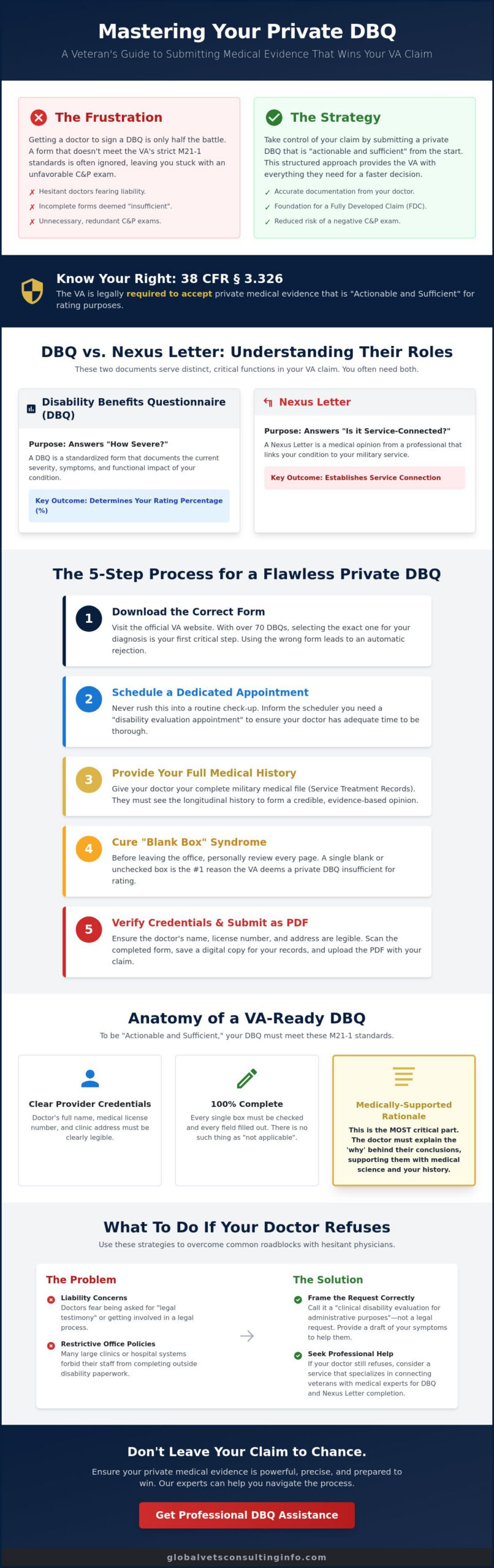
- Understand your legal right under 38 CFR § 3.326 to submit private medical evidence that the VA is required to accept when it’s actionable and sufficient.
- Master the essential five-step process on how to get a dbq from a private doctor, including why you should always schedule a dedicated review appointment.
- Learn the specific M21-1 criteria that determine if your evidence meets VA standards, helping you avoid unfavorable or redundant C&P exams.
- Discover why the “Rationale” section is the most critical part of your documentation and how your doctor must support their conclusions with medical science.
- Identify clear solutions for when your primary physician refuses to complete paperwork due to liability concerns or restrictive office policies.
Understanding Your Right to Submit Private Medical Evidence
You have the legal right to submit evidence from your own healthcare providers to support your disability claim. Under 38 CFR § 3.326, the Veterans Benefits Administration (VBA) is required to accept private medical evidence as long as it’s “actionable and sufficient” for rating purposes. This means you aren’t forced to rely solely on a VA-contracted examiner who might only see you for fifteen minutes. A private Disability Benefits Questionnaire (DBQ) is a standardized medical report completed by a non-VA doctor to evaluate the current severity of your condition.
In April 2021, the VA made these forms public again after a period of restricted access. This shift was a significant win for transparency and veteran choice. When you understand how to get a dbq from a private doctor, you gain more control over the narrative of your claim. Instead of walking into a Compensation and Pension (C&P) exam blind, you can submit evidence that accurately reflects your daily struggles, documented by a physician who actually knows your medical history. This approach replaces uncertainty with a clear, predictable path forward.
Choosing a private DBQ offers a level of thoroughness that standard exams often lack. If your private documentation is meticulous and adheres to the VA’s internal manual standards, it can provide the foundation for a Fully Developed Claim (FDC). Filing an FDC often leads to faster decisions because the VA has all the necessary evidence upfront. It’s about ensuring your records speak for themselves before an adjudicator even opens your file.
DBQ vs. Nexus Letter: Do You Need Both?
It’s common to confuse these two documents, but they serve distinct roles in your claim. A DBQ focuses on the current severity of your symptoms to determine your rating percentage. A Nexus Letter provides the medical link proving your condition was caused or aggravated by your military service. While some forms include a small section for medical opinions, you’ll often need both if you’re filing for a secondary condition. Mastering how to get a dbq from a private doctor ensures your severity is documented, but the Nexus Letter proves the VA is responsible for that condition.
5 Steps to Get a DBQ Filled Out by a Private Doctor
Securing a thorough medical evaluation requires a methodical approach. Understanding how to get a dbq from a private doctor starts with logistical preparation. You must first visit the official VA website to download the exact form corresponding to your specific diagnosis. With over 70 different DBQ forms available, using the wrong version is a common mistake that leads to immediate administrative rejection. Once you have the correct document, follow these steps to ensure it’s completed correctly.
- Schedule a dedicated appointment: Never try to squeeze a DBQ review into a routine check-up. Request a specific “disability evaluation” block so your doctor has the necessary time to focus on the paperwork.
- Provide your longitudinal history: Give your doctor your full military medical file. They need to see the progression of your condition over time to provide a credible opinion.
- Review for “blank box” syndrome: Before leaving the office, check that every field is filled. Blank boxes are the primary reason the VA deems a private DBQ insufficient.
- Verify provider credentials: Ensure the doctor’s name, license number, and clinic address are clearly legible on the final page.
- Submit as a PDF: Keep a digital copy for your records and submit the completed form as part of your Fully Developed Claim.
If your current physician seems overwhelmed by the paperwork, you might consider seeking professional DBQ assistance to ensure your documentation meets every rigorous VA requirement.
Preparing Your Doctor for the Appointment
Frame the request as a clinical disability evaluation for administrative purposes rather than asking for legal testimony, which often triggers liability fears in medical staff. You can also provide a draft version that outlines your current symptoms and functional limitations based on your daily experiences. This helps the doctor understand your perspective while saving them time during the actual examination. This collaborative approach ensures the final product remains objective and compliant with VA rating standards.
Who Can Sign Your DBQ?
The VA accepts signatures from several types of licensed healthcare professionals, including MDs, DOs, Physician Assistants (PAs), and Nurse Practitioners (NPs). However, mental health DBQs have stricter requirements. These specific forms must be completed by a board-certified or board-eligible psychiatrist or a licensed psychologist. If your primary care provider isn’t a specialist in the area they’re evaluating, the VA may give their opinion less weight or order a new C&P exam to verify the findings.
Ensuring Your Private DBQ is “Actionable and Sufficient”
The VA follows a specific playbook called the M21-1 Adjudication Procedures Manual. For your evidence to be accepted, it must meet the “actionable and sufficient” standard. This means the report must contain all the medical information necessary for a rater to assign a disability percentage without needing more data. When you’re learning how to get a dbq from a private doctor, you must ensure your physician understands that checking boxes isn’t enough. They must provide a detailed “Rationale” section that explains the medical science behind their conclusions.
Objective testing is another non-negotiable requirement. For example, if you’re filing for a joint or spine condition, the VA requires range-of-motion measurements taken with a goniometer. If your doctor estimates these numbers instead of using the proper tool, the VA will likely deem the DBQ insufficient and trigger a new C&P exam. You also need to watch for contradictory evidence. If your private DBQ describes severe limitations that conflict with your existing VA treatment records, your doctor must explain why those records differ. Without that explanation, a rater may find the private evidence less credible.
To avoid these technical pitfalls and secure a document that actually moves your claim forward, you can get a professionally completed DBQ that adheres to every M21-1 requirement.
Common Mistakes That Lead to DBQ Rejection
Small administrative errors often cause the most significant delays. A missing signature or an undated final page will result in an immediate rejection. Beyond paperwork, the doctor must specifically address the “Frequency, Severity, and Duration” of your flare-ups. If the form only describes how you feel on a “good day,” it doesn’t accurately represent your disability. Finally, ensure your doctor uses the precise terminology found in the VA Schedule for Rating Disabilities (VASRD). Using vague language like “moderate pain” instead of specific functional loss descriptions can lead to a lower rating than you’ve earned.
What to Do if Your Doctor Refuses to Help
It’s a common and frustrating reality for many veterans. You’ve done the research on how to get a dbq from a private doctor, scheduled the appointment, and brought the correct paperwork, only to have your physician refuse to sign. This rejection often stems from corporate “no-disability-paperwork” policies. Many large healthcare networks forbid their staff from completing these forms due to perceived liability concerns or the administrative time required. While this is a setback, it doesn’t have to be the end of your claim strategy.
When your primary doctor says no, the most effective alternative is seeking a private medical consulting firm that specializes in veteran disability documentation. These organizations understand the bureaucratic requirements that traditional clinics often find overwhelming. Professional services like Global Vets Consulting bridge the gap by providing expert-led DBQ preparation. This ensures your medical evidence is documented by providers who are comfortable with the VA’s rigorous standards and aren’t restricted by the same corporate policies as your local clinic.
Choosing a professional path is often the most reliable way to secure a Fully Developed Claim (FDC). Instead of begging a reluctant doctor to help, you can partner with experts who view the completion of your documentation as their primary mission. This proactive approach takes the guesswork out of the process. It puts a completed, actionable document in your hands without the usual administrative friction or office-policy hurdles.
The Advantage of Professional DBQ Preparation
Professional preparation offers a level of expertise in VA-specific language that primary care doctors often lack. While your family doctor is focused on your treatment, they may not know the specific keywords from the VA Schedule for Rating Disabilities (VASRD) that a rater looks for. Additionally, this route provides a streamlined process that avoids the months-long wait times typical of private specialist appointments. With hundreds of thousands of pending VA claims and the stakes higher than ever, choosing the best DBQ service for veterans can be the difference between an approval and a frustrating denial. You can learn more about the Benefits of Using a Private DBQ for Your VA Claim to see why this evidence is so impactful. If you’re ready to move forward with documentation that meets every VA standard, you can secure your professionally prepared DBQ here.
Take Control of Your VA Claim Journey
Securing the disability rating you’ve earned requires more than just a diagnosis; it demands evidence that the VA cannot ignore. You have the legal right to use private medical documentation to support your case, provided that information is actionable and sufficient. By focusing on M21-1 compliance and objective medical rationales, you move from being a passive participant to an empowered advocate for your own health. Understanding how to get a dbq from a private doctor is a vital skill for any veteran navigating the disability system, as it provides the transparency and predictability often missing from standard exams.
If you encounter resistance from your local clinic or simply want the peace of mind that comes with expert documentation, we are here to support you. Let Global Vets Consulting Prepare Your DBQ for a Successful Claim. As a veteran-owned and operated firm since 2021, we specialize in creating M21-1 compliant documentation that prioritizes accurate disability evaluations. Our mission is to ensure your military medical history is translated into the precise language the VA requires. You’ve already completed the hardest part by serving your country. Now, let’s work together to ensure your documentation accurately reflects the impact of that service on your life today.
Frequently Asked Questions
Can the VA reject a DBQ from a private doctor?
Yes, the VA can reject a private DBQ if it isn’t “actionable and sufficient” for rating purposes. This typically occurs when there are blank fields, missing signatures, or if the medical rationale doesn’t follow M21-1 standards. If the evidence is incomplete or lacks required tests, such as range-of-motion measurements, the rater will likely ignore the form and order a new C&P exam.
Is a private DBQ better than a VA C&P exam?
A private DBQ is often superior because it’s completed by a provider who understands your medical history and isn’t rushed by a heavy VA exam schedule. You have more control over the evidence submitted, which allows you to ensure every symptom is documented accurately. This often leads to a more comprehensive evaluation than a standard fifteen-minute C&P exam conducted by a third-party contractor.
How much does it cost to get a private doctor to fill out a DBQ?
The cost varies significantly depending on your provider’s office policies and the complexity of your condition. When you are researching how to get a dbq from a private doctor, remember that you are responsible for any fees charged by your provider. Some doctors include it in a standard visit, while others charge a specific administrative fee for disability evaluations. To better understand what factors drive pricing and how to evaluate your options, review this detailed breakdown of the cost of a private DBQ in 2026. The VA does not reimburse these costs.
Does a private doctor need to be a specialist for my condition?
While a specialist isn’t always required, the VA gives more weight to opinions from providers with relevant expertise. For mental health conditions, the provider must be a board-certified psychiatrist or a licensed psychologist. For physical conditions, having a specialist like an orthopedic surgeon sign the form adds significant credibility. This reduces the likelihood of the VA questioning the medical rationale behind your diagnosis.
What happens after I submit my private DBQ to the VA?
Once you submit your documentation, a VA rater reviews the evidence to determine if it meets legal standards. If the form is complete and follows M21-1 guidelines, the rater may assign a disability rating without requiring a C&P exam. Learning how to get a dbq from a private doctor correctly ensures your claim moves toward a decision faster within the Fully Developed Claim process.
Article by
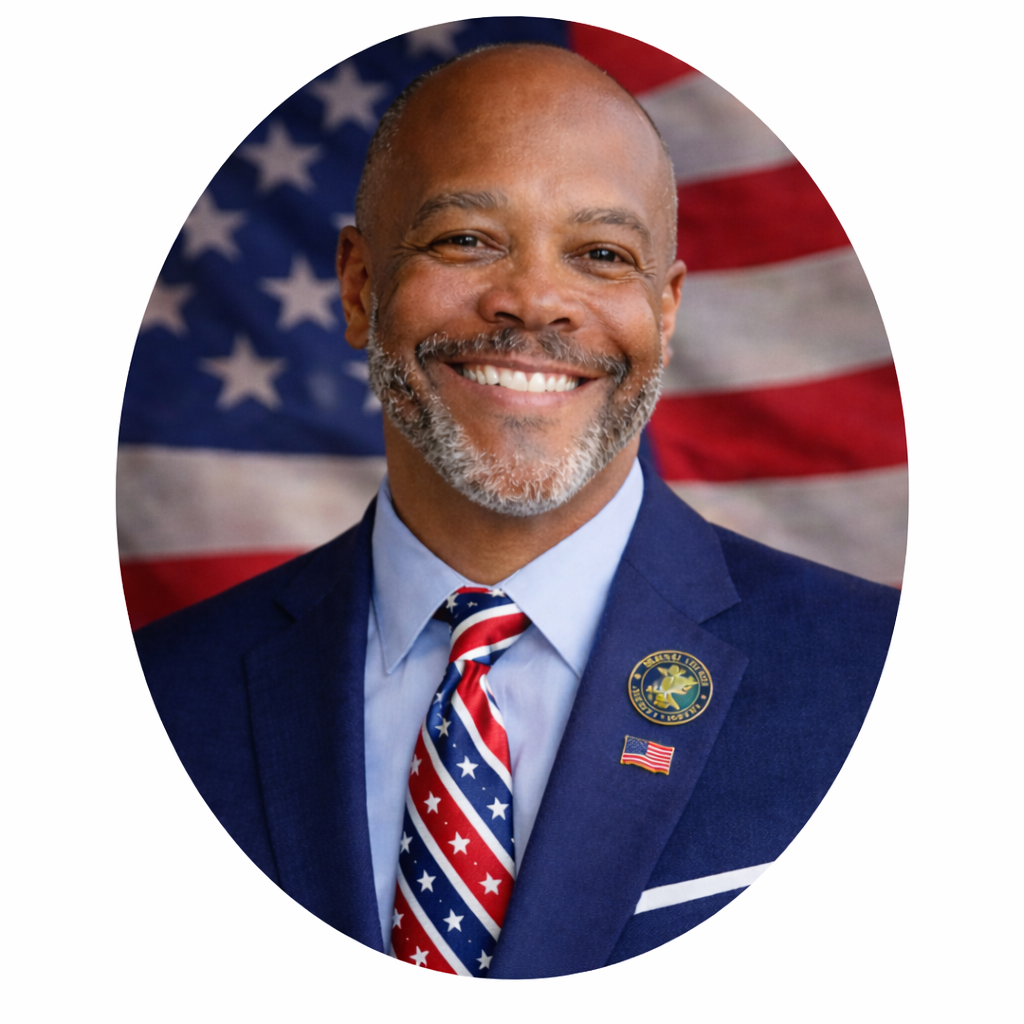
Willie Daniel
Willie Daniel is the Founder and Chief Executive Officer (CEO) of Global Vets Consulting (GVC) – National Veterans Disability Services, a veteran-led educational and medical evidence support organization dedicated to helping veterans better understand VA disability rating increases, DBQ medical evidence, secondary claims education, and C&P examination preparation.
He is a retired U.S. Army Medical Service Corps Officer with more than 27 years of honorable military service, a decorated Iraq combat veteran, and a retired federal official with the U.S. Department of Veterans Affairs. Throughout his military and federal career, Willie Daniel served in leadership, healthcare administration, operational, and veteran-support roles focused on improving services and support systems for servicemembers, veterans, and their families.
Drawing from decades of military leadership, healthcare administration, veteran advocacy, and federal government experience, Willie Daniel brings a practical, veteran-centered perspective to Global Vets Consulting’s educational articles, AI-powered veteran resources, video education initiatives, and outreach programs. His experience navigating military systems, medical documentation processes, and veteran-related administrative operations provides valuable insight into many of the challenges veterans face when seeking to better understand VA disability rating criteria, medical evidence, documentation strategies, and secondary condition education.
Through GVC’s “Veterans Helping Veterans” mission, his focus is on delivering clear, educational, and easy-to-understand information designed to empower veterans with knowledge, resources, and educational tools that may help them make more informed decisions regarding their individual VA disability journeys.
The information provided through GVC is intended for educational and informational purposes only and should not be considered legal or medical advice.
Disclaimer
Disclaimer: Global Vets Consulting, LLC (“GVC”) is a veteran-led educational and medical evidence support organization. GVC is not a law firm, is not a Veterans Service Organization (VSO), and is not affiliated with the U.S. Department of Veterans Affairs (VA) or any government agency.
Global Vets Consulting does not provide legal advice, medical advice, medical treatment, or healthcare services. GVC does not prepare, file, or submit VA disability claims on behalf of veterans. All information provided through this website, blog articles, videos, educational materials, AI tools, dashboards, templates, and communications is intended solely for general educational and informational purposes.
Veterans are encouraged to consult with accredited representatives, licensed attorneys, qualified medical providers, or Veterans Service Organizations regarding their specific legal, medical, or VA-related matters. VA disability decisions, ratings, and outcomes are determined solely by the U.S. Department of Veterans Affairs based on applicable laws, regulations, medical evidence, and individual circumstances. Past results do not guarantee future outcomes.