

Is your allergic rhinitis rating determined by a coin flip, or is it a matter of clinical precision? For many veterans, the difference between a 10% and 30% rating comes down to a single physical finding that often goes undocumented during a rushed C&P exam. You’ve likely felt the frustration of having your chronic congestion and sinus pressure dismissed because you didn’t have the “right” keywords on your paperwork. It’s exhausting to deal with a system that feels like it’s looking for reasons to say no rather than accurately assessing your service-connected symptoms.
We understand that the “all-or-nothing” structure of the VA rating system creates unnecessary anxiety. That’s why mastering the dbq for allergic rhinitis is essential for any veteran seeking fair compensation. In this guide, you’ll learn how to accurately document your symptoms to secure the disability rating you deserve. We will break down the updated 2026 rating criteria, explain the critical role of nasal polyps, and provide the education you need to walk into your next medical appointment with confidence. By the end of this article, you’ll know exactly how to bridge the gap between your daily struggle and the evidence the VA demands.
Key Takeaways
- Learn how the VA uses Diagnostic Code 6522 to evaluate your condition and why the DBQ is the primary tool for translating symptoms into a rating.
- Identify the specific clinical findings, such as the presence of nasal polyps or significant nasal passage obstruction, required to secure a 30% or 10% disability rating.
- Discover why submitting a private dbq for allergic rhinitis before your C&P exam can provide a strategic advantage and help prevent unfavorable results from record-only reviews.
- Follow a clear, two-step process to ensure your medical provider accurately documents your symptoms so that your paperwork aligns with your actual medical history.
Understanding the DBQ for Allergic Rhinitis: More Than Just a Form
The Disability Benefits Questionnaire (DBQ) for Sinusitis and Rhinitis serves as the foundational evidence tool the VA uses to determine your rating level. It’s the bridge between your clinical reality and the legal requirements found in 38 CFR § 4.97, specifically Diagnostic Code 6522. Allergic rhinitis is a chronic inflammation of the nasal mucous membranes. Without a completed dbq for allergic rhinitis, the VA relies solely on the C&P examiner’s interpretation, which might miss the nuances of your daily breathing difficulties.
You must have a formal diagnosis in your medical records before the VA will even consider the information on a DBQ. A diagnosis proves the condition exists; the DBQ proves how severe it is. This distinction is vital because a well-documented form cannot fix a lack of underlying medical history. If you don’t have a diagnosis yet, your first step is to see a medical professional to establish your clinical record.
To better understand how the VA evaluates these conditions during a physical assessment, watch this helpful video:
Service Connection: Direct vs. Presumptive
The PACT Act has significantly reduced the evidence burden for many veterans. If you served in certain locations after 9/11 or during the Gulf War, the VA now presumes your rhinitis is service-connected. However, a presumption of connection doesn’t guarantee a high rating. You still need to use the dbq for allergic rhinitis to link your symptoms to specific environmental exposures or service events to ensure the severity is captured accurately. This proactive documentation prevents the VA from downplaying the impact of your toxic exposure.
The Importance of Chronicity
The VA doesn’t compensate for occasional hay fever. They look for “constant” or “frequent” symptoms that impact your life throughout the year. When filling out the form, your provider must document your history of treatment, including your use of antihistamines or nasal steroids. If your symptoms only appear for two weeks in the spring, you likely won’t meet the criteria for a compensable rating. Consistent documentation of your medication use and symptom frequency is the only way to prove your condition is chronic.
Decoding the VA Rating Criteria: How the DBQ Determines Your Percentage
Section IV of the dbq for allergic rhinitis is the most critical part of the document. This is where the examiner records the physical findings that directly translate to your monthly compensation. The VA rater isn’t looking for a general description of your discomfort. Instead, they’re looking for specific clinical markers like tissue growth or measured airflow restriction. If these details are missing or vague, you risk being assigned a 0% non-compensable rating even if you suffer daily.
Understanding how the VA views “obstruction” is vital. On the official Disability Benefits Questionnaire (DBQ) for Rhinitis, the examiner must check boxes indicating whether your symptoms are continuous or intermittent. If you only experience symptoms during high-pollen days, the VA may view your condition as intermittent, which often leads to a lower rating. You should be prepared to discuss how your congestion persists throughout the year, regardless of the season.
Many veterans fall into the trap of downplaying their symptoms during the physical exam. They might say they “get by” or “it’s not that bad today.” This is a mistake. The examiner needs to know what your worst days look like. If you are struggling to prepare for this conversation, learning how to articulate your symptoms can make a significant difference in your final outcome.
The 10% Rating: Greater Than 50% Obstruction
To qualify for a 10% rating under Diagnostic Code 6522, the medical evidence must show greater than 50% obstruction in both nasal passages. Alternatively, if one side is completely blocked (100% obstruction), you meet the same 10% criteria. During the exam, the provider may use a speculum to look inside your nose or ask you to breathe through one nostril at a time. It’s important to describe the physical sensation of the blockage, such as the feeling of “breathing through a straw,” to help the examiner accurately record the percentage of obstruction.
The 30% Rating: The Nasal Polyp Threshold
The presence of nasal polyps is the “binary gatekeeper” for the 30% rating. If the examiner identifies polyps in either nasal passage, the VA criteria mandate a 30% rating, regardless of the level of obstruction. These are non-cancerous growths that often result from chronic inflammation. You must ensure your doctor uses the specific clinical term “polyps” in the remarks section of the dbq for allergic rhinitis. Without that specific word, the VA will likely default to a 10% rating based on obstruction alone, even if the polyps are the underlying cause of your breathing issues.
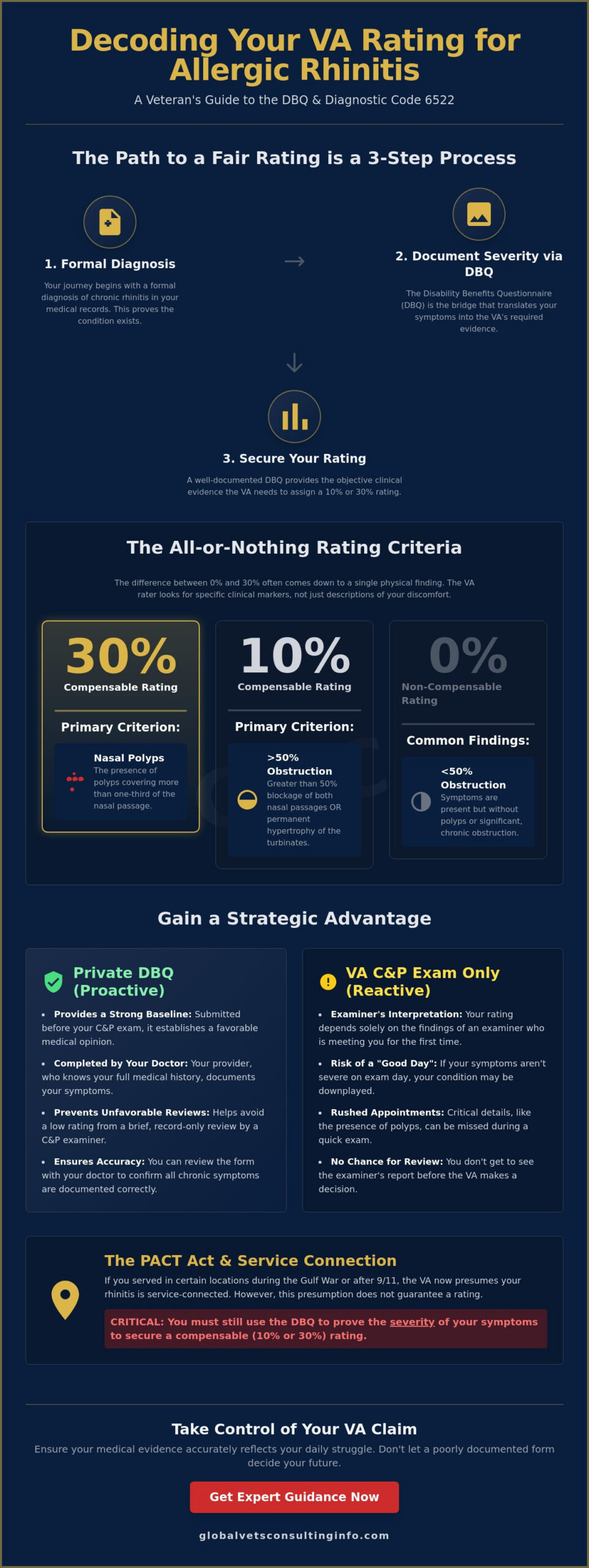
Private DBQ vs. VA C&P Exam: Strategic Evidence Gathering
Choosing a proactive approach to your claim means gathering evidence before the VA schedules your physical assessment. Submitting a private dbq for allergic rhinitis gives you a strategic advantage because it establishes a baseline of severity that the VA cannot easily ignore. When you rely solely on the VA’s Compensation and Pension (C&P) exam, you’re essentially reacting to whatever the examiner decides during a brief fifteen-minute window. By contrast, a private medical record ensures your symptoms are documented accurately on your own terms.
This strategy is particularly effective for navigating the “ACE” exam, or Acceptable Clinical Evidence review. In these cases, a VA clinician may complete a rating based entirely on your existing records without ever meeting you. A strong, detailed DBQ prevents unfavorable findings by providing the clear, clinical data a reviewer needs to make a positive decision. If you’ve already established a private medical opinion vs c&p exam record, you’ve created a safeguard against examiners who might rush the process or overlook key symptoms.
Why Use a Private Doctor?
A private physician often has a more complete understanding of your long-term health than a one-time VA contractor. They can dedicate the necessary time to review your full history of allergic rhinitis diagnosis and treatment, ensuring every flare-up is accounted for. It’s also helpful to work with a provider who understands the VA disability claims process step by step. This ensures your medical evidence is formatted in a way that aligns with VA requirements, reducing the risk of administrative delays. If you need assistance documenting your condition, consider using our educational resources to help your doctor accurately complete your dbq for allergic rhinitis.
What to Do if Your C&P Exam Goes Poorly
If a C&P examiner contradicts your private evidence or fails to measure your nasal obstruction correctly, don’t panic. You can use your private DBQ as the primary rebuttal for a Higher-Level Review (HLR) or a Supplemental Claim. An inadequate exam where the provider ignores polyps or miscalculates blockage can be challenged by pointing to the “competent medical evidence” provided by your private doctor. This creates a clear path toward correcting errors and securing the rating you earned. Explore our professional DBQ education resources to ensure your evidence stands up to VA scrutiny.
How to Leverage Your DBQ for a Successful VA Claim
Securing your earned benefits requires a methodical approach to medical documentation. First, you must obtain a current diagnosis of allergic rhinitis from a qualified professional. This diagnosis acts as the anchor for your entire claim. Once established, your medical provider should complete the dbq for allergic rhinitis by ensuring all “yes/no” boxes align perfectly with your existing clinical records. Any discrepancy between the DBQ checkboxes and your treatment history can lead to a denial or a lower rating than you deserve.
If you aren’t filing under the presumptive PACT Act rules, you should pair your DBQ with a Nexus Letter. This letter provides the medical rationale linking your current condition to your military service. Finally, submit your dbq for va disability rating increase as part of a Fully Developed Claim (FDC). An FDC tells the VA that you’ve provided all necessary evidence upfront, which often results in a faster decision and a more predictable outcome.
Secondary Conditions to Consider
Allergic rhinitis rarely exists in isolation. You should consider linking it to other respiratory issues like Sleep Apnea or Asthma as a secondary service connection. Because the upper and lower airways are connected, chronic nasal inflammation often exacerbates other conditions. A strong dbq for allergic rhinitis can serve as the clinical foundation for these related claims, potentially increasing your overall combined disability rating through a logical, evidence-based progression.
Final Review Checklist Before Submission
Before you upload your documents to the VA portal, perform a final meticulous review. A small administrative error can delay your claim by months. Ensure your packet meets these criteria:
- The doctor’s signature, medical credentials, and the date of the exam are clearly visible.
- The “Remarks” section contains specific clinical details that support the findings in the checkbox sections.
- All pages of the DBQ are included in the upload, even if some sections are blank.
- The diagnosis on the form matches the diagnosis in your official medical records exactly.
Take Control of Your Disability Claim Documentation
You now have a clear roadmap for documenting your respiratory symptoms and navigating the VA’s complex rating structure. Remember that the difference between a 10% and 30% rating often rests on the clinical identification of nasal polyps or the specific percentage of nasal passage obstruction. By utilizing a private dbq for allergic rhinitis, you ensure that your medical record is thorough, accurate, and ready for scrutiny. This proactive approach reduces the anxiety of the C&P process and places the focus back on the severity of your service-connected condition.
If you’re ready to move forward with a claim that reflects your true health status, secure the medical documentation you need with Global Vets Consulting. We are veteran-owned and operated with a duty-first mentality, specializing in standardized DBQ preparation. Our team is dedicated to simplifying the bureaucratic VA system so you can focus on your well-being. You’ve already done the hard work of serving your country; now it’s time to ensure your benefits are fully secured. You have the tools and the knowledge to succeed.
Frequently Asked Questions
What is the maximum VA rating for allergic rhinitis?
The maximum schedular rating for allergic rhinitis is 30% according to 38 CFR § 4.97, Diagnostic Code 6522. This specific percentage is only granted when a medical professional documents the presence of nasal polyps during an examination. If you don’t have polyps but experience significant nasal blockage, you’re limited to a 10% rating. Understanding this limit helps you set realistic expectations for your claim while ensuring your documentation focuses on the correct clinical findings.
Can I get a 50% rating for allergic rhinitis?
You cannot receive a 50% rating for allergic rhinitis because the VA rating schedule for this condition only includes 0%, 10%, and 30% tiers. If your symptoms are exceptionally severe, you should explore whether your rhinitis is causing or worsening other conditions like sleep apnea or sinusitis. Documenting these related issues can lead to additional secondary ratings that increase your overall combined disability compensation beyond the 30% cap for rhinitis alone.
Do I need a Nexus Letter if I have a DBQ for allergic rhinitis?
You generally need a Nexus Letter if your condition isn’t considered presumptive under the PACT Act. While the dbq for allergic rhinitis documents the severity of your symptoms, it doesn’t always establish the required link to your military service. If you aren’t a Gulf War or post-9/11 veteran covered by presumptive rules, a Nexus Letter provides the clinical rationale necessary to prove your condition started during or was caused by your active duty service.
What happens if my C&P examiner says I don’t have polyps but my doctor says I do?
If a C&P examiner contradicts your private medical evidence, you should submit a Higher-Level Review or a Supplemental Claim to challenge the finding. The VA is required to consider all competent medical evidence, and a detailed report from your own physician carries significant weight. Providing a private dbq for allergic rhinitis that specifically notes the location and size of the polyps can help resolve this conflict by highlighting an inadequate or rushed VA examination.
How does the VA rate allergic rhinitis secondary to sleep apnea?
The VA rates allergic rhinitis as a secondary condition by evaluating how it was caused or aggravated by an existing service-connected disability. For example, if your service-connected sleep apnea or asthma leads to chronic nasal inflammation, the VA will assign a rating of 10% or 30% based on the standard criteria for rhinitis. This secondary connection allows you to receive compensation for the condition even if it didn’t begin during your time in the military.

Article by
Willie Daniel
Willie Daniel is the Founder and Chief Executive Officer (CEO) of Global Vets Consulting (GVC) – National Veterans Disability Services, a veteran-led educational and medical evidence support organization dedicated to helping veterans better understand VA disability rating increases, DBQ medical evidence, secondary claims education, and C&P examination preparation.
He is a retired U.S. Army Medical Service Corps Officer with more than 27 years of honorable military service, a decorated Iraq combat veteran, and a retired federal official with the U.S. Department of Veterans Affairs. Throughout his military and federal career, Willie Daniel served in leadership, healthcare administration, operational, and veteran-support roles focused on improving services and support systems for servicemembers, veterans, and their families.
Drawing from decades of military leadership, healthcare administration, veteran advocacy, and federal government experience, Willie Daniel brings a practical, veteran-centered perspective to Global Vets Consulting’s educational articles, AI-powered veteran resources, video education initiatives, and outreach programs. His experience navigating military systems, medical documentation processes, and veteran-related administrative operations provides valuable insight into many of the challenges veterans face when seeking to better understand VA disability rating criteria, medical evidence, documentation strategies, and secondary condition education.
Through GVC’s “Veterans Helping Veterans” mission, his focus is on delivering clear, educational, and easy-to-understand information designed to empower veterans with knowledge, resources, and educational tools that may help them make more informed decisions regarding their individual VA disability journeys.
The information provided through GVC is intended for educational and informational purposes only and should not be considered legal or medical advice.
Disclaimer
Disclaimer: Global Vets Consulting, LLC (“GVC”) is a veteran-led educational and medical evidence support organization. GVC is not a law firm, is not a Veterans Service Organization (VSO), and is not affiliated with the U.S. Department of Veterans Affairs (VA) or any government agency.
Global Vets Consulting does not provide legal advice, medical advice, medical treatment, or healthcare services. GVC does not prepare, file, or submit VA disability claims on behalf of veterans. All information provided through this website, blog articles, videos, educational materials, AI tools, dashboards, templates, and communications is intended solely for general educational and informational purposes.
Veterans are encouraged to consult with accredited representatives, licensed attorneys, qualified medical providers, or Veterans Service Organizations regarding their specific legal, medical, or VA-related matters. VA disability decisions, ratings, and outcomes are determined solely by the U.S. Department of Veterans Affairs based on applicable laws, regulations, medical evidence, and individual circumstances. Past results do not guarantee future outcomes.